Random Humor

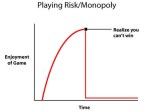
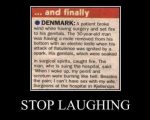
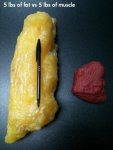
More random humor from my vault of hopefully amusing photos.  For more, type “random humor” into the search bar on home page.  Enjoy!

1 Comment

Filed under Humor and Observations

King Richard III buried in hasty grave, archaeologists find

King Richard III buried in hasty grave, archaeologists find

By Stephanie Pappas

Published May 27, 2013

LiveScience

  • king-richard-skull

    The skull of the skeleton found at the Grey Friars excavation in Leicester, potentially that of King Richard III. (University of Leicester)

The body of King Richard III was buried in great haste, a new study finds perhaps because the medieval monarch’s corpse had been out for three days in the summer sun.

The new research is the first academic paper published on the discovery of Richard III, which was publically announced in February 2013. A team of archaeologists from the University of Leicester found the body beneath a parking lot in Leicester that was once the site of a medieval church. The full study was available online Friday, May 24.

The archaeological analysis contains details only alluded to in the initial announcement of the findings. In particular, the archaeologists found that Richard III’s grave was dug poorly and probably hastily, a sharp contrast to the neat rectangular graves otherwise found in the church where the king was laid to rest. [Gallery: The Discovery of Richard III]

Richard III’s journey to Leicester
Richard III ruled England from 1483 to 1485, when he was killed during the Battle of Bosworth Field, the definitive fight in the War of the Roses.

‘Richards damaged body had already been on public display for several days in the height of summer, and was thus in poor condition.’

– A team of archaeologists from the University of Leicester 

Historical records reveal that after the battle, Richard’s body was stripped and brought to Leicester, where it remained on public display for three days until burial on August 25, 1485. The church where the body was interred, a Franciscan friary called Grey Friars, was eventually demolished around 1538. A former mayor of Leicester built a mansion on the site, but by the 1700s, the land had been subdivided and sold off, the location of the church lost.

With it went all memory of where one of England’s most famous kings was buried. Richard III was immortalized by a Shakespeare play of the same name and made out to be a villain by the Tudor dynasty that followed his rule. Today, however, there are societies of Richard III enthusiasts called Richardians who defend the dead king’s honor. One of these Richardians, a screenwriter named Philippa Langley, spearheaded the excavation that discovered Richard III’s body.

Digging for Richard
The new paper, published in the journal Antiquity, outlines how archaeologists dug three trenches in a city government parking lot, hoping to hit church buildings they knew had once stood in the area. They soon found evidence of the friary they were looking for: first, a chapter house with stone benches and diamond-pattern floor tiles. This chapter house would have been used for daily monastery meetings.

South of the chapter houses, the excavation revealed a well-worn cloister walk, or covered walkway. Finally, the researchers found the church building itself. The church was about 34 feet wide. It had been demolished, but the floors (and the graves in the floor) were left intact. Among the rubble were decorated tiles and copper alloy letters that likely once marked the graves.

Brick dust suggested the outer church walls may have been covered with a brick faade, which would have created a striking red-and-white look with the church’s limestone-framed windows, the researchers wrote.

A hasty grave
Most of the graves in the Grey Friars church floor are neat and orderly, with squared-off rectangle sides. Richard III’s is an exception. The grave is irregularly shaped, with sloping sides. It was also too small for the 5-foot-8-inch skeleton interred within: Richard’s torso is twisted and his head propped up rather than laid flat. The body was also crammed against the north wall of the grave, perhaps because someone stood against the south wall to guide the body into its resting place. Whoever it was did not spend time afterward rearranging the body into a more symmetrical position.

“The haste may partially be explained by the fact that Richards damaged body had already been on public display for several days in the height of summer, and was thus in poor condition,” the researchers wrote.

There was no coffin in the grave, and likely no shroud, judging by the loose position of the skeleton’s limbs. However, the corpse’s hands were crossed and perhaps tied in front of him.

The study also delineates the 10 injuries on the corpse’s skeleton. Most are likely battle wounds, including two fatal blows to the back of the head. Two wounds on the face, one to the ribs and one to the buttock were likely delivered post-mortem, after Richard III was stripped of his armor, the researchers wrote. These “humiliation wounds” may have been designed to disrespect the king in death.

Read more: http://www.foxnews.com/science/2013/05/27/battle-bruised-king-richard-iii-buried-in-hasty-grave/?intcmp=obinsite#ixzz2Ul5EP0MW

1 Comment

Filed under Humor and Observations

Nostalgia Time – One of my first posts…

This was a post from December 2011, when I first started posting somewhat regularly.  The mystery of butter and cheese, something still with me today…

Print

The Greatest Mysteries of All Time – Butter and Cheese!

I grew up on a dairy and milked cows growing up.  Unfortunately, I was also allergic to milk.  Even now the smell, taste and even look of milk disgusts me.  I never have butter on my bread and I was sixteen before I had my first piece of cheese.  Despite that, the two greatest mysteries to me is where butter and cheese originated.  This might sound silly at first, but who came up with the idea to take cream, shake it or churn it for 20 to 30 minutes, and add salt?  The thing is, they did this 10,000 years ago, and the first written reference to butter is on a 4,500 year old sandstone tablet.  Hunter-gatherers unable to write were making butter.  Here are some more facts about butter from the Dairy Goodness site:

Butter’s origins go back about 10,000 years to the time when our ancestors first began domesticating animals. Today, butter in its many flavourful forms is the world’s most popular fat. As a versatile spread, a delicious enhancer for so many foods, and the essential ingredient for baking, butter’s simple goodness has no equal…

  • The first reference to butter in our written history was found on a 4,500-year-old limestone tablet illustrating how butter was made.
  • It is generally believed the word butter originates from the bou-tyron, Greek for “cow cheese”, however it may have come from the language of cattle-herding Scythians.
  • Butter was used as food by ancient tribes of Asiatic India, as well as for burning in primitive lamps and smeared on skin to protect from the cold.
  • In early times, unlike today, butter was so costly it was used in religious ceremonies. It still is today in India and Tibet.
  • In ancient Rome, butter was valued cosmetically. Not only was it used as a cream to make skin smooth, but Greeks and Romans massaged it into their hair to make it shine.
  • Much esteemed for its perceived healing properties, butter was also used in poultices to fight skin infections and burns. The ancient Egyptians even valued it as a cure for eye problems.
  • During the T’ang Dynasty in China, clarified butter represented the ultimate development of the Buddha spirit.
  • The ancient Irish, Scots, Norsemen and Finns loved and valued butter so much they were buried with barrels of it.
  • Christian missionaries travelling in central Siberia in 1253 mentioned a traditional fermented drink, kumyss, which was served with generous lumps of butter floating in it.
  • In Northern Europe, in centuries past, butter was credited with helping to prevent kidney and bladder stones as well as eye maladies. (This was probably thanks to butter’s vitamin A content.)
  • Sailors in Elizabethan times were guaranteed 1/4 lb of butter a day in their rations, and it was an old English custom to present newlyweds with a pot of this creamy delight as a wish for fertility and prosperity.

Now for cheese, which is even harder to understand.  To make cheese, you take milk and add rennet.  For those that don’t know what rennet is, it is a stomach enzyme in mammals, usually taken from cows.  So, once again, who said for the first time, “Let’s take a bunch of milk and put it a big container.  Then, let’s take stomach juices from the inside of a cow and stick that in there.  When it starts to clump up, let’s take the clumps and press them together.  Then let those clumps sit there until they mold.  Then let’s eat it!”  I just don’t understand how that happened.  Again, cheese predates recorded history.  No one knows who made it first, but it started getting made all over the place.  Here is a brief origin from Wikipedia:

Cheese is an ancient food whose origins predate recorded history. There is no conclusive evidence indicating where cheesemaking originated, either inEuropeCentral Asia or the Middle East, but the practice had spread withinEurope prior to Roman times and, according to Pliny the Elder, had become a sophisticated enterprise by the time the Roman Empire came into being.[3]

Proposed dates for the origin of cheesemaking range from around 8000 BCE(when sheep were first domesticated) to around 3000 BCE. The first cheese may have been made by people in the Middle East or by nomadic Turkic tribes inCentral Asia. Since animal skins and inflated internal organs have, since ancient times, provided storage vessels for a range of foodstuffs, it is probable that the process of cheese making was discovered accidentally by storing milk in a container made from the stomach of an animal, resulting in the milk being turned to curd and whey by the rennet from the stomach. There is a legend with variations about the discovery of cheese by an Arab trader who used this method of storing milk.[4][5]

Cheesemaking may have begun independently of this by the pressing and salting of curdled milk to preserve it. Observation that the effect of making milk in an animal stomach gave more solid and better-textured curds, may have led to the deliberate addition of rennet.

The earliest archeological evidence of cheesemaking has been found in Egyptiantomb murals, dating to about 2000 BCE.[6] The earliest cheeses were likely to have been quite sour and salty, similar in texture to rustic cottage cheese or feta, a crumbly, flavorful Greek cheese.

Cheese produced in Europe, where climates are cooler than the Middle East, required less salt for preservation. With less salt and acidity, the cheese became a suitable environment for useful microbes and molds, giving aged cheeses their respective flavors.

So, now that you know more, I ask you – where did butter and cheese come from?  Other inventions are easy to trace, but butter and cheese seem to have always been with us.  Alcohol is also a long standing mystery.  That, I theorize was discovered when someone ate old grape juice or rotting grain and got buzzed.  Once someone gets a buzz, they figure out why, be it mushrooms, hemp, or licking a frog.  But butter and cheese?  The world may never know.  I personally believe it may be either divine inspiration and guidance, or alien visitation.

Leave a comment

Filed under Humor and Observations, Uncategorized

Latte Artwork

This is all artwork made in latte drinks.

3 Comments

Filed under Humor and Observations, Uncategorized

RAF Museum to raise Nazi bomber from 1940 Blitz out of English Channel

RAF Museum to raise Nazi bomber from 1940 Blitz out of English Channel

By 

Published May 07, 2013

FoxNews.com

  • Possible Do17_Wessex Archaeology side scan.jpg

    Side-scan sonar imaging provides a haunting look at the Nazi bomber, which the RAF museum plans to salvage in late May. (Port of London Authority/RAF museum)

  • Dornier Aircraft Wreck Site.jpg

    A sonar image reveals the body of the Dornier, half buried beneath the sands of the English Channel. (Port of London Authority/RAF museum)

  • The-Dornier-17-first-seen-in-public-at-Zurich-in-1937.jpg
A British museum has begun the process of lifting the only Nazi bomber to survive the World War II Blitz on London out of its shallow grave — under 60 feet of water and shifting sands under the English Channel.

In the fall of 1940, the southeast coast of England was under heavy attack by the German Luftwaffe, as Hitler sent wave after wave of bombers to the country in his efforts to blast the country out of World War II.

In August, early in a campaign that would come to be known as “the Blitz,” a formation of German Dornier Do-17 bombers was intercepted and one was shot down. It landed on Goodwin Sands, a large sandbank off the coast of Kent County, the last bit of rolling English countryside before Britain gives way to the straits of Dover, 20 or so miles of cold sea, and ultimately France.

‘It’s hugely important to British national history.’

– Peter Dye, director general of London’s RAF Museum 

The aircraft touched down relatively safely, but as it sank to the sea floor it flipped upside-down. And there it stayed, buried by the English Channel, the sandbar, the tides and the decades. Until now.

“When you find these fascinating, important objects, they’re in challenging places: the Greenland ice caps, the Egyptian deserts — or in this case, the English Channel,” explained Peter Dye, director general of London’s RAF Museum, which is spearheading a program to pull the plane from the sea.

Sidescan sonar images taken in 2008 revealed the silhouette of the craft, Dye told FoxNews.com, as the shifting sands exposed the perfectly preserved plane for the first time.

The Dornier’s very existence is remarkable, he said; all of the hundreds of fighters that England shot down were smelted during the war and reused, ironically turned into British aircraft to continue the battle against the Germans.

“We’ve got a Spitfire and a Hurricane and a German Messerschmidt,” Dye said. “All the other aircraft were sent to smelters and recycled, ironically enough into our aircraft.”

“You might say it’s environmentally sound,” he added wryly.

But now that it’s exposed, now that the sand has shifted, every winter storm will degrade the plane, while sport divers and curious history buffs will unintentionally damage it merely by swimming by.

“The process of destruction begins with discovery,” Dye told FoxNews.com. So the RAF Museum, in conjunction with the Port of London Authority, the National Heritage Memorial Fund, and Imperial College London are in the process of retrieving the plane. But that’s a challenge in itself.

The Dornier Do-17 has a 60-foot wingspan and stretches about 50 feet; it’s constructed of several aluminum sections. The plane is relatively light, but chloride in the ocean as well as the life teaming there have worked on it over the 70 years since it last saw sunlight.

The RAF Museum is currently on site assembling a special lift to raise the plane from the sea floor, a process that will take a few hours at most, likely during the last week of May.

The wing section will then be removed from the body, promptly sprayed with chemicals and gels to preserve it, and driven a few hours down the highway — likely the first time a Nazi craft has navigated England’s roads in half a century.

The preservation process involves a months — or even years-long — lemon-juice shower, an odd solution devised by the Imperial College’s Department of Material Science that strips away the Channel’s chemicals and prevents exposure to oxygen.

By washing away the chloride with citric acid, the surface is effectively protected and a barrier to further corrosion built, Dye explained. The process is lengthy, and the entire proceeding will cost roughly half a million pounds (around $750,000). But the uniqueness of the find makes it truly worthwhile, he told FoxNews.com.

“We feel that this is a unique survivor, the only German bomber from the Blitz that’s left. And it’s hugely important to British national history,” he said.


Read more: http://www.foxnews.com/science/2013/05/07/raf-museum-to-raise-nazi-bomber-from-blitz-out-english-channel/?intcmp=trending#ixzz2UZAE07YJ

1 Comment

Filed under Humor and Observations

Cute Dogs – Tuesday Edition

Since yesterday was Memorial Day holiday for many of you, I put the cute dogs post on Tuesday this week.  Enjoy!

4 Comments

Filed under Animals

Possible Evidence Of Continent Deep Beneath Atlantic Ocean

Brazilian ‘Atlantis’: Submersible Finds Possible Evidence Of Continent Deep Beneath Atlantic Ocean

The Huffington Post  |  By Posted: 05/07/2013 4:56 pm EDT  |  Updated: 05/08/2013 4:52 pm EDT

Nearly 2,600 years after Greek philosopher Plato wrote about the fabled metropolis of Atlantis, vanished forever beneath the sea, a Japanese-manned submersible has discovered rock structures that may be evidence of a continent that similarly disappeared beneath the Atlantic Ocean many, many years ago.

The Japan Agency for Marine-Earth Science and Technology (JAMSTEC) and the Geology Service of Brazil (CPRM) announced Tuesday the discovery of granite at the bottom of the Atlantic Ocean, about 900 miles off the coast of Rio de Janeiro.

Granite, normally found on dry land, suggests that a continent once existed in the region and then sank, much in the same way Plato described, according to The Japan Times.

“South America and Africa used to be a huge, unified continent,” Shinichi Kawakami, a professor at Gifu University told the outlet. “The area in question may have been left in water as the continent was separated in line with the movements of plates.”

Plato wrote that Atlantis was “an island situated in front of the straits which are by you called the Pillars of Hercules,” Reuters notes. During Plato’s time, the Straits of Gibraltar were known as the Pillars of Hercules, so Atlantis-seekers have focused their search in the Mediterranean and Atlantic. (However, others disregard the tale altogether, NTDTV points out.)

CPRM geology director Roberto Ventura Santos emphasizes that his team’s references to the so-called “Brazil’s Atlantis” are mostly symbolic.

“Obviously, we don’t expect to find a lost city in the middle of the Atlantic,” Santos said, according to the Telegraph. “But if it is the case that we find a continent in the middle of the ocean, it will be a very big discovery that could have various implications in relation to the extension of the continental shelf.”

JAMSTEC, which is currently conducting a variety of missions and experiments, has been exploring this region in the Atlantic for some time using its state-of-the-art manned mini-sub the Shinkai 6500, the Telegraph notes.

On its website, JAMSTEC states its mission is “to contribute to the advancement of academic research in addition to the improvement of marine science and technology by proceeding the fundamental research and development on marine, and the cooperative activities on the academic research related to the Ocean for the benefit of the peace and human welfare.”

Finding Plato’s actual lost city has been something of a holy grail for many researchers and has spawned several unproven “breakthroughs.”

In 2011, a team of researchers claimed to have found Atlantis buried in mud off the tip of Spain. The ancient city was allegedly flooded by a devastating tsunami, according to PopSci. In 2009, a mysterious, underwater grid pattern on Google Earth was also heralded by some as the lost city; however, Google Earth quickly explained it was a glitch created by sonar boat data collection, Time reported.

1 Comment

Filed under Humor and Observations

The Phoenix Comic Con 2013 Experience

I have posted more pictures from the Phoenix Comic Con 2013 below.  These were the few I took with my own camera, as it was always low on battery due to using the Square for credit card sales.  Our booth at #1629 was awesome, being at the end of the row by the Lego exhibit and the Star Wars exhibits.  Lots of folks fled the crowded aisles to take a breather at the end of the row in open space where we could get great photos.  I will post more when I get the photos back from the friends who helped in our booth.

The convention was awesome as always.  There is no other place you can have 40,000 or more folks gather with no problems.  Everyone is friendly, having a great time, and accepts everyone else.  You can wear pretty much anything you want, including street dress, costumes of characters or your own inventions.  A great time was had by all.

Unfortunately, there were two small flies in the ointment.  The first was the annual Zombie Walk.  The street is only one block long that they block off and there were too many observers and walkers to see anything.  The anti-zombie forces were cool when it was just the Zombie Response Team or the Department of Zombie Defense.  This time there were hundreds of non-zombies including Dr. Who’s, steampunkers and regular super heroes, which I thought took away from it.  The zombies themselves were so packed in that you could not make out anything but a crowd.  Instead of a walk, they let them surge forward about fifty feet at a time in mass.  It needs to go back to its roots and have more space for people to have fun.


The second was when someone apparently played with a fire extinguisher and set off the fire alarms on Sunday around 4:15 pm.  Everyone evacuated.  When we could return, they had to keep all but exhibitors and staff out because a few were trying to run down to the unguarded merchandise.  I was told they would not open it again, since they were supposed to close at 5 pm.  My wife and I packed up all our stuff, then they announced they were closing at 6:30 pm.  We just left at 5 pm anyway.  Those were minor issues in the scheme of things.  I really appreciate the great folks at PCC that helped this year, including Erin Bence who was awesome to work with.

Leave a comment

Filed under Humor and Observations

Sorry for Slow Posts

I’ve been putting in long days from 7 am to 11 pm with the Phoenix Comic Con 2013.  It just ended tonight so my usual posting will resume tomorrow.  Thanks for your patience.  The convention was very successful with my wife nearly selling her entire stock of custom jewelry, accessories and pop culture items while I was able to entice many new readers to try my novels.  There are so many great people and good friends who come to the convention and so many stories to be told.  I will have to describe the highs and lows tomorrow in a post when I am not so exhausted…


1 Comment

Filed under Humor and Observations

Photos of Individual Snowflakes – Amazing

Ethereal Macro Photos of Snowflakes in the Moments Before They Disappear

Ethereal Macro Photos of Snowflakes in the Moments Before They Disappear macrosnow 5

Russian photographer Andrew Osokin is a master of winter macro photography. His photo collection is chock full of gorgeous super-close-up photographs of insects, flowers, snow, and frost. Among his most impressive shots are photographs of individual snowflakes that have fallen upon the ground and are in the process of melting away. The shots are so detailed and so perfectly framed that you might suspect them of being computer-generated fabrications.

They’re not though. The images were all captured using a Nikon D80 or Nikon D90 DSLR and a 60mm or 90mm macro lens.

Ethereal Macro Photos of Snowflakes in the Moments Before They Disappear macrosnow 2

Ethereal Macro Photos of Snowflakes in the Moments Before They Disappear macrosnow 3

Ethereal Macro Photos of Snowflakes in the Moments Before They Disappear macrosnow 4

Ethereal Macro Photos of Snowflakes in the Moments Before They Disappear macrosnow 1

Ethereal Macro Photos of Snowflakes in the Moments Before They Disappear macrosnow 6

Ethereal Macro Photos of Snowflakes in the Moments Before They Disappear macrosnow 7

Ethereal Macro Photos of Snowflakes in the Moments Before They Disappear macrosnow 8

Ethereal Macro Photos of Snowflakes in the Moments Before They Disappear macrosnow 10

Ethereal Macro Photos of Snowflakes in the Moments Before They Disappear macrosnow11

Ethereal Macro Photos of Snowflakes in the Moments Before They Disappear macrosnow 9

You can enjoy many more of Osokin’s impressive photographs (16 pages worth, at the moment) over on his LensArt.ru website.

Andrew Osokin Photography [LensArt via The Curious Brain via Colossal]

Read more at http://petapixel.com/2012/12/07/ethereal-macro-photos-of-snowflakes-in-the-moments-before-they-disappear/#Up1tq3XgppwS52xk.99

3 Comments

Filed under Humor and Observations