Kate Upton says Maybe to Geeky High School Prom Invitation

Confidence to go where no geek has gone before might pay off.  Arguably one of the best looking young ladies in history, super model Kate Upton, fresh off her cover photo on the Sports Illustrated “Swimsuit Issue” was asked by a geeky young man to go to the prom with her.  She retweeted his request and said maybe, and she would check her calendar.  Cheers for Kate Upton for raising the expectations of a generation of geeky guys.  It reminds me of Mila Kunis and Justin Timberlake going to the Marine Corps Ball.  I hope the date happens and he does not die from the strain on his heart.

Geeky high schooler asks Kate Upton to prom on YouTube; she says maybe

Published March 20, 2013

FoxNews.com 


The lovely and talented Kate Upton

The curvy model is everywhere these days.

Remember when Mila Kunis accepted a Marine’s YouTube video invitation to attend the Marine Corps ball?

Well now a high school senior is trying the same tack, only this time its with supermodel Kate Upton.

And it just might work, too.

Geeky Upton escort wannabe Jake Davidson posted a YouTube video on Sunday asking the Upton to accompany him to his high school prom, because he doesn’t have a girlfriend.

“I’m gonna be real with you here, I don’t have a girlfriend, and with prom season coming around, that could be problematic for some,” he explains. “But I’m me, I’m Optimus Prime, and I see the glass half full.”

He proved that by explaining why apparent opposites such as he and Upton attract: “You’re the ying to my yang, I’m Jewish, 5’9 on a really good day – and I can’t dance at all. You’re Christian, 5’10, and that Cat Daddy video should have won an Oscar for best short film – you could say this is destiny.”

“Kate we can ride around all night long, ’til 11, that’s my curfew,” he added.

The video has already been viewed by over 100,000 people, including Upton, who retweeted it to her followers and also responded via Twitter:

“You can call me Katie if you want! How could I turn down that video! I’ll check my schedule ;)”

Davidson couldn’t believe his luck.

“You truly are incredible,” he replied. “Just responding made my year, thanks so much! P.S. Hope your schedule is free!”

Read more: http://www.foxnews.com/entertainment/2013/03/20/geeky-high-schooler-asks-kate-upton-to-prom-on-youtube-says-maybe/?intcmp=features#ixzz2O9hBr9AL

Leave a comment

Filed under Humor and Observations

Book Publishers Scramble to Rewrite Their Future

Book Publishers Scramble to Rewrite Their Future

  • BY EVAN HUGHES
  • 03.19.13
  • 6:30 AM


Illustration: Stephen Doyle 

While working in a bookstore in Boone, North Carolina, back in 2011, a 36-year-old college dropout named Hugh Howey started writing a series of sci-fi novellas called Wool. His stories were set in a postapocalyptic world where all human survivors live in an underground silo, a microsociety where resources are so scarce that one person has to die before another can be born. Howey had already published a book with a small press, but he wanted to retain creative control, and he didn’t want to go through the arduous process of finding an agent. So he decided to put out the new books himself, selling digital downloads and print editions through Amazon. In the first six months he sold 14,000 copies. Each new installment met with immediate enthusiasm. Within hours he’d receive emails from readers hungry for more.

By January of last year, agents were calling Howey, looking to publish the books through more established channels, but he was reluctant. At that point, the Wool series was already making him close to $12,000 a month. Nelson Literary Agency founder Kristin Nelson won Howey over when she admitted that she wasn’t sure traditional publishing could offer him anything better than what he was doing on his own. (When she recounted this remark at a recent industry conference, the publishing professionals in the audience shifted uncomfortably in their chairs.) By May, Wool was bringing in $130,000 a month, and Howey and Nelson had sold the film option to 20th Century Fox and Ridley Scott. A couple of publishers made seven-figure offers for the rights to sell the book in hardcover, paperback, and ebook, but Howey and Nelson turned them down. He’d make that much in a year of digital sales alone.

Then Simon & Schuster’s president sent Nelson an email that opened the door to a six-figure deal for print rights only. It was an extraordinary concession—the publisher would agree to put its full marketing muscle behind Wool despite having to forgo the ebook revenue stream that has generated the bulk of the series’s earnings. It’s often said in publishing that with a blockbuster book, everybody wins. But with Wool, it’s Hugh Howey who has won biggest.

After centuries in which books and the process of publishing them barely changed, the digital revolution has thrown the entire business up for grabs. It’s a transformation that began with the rise of Amazon as an online bookseller and accelerated with the resulting decline of the physical bookstore. But with the shift to ebooks—which now represent upwards of 20 percent of big publishers’ revenue, up from 1 percent in 2008—every aspect of the existing framework is now open to debate: how much books will cost, how long they’ll be, whether they’ll be edited, who will publish them, and whether authors will continue to be paid in advance to write them. It’s a future that Amazon doesn’t control and one where traditional publishers might eventually thrive, not just survive. The only certainty is that the venerable book business, a settled landscape for so long, is now open territory for anyone to claim.

Of all the worries in the publishing world these days, the king of them is cultural irrelevance. “The fact is that people don’t read anymore,” Steve Jobs told a reporter in 2008, blurting out the secret fear of bookish people everywhere. But consider this: In one week, people who don’t read anymore bought about half a million copies of a really long book called Steve Jobs. In the past year, Vintage has sold one book from the Fifty Shades of Grey trilogy for every six American adults. The Big Six publishers—Random House, Penguin, Hachette, Macmillan, Simon & Schuster, and HarperCollins—all make money, and at profit margins that are likely better than they were 50 years ago.

Meanwhile, readers have an unprecedented array of options. E-readers have gotten consistently cheaper and better since the first Kindle shipped in 2007, giving customers instant access to millions of titles. For a couple of dollars you can buy a self-published sensation or a Kindle Single rather than a full-length book. Add it all together and you have a more vibrant market for literary material than ever before, with nearly 3 billion copies sold every year. Amazon likes to point out that new Kindle buyers go on to purchase almost five times as many books from Amazon, print and digital, in the ensuing year as they did in the prior one. “I believe we’ll look back in five years,” says Russ Grandinetti, VP of Kindle content for Amazon, “and realize that digital was one of the great expansions of the publishing business.”

For all the digital optimism, not even Amazon is ready to declare the traditional model dead. In May 2011 the company announced that it was going head-to-head with the Big Six by launching a general-interest imprint in Manhattan, headed by respected industry veteran Larry Kirshbaum. It signed up celebrity authors, paying a reported $850,000 for a memoir by Laverne & Shirley star Penny Marshall and winning over best-selling self-help author Timothy Ferriss. Tired of being undersold by Amazon and wary of its encroachment into their business, many brick-and-mortar booksellers refused to stock the titles. The boycott has worked so far: Marshall’s book flopped, and Ferriss’ undersold his previous offering. Ferriss says he doesn’t regret his experiment with Amazon Publishing, but he allows, “I could have made more money—certainly up to this point—by staying with Random House.”

Still, it’s not clear that traditional publishers are well positioned to own the digital future. They are saddled with the costs of getting dead trees to customers—paper, printing, binding, warehousing, and shipping—and they cannot simply jettison those costs, because that system accounts for roughly 80 percent of their business. Ebooks continue to gain ground, but the healthiness of the profit margins is unclear. J. K. Rowling’s latest book helps illustrate this bind. At a rumored advance of $7 million, Little, Brown essentially backed up an armored car to Rowling’s house to pay her before seeing a nickel in revenue. The publisher then paid highly trained people to improve the novel and well-connected people to publicize and market it until it was inescapable. Little, Brown’s landlord in Manhattan occasionally asks for rent too. If a reader can buy the Kindle edition for $8.99, the public might eventually find it absurd to pay $19.99 for a printed version, let alone the $35 that Little, Brown wants for the hardcover.

What’s more, awarding huge contracts for books that may not even be written yet creates tremendous risk. The industry is plagued by what indie-publishing entrepreneur Richard Nash has called the “pathology of unearned advances.” An author who gets a book deal is paid an advance against royalties, and if the royalties end up exceeding the advance, the author starts getting more checks. But that doesn’t usually happen.

The uncertainty about a book’s potential value cuts both ways. Daniel Menaker, former executive editor in chief of Random House, told me what happened when a fellow editor there presented a case to his colleagues for making an offer on Laura Hillenbrand’s Seabiscuit: “People just laughed, and someone said, ‘Talk about beating a dead horse.’ ”  Good one! The editor, Jonathan Karp, luckily won the argument, and Random House bought the rights for only five figures. More than 2 million copies were in print even before the movie came out. Unfortunately, the more common scenario is that a publisher opens the vault for a book that tanks. Bantam paid a reported $2 million in 2005 for two novels from a sci-fi writer named Gordon Dahlquist. If the title The Glass Books of the Dream Eaters doesn’t sound familiar, you’re not alone.

The disappearance of the physical bookstore would endanger the entire book business—even Amazon.

The publishing houses stay afloat only because the megahits pay for the flops, and there’s generally enough left over for profit. Predicting the success or failure of any given book is impossible. Menaker recalls Jason Epstein, who led Random House for four decades, telling him, “Make no mistake—this is gambling.” Which is why the pricing pressure on ebooks is so scary to publishers: If they are the gambler at the slot machines, placing scores of bets and relying on the winnings to trump the losses, Amazon represents a casino that offers smaller and smaller payouts.

Beyond the immediate concern over prices, publishers also worry that the disappearance of the physical bookstore could endanger the entire book business, even (ironically) Amazon. Research has shown that readers don’t tend to use online bookstores to discover books; they use them to purchase titles they find out about elsewhere—frequently at physical stores. (If you want to see a bookstore owner get angry, mention Amazon’s Price Check app, which allows customers to scan an item in a physical store and buy it for less from Amazon then and there.) With no stores to browse in, publishers fear, book sales everywhere could take a significant hit.

This is one reason that, in 2010, five of the Big Six publishers worked with Apple to institute a new model to keep other retailers competitive with Amazon. In an attempt to win customers, Amazon had been routinely selling ebooks at a loss, paying, say, $12 to $15 wholesale for a popular ebook and then selling it for $9.99. Under the new so-called agency model, the publisher would have the power to set the price everywhere—between $12.99 and $14.99 for most best sellers—but the retailer would take 30 percent. That is, the publishers agreed to a scheme in which Amazon would make significantly more per book and they would make less. They were playing the long game, trying to protect physical stores and print sales and chip away at Amazon’s overwhelming ebook market share.

After fighting the plan, Amazon caved. But the Department of Justice sued the five publishers and Apple for collusion, and Amazon described one of the resulting settlements as “a big win for Kindle owners.” The recently announced merger of the two biggest of the Big Six, Random House and Penguin, is widely seen as a move to build an entity that can stand up to Amazon’s market power.

In the long term, what publishers have to fear the most may not be Amazon but an idea it has helped engender—that the only truly necessary players in the game are the author and the reader. “I was at a meeting God knows how many years ago at MIT,” former Random House chief Epstein says, “and someone used the word disintermediation. When I deconstructed that, I said, ‘Oh my God, that’s the end of the publishing business.’ ”  At a time when a writer can post a novel online and watch the revenue pour in by direct deposit, the publishing industry’s skill at making books, selling them by hand to bookstores, and managing the distribution of the product threatens to become irrelevant. In Epstein’s vision, the writer may need a freelance editor, a publicist, and an agent who functions as a kind of business manager, but authors will keep a bigger share of the proceeds with no lumbering media corporation standing in the way.

So far this phenomenon has largely been limited to previously unknown writers like Hugh Howey. Amanda Hocking, a 26-year-old Minnesotan who worked days at an assisted-living facility, grossed about $2 million on ebooks in a little over a year with her paranormal romances and zombie novels for young adults. John Locke, a self-published crime writer, had already beaten Hocking to the 1-million-ebook mark on Amazon. And then, of course, there is E. L. James’ Fifty Shades of Grey, which began as self-published Twilight fan fiction but wound up making 2012 so bountiful for Random House that it gave a $5,000 bonus to each employee.

But these are the exceptions. In general, new writers gain much more than they lose by signing with a major house. Most self-published authors have trouble selling a copy outside of their immediate family. Even if they have talent, they lack professional help or the imprimatur of quality that a publisher can bring. Indeed, Fifty Shades, which some have taken to be the definitive evidence in favor of self-publishing, is more accurately a demonstration of the opposite: The book became a massive commercial success only after Random House got involved, placing giant stacks of paperbacks in bookstores everywhere and buying huge ads in the London Underground.

The real danger to publishers is that big-ticket authors, who relied on the old system to build their careers, will abandon them now that they have established an audience. As Howey says, “When that happens, all bets are off.” The John Grishams of the world already manage to extract excellent deals in the traditional way because of their huge and reliable sales, and few writers relish the work of being their own publisher. But as that work grows easier—as complex print distribution loses ground to low-cost digital delivery—the big names are starting to get tempted. Stephen King has been experimenting with bypassing his publisher, releasing his latest essay as a Kindle Single directly (albeit with some editing and promotion) through the Amazon store. The popular suspense writer Barry Eisler turned down a $500,000 book contract with the intention to self-publish—but before he could do so, Amazon Publishing offered him a sweetheart deal.

Pretty soon one of these famous writers will step up to the cliff and actually jump. Maybe it will be Tim Ferriss. His less-than-stellar results with Amazon might push him back to a traditional publisher—or in another direction entirely. A great deal of money hinges on what he and his fellow best-selling authors decide to do next. “I wouldn’t be surprised if I self-published in the next few years,” Ferriss says. “Wouldn’t remotely surprise me.”

Evan Hughes (@evanhughes) is the author of Literary Brooklyn.

4 Comments

Filed under Writing

Star Trek’s Tractor Beam Created

Star Trek ‘tractor beam’ created by scientists

Published January 27, 2013

SkyNews

  • Tractor Beam

    In “Stak Trek,” Federation starships relied upon tractor beams to hold and tow other vessels. Scientists may not be there yet, but they have managed to tow a small particle using light beams.

A team of scientists has created a real-life miniature “tractor beam” – as featured in the Star Trek series – in a development which may lead to more efficient medical testing.The microscopic beam – created by scientists from Scotland and the Czech Republic – allows a source of light to attract objects.

Light manipulation techniques have existed since the 1970s, but researchers say the experiment is the first instance of a beam being used to draw objects towards light.

Researchers from the University of St Andrews and the Institute of Scientific Instruments (ISI) in the Czech Republic say development of the beam may be an aid to medical testing, such as in the examination of blood samples.

A tractor beam was used to pull in spaceships and other large objects in the popular US science fiction show.

Normally, when matter and light interact, a solid object is pushed by the light and carried away in a stream of photons.

However, in recent years, researchers have realised that there is a space of parameters when this force reverses.

The scientists have now demonstrated the first experimental realisation of the concept.

Professor Pavel Zemanek of the ISI said: “The whole team have spent a number of years investigating various configurations of particles delivery by light.

“I am proud our results were recognised in this very competitive environment and I am looking forward to new experiments and applications. It is a very exciting time.”

Dr Oto Brzobohaty, also of the ISI, said: “These methods are opening new opportunities for fundamental phonics as well as applications for life-sciences.”

Read more: http://www.foxnews.com/science/2013/01/26/star-trek-tractor-beam-created-by-scientists/#ixzz2O3mTPFXo

2 Comments

Filed under Humor and Observations

Smart Faith Conference

If discussion of religious belief bothers you, skip this post.

Are you a Christian, a questioning believer or an agnostic?  I don’t want to preach to you at all.  But many of us Christian believers are also scientific and still believe completely.  In this world, people of faith are increasingly viewed as backward for their beliefs.  If you want an honest examination of these issues and want to hear them discussed, some fellow Steampunk fans of mine, Davina White and Kathleen Hill told me of a great conference coming up.  The Smart Faith Conference exams Christianity in a world of science that makes some question their faith.

It will be the evening of June 7th, and all day June 8th here in Phoenix, Arizona.

sf

If you read this blog, you know I am heavily into science, astrophysics and ancient history.  I have three science degrees, one in computer science, one in electronic engineering and one in economics.  I write both science fiction and science fact columns for magazines.  Everyone finds themselves asking why am I here?  Is this all there is?  What happens when I die?  All of science and faith comes down to one question – Did it just happen, or was their a Designer, a Creator?  To me, both theories are unprovable and the science supports both.  (Which my reasoning could be a whole book.)  My son is studying to become a bio-chemical engineer and we had a very good discussion.  He is at the age where he questions his faith.  He is young, in college, taking science, all hostile to beliefs.  I was there, I know.


Do you believe what you believe because you grew up that way, or is it a rational thought?  Everyone has to decide for themselves.  Faith is a choice.  There will be no proof.  However, all I know leads me to think a Creator is more likely than random chance.  Many of my smart friends disagree with me.  If you are interested in hearing about “smart faith” I encourage you to register for this conference.

http://www.smartfaith.org/


Leave a comment

Filed under Humor and Observations, Uncategorized

Still More Cosplay Pictures

I have so many cosplay friends that I have tons of pictures, so get used to seeing them.  For you who still don’t know, cosplay, or “costume play” is a world-wide culture of fun-loving people who dress up for fun as anime, comic book characters, tv or movies, steampunk, sci-fi, or whatever moves them.  If you want to see earlier posts, type “cosplay” into the search box on the home page.  Enjoy!

Leave a comment

Filed under Humor and Observations

Zombie Apocalypse (warning graphic images)

Here is a regular post on my site, images from the upcoming zombie apocalypse.  For earlier posts, type “zombie apocalypse” into the search box on my home page.  Enjoy!

1 Comment

Filed under Humor and Observations

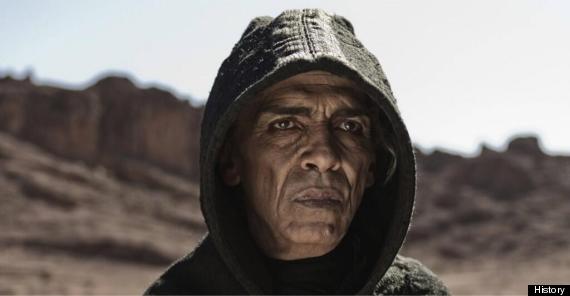
Did the History Channel Intentionally Make Satan Look Like Obama?

I don’t agree with this President, or any other President since Reagan on much of anything.  However, I would not portray them as Satan.  I hope this was not done intentionally.  I don’t see as much resemblance as people are trying to say there is though.  You decide.  Here is the picture, and one of many stories about it below.

SATAN-OBAMA-570


‘The Bible’ creators, History Channel deny show’s Satan resembles President Obama

Published March 18, 2013

FoxNews.com

  • bible obama devil split 660.jpg

    Some viewers said it looked like actor Mehdi Ouzaani (left) was made up to look like President Obama (right) for his role as Satan (center). (Cinemamarocain.net / History / Reuters)

The creators of the miniseries “The Bible” and the network that airs it are denying reports that the character Satan intentionally resembles President Barack Obama.

The couple behind the show, Mark Burnett and Roma Downey, dismissed what they called “foolish” reports that their show’s villain looked like the President.

“This is utter nonsense. The actor who played Satan, Mehdi Ouzaani, is a highly acclaimed Moroccan actor,” they said in a statement sent to FOX 411. “He has previously played parts in several Biblical epics– including Satanic characters long before Barack Obama was elected as our President.”

Downey added: “Both Mark and I have nothing but respect and love our President, who is a fellow Christian. False statements such as these are just designed as a foolish distraction to try and discredit the beauty of the story of The Bible.”

The History Channel set out to put an end to the rumors, saying the show aims to feature “a diverse cast of respected actors.”

“History channel has the highest respect for President Obama,” the network said in a statement. “It’s unfortunate that anyone made this false connection. History’s ‘The Bible’ is meant to enlighten people on its rich stories and deep history.”

After Sunday night’s episode, scores of viewers took to Twitter to note a resemblance between the show’s Satan character and President Barack Obama.

“That guy playing Satan in ‘the Bible’… does resemble the president,” one user wrote. “I would hope it wasn’t intentional, but who knows.”

Another quipped: “Did anyone else notice that Satan spoke like Nacho Libre and looked just like Obama? #thebible”

Read more: http://www.foxnews.com/entertainment/2013/03/18/bible-creators-history-channel-deny-show-satan-resembles-president-obama/?intcmp=features#ixzz2O1MtYthS

1 Comment

Filed under Humor and Observations

Historical Writing – Chronology of Events in Science, Mathematics, and Technology

Another important source I use for writing historical fiction is to know when various advances were made in science, mathematics and technology.  Good not to use radios before they were invented, or cotton looms before they existed.  Even things like light bulbs, electricity and television are harder than you think.  Pardon the small print, but these are useful links by topic.  Found it on StumbleUpon at the following link, not sure the original source document, probably http://www.3rd1000.com.

http://www.stumbleupon.com/su/2Ka4MI/:m-bt.SFj:WJjdm5D./www.3rd1000.com/chronology/chrono.htm/

The Chronology of Events in Science, Mathematics, and Technology


Chronology of Biology and Organic Chemistry
Chronology of Medicine and Medical Technology 
Chronology of General Technology
Chronology of Pure and Applied Mathematics
Chronology of Geology
Chronology of Geography, Meteorology, Paleontology, Science Philosophy and Publishing
Chronology of Agriculture and Food Technology
Chronology of Clothing and Textiles Technology
Chronology of Motor and Engine Technology
Chronology of Transportation Technology
Chronology of Underwater Technology
Chronology of Communication Technology
Chronology of Photography Technology
Chronology of Calculator and Computer Technology
Chronology of Time Measurement Technology
Chronology of Temperature and Pressure Measurement Technology
Chronology of Microscope Technology
Chronology of Low Temperature Technology
Chronology of Rocket and Missile Technology
Chronology of Materials Technology
Chronology of Lighting Technology
Chronology of Classical Mechanics
Chronology of Electromagnetism and Classical Optics 
Chronology of Thermodynamics, Statistical Mechanics, and Random Processes 
Chronology of States of Matter and Phase Transitions 
Chronology of Quantum Mechanics, Molecular, Atomic, Nuclear, and Particle Physics
Chronology of Particle Physics Technology
Chronology of Gravitational Physics and Relativity
Chronology of Black Hole Physics
Chronology of Cosmology
Chronology of Cosmic Microwave Background Astronomy
Chronology of Background Radiation Fields
Chronology of Galaxies, Clusters of Galaxies, and Large Scale Structures
Chronology of Interstellar and Intergalactic Medium
Chronology of White Dwarfs, Neutron Stars, and Supernovae
Chronology of Stellar Astronomy 
Chronology of Solar Astronomy
Chronology of Solar System Astronomy 
Chronology of Astronomical Maps, Catalogs, and Surveys 
Chronology of Telescopes, Observatories, and Observing Technology
Chronology of Artificial Satellites and Space Probes

2 Comments

Filed under Humor and Observations, Writing

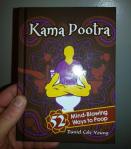
Even More Strange Book Covers

I have done this post a few times and people get a kick out of it, so here goes again.  To see earlier posts, type “strange book covers” into the search box on my home page.  Enjoy!

3 Comments

Filed under Humor and Observations, Writing

Four asteroids buzz Earth in single week

Four asteroids buzz Earth in single week

By Tariq Malik

Published March 11, 2013

Space.com

  • asteroid-2013-et-slooh-camera-1

    The 460-foot (140-meter) asteroid 2013 ET is seen through a Slooh Space Camera telescope in the Canary Islands on March 9, 2013, during its close approach to Earth. The asteroid was just within 600,000 miles of Earth, about 2.5 times the Earth- (Slooh Space Camera)

  • asteroid-2013-et-slooh-camera-2

    The 460-foot (140-meter) asteroid 2013 ET is seen through a Slooh Space Camera telescope in the Canary Islands on March 9, 2013, during its close approach to Earth. The asteroid was just within 600,000 miles of Earth, about 2.5 times the Earth (Slooh Space Camera)

In the last seven days, an asteroid the size of a city block and three smaller space rocks have zoomed safely by Earth, the latest demonstration that we live in a solar system that some scientists have dubbed a “cosmic shooting gallery.”
All four asteroid flybys occurred between March 4 and Sunday, March 10. The asteroids were also all discovered this month, some just days ago.

‘The scary part about this one is that it’s something we didn’t even know about.’

– Patrick Paolucci, president of the online Slooh Space Camera 

The biggest space rock encounter occurred Saturday, when the asteroid 2013 ET passed just inside 600,000 miles of Earth. That asteroid is about 460 feet long and approached within 2.5 times the distance between Earth and the moon.

The scary part about this one, of course, is that it’s something we didn’t even know about,” said Patrick Paolucci, president of the online Slooh Space Camera during a live webcast of 2013 ET’s flyby. The asteroid was first discovered on March 3 by the Catalina Sky Survey at the University of Arizona. [See a video of asteroid 2013 ET]

Also on Saturday, a smaller asteroid called 2013 EC20 (discovered on Thursday, March 7) came even closer to Earth, passing at a range of about 93,000 miles, less than half the distance to the moon. It was about 23 feet across.

Had asteroid 2013 ET actually hit the Earth, instead of zipping safely by, it could have destroyed a large city, Slooh Space Camera engineer Paul Cox said in the webcast. Cox controlled the remotely operated Slooh telescope in the Canary Islands, off the west coast of Africa, as the asteroid zoomed by Earth at a speed of 26,000 mph.

Recent asteroid events
The asteroid flybys came a few weeks after a 55-foot meteor exploded over Russia on Feb. 15 with the force of about 500 kilotons, injuring more than 1,200 people in the city of Chelyabinsk and causing extensive damage to city buildings. Later on Feb. 15, the larger asteroid 2012 DA14 passed within 17,200 miles or Earth —closer than many communications satellites.

The asteroid 2012 DA14 flyby, which was closely tracked by NASA and astronomers, prompted planetary scientists Bruce Betts of the Planetary Society to remind the public that Earth is in a “cosmic shooting gallery” where asteroids are concerned.

“This should be a wakeup call to governments,” Cox said. “We know that the solar system is a busy place. We’re not sitting here on our pale blue dot, on our own in nice safety.”

More space rock flybys
The two other space rocks to buzz Earth in the last week were asteroid 2013 EC and asteroid 2013 EN20, which zipped by the planet on March 4 and March 10, respectively.

The 39-foot long asteroid 2013 EC passed  Earth at about the same distance of the moon —about 238,000 miles. It was discovered on March 2, just two days before its closest approach. The Virtual Telescope Project, an online stargazing website in Italy run by astrophysicist Gianluca Masi, captured a video of the asteroid 2013 EC flyby.

Asteroid 2013 EN20 passed Earth today a range just beyond the moon’s orbit and is about 23 feet across. It was first discovered by astronomers on March 7.

NASA scientists and astronomers around the world routinely scan the sky for large asteroids that could pose an impact threat to Earth. While small asteroids sometimes zip by the planet unseen, about 100 tons of material – mostly grains of dust – fall harmlessly into Earth’s atmosphere each day, NASA scientists have said.

Sightings by amateur astronomers, who can also discover near-Earth asteroids and help refine their orbits with follow-up observations, can be vital in tracking newfound space rocks.

Cox said he used the Slooh telescope to send images of asteroid 2013 ET into the Minor Planet Center operated at the Smithsonian Astrophysics Observatory in Cambridge, Mass., for that purpose.

“Amateur astronomers can have a huge input into the field of astronomy,” Cox said.

Read more: http://www.foxnews.com/science/2013/03/11/four-asteroids-buzz-earth-in-single-week/?intcmp=trending#ixzz2Nqjtwv6e

Leave a comment

Filed under Humor and Observations