Brian Williams Memes

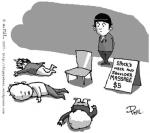
For those of you who don’t know, news anchor Brian Williams claimed that during his visit to the Middle East his helicopter took small arms fire and was then hit with an RPG and had to do an emergency landing.  After US troops who were with him reported to the Stars and Stripes military publication that the incident never happened, the witnesses began to snow ball until it was clear his statement was a lie.

Brian Williams then came on his news cast and said he had “misremembered” not lied.  As a result, I present you the following memes, and some advice – never exaggerate and become a meme…

Leave a comment

Filed under Humor and Observations

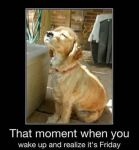
Random Humor for the End of Your Week

Random humor to bring you some chuckles to start off the weekend in a good mood…

1 Comment

Filed under Humor and Observations

Diver gets caught in whale ‘poonado’

Diver gets caught in whale 'poonado'

This Monday, Oct. 6, 2014 photo shows sperm whales swimming in the waters off the the coast of Dana Point, Calif. (AP Photo/Capt. Dave Anderson/ DolphinSafari.com)

As octopuses shoot out ink as a defense mechanism, so sperm whales blast threats with poop. At least that’s the theory explained by a diver to the BBC.

Keri Wilk and three fellow divers were engulfed in what he describes as a “poonado” let loose by one such whale off the coast of Dominica.

Wilk wasn’t using scuba gear, since that can bother whales, the New York Daily News reports. That means he had little protection: “I had poop in my eyes, mouth, wetsuit, everywhere,” he tells the BBC.

“I was soaked in it from head to toe.” He described the cloud of feces as being some “30 or 40 meters in diameter,” or about 100 feet.

The whale was diving, and the animals often poop while diving, Wilk said. But this time, it stopped mid-dive. “And then it started to evacuate its bowels, and didn’t stop for several minutes.” It even seemed to try to wave the feces toward the divers with its tail.

“But, after leaving the cloud, it quickly washed away and didn’t leave a smell on us,” he says. The group got some rather alarming photos of the whole thing.

(Whales, it seems, aren’t so into being watched.)

This article originally appeared on Newser: Diver Caught in Whale ‘Poonado’

Leave a comment

Filed under Animals, Humor and Observations

Unexpected find: Seating plan for Rome’s Colosseum

Unexpected find: Seating plan for Rome's Colosseum

A man dressed as a gladiator enjoys his lunch in front of Rome’s Colosseum, Friday Nov. 7, 2014. (AP Photo/Alessandra Tarantino)

Spectators who once flocked to Rome’s Colosseum could find their seats with the help of red numbers painted over entrance archways. What’s amazing is that hints of that paint still remain, Discovery reports.

A team restoring the Colosseum has spotted remnants of it in Latin numerals carved high up on an entrance gate. “This is an exceptional discovery because we did not expect that some trace of the red paint was still preserved,” Colosseum Director Rossella Rea tells the International Business Times.

The red color, derived from clay minerals and iron oxide, had to be repainted every two or three years—which makes the find that much more unexpected.

It also casts a light on how Romans found their seats when going to watch gladiators, wild beasts, and public executions. “The 50,000 spectators had a ticket that said which numbered gate arch they were supposed to enter,” says Rea.

“Inside the arena, there were other numbers to help people access their seats, which were assigned according to social class.” Admittance was free, but of course the emperor had the best seat in his private box, New Historian reports.

Rome’s social and political elite also sat high up, followed by upper-class businessmen and government officials, ordinary Roman men, and finally women and the poor, who had to sit or stand on wood benches.

Built in 70AD, the Colosseum is undergoing a $33 million restoration to clean off dirt that’s accumulated since the Middle Ages. (After its glory days, researchers say, the Colosseum became a “condo.”)

This article originally appeared on Newser: Surprise Find: Seating Plan for Rome’s Colosseum

Leave a comment

Filed under Humor and Observations

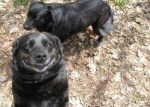
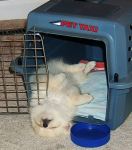
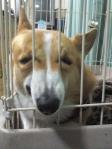
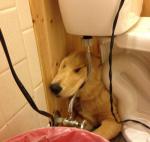
Cute Dogs for Your Monday Blues!

Cute dog pictures to cheer up the start of your week…

Leave a comment

Filed under Animals, Humor and Observations

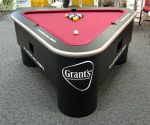
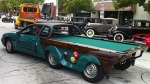
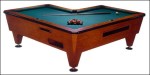
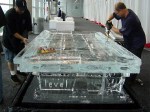
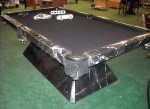
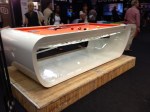
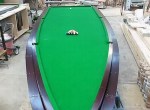
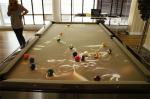
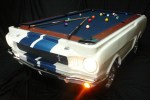
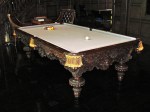
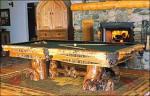
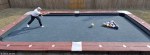
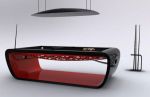
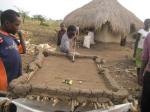
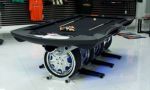
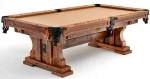
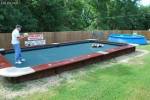
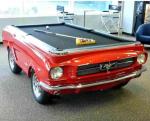
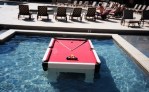
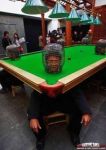
Unusual Pool and Billiard Tables

Would you want to play on these?

Leave a comment

Filed under Humor and Observations

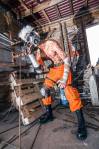
Cosplay Pictures for Your Weekend

Cosplay pictures for your enjoyment…

Leave a comment

Filed under Humor and Observations

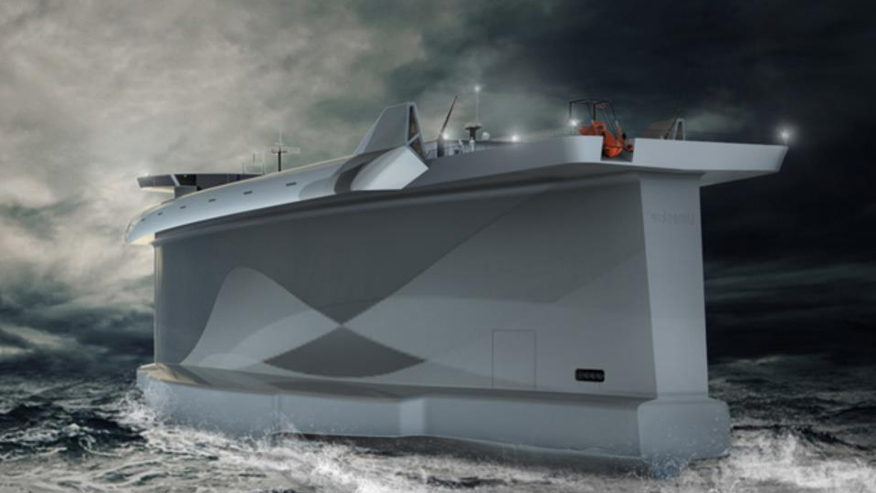
Futuristic cargo vessel looks to revolutionize shipping

  • Vindskip2.jpg

     (Copyright Lade AS)

Norwegian ship designer Lade AS has unveiled a futuristic new design for cargo vessels, which uses the ships’ hulls as a sail.

Inspired by sailboats and aerospace, the ‘Vindskip,’ with its hull shaped like a symmetrical air foil, is designed to use the wind for propulsion.  Lade AS says that the ship’s hull will generate aerodynamic lift, giving a pull in the ship’s direction.

The hybrid merchant vessel will also use a Liquid Natural Gas electric propulsion system, which takes the ship to the necessary speed to generate aerodynamic lift on its hull. Additionally, the Vindskip will employ a specialized computer program to analyze meteorological data and calculate the best sailing route based on available wind energy.

Terje Lade, manager of Lade AS, told FoxNews.com that the Vindskip concept is being tested using wind tunnels and computational fluid dynamics. Testing of a model in a water tank is scheduled to begin in April, he explained in an email. Lade AS plans to eventually license the Vindskip concept to shipping companies, ship consultants, and shipyards.

The Alesund-based company has already been awarded two patents for the hull’s ability to generate aerodynamic lift, which it describes as its Wind Power System.

Lade told FoxNews.com that the Vindskip development project will be finished by the fourth quarter of 2015, and estimates that engineering and construction will take approximately 2 to 3 years. “Our estimate is that it should be sailing in 2019,” he added.

The project has already attracted the attention of at least one shipping industry heavyweight. A spokesman for Wilhelmsen, one of Norway’s largest shipowners, told FoxNews.com that the company’s technical department has been involved in brainstorming related to the Vindskip, although there has been no formal involvement or investment in the project. “Some years back, our technical team developed our concept vessel (Orcelle) — and based on this we were invited into the Vindskip project,” he explained in an email.”Our vision is ‘shaping the maritime industry,’ and we value sharing some ‘futuristic’ thoughts and ideas on how shipping can develop some years ahead.”

LadeVindskip

Lade AS estimates that the Vindskip design could generate fuel savings of 60% and reduce carbon dioxide emissions by 80% compared to a traditional ship. The designer says that the design is particularly well suited to a number of passenger and container vessels.

However, Chris Cheetham, founder of Soter Advisors, a fuel and energy risk management consultancy specializing in the shipping industry, said that a number of factors could impact potential savings. “What these designs will come down to is ‘how much does it really cost?'” he told FoxNews.com. “You have to relate that to the cost of building and charter rates for shipping.”

Cheetham cited the huge pullback in oil prices and the “inventory” of traditional ships that are already scheduled to be built as factors that companies will need to consider before licensing a revolutionary design such as the Vindskip.

Story updated from Jan. 19 with comments from Lade AS, Wilhelmsen, and Soter Advisors.

Follow James Rogers on Twitter @jamesjrogers

Leave a comment

Filed under Humor and Observations

Cute Dogs for Your Monday Blues

Dog pictures to cheer up your Monday…

Leave a comment

Filed under Animals, Humor and Observations

Why do zebras have stripes? It’s not for camouflage

ZebraStripes.jpg

 (REUTERS/Ricardo Moraes)

Zebras’ thick, black stripes may have evolved to help these iconic creatures stay cool in the midday African heat, a new study suggests.

Many African animals sport some stripes on their bodies, but none of these patterns contrast as starkly as the zebra’s. Researchers have long struggled to explain the purpose of the zebra’s unique black-and-white coat. Some have suggested that the stripes may help zebras camouflage themselves and escape from lions and other predators; avoid nasty bites from disease-carrying flies; or control body heat by generating small-scale breezes over the zebra’s body when light and dark stripes heat up at different rates.

Still, few scientists have tested these explanations, and many argue that the stripes serve a complex mix of purposes. [See images of plains zebras across southern Africa]

Now, researchers based at the University of California, Los Angeles (UCLA) have produced one of the most comprehensive zebra stripe studies yet by examining how 29 different environmental variables influence the stripe styles of plains zebras at 16 different sites from south to central Africa.

The scientists found that the definition of stripes along a zebra’s back most closely correlated with temperature and precipitation in a zebra’s environment, and did not correlate with the prevalence of lions or tsetse flies in the region. These findings suggest that torso stripes may do more to help zebras regulate their body temperature than to avoid predators and tsetse flies, the team reported Jan. 13 in the journal Royal Society Open Science.

“This wall we kept hitting up against was, ‘Well, why do zebra have to have stripes for predation? Other animals have predators, and they don’t have stripes,'” said study co-author Ren Larison, a researcher in the Department of Ecology and Evolutionary Biology at UCLA. “And other animals get bitten by flies, and they don’t have stripes, either.”

Other animals also need to regulate body temperature, or thermoregulate, Larison pointed out, but zebras may especially benefit from an extra cooling system because they digest food much less efficiently than other grazers in Africa. As such, zebras need to spend longer periods of time out in the heat of the midday sun, eating more food.

“Zebra have a need to keep foraging throughout the day, which keeps them out in the open more of the time than other animals,” Larison told Live Science. “An additional cooling mechanism could be very useful under these circumstances.”

The team found that the plains zebras with the most-defined torso stripes generally lived in the Northern, equatorial region of their range, whereas those with less-defined torso stripes were more common in the Southern, cooler regions of the range — a finding that supports the thermoregulation explanation.

Still, the researchers have not experimentally tested the theory that black and white stripes may generate small-scale breezes over a zebra’s body, and some researchers don’t think stripes can actually create this effect.

“I don’t think that you would want to have a lot of black hairs along the top of your back if you wanted to try to keep cool,” said Tim Caro, a professor of wildlife biology at the University of California, Davis, who studies zebra stripes but was not involved in the new study. “It’s kind of the last color that you would want.”

Caro said regions with warmer, wetter climates are particularly susceptible to several species of disease-carrying flies other than the tsetse fliesthat the team considered in their study, and that the relationship the researchers found may actually be a function of fly avoidance, not thermoregulation. Flies seem to struggle to recognize striped surfaces, but scientists have not quite figured out why this is, Caro told Live Science.

The study co-authors emphasized that their findings require follow-up research, and that a zebra’s stripes likely serve multiple purposes. For example, stripes on a zebra’s back may help thermoregulate, whereas stripes on the animal’s legs — where zebras are more likely to get bitten by flies — may help them avoid disease-carrying flies other than tsetses, Larison said.

“Really, the striping is kind of extraordinary, so you need something extraordinary to explain it,” Larison said.

The researchers plan to test their thermoregulation hypothesis, either by studying the behavior of air currents over zebra pelts, or by implanting wild zebras with temperature sensors, if they are granted permission to do so, Larison said.

Leave a comment

Filed under Animals