Scientists Try 3-D Printer To Build Human Heart

Scientists Try 3-D Printer To Build Human Heart

 | by  DYLAN LOVAN

Posted: 04/10/2014 8:52 am EDT Updated: 04/10/2014 12:59 pm EDT 
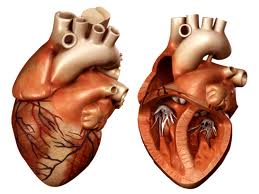
In this March 6, 2014 photo, a 3-D printer was used to construct these tiny two-ventricle cylinders at the University of Louisville, in Louisville, Ky. Researchers are working on a project to build a human heart using a 3-D printer and human cells. (AP Photo/Dylan Lovan) | ASSOCIATED PRESS
untitled (5)

 LOUISVILLE, Ky. (AP) — It may sound far-fetched, but scientists are attempting to build a human heart with a 3-D printer.

Ultimately, the goal is to create a new heart for a patient with their own cells that could be transplanted. It is an ambitious project to first, make a heart and then get it to work in a patient, and it could be years — perhaps decades — before a 3-D printed heart would ever be put in a person.

The technology, though, is not all that futuristic: Researchers have already used 3-D printers to make splints, valves and even a human ear.

So far, the University of Louisville team has printed human heart valves and small veins with cells, and they can construct some other parts with other methods, said Stuart Williams, a cell biologist leading the project. They have also successfully tested the tiny blood vessels in mice and other small animals, he said.

Williams believes they can print parts and assemble an entire heart in three to five years.

The finished product would be called the “bioficial heart” — a blend of natural and artificial.

The biggest challenge is to get the cells to work together as they do in a normal heart, said Williams, who heads the project at the Cardiovascular Innovation Institute, a partnership between the university and Jewish Hospital in Louisville.

AOL AdAn organ built from a patient’s cells could solve the rejection problem some patients have with donor organs or an artificial heart, and it could eliminate the need for anti-rejection drugs, Williams said.

If everything goes according to plan, Williams said the heart might be tested in humans in less than a decade. The first patients would most likely be those with failing hearts who are not candidates for artificial hearts, including children whose chests are too small to for an artificial heart.

Hospitals in Louisville have a history of artificial heart achievements. The second successful U.S. surgery of an artificial heart, the Jarvik 7, was implanted in Louisville in the mid-1980s. Doctors from the University of Louisville implanted the first self-contained artificial heart, the AbioCor, in 2001. That patient, Robert L. Tools, lived for 151 days with the titanium and plastic pump.

Williams said the heart he envisions would be built from cells taken from the patient’s fat.

But plenty of difficulties remain, including understanding how to keep manufactured tissue alive after it is printed.

“With complex organs such as the kidney and heart, a major challenge is being able to provide the structure with enough oxygen to survive until it can integrate with the body,” said Dr. Anthony Atala, whose team at Wake Forest University is using 3-D printers to attempt to make a human kidney.

The 3-D printing approach is not the only strategy researchers are investigating to build a heart out of a patient’s own cells. Elsewhere, scientists are exploring the idea of putting the cells into a mold. In experiments, scientists have made rodent hearts that beat in the laboratory. Some simple body parts made using this method have already been implanted in people, including bladders and windpipes.

The 3-D printer works in much the same way an inkjet printer does, with a needle that squirts material in a predetermined pattern.

The cells would be purified in a machine, and then printing would begin in sections, using a computer model to build the heart layer by layer. Williams’ printer uses a mixture of a gel and living cells to gradually build the shape. Eventually, the cells would grow together to form the tissue.

The technology has already helped in other areas of medicine, including creating sure-fitting prosthetics and a splint that was printed to keep a sick child’s airway open. Doctors at Cornell University used a 3-D printer last year to create an ear with living cells.

“We’re experiencing an exponential explosion with the technology,” said Michael Golway, president of Louisville-based Advanced Solutions Inc., which built a printer being used by Williams’ team.

___

Follow on Lovan on Twitter: @dylanlovan

Leave a comment

Filed under Humor and Observations

Young Blood Injected Into Old Reverses Aging

Young blood reverses aging in mice

AP_miceblood.jpg

This combination of images shows 3-D reconstructions of brain blood vessels in, from left, a young mouse, an old mouse, and an old mouse who was exposed to the blood of a young mouse. (AP Photo/Lida Katsimpardi)


If Mickey Mouse is feeling his age at 86, scientists may have found just the tonic: the blood of younger mice.

Older mice got stronger, exercised longer and performed better mentally after they were injected with blood from young mice, or even just with a substance that’s more abundant in younger blood.

Someday, if more research goes well, this may lead to a way to treat some infirmities of old age in people. In the meantime, scientists have a warning for do-it-yourselfers.

“Don’t try this at home,” said Saul Villeda of the University of California, San Francisco, an author of one of three papers published online Sunday by the journals Nature Medicine and Science.

He worked with mice that were roughly the equivalent of people in their 20s and 60s. Researchers repeatedly injected the older mice with blood from either the younger animals or other aged mice. Those that got the young blood did better in learning and memory tests than the mice given the older blood. For example, they performed better at recalling where to find a submerged platform in a maze.

Villeda said the researchers are trying to figure out what’s in the young blood that made the difference.

The two other papers, from Harvard University, focused on a substance that is more abundant in the blood of younger mice than old. That protein, called GDF11, is also found in human blood and its concentration also appears to decline with age, said Amy Wagers, an author on both papers.

On average, aging mice that got injections of it showed greater grip strength and more endurance on a treadmill than untreated mice.

The Harvard scientists also found that exposing older mice to the blood of younger mice produced more blood vessels and blood flow in the brain. Injections of GDF11 had a similar effect. Lee Rubin, a study author, said those results suggest further work may lead to a way to treat age-related mental decline and perhaps dementia in people.

Wagers and Villeda said it’s not clear whether GDF11 explains the results of Villeda’s study. Wagers said she suspects other substances in blood can also help aging animals.

Leave a comment

Filed under Animals, Humor and Observations

Cute Dogs for Your Monday Blues

Cute dog pictures to start off the week nicely!

Leave a comment

Filed under Animals

Awesome Proposal On Stage

This is my son Alex proposing to his girlfriend Suzanna on stage.  She is the Choir Director at a High School, and this occurred right after intermission at her concert.  She had no idea.  My son is a former professional actor/singer/model, but they are moving to California for his fellowship at UCLA where he is completing his PhD in Molecular Biology.  I hope at least one of the links I have shared below allow you to see this.  I think one link is the lead up, and the second is the song/proposal.

alex


1 Comment

Filed under Humor and Observations, Uncategorized

10 Painful Rejection Letters To Famous People Proving You Should NEVER Give Up Your Dreams


People Sharing

The sting of rejection is bitter, but it’s a necessary step to triumph. Even the best have been told that they aren’t good enough.

1. Madonna

undefined

perezhilton.comWhen the Queen of Pop finally signed with Sire Records in 1982, her debut album sold more than 10 million copies worldwide. She used this early rejection as motivation, as this respected producer didn’t believe she was “ready yet.” She’s now the best selling female artist of all time.

2. Tim Burton

undefined

lettersofnote.comThis Disney editor didn’t consider Burton’s first children’s book, “The Giant Zlig”, marketable enough. He took the feedback to heart, feverishly honed his skills and was hired as an animator’s apprentice at the company just a few years later. He went on to become involved in films like “Edward Scissorhands”, and “The Nightmare Before Christmas”.

3. Andy Warhol

undefined

papermag.comIn 1956, Warhol gave one of his pieces to the Museum of Modern Art – for free – but was quickly rejected. Obviously, his luck turned around pretty fast. On top of having his own museum in Pittsburgh, the very museum that rejected him now features 168 of his original works.

4. U2

undefined

mentalfloss.comWhen U2 debuted in 1979, RSO Records was thoroughly unimpressed. Within months, the band signed with Island Records and released their first international single, “11 O’Clock Tick Tock.” They went on to sell 150 million records, win 22 Grammy Awards (most of any band ever), and performed in the highest grossing concert tour in history .

5. Kurt Vonnegut

undefined

lettersofnote.comThree writing samples sent to The Atlantic Monthly in 1949 were deemed commendable, but “not compelling enough for final acceptance.” Rather than giving up, Kurt framed the letter, which now hangs in his Memorial Library in Indianapolis.

His most famous work, Slaughterhouse-Five , is rumored to have developed out of one of the samples.

6. Sylvia Plath

undefined

openculture.comAlthough this wasn’t a complete rejection, the New Yorker requested the entire first half of “Amnesiac” to be cut. It’s hard to believe that the Pulitzer Prize-winning poet would have her work torn apart, but it shows how even the greatest writers start from humble beginnings.

Share On Facebook

7. Gertrude Stein

undefined

mentalfloss.comIn possibly the snarkiest letter of all time, Arthur C. Fifield turned down Gertrude Stein’s manuscript for “The Making of Americans” without reading all of it, then mocked her. The celebrated novelist and poet later mentored the likes of Ernest Hemingway.

8. Jim Lee

undefined

instagram.comToday, Jim is the co-publisher of DC comics and one of the most famous figures in the comic book industry. But in this letter from Marvel (one of many rejection letters he’d received throughout his life), he was told to reapply “when he had learned to draw hands.”

9. Stieg Larsson

undefined

theguardian.comThis Swedish letter the man behind the award-winning “Millennium” trilogy told him he wasn’t good enough to be a journalist. Although he didn’t live long enough to experience his own success, those in charge at the JCCJ in Stockholm must be kicking themselves.

10. Edgar Rice Burroughs

undefined

erbzine.comEdgar’s claim to fame, “Tarzan of the Apes”, has spawned 25 sequels and countless reproductions. But before everyone knew about the famous ape man, his story was unceremoniously rejected from a magazine in 1912. Luckily, a wiser publication accepted his piece later that year, launching a legacy that is now over a hundred year old.

11. Others didn’t save their letters, but they’ll never forget the words that fueled their success…

Walt Disney – Fired from the Kansas City Star in 1919 because he “lacked imagination and had no good ideas.”

JK Rowling – Rejected by dozens, including HarperCollins, when a small publisher in London took a chance on Harry Potter.

Oprah Winfrey – Fired as an evening news reporter of Baltimore’s WJZ-TV because she couldn’t separate her emotions from her stories.

George Orwell – A publisher turned down his legendary novel, Animal Farm, with the words “It is impossible to sell animal stories in the USA”.

Jerry Seinfeld – Didn’t find out he was cut from a minor role on a sitcom until he read the script and discovered his part missing.

Elvis Presley – After a performance in Nashville early in his career, he was told by a manager that he was better off driving trucks in Memphis (his previous job).

Steve Jobs – Fired from the company he started, Apple, but was desperately brought back in 1997 to save it. Apple is now the most valuable company in the world.

Stephen King – His first book, Carrie, was rejected thirty times. He nearly threw the book out when his wife saved it from the trash and encouraged him to keep trying.

Marilyn Monroe – At the start of her storied modeling and acting career, she was told she should consider becoming a secretary.

Abraham Lincoln – Demoted from Captain to Private during war, failed as a businessman, and lost several times as a political candidate before becoming President.

I could show you more, but the list would never end because no one has ever won without first experiencing many failures and rejections.  We can choose to learn from these lessons, or let them destroy our spirit. The ones who ultimately succeed are those who never, ever stop trying. Share this list and inspire others to keep chasing their dreams!

Satisfy your curiosity by checking out more lists on Distractify! See below.

Leave a comment

Filed under Humor and Observations, Writing

Modern humans no brainier than neanderthals, study finds

Modern humans no brainier than neanderthals, study finds

Modern humans no brainier than neanderthals, study finds

This Jan. 8, 2003 file photo shows a reconstructed Neanderthal skeleton, right, and a modern human version of a skeleton, left, on display at the Museum of Natural History.AP PHOTO/FRANK FRANKLIN II, FILE

It’s a well-ingrained stereotype: That Neanderthals grunted their way through life as less than brilliant “club-wielding brutes.” A new study published in Plos One says that just isn’t so.

Scientists have long theorized that early modern humans had a cognitive advantage (which translated, they posited, into a better diet, better weapons, and better communication) that allowed them to survive when Neanderthals did not some 40,000 years ago.

Wil Roebroeks at the Netherlands’ Leiden University was one of two researchers who dug through archaeological records looking for research to support the idea of a dimwitted demise, but instead found “there is no archaeology to back them up.”

Adds Dr. Paola Villa of the University of Colorado Museum of Natural History, “The evidence for cognitive inferiority is simply not there.” In terms of being able to communicate and work as a team, they point to a sinkhole in France where Neanderthals are believed to have steered hundreds of bison to their deaths; food remains at cooking sites suggest a diverse diet that included pistachios and wild olives, a press release notes.

Villa says part of the issue is that Neanderthals have long been compared to humans who came after them (in the Upper Paleolithic period) rather than those who were their Middle Paleolithic contemporaries.

Quips Villa, “It would be like comparing the performance of Model T Fords to the performance of a modern-day Ferrari and conclude that Henry Ford was cognitively inferior to Enzo Ferrari.” So why did they die out? Roebroeks and Villa think the answer is a complex one, but note that interbreeding with modern humans may have produced infertile male offspring, the Guardian reports.

(And there’s more evidence that Neanderthals weren’t the brutes their name suggests.)

3 Comments

Filed under Humor and Observations

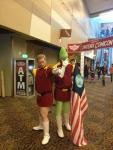
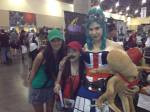
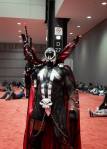
Cosplay Pictures for Your Weekend Enjoyment!

More cool cosplay pictures…

Leave a comment

Filed under Humor and Observations

Cold War images spill new secrets: Lost cities

Cold War images spill new secrets: Lost cities

coronoa atlas.jpg

An image from the website.CORONA.CAST.UARK.EDU

The Middle East is home to 4,500 archaeological sites, or so we thought. An in-depth review of Cold War-era photos taken by spy satellites has pulled back the veil on as many as 10,000 more lost cities, roads, and other ruins in the region.

As Gizmodo reports, CORONA served as the code name for America’s first use of photographic spy satellites, and was in operation from 1960 to 1972.

Its name lives on in the new CORONA Atlas of the Middle East, which made its debut Thursday at the annual gathering of the Society for American Archaeology and revealed “completely unknown” sites via some of the 188,000 declassified photos taken during the mission’s final five years, reports National Geographic.

Archaeologist Jesse Casana of the University of Arkansas describes some of the sites as “gigantic,” with two sprawling over more than 123 acres; Casana suspects the largest, which appear to include aged walls and citadels, were Bronze Age cities.

And as he explains, the photos’ age matters. Though current satellites produce images superior to these grainy decades-old ones, “we can’t see a site that someone has covered up with a building,” and the fact that they were taken before cities like Iraq’s Mosul and Jordan’s Amman swelled makes them invaluable.

The CORONA site explains that the mission’s satellites snapped images “of most of the Earth’s surface” (images whose film strips were, in a great detail noted byNational Geographic, sent back to Earth via parachute-topped buckets) and archaeologists plan to also review areas like Africa and China.

Leave a comment

Filed under Humor and Observations

Disney and the A-113 Secret Conspiracy…

Do you know what A-113 is?  Then you might be missing out on something important, or maybe not…  See for yourself:

Disney Has Been Hiding Something From You In Plain Sight. I Can’t Believe I Didn’t Notice It Before

 Does the code “A113″ ring a bell? It probably doesn’t, but odds are good that you’ve seen several of these movies where it was used for some small detail. Pixar has used the number in many of their films, but what’s the meaning behind it? Let’s take a look:


Does this code look familiar? It’s the license plate of Andy’s mom in Toy Story, but that’s not the only Pixar movie you’ve seen it in.

hidden-disney-secret-01

There was also that box in A Bug’s Life…

hidden-disney-secret-02

The diver’s camera from Finding Nemo…

hidden-disney-secret-03

The coordinates of Mr. Incredible’s cell in The Incredibles…

hidden-disney-secret-04

On a train and Mater’s license plate in Cars…

hidden-disney-secret-05

hidden-disney-secret-06

On a tag in Ratatouille…

hidden-disney-secret-07

It was the code for the Abandon Earth protocol in WALL-E…

hidden-disney-secret-08

The courtroom number in Up…

hidden-disney-secret-09

On Siddley’s tail, a screen, and (once again) on Mater’s license plate in Cars 2…

hidden-disney-secret-10

hidden-disney-secret-11

 hidden-disney-secret-12

Engraved in Roman numerals above a doorway in Brave…

hidden-disney-secret-13

On this door in Monster’s University…

hidden-disney-secret-14

And it’s even in non-Pixar films, such as Lilo & Stitch…

hidden-disney-secret-15

The Iron Giant…

hidden-disney-secret-16

The Princess and the Frog…

hidden-disney-secret-17

The Brave Little Toaster…

hidden-disney-secret-18

As well as TV shows like American Dad…

hidden-disney-secret-23

The Simpsons…

hidden-disney-secret-19

And in live action movies, like The Avengers.

hidden-disney-secret-20

So what’s the secret?

hidden-disney-secret-21

A113 is a classroom number at the California Institute of Arts, where many talented animators studied. First-year graphic designers and animators studied here before they went on to work for Disney and Pixar, and the mark that classroom has made was left on many of our favorite films and TV shows.

hidden-disney-secret-22

Now you’ll never miss it again when a movie uses “A113.” What kind of secret mark would you leave if it could be seen by millions?


1 Comment

Filed under Humor and Observations

Star Wars Episode VII: Disney estimates a $200 Million Budget

Star Wars Episode VII: Disney estimates a $200 Million Budget

By Reid Joneson  April 23rd, 2014 
Star Wars: Episode VII

In an interview with Bloomberg Television, Disney Chairman Alan Horn spoke about the progress on the development of the budget for the film.

We actually don’t even have the completed budget yet, but it will be in that range. These large, tentpole kinds of movies, on the expensive side, are in the neighborhood of $175-200 million, that kind of a number — some are more, some are less. We need to give the audience, essentially, a full meal in return for their affection and devotion and love for these properties.

$200 Million is a very big budget, one that is higher than the average budget for Disney’s current biggest source of blockbuster income: Marvel Studios. Disney obviously has high faith in the success of this film, and feels safe in using this kind of money on the franchise.

Granted, this is Star Wars which can guarantee even the biggest disaster to be a success, however Disney has made this kind of gamble before with John Carter and still come out on the short end of the stick.

Last week, it was confirmed that parts and scenes were already underway with filming and initial production.

Star Wars: Episode VII will hit theaters next year on December 18th, 2015.

2 Comments

Filed under Humor and Observations