Tag Archives: history

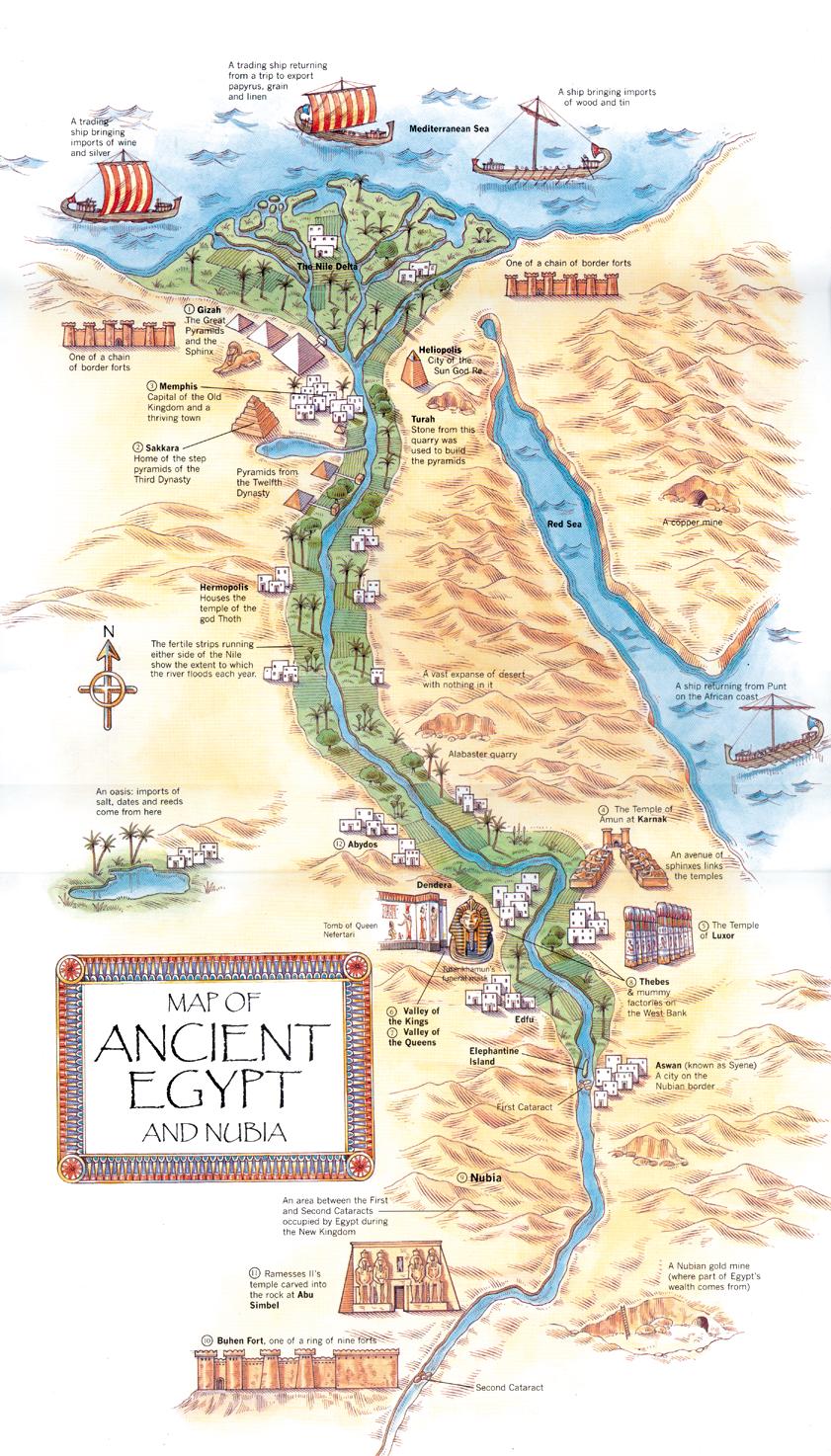
Map of Ancient Egypt

AncientEgyptMap

1 Comment

March 30, 2013 · 9:50 am

Rome – An Ancient Super City

Rome – Ancient Super City

Rome

2 Comments

Filed under Humor and Observations

Top 10 Snipers in History

Top 10 Snipers in History

by , November 13, 2009
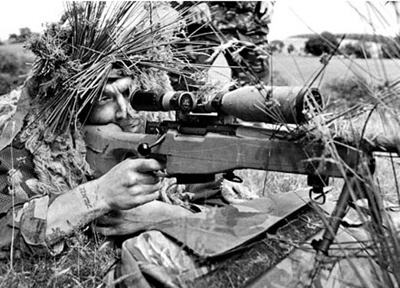
‘It was night and low visibility, but I saw a guy with an AK-47 lit up by the porch light in a doorway about 400 meters away. I watched him through the sights. He looked like just another Iraqi. I hit him low in the stomach and dropped him.’ – Specialist James Wilks, 25, from Fort Worth, Texas. Concealment is key to becoming a great sniper. Highly trained marksmen who can shoot accurately from incredible distances with specialized training in high-precision rifles. In addition, they are trained in camouflage, field craft, infiltration, reconnaissance and observation, making them perhaps the most feared military presence in a war. Below is my list of top ten snipers in history and some of the greatest shots ever fired.10
Thomas Plunkett
died in 1851

Riflemen

Was an Irish soldier in the British 95th Rifles. What makes him on of the greats is that he shot a very impressive French general, Auguste-Marie-François Colbert.

During the battle at Cacabelos during Monroes retreat in 1809, Plunkett, using a Baker Rifle, shot the French general at a range of about 600 meters. Giving the incredible inaccuracy of rifles in the early 19th century, this was either a very impressive feat, or one hell of a fluke. Well Plunkett not wanting his army buddies to think he was a bit lucky decided to take the shot again before returning to his line. So he reloaded his gun and took aim once again this time at the trumpet major who had come to the generals aid. When this shot also hit its intended target, proving that Plunkett is just one badass marksman, he looked back to his line to see the impressed faces of the others in the 95th Rifles.

Just for comparison the British soldiers were all armed with ‘Brown Bess muskets’ and trained to shoot into a body of men at 50 meters. Plunkett did 12 times that distance. Twice.9

Sgt Grace
4th Georgia Infantry

Sedgwick-General

The date was May 9th 1864, when Sgt Grace, a Confederate sniper, achieved what was considered to be an incredible shot at the time, and what is definitely the most ironic demise of a target in history. It was during the battle of Spotsylvania when Grace took aim with his British Whitworth Rifle. His target was General John Sedgwick (pictured above) and the distance was 1,000 yards. An extremely long distance for the time. During the beginning of the skirmish, the confederate sharpshooters were causing Sedgwick’s men to duck for cover. Sedgwick refused to duck and was quoted saying “What? Men dodging this way for single bullets? What will you do when they open fire along the whole line? I am ashamed of you. They couldn’t hit Elephants at this distance.” His men persisted in taking cover. He Repeated “They couldn’t hit elephants at this distance” Seconds Later Grace’s shot hits Sedgwick just under his left eye.

I swear you couldn’t write it. Sedgwick was the highest ranking Union casualty in the civil war and upon hearing his death Lt. Gen. Ulysses S. Grant repeatedly asked “Is he really dead”.

8

Charles ‘Chuck’ Mawhinney
1949-
8-Mawhinney-625X450

103 Confirmed Kills

Was an avid hunter as a kid and joined the Marines in 1967. He served in the U.S. Marine Corps during Vietnam and holds the record for number of confirmed kills for Marine snipers, exceeding that of legendary Marine sniper Carlos Hathcock. In just 16 months he killed 103 enemies and another 216 kills were listed as probable’s by the military, only because it was too risky at the time to search the bodies for documents. When he left the Marines he told no-one of his of his role during the conflict and only a few fellow Marines knew of his assignments. It was nearly 20 years before somebody wrote a book detailing his amazing skills as a sniper. Mawhinney came out of anonymity because of this and became a lecturer in sniper schools. He was once quoted saying “it was the ultimate hunting trip: a man hunting another man who was hunting me. Don’t talk to me about hunting lions or elephants; they don’t fight back with rifles and scopes. I just loved it. I ate it up.”

A routinely deadly shot from distances between 300 – 800 yards, Mawhinney had confirmed kills of over 1000 yards, making him one of the greatest snipers of the Vietnam war.

7

Rob Furlong

925928

A former corporal of the Canadian Forces, he holds the record for the longest confirmed sniper kill in history at 1.51 miles or 2,430 metres. That’s the length of about 26 football pitches.

This amazing feat occurred in 2002, when he was involved in Operation Anaconda. His Sniper Team consisted of 2 Corporals and 3 Master Corporals. When a three man Al-Qaeda weapons team moved into a mountainside position he took aim. Furlong was armed with a .50-caliber McMillan Brothers Tac-50 Rifle and loaded with A-MAX very low drag bullets. He fired and missed. His second shot hit the enemies knapsack on his back. He had already fired his third shot by the time the second hit, but now the enemy knew he was under attack. The airtime for each bullet was about 3 seconds due to the immense distance, enough time for an enemy to take cover. However the dumbfounded militant realised what was happening just in time to take the third shot in the chest.

6

Vasily Zaytsev
March 23, 1915 – December 15, 1991

6-Zaytsev-625X450

242 Confirmed Kills

Zaytsev is probably the best known Sniper in history thanks to the movie ‘Enemy At The Gates’. It is a great film and I wish I could say it was all true. However the truth only goes as far as the battle of Stalingrad. There was no Nazi Counter-Sniper Specialist in real life. Well not to the extent of the film. Here’s the truth. Zaytsev was born in Yeleninskoye and grew up in the Ural Mountains. His surname means ‘hare‘. Before Stalingrad, he served as a clerk in the Soviet Navy But after reading about the conflict in the city he volunteered for the front line. he served in the 1047th Rifle Regiment. Zaytsev ran a sniper school in the Metiz factory. The cadets he trained were called Zaichata, meaning ‘Leverets’ (Baby Hares). This was the start of the sniper movement in the 62nd army. It is estimated that the snipers he trained killed more than 3,000 enemy soldiers

Zaytsev himself made 242 confirmed kills between October 1942 and January 1943, but the real number is probably closer to 500. I know I said there was no counter-sniper, but there was Erwin Kónig. Was alleged to be a highly skilled Wehrmacht sniper. Zaytsev claimed in his memoirs that the duel took place over a period of three days in the ruins of Stalingrad. Details of what actually happened are sketchy, but by the end of the three day period Zaytsev had killed the sniper and claimed his scope to be his most prized trophy. For him to make this his most prized trophy means that this person he killed must have been almost as good as Zaytsev himself.

5
Lyudmila Pavlichenko
July 12, 1916 – October 10, 1974

Lyudmyla M Pavlichenko

309 Confirmed Kills

In June 1941, Pavlichenko was 24 and Nazi Germany were invading the Soviet Union. She was among the first volunteers and asked to join the infantry. she was assigned to the Red Armies 25th infantry Division. From there she became one of 2000 female snipers of the soviet.

Her first 2 kills were made near Belyayevka using a Mosin-Nagant bolt action rifle with a P.E. 4-power scope. The first action she saw was during the conflict in Odessa. She was there for 2 and a half months and notched 187 kills. When they were forced to relocate, she spent the next 8 months fighting in Sevastopol on the Crimean Peninsula. There she recorded 257 kills and for this feat she was cited by the Southern Army Council. Pavlichenkos’ total confirmed kills during WW2 was 309. 36 of those were enemy snipers.

4

Corporal Francis Pegahmagabow
March 9, 1891 – August 5, 1952

Francis Pegahmagabow

378 Confirmed kills
300+ Captures

Three times awarded the military medal and twice seriously wounded, he was an expert marksman and scout, credited with 378 German kills and capturing 300+ more. He was an Ojibwa warrior with the Canadians in battles like those at mount sorrel. As if killing nearly 400 Germans wasn’t enough, he was also awarded medals for running messages through very heavy enemy fire, for directing a crucial relief effort when his commanding officer was incapacitated and for running through enemy fire to get more ammo when his unit was running low.

Though a hero among his fellow soldier, he was virtually forgotten once he returned home to Canada. Regardless he was one of the most affective snipers of world war 1.

3

Adelbert F. Waldron
March 14, 1933 – October 18, 1995

Sniper2Bmpxi5

109 confirmed kills

He holds the record for the highest number of confirmed kills for any American sniper in history. However it is not just his impressive kill record that makes him one of the best, but also his incredible accuracy.

This excerpt from ‘Inside the Crosshairs: Snipers in Vietnam’ by Col. Michael Lee Lanning, describes just what I’m talking about:

“One afternoon he was riding along the Mekong River on a Tango boat when an enemy sniper on shore pecked away at the boat. While everyone else on board strained to find the antagonist, who was firing from the shoreline over 900 meters away, Sergeant Waldron took up his sniper rifle and picked off the Vietcong out of the top of a coconut tree with one shot (this from a moving platform). Such was the capability of our best sniper.” Nuff Said.

If there was a scale of difficulty for shots like these, it would be next to impossible to beat. well lets try to do that anyway.

Here’s ‘white feather’….

2

Carlos Norman Hathcock II
May 20, 1942 – February 23, 1999

1133204291 334274Af7C

Nicknamed ‘Lông Trung du Kich’ (‘White Feather Sniper’)

93 Confirmed kills

Hathcock has one of the most impressive mission records of any sniper in the Marine corps. Lets forget about the dozens of shooting championships he won, during the Vietnam war he amassed 93 confirmed kills. The Vietnam army put a $30,000 bounty on his life for killing so many of their men. Rewards put on U.S. snipers by the NVA (North Vietnamese Army) typically amounted to….say $8.

It was Hathcock who fired the most famous shot in sniper history. He fired a round, over a very long distance, which went through the scope of an enemy sniper, hit him in the eye, and killed him. Hathcock and Roland Burke his spotter were stalking the enemy sniper, (which had already killed several Marines) which they believed was sent to kill him specifically. When Hathcock saw a flash of light reflecting off the enemies scope he fired at it in a split second pulling off one of the most precise shots in history. Hathcock reasoned that the only way that this was possible, would have been if both snipers were aiming at each others scopes at the same time, and he fired first. However, although the distance was never confirmed, Hathcock knew that because of the flight time, it would have been easy for both snipers to kill each other. The white feather was synonymous with Hathcock (He kept one in his hat) and he removed it only once for a mission. Keep in mind that he volunteered for this mission, but he had to crawl over 1500 yards of enemy territory to shoot an NVA commanding general. Information wasn’t sent until he was on-route. (He volunteered for a mission he knew nothing about) It took 4 days and 3 nights without sleep of inch-by-inch crawling. One enemy soldier almost stepped on him as he laid camouflaged in a meadow. At another point he was nearly bitten by a viper, he didn’t flinch. He finally got into position and waited for the general. When he arrived Hathcock was ready. He fired one round and hit the general through the chest killing him. The soldiers started a search for the sniper and Hathcock had to crawl back to avoid detection. They never caught him. Nerves of steel.

1

Simo Häyhä
December 17, 1905 – April 1, 2002

Simo Hayha-S585X360-11707

Nicknamed ‘The White Death’

705 confirmed kills (505 with rifle, 200 with submachine gun)

Was a Finnish soldier who, using an iron sighted bolt action rifle, amassed the highest recorded confirmed kills as a sniper in any war…ever!!

Häyhä was born in the municipality of Rautjärvi near the present-day border of Finland and Russia, and started his military service in 1925. His duties as a sniper began during the ‘winter war’ (1939-1940) between Russia and Finland. During the conflict Häyhä endured freezing temperatures up to -40 degrees Celsius. In less than 100 days he was credited with 505 confirmed kills, 542 if including unconfirmed kills, however the unofficial frontline figures from the battlefield places the number of sniper kills at over 800. Besides his sniper kills he was also credited with 200 from a Suomi KP/31 Submachine gun, topping off his total confirmed kills at 705.

How Häyhä did all this was amazing. He was basically on his own all day, in the snow, shooting Russians, for 3 months straight. Of course when the Russians caught wind that a shit load of soldiers were being killed, they thought ‘well this is war, there’s bound to be casualties’. But when the generals were told that it was one man with a rifle they decided to take a bit of action. first they sent in a counter-sniper. When his body was returned they decided to send in a team of counter-snipers. When they didn’t come back at all they sent in a whole goddamn battalion. They took casualties and couldn’t find him. Eventually they ordered an artillery strike, but to no avail. You see Häyhä was clever, and this was his neck of the woods. He dressed completely in white camouflage. He used a smaller rifle to suit his smaller frame (being 5ft3) increasing his accuracy. he used an iron sight to present the smallest possible target (a scoped sight would require the sniper to raise his head for sighting). He compacted the snow in front of the barrel, so as not to disturb it when he shot thus revealing his position. He also kept snow in his mouth so his breath did not condense and reveal where his was. Eventually however his was shot in the jaw by a stray bullet during combat on March 6 1940. He was picked up by his own soldiers who said half his head was missing. He didn’t die however and regained consciousness on the 13th, the day peace was declared.

Once again total kills…. 505 sniper + 200 submachine = 705 total Confirmed Kills…all in less that 100 days.

2 Comments

Filed under Humor and Observations, Uncategorized

1,400 Year Old Monastery on Atlantic Island

Skellig Michael – Mysterious Monastery in the Atlantic

Saturday, March 26, 2011

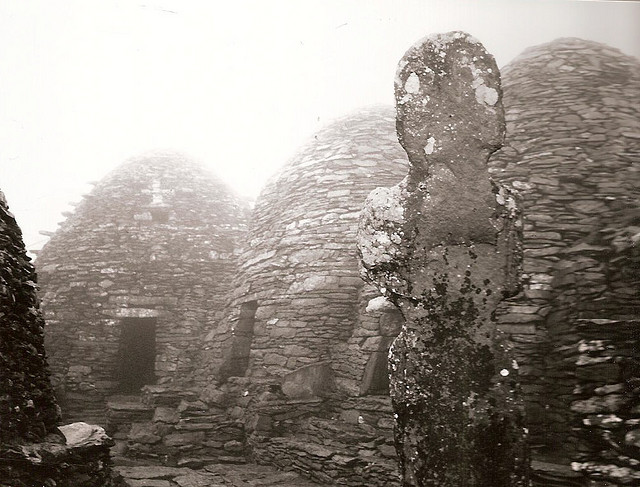
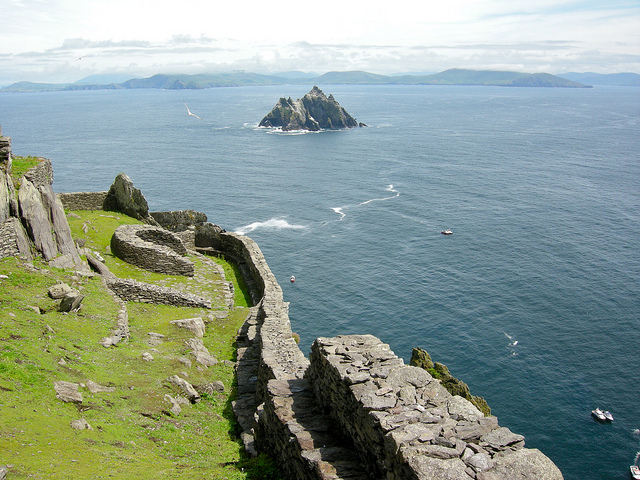
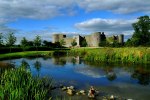
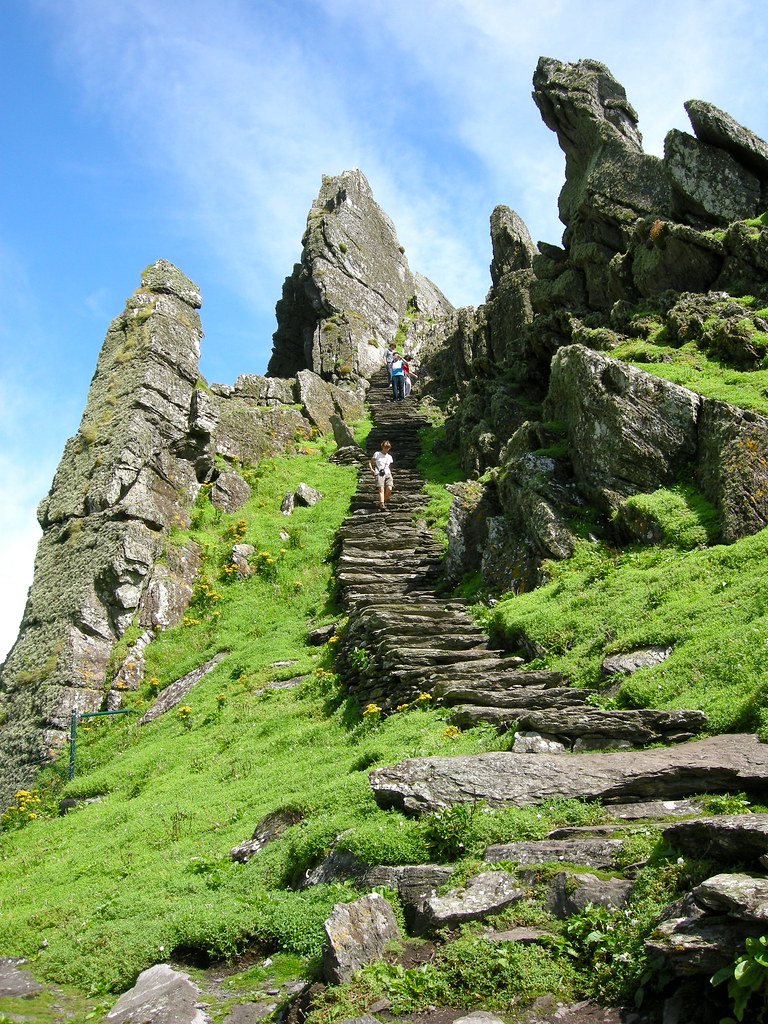
Nine miles off the coast of County Kerry in the west of Ireland there are two small rocky islands peeking out of the Atlantic Ocean.  The larger of the two, Skellig Michael, is home to something quite extraordinary – a 1400 year old monastery which only a handful of people get to see each year.

As you approach the island there is little, seemingly, to notice.  Yet closer inspection reveals the tell tale criss-cross of manmade paths.   Who could possibly have wanted to live here – and when?

It is thought that the monastery of Skellig Michael was founded at some point in the seventh century and monastic life persisted there for over 600 years.  Why it was abandoned is lost in the sands of time but because of the sheer inaccessibility of the island what the monks left behind remained, through the centuries, remarkably intact.

The name of the island is taken from the Irish language and means Michael’s Rock.  It is some rock, too, rising to 230 meters at its summit.  Atop this the Gaelic Monastery has become well known globally but very few make the journey to visit the site – not many are allowed. This very fact has meant that because its remoteness necessarily discourages tourists that the monastery is, for its age, wonderfully preserved.

It is easy to imagine the early Irish Christian monks leading their extraordinarily spartan day to day existence here – to say that life would have been harsh for them is something of an understatement.  Their huts, in the shape of beehives and called clochans, indicate the bareness of life on the rock.  These monks would have shrugged off all of their earthly possessions before they came to live here. Although it is not by definition a hermitage it must surely have been a lonesome existence for the monks, despite the faith which initiated their decision to move there.

The monastery itself was terraced – a necessity because of the sheer sides of the rick.  Three flights of stairs (perhaps reflecting the Holy Trinity) lead up to Christ’s Valley which is the small depression between the peaks of Skellig Michael at 130 meters.  The visitor is not disappointed when greeted by the sight of six intact clochans.

Neither are they disappointed with the sight of the two oratories, graves and the monolithic cross which are to be discovered there.  There is more recent addition too – a church which was built as late as the thirteenth century.  The construction must have been a labor – the walls are almost two meters thick.

Although Skellig Michael was not intended as such there is a hermitage on the island, distinct from the monastery.   As if a rock in the Atlantic was not isolated enough this extreme form of retreat afforded those monks who wished to contemplate the divine in complete isolation the opportunity to do so.

Daily life and its demands also had to be taken in to account and there is a latrine on the island which is situated over an enormously yawning gap in the rock to ensure that waste matter was thoroughly disposed of.  There are also the remains of a garden which the monks would use to grow essential vegetables.

There is evidence that Skellig Michael suffered several Viking raids, though quite what the visitors from the north would have hoped to pillage is questionable.  However, these raids may have caused the monks to decamp to the mainland in the twelfth century even though the later chapel was built at around the same time. One can only attempt to imagine the dread that the isolated and virtually defenceless monks must have felt at the sight of an approaching Viking longship.

As a result of the deterioration of the monastery due to the tramp of tourists’ feet, the decision was taken to severely restrict the number of visitors to the island.  13 licenses are given to tour operators annually and each may only make a single trip to the rock.

It is thought that there were never more than a dozen or so monks on the island at any one time plus an abbot.  The mystery as to the abandonment of the rock is never likely to be satisfactorily solved but in many ways the monks did the rest of the world a favor.  It is unlikely that what we see now on the island would have remained intact if the island had continued to be populated.  Its very abandonment ensured its survival.

1 Comment

Filed under Humor and Observations

Before Lady Gaga, Before Madonna – Peggy Moffitt

Even today, many of these styles would be avant garde and Peggy Moffitt wore them in the 1960’s, yep, fifty years ago when men dressed like the movie Men-in-black, the Civil Rights Movement was in full swing, and America was trying to catch up with the Soviets in the space race.  Most important was the Summer of ’63, at least personally, because I was born…

An homage to Peggy Moffitt

1960s:Peggy Moffitt

“Peggy Moffitt (born 1940) was during the 1960s a premier model. She developed a signature style that featured heavy, Kabuki-like makeup and an asymmetrical hair cut.”

– Wikipedia

As a warning for young folks, the following Wikipedia post has a topless shot of Peggy. Not sure why they did that out of all her pictures, but it has good information on her.

http://en.wikipedia.org/wiki/Peggy_Moffitt


Leave a comment

Filed under Humor and Observations, Uncategorized

Seven Masted Schooner – 1902

1902:

The Thomas W. Lawson

“The Thomas W. Lawson was a seven-masted schooner originally planned for the Pacific trade but used primarily to haul coal and oil along the East Coast of the United States. The ship was the largest pure sailing vessel ever built.

“Her design and purpose was an ultimately unsuccessful bid to keep sailing ships competitive with steam ships” 

– Wikipedia

Sources: Boston Public Library

Leave a comment

Filed under Uncategorized

Life in Victorian England

I write a lot about things in the Victorian time frame.  I am an avid researcher.  Even though I write Steampunk, which is old timey science fiction, I try to have 90% or more of my novel actual history and real people, so the sci-fi blends in nicely.  In my first novel, The Travelers’ Club and the Ghost Ship, some of the adventure occurs in Morocco.  I read a 512 page diary of a French party that traveled in Morocco in 1880, and a 240 page diary of Spanish travelers in Morocco the same year.  I used maybe one paragraph of information, but it gave me a feel for it.  I researched the leaders, the towns, the religions, the customs.  The pass given to my characters was the actual pass that the Sultan gave to foreign visitors, copied from a print in 1880, translated from Arabic for me by a free translator who speaks Arabic, Berber and English over the internet.  I used videos shot by tourists to show me the coastlines, old paintings and pictures.  I used Google Earth to view the ascent up Mount Toubkal, along with modern tour guide descriptions.  I looked up the weather, the position of the moon and other occurrences during the specific days and months they traveled.

Ghost Ship Cover Final Michael Special (2)

This is by way of explanation of this post.  This is one of the hundreds of sites I use to help understand and add color to the background of my Victorian stories.  Websites like this are incredibly helpful.  Enjoy!

Life in Victorian England

http://www.aboutbritain.com/articles/life-in-victorian-england.asp

The industrial revolution completely changed the lifestyle of Victorian Britain. Suddenly, the focus wasn’t on tilling the soil or land husbandry to make a living. Factories and commercial enterprise was the name of the game.

When Queen Victoria ascended the throne in 1837, Britain had already started its transformation into a world power. Agriculture was slowly being pushed aside for manufacturing jobs. By the end of the 1800’s, 80 percent of England’s population lived in cities.

Industrialization and Engineering

Steam-powered cotton factories enabled Victorian Britain to produce more than half the world’s supply of cotton. Coal-mining aroundNewcastle also expanded rapidly to meet demand.

Picnic scene

With the upsurge in railway construction, moving goods to shipping ports became easy, while ship-building itself went forward at a rapid pace.Bristol was home to “The Great Britain”, a massive steam ship built byIsambard Kingdom Brunel.

Lead by Brunel, engineering wonders were beginning to be common place during the Victorian period. Brunel’s Clifton Suspension Bridge still stands as a testament to his expertise.

The Brunel Railway Bridge between The West Country and Plymouth is still used to this day.

Manchester and Liverpool took full advantage of the industrial revolution. Along with other cities in Victorian times, they enjoyed being part of the “workshop of the world”.

Leisure Time

With industrialization, there was more leisure time to be enjoyed. When the railway line fromLondon to Brighton was established, going on holiday began to be a regular part of Victorian life.

Thanks to the Bank Holiday Act of 1871 and the ease of rail travel, seaside resorts such asBlackpool and Torquay began to enjoy great popularity.

There was time to read a novel during the Victorian period. Charles Dickens, Robert Lewis Stephenson, and H.G. Wells are just three of the authors who were popular.

Attending the theatre and appreciating the talents of Sarah Bernhard and Ellen Terry kept the evenings busy. Melodrama was in its hey-day while the music hall was always packed with people enjoying the variety of acts presented.

Medicine

Medical advances were tremendous during Victorian times. Boiling and scrubbing medical instruments before and after use was found to greatly increase a patient’s chance for survival. The identification of disease took a great leap forward.

Cholera was shown to be a product of sewage water. With the simple procedure of boiling drinking water and washing the hands, incidents of cholera dramatically drop.

Codeine and iodine made their appearance in Victorian life. Morphine helped to alleviate pain while the use of chloroform during childbirth was pioneered by Queen Victoria… and highly recommended.

Mourning the Dead

With style, great weeping, and yards of black material, the Victorian period made a fine-art out of death. Funerals were huge, many with professional mourners hired to walk in the procession.

At the moment of death, clocks would be stopped, curtains drawn over windows, and mirrors covered. Black apparel was quickly donned or if black cloth was not available, the household would quickly dye their clothes to a darker hue.

Row of terraced housesWidows from all social classes were expected to maintain mourning for a full year, and withdraw as much as possible from Victorian life. For women with no income, or small children to care for, remarriage was ‘allowed’ after this 12 month period.

As time went by, the stages of mourning gradually released their hold. Black material could be put aside for lilac or other soft shades. After approximately two years, wearing colour was no longer frowned upon.

Widowers would usually wear black for two years. However, it was their decision when to go back to work, and back into society.

Rural Life

Although much of Great Britain’s population did leave the countryside to reap the benefits of industrialization, village life did not come to an end.

Farming was still very much a part of life in Victorian Britain. With the advent of steam-power, farm machinery was easier to use and made for a faster work day. Small gardens would supplement the family’s food supply.

Some villages would specialize in an industry. Lace-making was popular. Craftsman (blacksmiths, tanners, carpenters) could always be found in a rural setting.

To maintain the huge country estates of the wealthy, local villagers would provide the servant power during the season. Some rural folk would live on the estate throughout the year, often in conditions which were cramped.

In their own homes, rural life in Victorian England was concerned with the basics – cooking meals, mending clothes, and seeing that children received the education which was mandatory by 1880.

Article by “Tudor Rose”

Leave a comment

Filed under Humor and Observations, Writing

IRISH!!! (information and pictures)

I am Irish.  My name was Anglicized from O’Brolochain to Bradley when my ancestors arrived in America.  I could go on and on about my ancestral home, but I will try to hit on some high points.  Your pay off is that you can read it and learn cool stuff, or you can scroll down to the Irish picture gallery, which also has some fine looking Irish ladies mixed in.  My family comes from County Derry.  None of us were famous, we were from a minor clan, and someone rose to local parrish Abbot at some point.  We were poor and fled to America for jobs and food.  Our people fought in wars, fought in bars, built the railroads, owned slaves and led the Confederates, but filled the ranks of the Union too.  We have more Irish living abroad than in Ireland thanks to the damnable British!  Yes, I explain some of “The Troubles” below as well.

My son was asked to write about his family history as a child.  I told him we were poor, drunken brawlers.  We were starving, so we came to America and stayed mostly in the North where we were despised and worked at crap jobs like building the railroads.  The luckier and immoral ones went South, learned how to buy land and became slaveholders.  When slavery ended, many slaves took their old master’s last names.  If you meet a black person named Bradley, chances are they are descended from slaves that my ancestors owned.  Not a good history.  It gets worse…  In WW2, many of the Irish sided with Hitler as a chance to rebel against the British.  My son and I both have our names on the fly watch list because Michael Bradley and Alex Bradley are common names in our homeland, and apparently, some named that have been part of “The Troubles.”  As a result, I cannot check in more than two hours early, I get searched, show documentation with picture and birth-date, and all my luggage is searched.  Yes, it does not just happen to Middle Easterners.  My wife said, you can’t have him write that stuff for class.  I said, “Why not, it is true?  Not everyone is descended from people who had it easy.”
Erin go Bragh!

Erin_Go_Bragh_flag

Erin go Bragh is an anglicisation of the Irish phrase Éirinn go Brách (pronounced [ˈeːɾʲɪn̠ʲ ɡə ˈbˠɾˠɑːx]), in which Éirinn is the dative of Éire (meaning “Ireland”). In standard modern Irish the phrase is Éire go Brách (pronounced [ˈeːɾʲə ɡə ˈbˠɾˠɑːx]). It is probable that the English version was taken from what was a “dative” context, such as Go bhfanad in Éirinn go brách (“May I stay in Ireland for ever”) or Go bhfillead go hÉirinn go brách (“May I go back to Ireland for ever”).

Alternatively, given that in a few local dialects (particularly in Waterford Irish and South Connacht Irish) Éirinn has replaced Éire as the ordinary name for Ireland, it could be that the phrase was taken from a speaker of such a dialect. This replacement of the nominative by the dative is common among Irish feminine and some masculine nouns of the second and fifth declensions, and is most widespread in the two dialect areas mentioned.[2] The word brách is an adjective/nominal which is equivalent to “for ever”, “eternal”, “always”, “still”, and conveys the global semantics of “unchanging”—such as in the phrases Fan go brách (“Just wait – don’t move – be patient and wait a bit more”) or fuair sé an litir agus as go brách leis go dtí an sagart chun í a thaispeáint dó (“he got the letter and without waiting off with him to the priest to show him it”).

A phrase confused with Erin go Bragh is Érin go Breá.[citation needed] This is actually [Tá] Éire go breá (“Ireland is (doing) fine/great/excellent”).

St. Patrick’s Day

250px-Saint_Patrick_(window)

  • St. Patrick is known for “driving the snakes out of Ireland.”  This is generally believed to mean he drove out the remnants of paganism and converted the country to Christianity.  Although most hear that and think he was like the Pied Piper who led rats out of a city.  It does not in fact mean actual snakes, but anti-Christians, such as the serpent in the Garden of Eden.
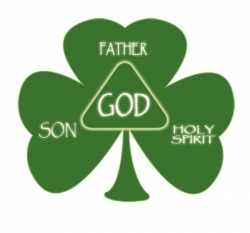
  • St. Patrick also made the Shamrock a national symbol of Ireland.  He used its three sections to explain the Holy Trinity of God the Father, Jesus the Son, and the Holy Spirit.  Each separate, but one.

draft_lens17603171module148005042photo_1297871374Holy-Trinity-Shamrock

  • Saint Patrick (LatinPatriciusProto-Irish*Qatrikias;[2] Modern IrishPádraig;[3] WelshPadrig;[4] c. 387 – 17 March c. 460[5] or c. 492[6]) was a Romano-British Christian missionary and bishop inIreland. Known as the “Apostle of Ireland”, he is the primary patron saint of the island along with Saints Brigid and Columba.
  • Two authentic letters from him survive, from which come the only generally accepted details of his life.[7] When he was about 16, he was captured from his home and taken as a slave to Ireland, where he lived for six years before escaping and returning to his family. After becoming a cleric, he returned to northern and western Ireland as an ordained bishop, but little is known about the places where he worked. By the seventh century, he had already come to be revered as the patron saint of Ireland.
  • Most available details of his life are from subsequent hagiographies, and these are now not accepted without detailed criticism. The Annals of Ulster state that he arrived in Ireland in 432, ministered inUlster around 443, and died in 457 or 461.[8] The text, however, distinguishes between “Old Patrick”[9] and “Patrick, archapostle of the Scots,”[10] who died in 492.[8] The actual dates of Patrick’s life cannot be fixed with certainty but, on a widespread interpretation, he was active as a missionary in Ireland during the second half of the 5th century.[11] He is generally credited with being the first bishop of ArmaghPrimate of All Ireland.
  • Saint Patrick’s Day is observed on March 17, the date of his death.[12] It is celebrated both inside and outside Ireland, as both a liturgical and non-liturgical holiday. In the dioceses of Ireland, it is both asolemnity and a holy day of obligation; outside Ireland, it can be a celebration of Ireland itself.

Irish in America

  • Irish immigrants of this period participated in significant numbers in the American Revolution, leading one British major general to testify at the House of Commons that “half the rebel Continental Army were from Ireland.”
  • The relatively small number of Irish Catholics concentrated in a few medium-sized cities, where they were highly visible, especially in CharlestonSavannah and New Orleans.[18][19] They became local leaders in the Democratic party, generally favored preserving the Union in 1860, but became staunch Confederates after secession in 1861.
  • During the American Civil War, Irish Americans volunteered in high numbers for the Union Army, and at least thirty-eight Union regiments had the word “Irish” in their title. 144,221 Union soldiers were born in Ireland; additionally, perhaps an equal number were of Irish descent.[43] Many immigrant soldiers formed their own regiments, such as the Irish Brigade.[44]
  • The majority of the Union Pacific track across the Nebraska and Wyoming territory till it approached Utah territory was built by veterans of both the Union and Confederate armies and many immigrant Irishmen.  (It upsets me that even history books now refer to the blacks and chinese building the railroad, when in fact it was the Irish in the East in Midwest and the Chinese in West.  A few blacks were employed but in insignificant numbers compared to the Irish.)  The blacks endured slavery and discrimination in the South, but the Irish suffered slavery and ethnic cleansing in their own country for decades, and received further abuse in America.  So our tale should not be forgotten either.

Number of Irish in America

  • After the potato famines and British land grabs and extermination of Irish, so many Irish moved to America, that by 1910 more Irish born lived in the United States than were left in Ireland.  Ever since then more Irish have lived outside Ireland.  The population in Ireland dropped from over 8 million to less than 4 million during that period of suffering.
  • Irish Americans are citizens of the United States who can trace their ancestry to Ireland. A total of 36,278,332 Americans—estimated at 11.9% of the total population—reported Irish ancestry in the 2008 American Community Survey conducted by the U.S. Census Bureau.[6] Roughly another 3.5 million (or about another 1.2% of Americans) identified more specifically with Scotch-Irishancestry. The Irish diaspora population in the United States is roughly six times the modern population of Ireland.
  • The only self-reported ancestral group larger than Irish Americans is German Americans.[6] The Irish are widely dispersed in terms of geography, and demographics. Irish American political leaders have played a major role in local and national politics since before the American Revolutionary War: eight Irish Americans signed the United States Declaration of Independence, and twenty-twoAmerican Presidents, from Andrew Jackson to Barack Obama, have been at least partly of Irish ancestry.

American Presidents with Irish ancestry

A number of the Presidents of the United States have Irish origins.[147] The extent of Irish heritage varies. For example, Chester Arthur‘s father and both of Andrew Jackson‘s parents were Irish born, whileGeorge W. Bush has a rather distant Irish ancestry. Ronald Reagan‘s father was of Irish ancestry,[148] while his mother also had some Irish ancestors. President Kennedy had Irish lineage on both sides. Within this group, only Kennedy was raised as a practicing Roman Catholic. Current President Barack Obama‘s Irish heritage originates from his Kansas-born mother, Ann Dunham, whose ancestry is Irish and English.[149] His Vice President Joe Biden is also an Irish-American.

United States President Ronald Reaganspeaking to large crowd in his ancestral home in Ballyporeen, Ireland in 1984.

Andrew Jackson
7th President 1829–37: He was born in the predominantly Scotch-Irish[150] Waxhaws area of South Carolina two years after his parents left Boneybefore, near Carrickfergus in County Antrim. A heritage centre in the village pays tribute to the legacy of ‘Old Hickory’, the People’s President. Andrew Jackson then moved to Tennessee, where he served as Governor[151]
James Knox Polk
11th President, 1845–49: His ancestors were among the first Ulster-Scots settlers, emigrating from Coleraine in 1680 to become a powerful political family in Mecklenburg CountyNorth Carolina. He moved to Tennessee and became its governor before winning the presidency.[152]
James Buchanan
15th President, 1857–61: Born in a log cabin (which has been relocated to his old school in Mercersburg, Pennsylvania). The Buchanans were originally from Deroran, near Omagh in County Tyronewhere the ancestral home still stands.[152]
Andrew Johnson
17th President, 1865–69: His grandfather left Mounthill, near Larne in County Antrim around 1750 and settled in North Carolina. Andrew worked there as a tailor and ran a successful business inGreenevilleTennessee, before being elected Vice President. He became President following Abraham Lincoln‘s assassination.[152]
Ulysses S. Grant
18th President, 1869–77: The home of his maternal great-grandfather, John Simpson, at DergenaghCounty Tyrone, is the location for an exhibition on the eventful life of the victorious Civil Warcommander who later served two terms as President. Grant visited his ancestral homeland in 1878.[153]
Chester A. Arthur
21st President, 1881–85: His election was the start of a quarter-century in which the White House was occupied by men of Ulster-Scots origins. His family left Dreen, near CullybackeyCounty Antrim, in 1815. There is now an interpretive centre, alongside the Arthur Ancestral Home, devoted to his life and times.[152][154]
Grover Cleveland
22nd and 24th President, 1885–89 and 1893–97: Born in New Jersey, he was the maternal grandson of merchant Abner Neal, who emigrated from County Antrim in the 1790s. He is the only president to have served non-consecutive terms.[152]
Benjamin Harrison
23rd President, 1889–93: His mother, Elizabeth Irwin, had Ulster-Scots roots through her two great-grandfathers, James Irwin and William McDowell. Harrison was born in Ohio and served as a brigadier general in the Union Army before embarking on a career in Indiana politics which led to the White House.[152][155]
William McKinley
25th President, 1897–1901: Born in Ohio, the descendant of a farmer from Conagher, near BallymoneyCounty Antrim, he was proud of his ancestry and addressed one of the national Scotch-Irish congresses held in the late 19th century.[156] His second term as president was cut short by an assassin’s bullet.[152][157]
Theodore Roosevelt
26th President, 1901–09: His mother, Mittie Bulloch, had Ulster Scots ancestors who emigrated from GlenoeCounty Antrim, in May 1729. Roosevelt praised “Irish Presbyterians” as “a bold and hardy race.”[158] However, he is also the man who said: “But a hyphenated American is not an American at all. This is just as true of the man who puts ‘native’ before the hyphen as of the man who puts German or Irish or English or French before the hyphen.” [1] (*Roosevelt was referring to “nativists“, not American Indians, in this context)[159]
William Howard Taft
27th President 1909–13[160][161]
Woodrow Wilson
28th President, 1913–21: Of Ulster-Scot descent on both sides of the family, his roots were very strong and dear to him. He was grandson of a printer from Dergalt, near StrabaneCounty Tyrone, whose former home is open to visitors.[152]
Warren G. Harding
29th President 1921–23[162]
Harry S. Truman
33rd President 1945–53[163][164]
John F. Kennedy
35th President 1961–63, (County Wexford)
Richard Nixon
37th President, 1969–74: The Nixon ancestors left Ulster in the mid-18th century; the Quaker Milhous family ties were with County Antrim and County Kildare.[152]
Jimmy Carter
39th President 1977–1981 (County Antrim and County Londonderry):[153] One of his maternal ancestors, Brandon McCain, emigrated from County Londonderry to America in 1810.
Ronald Reagan
40th President 1981–89: He was the great-grandson, on his father’s side, of Irish migrants from County Tipperary who came to America via Canada and England in the 1840s. His mother was of Scottish and English ancestry.[165]
George H. W. Bush
41st President 1989–93 (County Wexford): historians have found that his now apparent ancestor, Richard de Clare, Earl of Pembroke. Shunned by Henry II, he offered his services as a mercenary in the 12th-century Norman invasion of Wexford, Ireland in exchange for power and land. Strongbow married Aoife, daughter of Dermot MacMurrough, the Gaelic king of Leinster.[166][167]
Bill Clinton

Obama greets local residents on Main Street in Moneygall, Ireland, May 23, 2011.

42nd President 1993–2001: He claims Irish ancestry despite there being no documentation of any of his ancestors coming from Ireland [152][168]
George W. Bush
43rd President 2001–09: One of his five times great-grandfathers, William Holliday, was born in Rathfriland, County Down, about 1755, (a British merchant living in Ireland) and died in Kentucky about 1811–12. One of the President’s seven times great-grandfathers, William Shannon, was apparently born somewhere in County Cork about 1730, and died in Pennsylvania in 1784.[167]
Barack Obama
44th President 2009–present: Some of his maternal ancestors came to America from a small village called Moneygall, in County Offaly.[149][169] His ancestors lived in New England and the South and by the 1800s most were in the Midwest.

[edit]Vice Presidents of Irish descent

Joe Biden
47th Vice President 2009–present[170]

[edit]Other presidents of Irish descent

Sam Houston
President of Texas 1836–38 and 1841–44

[edit]Irish-American Justices of the Supreme Court

History of Ireland – High Points Only

  • The first known settlements in Ireland began around 8000 BC.
  • The 17th century was perhaps the bloodiest in Ireland’s history. Two periods of war (1641–53 and 1689–91) caused huge loss of life. The ultimate dispossession of most of the Irish Catholic landowning class was engineered, and recusants were subordinated under the Penal Laws.
  • During the 17th century Ireland was convulsed by eleven years of warfare, beginning with the Rebellion of 1641, when Irish Catholics rebelled against the domination of English and Protestant settlers. The Catholic gentry briefly ruled the country as Confederate Ireland (1642–1649) against the background of the Wars of the Three Kingdoms until Oliver Cromwell reconquered Ireland in 1649–1653 on behalf of theEnglish Commonwealth. Cromwell’s conquest was the most brutal phase of the war. By its close, up to a third of Ireland’s pre-war population was dead or in exile. As retribution for the rebellion of 1641, the better-quality remaining lands owned by Irish Catholics were confiscated and given to British settlers commenced. Several hundred remaining native landowners were transplanted to Connacht.
  • Forty years later, Irish Catholics, known as “Jacobites”, fought for James from 1688 to 1691, but failed to restore James to the throne of Ireland, England and Scotland.
  • Ireland became the main battleground after the Glorious Revolution of 1688, when the Catholic James II left London and the English Parliament replaced him withWilliam of Orange. The wealthier Irish Catholics backed James to try to reverse the Penal Laws and land confiscations, whereas Protestants supported William and Mary in this ‘Glorious Revolution’ to preserve their property in the country. James and William fought for the Kingdom of Ireland in the Williamite War, most famously at the Battle of the Boyne in 1690, where James’ outnumbered forces were defeated.

Slavery and Extermination by the British

  • From the 15th to the 18th century, Irish prisoners were sold as slaves. For centuries, the Irish were de-humanised by the English, described as savages, so making their murder and displacement appear all the more justified.[19] In 1654 the British parliament gave Oliver Cromwell a free hand to banish Irish “undesirables”. Cromwell rounded up Catholics throughout the Irish countryside and placed them on ships bound for the Caribbean, mainly Barbados. The authorities in the West Indies, fearing the Irish would resist servitude, treated the prisoners harshly. Records suggest that priests may have been routinely tortured and executed. By 1655, 12,000 political prisoners had been forcibly shipped to Barbados.[20]
  • Known as a hero in Britain, Oliver Cromwell led several armies to Ireland for the purpose of stealing their lands and thinning out the Irish population for resettlement by British.  He is probably the most hated person ever in Ireland.
  • Subsequent Irish antagonism toward England was aggravated by the economic situation of Ireland in the 18th century. Some absentee landlords managed their estates inefficiently, and food tended to be produced for export rather than for domestic consumption. Two very cold winters near the end of the Little Ice Age led directly to a famine between 1740 and 1741, which killed about 400,000 people and caused over 150,000 Irish to leave the island. In addition, Irish exports were reduced by the Navigation Acts from the 1660s, which placed tariffs on Irish products entering England, but exempted English goods from tariffs on entering Ireland. Despite this most of the 18th century was relatively peaceful in comparison with the preceding two centuries, and the population doubled to over four million.
  • The second of Ireland’s “Great Famines”, An Gorta Mór struck the country during 1845–49, with potato blight, exacerbated by the political and laissez-faire economic factors of the time[22] leading to mass starvation and emigration. (See Great Irish Famine.) The impact of emigration in Ireland was severe; the population dropped from over 8 million before the Famine to 4.4 million in 1911. Gaelic or Irish, once the island’s spoken language, declined in use sharply in the nineteenth century as a result of the Famine and the creation of the National School education system, as well as hostility to the language from leading Irish politicians of the time; it was largely replaced by English.
  • The English Parliament was well aware that they had removed the food from Ireland, left their fields fallow, and they were now suffering starvation.  When debated in Parliament, the British MPs discussed at length and decided the best thing would be to let the Irish starve or move away so it would be easier to suppress them and take their land.  They literally let over half the population of the country starve or cross oceans to get food, when they could have saved them.  The willful starvation and forced immigration of over half the Irish is why there is still so much hatred for the British, even centuries after Cromwell and slavery and land robbery.  The famines happened just 100 years ago, and Ireland has never been the same.

Here it is, picture gallery of Irishness…

2 Comments

Filed under Humor and Observations, Uncategorized

Ancient Arctic Camel

Ancient Arctic camel a curious conundrum

Published March 05, 2013

Associated Press

  • Pliocene Candian Camel.jpg

    The High Arctic camel on Ellesmere Island during the Pliocene warm period, about 3.5 million years ago. The camels lived in a boreal-type forest that included larch trees; the depiction is based on records of plant fossils found at nearby fossil deposits. (Julius Csotonyi)

  • Pliocene Candian Camel 1.jpg

    The fossil bones of the High Arctic Camel laid out in Dr. Rybczynski’s lab at the Canadian Museum of Nature. The fossil evidence consists of about 30 bone fragments, which together form part of a limb bone of a Pliocene camel. (Martin Lipman, Canadian Museum of Nature)

  • Pliocene Candian Camel 2.jpg

    View of Camp 2 at the Fyles Leaf Bed Site on Ellesmere Island, near Strathcona Fiord. Across the valley lay exposed tilted Devonian-era beds, partially obscured by low-lying cloud. (Martin Lipman, Canadian Museum of Nature)

  • Pliocene Candian Camel 3.jpg

    A fragment of the camel fossil lying in situ on the Fyles Leaf Bed site. The fossil looks very similar to wood. The fossil evidence consists of about 30 bone fragments, which together form part of a limb bone of a Pliocene camel.Found on Ellesmere Island, this is the northernmost discovery of camels in the Arctic, about 1,200 km further north than the Yukon camel.The fossil record from this area shows the camel lived about 3.5 million years ago, when the region supported a boreal-type forest.Ellesmere Island..”Fyles Leaf Bed site” refers to an exposure located about 9 km Southwest of the Beaver Pond site near Strathcona Fiord. The section was visited previously by John Fyles (Geological Survey of Canada), and briefly in 1992 by Fyles and Richard Harington. In 1992 they prospected for about 2 hours. The first detailed stratigraphic work on the site was by Adam Csank (supervised by Jim Basinger) as part of his M.Sc. thesis (2006). At the time Adam measured 40 m of section, but in 2008 John Gosse determined that the Tertiary section was 90 m in thickness. (Martin Lipman, Canadian Museum of Nature)

OTTAWA –  Ancient, mummified camel bones dug from the tundra confirm that the animals now synonymous with the arid sands of Arabia actually developed in subfreezing forests in what is now Canada’s High Arctic, a scientist said Tuesday.

About 3.5 million years ago, Strathcona Fiord on Ellesmere Island’s west-central coast would have looked more like a northern forest than an Arctic landscape, said paleobotanist Natalia Rybczynski of the Canadian Museum of Nature in Ottawa.

“Larch-dominated, lots of wetlands, peat,” said Rybczynski, lead author of a study published Tuesday in the journal Nature Communications. Nearby fossil sites have yielded evidence of ancient bears, horses, deer, badgers and frogs. The average yearly temperature would have been about 32 Fahrenheit.

“If you were standing in it and watching the camel, it would have the feel of a boreal-type forest.”

The Arctic camel was 30 percent larger than modern camels, she said. Her best guess is it was one-humped.

Although native camels are now only found in Africa and Asia, scientists have long believed the species actually developed in North America and later died out. Camel remains have been previously found in the Yukon.

What makes Rybczynski’s find special is not only how far north it was found, but its state of preservation.

The 30 fragments found in the sand and pebbles of the tundra were mummified, not fossilized. So despite their age, the pieces preserved tiny fragments of collagen within them, a common type of protein found in bones.

Analyzing that protein not only proved the fragments were from camels, but from a type of camel that is much more closely related to the modern version than the Yukon camel. Out of the dozens of camel species that once roamed North America, the type Rybczynski found was one of the most likely to have crossed the Bering land bridge and colonized the deserts.

“This is the one that’s tied to the ancestry of modern camels,” she said.

Read more: http://www.foxnews.com/science/2013/03/05/ancient-arctic-camel-curious-conundrum/?intcmp=features#ixzz2NNHSu4Ih

2 Comments

Filed under Animals, Humor and Observations

Mummies Show Clogged Arteries 4,000 years ago.

Even 4,000 year-old mummies had clogged arteries, study reveals

Published March 11, 2013

Associated Press

  • MummyHeartDisease.JPG

    March 10, 2013: A a group of cardiologists lead by Saint Luke’s Mid America Heart Institute in Kansas City, USA, show the mummy Hatiay (New Kingdom, 18th Dynasty, 1550 to 1295 BCE) as it is returned to its display back in the Antiquities Museaum in Cairo after it underwent a CT scanning. (AP)

  • Egypt Mummies Heart Disease 1.jpg

    March 10, 2013: The sarcophagus of the mummy Hatiay (New Kingdom, 18th Dynasty, 1550 to 1295 BCE) is closed after the mummy underwent a CT scanning, in Cairo, Egypt. (AP Photo/Dr. Michael Miyamoto)

  • Egypt Mummies Heart Disease 2.jpg

    March 10, 2013: Egyptologists prepare the mummy Hatiay (New Kingdom, 18th Dynasty, 1550 to 1295 BCE) for CT scanning in Cairo, Egypt, which later demonstrated evidence of extensive vascular disease. (AP Photo/Dr. Michael Miyamoto)

  • Egypt Mummies Heart Disease.jpg

    March 10, 2013: The mummy Hatiay (New Kingdom, 18th Dynasty, 1550 to 1295 BCE) gets a CT scan in Cairo, Egypt, where it was found to have evidence of extensive vascular disease. (AP Photo/Dr. Michael Miyamoto)

Even without modern-day temptations like fast food or cigarettes, people had clogged arteries some 4,000 years ago, according to the biggest-ever hunt for the condition in mummies.

Researchers say that suggests heart disease may be more a natural part of human aging rather than being directly tied to contemporary risk factors like smoking, eating fatty foods and not exercising.

‘Heart disease has been stalking mankind for over 4,000 years.’

– Dr. Randall Thompson, a cardiologist at Saint Luke’s Mid America Heart Institute in Kansas City 

CT scans of 137 mummies showed evidence of atherosclerosis, or hardened arteries, in one third of those examined, including those from ancient people believed to have healthy lifestyles. Atherosclerosis causes heart attacks and strokes. More than half of the mummies were from Egypt while the rest were from Peru, southwest America and the Aleutian islands in Alaska. The mummies were from about 3800 B.C. to 1900 A.D.

“Heart disease has been stalking mankind for over 4,000 years all over the globe,” said Dr. Randall Thompson, a cardiologist at Saint Luke’s Mid America Heart Institute in Kansas City and the paper’s lead author.

The mummies with clogged arteries were older at the time of their death, around 43 versus 32 for those without the condition. In most cases, scientists couldn’t say whether the heart disease killed them.

The study results were announced Sunday at a meeting of the American College of Cardiology in San Francisco and simultaneously published online in the journal Lancet.

Thompson said he was surprised to see hardened arteries even in people like the ancient Aleutians who were presumed to have a healthy lifestyle as hunter-gatherers.

“I think it’s fair to say people should feel less guilty about getting heart disease in modern times,” he said. “We may have oversold the idea that a healthy lifestyle can completely eliminate your risk.”

Thompson said there could be unknown factors that contributed to the mummies’ narrowed arteries. He said the Ancestral Puebloans who lived in underground caves in modern-day Colorado and Utah, used fire for heat and cooking, producing a lot of smoke.

“They were breathing in a lot of smoke and that could have had the same effect as cigarettes,” he said.

Previous studies have found evidence of heart disease in Egyptian mummies, but the Lancet paper is the largest survey so far and the first to include mummies elsewhere in the world.

Dr. Frank Ruehli of the University of Zurich, who runs the Swiss Mummy Project, said it was clear atherosclerosis was notably present in antiquity and agreed there might be a genetic predisposition to the disease.

“Humans seem to have a particular vulnerability (to heart disease) and it will be interesting to see what genes are involved,” he said. Ruehli was not connected to the study. “This is a piece in the puzzle that may tell us something important about the evolution of disease.”

Other experts warned against reading too much into the mummy data.

Dr. Mike Knapton, associate medical director at the British Heart Foundation, said calcified arteries could also be caused by other ailments including endocrine disorders and that it was impossible to tell from the CT scans if the types of calcium deposits in the mummies were the kind that would have sparked a heart attack or stroke.

“It’s a fascinating study but I’m not sure we can say atherosclerosis is an inevitable part of aging,” he said, citing the numerous studies that have showed strong links between lifestyle factors and heart disease.

Researcher Thompson advised people to live as healthy a lifestyle as possible, noting that the risk of heart disease could be reduced with good eating habits, not smoking and exercising. “We don’t have to end up like the mummies,” he said.

Read more: http://www.foxnews.com/science/2013/03/11/study-reveals-even-4000-year-old-mummies-had-clogged-arteries/?intcmp=related#ixzz2NNFOasby

1 Comment

Filed under Humor and Observations