Tag Archives: history

Medieval Knight Found in Parking Lot


Medieval Knight Found Under Parking Lot In Scotland; Mysterious Remains Thrill Archeologists

The Huffington Post  |  By Posted: 03/14/2013 9:57 am EDT  |  Updated: 03/14/2013 9:57 am EDT

Medieval Knight Found Parking Lot

Archaeologists this week announced the discovery of an unidentified medieval knight’s skeleton buried along with several other bodies under a Scottish parking lot.

The knight — or possibly nobleman — was uncovered during construction work, according to The Scotsman. Also found was an intricately carved sandstone slab, several other human burial plots and a variety of artifacts researchers believe are from the 13th-century Blackfriars Monastery.

(Story continues below.)

medieval knight found parking lot

Councillor Richard Lewis, a member of the City of Edinburgh Council, said the archeological treasure trove has “the potential to be one of the most significant and exciting archaeological discoveries in the city for many years, providing us with yet more clues as to what life was like in Medieval Edinburgh,” according to a statementreleased by the Edinburgh Center for Carbon Innovation (ECCI).

“We hope to find out more about the person buried in the tomb once we remove the headstone and get to the remains underneath but our archaeologists have already dated the gravestone to the thirteenth century,” Lewis added.

The team leading the excavation is part of Headland Archeology, which noted with glee that many of its researchers may have once walked over the bones while studying nearby at the former University of Edinburgh’s archaeology department. A statement released by the group says members are “looking forward to post excavation analyses that will tell us more about the individual buried there.”

Ross Murray, a project officer for Headland, told The Huffington Post in an email that the team has already divined some clues about the knight’s background.

“The knight would have been buried in the graveyard associated with the monastery meaning he had money or was important in the society of time,” Murray told HuffPost. “The more important you were the closer you got placed to the church. He was also pretty tall for the time being around 6ft or so.”

Echoing Councillor Lewis, Murray went on to say that the contents of the grave site and monastery will be “fantastic” additions to Scottish art history.

“We have now taken the body back to our labs and will have an osteo-archaeologist examine the body to try and establish their sex, age, if they had any diseases or even how they died,” Murray said. “The medieval was a pretty brutal time so a violent death wouldn’t be uncommon. We would also get radiocarbon dates from the bones to get a more accurate date for the burial and have an expert in medieval sculpture looks at the carved grave slab.”

After the excavation is complete, the former parking lot will house the rainwater-harvesting tank of the University of Edinburgh’s new ECCI building.

This impressive Edinburgh find comes on the heels of scientists’ confirmation this February that bones found under an English city council parking lot do indeed belong to King Richard III. Researchers from the University of Leicester used DNA analysis to identify the 15th-century monarch, who died in battle during the War of the Roses.
Leave a comment

Filed under Humor and Observations

A Five Year War Starts at Your House and Finishes At Your House

A Five Year War Starts at Your House and Finishes At Your House

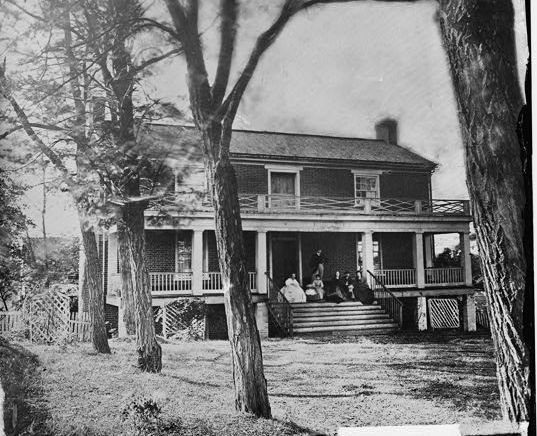
How could this be?  Ask poor Wilmer McLean.  When federal troops headed south to enforce the union and bring secessionists states back into the fold, they were met by Confederate forces under General PGT Beauregard at the First Battle of Bull Run, called Manassas in the South.  During the battle, Wilmer McLean’s house was used as the Headquarters for General PGT Beauregard.  During supper, a cannon ball hit the house and fell through the kitchen roof rolling around the table where they were eating.  So, the Civil War started, fought on McClean’s front porch and in his kitchen.

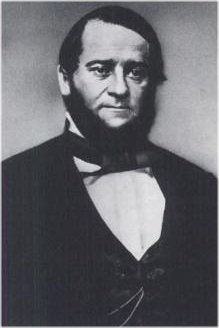
Wilmer_McLean_ca_1860

Wilmer McLean around 1860

Wilmer McClean felt a change of location would be good for his health, so he packed up and moved.  In the Spring of 1863, he moved to a quiet place in Virginia where he could live in peace.  Later, near the end of the war, the Confederates were beaten and surrounded.  They decided to surrender at Appomattox Court House, Virginia.  They looked around for a suitable home for the ceremony and chose – the home of Wilmer McClean.  General Robert E. Lee surrendered to General US Grant in the parlor of McClean’s home.

After the ceremony, officers started taking away McClean’s furniture as souvenirs of the event, throwing money at him as payment.  General Ord payed $40 for the table they signed the surrender on, General Sheridan paid $20 for the table it was drafted on.  Chairs, furnishings, anything not bolted down was removed, most not being paid for.  Poor Wilmer McLean who had tried to avoid combat was in the wrong place at the wrong time again.

I believe he was the only man in history who can honestly say that a major war (the American Civil War in this case) started in his front yard, and ended in his parlor.  It was his claim to fame for the remainder of his life.

Appomattox Court House

Appomattox Court House

Leave a comment

Filed under Humor and Observations

Most Ancient Port, Hieroglyphic Papyri Found

Most Ancient Port, Hieroglyphic Papyri Found

APR 12, 2013 02:00 PM ET // BY ROSSELLA LORENZI
 
Most Ancient Port Found in Egypt
PIERRE TALLE

An ancient Egyptian harbor has emerged on the Red Sea coast, dating back about 4,500 years.

“Evidence unearthed at the site shows that it predates by more than 1,000 years any other port structure known in the world,” Pierre Tallet, Egyptologist at the University of Paris-Sorbonne and director of the archaeological mission, told Discovery News.

PIERRE TALLET

Built at the time of the fourth dynasty of King Cheops, the owner of the Great Pyramid in the Giza Plateau, the port was discovered at Wadi el-Jarf, nearly 110 miles south the coastal city of Suez by a team of Franco-Egyptian archaeologists.

Egyptologist Sir John Garner Wilkinson
PD-ART/WIKIMEDIA COMMON

The site was first explored in 1823 by British pioneer Egyptologist Sir John Garner Wilkinson, who found a system of galleries cut into the bedrock a few miles from the coast. He believed them to be catacombs.

“The place was then described by French pilots working on the Suez Gulf during the 1950s, but no one realized that it concealed the remains of an ancient pharaonic harbor,” Tallet said.

.
PIERRE TALLET

Tallet has been excavating the area since 2011 with archaeologist Gregory Marouard, of the University of Chicago’s Oriental Institute, topographer Damien Laisney of the French National Center for Scientific Research, and doctoral students Aurore Ciavatti and Serena Esposito from the Sorbonne University. The team first focused on the most visible part of the site: the galleries described by Wilkinson.

The excavation revealed 30 of these galleries, measuring on average 65 feet long, 10 feet wide and 7 feet high.

PIERRE TALLET

Used to store dismantled boats after the expeditions that were regularly led to transfer copper and stones from Sinai to the Nile valley, the galleries featured an elaborate closure system which made use of large and heavy limestone blocks inscribed with the name of Cheops (about 2650 BC).

An ancient Egyptian harbor has emerged on the Red Sea coast, dating back about 4,500 years.

“Evidence unearthed at the site shows that it predates by more than 1,000 years any other port structure known in the world,” Pierre Tallet, Egyptologist at the University of Paris-Sorbonne and director of the archaeological mission, told Discovery News.

Built at the time of the fourth dynasty of King Cheops, the owner of the Great Pyramid in the Giza Plateau, the port was discovered at Wadi el-Jarf, nearly 110 miles south the coastal city of Suez by a team of Franco-Egyptian archaeologists.
PD-ART/WIKIMEDIA COMMON
 
PIERRE TALLET

Inside the galleries Tallet and his team found several fragments of boats, ropes and pottery dating to the early fourth dynasty. Three galleries contained a stock of storage jars, which probably served as water containers for boats.

PIERRE TALLET

Underwater exploration at the foot of the jetty revealed 25 pharaonic anchors — and pottery similar to that uncovered in the galleries — all dating  from the fourth dynasty.

PIERRE TALLET

About 200 meters from the sea side, the archaeologists also found the remains of an Old Kingdom building where 99 pharaonic anchors had been stored (visible at the center of the photo).

“Some of them were inscribed with hieroglyphic signs, probably with the names of the boats,” Tallet said.

PIERRE TALLET

Most interestingly, the storage galleries also contained hundreds of papyrus fragments.

Among them, 10 were very well preserved.

“They are the oldest papyri ever found,” Tallet said

Many of the papyri describe how the central administration, under the reign of Cheops, sent food — mainly bread and beer — to the workers involved in the Egyptian expeditions departing from the port.

PIERRE TALLET

But one papyrus is much more intriguing: it’s the diary of Merrer, an Old Kingdom official involved in the building of the Great Pyramid of Cheops.

From four different sheets and many fragments, the researchers were able to follow his daily activity for more that three months.

“He mainly reported about his many trips to the Turah limestone quarry to fetch block for the building of the pyramid,” Tallet said.

“Although we will not learn anything new about the construction of Cheops monument, this diary provides for the first time an insight on this matter,” Tallet said.

Leave a comment

Filed under Humor and Observations

Treasure-filled warrior’s grave found in Russia

Treasure-filled warrior’s grave found in Russia

By Owen Jarus

Published February 21, 2013

LiveScience

  • ancient-treasures-8

    The burial of the warrior was richly adorned and contained more than a dozen gold artifacts. This fibula-brooch, despite being only 2.3 by 1.9 inches in size, contains intricate decorations leading towardthe center where a rock crystal bead is (Photo courtesy Valentina Mordvintseva)

  • ancient-treasures-13.jpg

    This iron axe is one of many weapons found with the burial of the warrior. (Valentina Mordvintseva)

  • warrior-burial-diagram.jpg

    The grave of a male warrior who was laid to rest some 2,200 years ago in what is now the mountains of the Caucasus in Russia, shown here in a diagram of the warrior’s skeleton and numerous artifacts. (Valentina Mordvintseva)

Hidden in a necropolis situated high in the mountains of the Caucasus in Russia, researchers have discovered the grave of a male warrior laid to rest with gold jewelry, iron chain mail and numerous weapons, including a 36-inch iron sword set between his legs.
That is just one amazing find among a wealth of ancient treasures dating back more than 2,000 years that scientists have uncovered there.

Among their finds are two bronze helmets, discovered on the surface of the necropolis. One helmet (found in fragments and restored) has relief carvings of curled sheep horns while the other has ridges, zigzags and other odd shapes.

Although looters had been through the necropolis before, the warrior’s grave appears to have been untouched. The tip of the sword he was buried with points toward his pelvis, and researchers found “a round gold plaque with a polychrome inlay” near the tip, they write in a paper published in the most recent edition of the journal Ancient Civilizations from Scythia to Siberia. [See Images of the Warrior Burial and Artifacts]

The remains of three horses, a cow and the skull of a wild boar were also found buried near the warrior.

“These animals were particularly valuable among barbarian peoples of the ancient world. It was [a] sign of [the] great importance of the buried person, which was shown by his relatives and his tribe,” wrote team member Valentina Mordvintseva, a researcher at the Ukrainian National Academy of Sciences Institute of Archaeology, in an email to LiveScience. The animal bones and pottery remains suggest that a funeral feast was held in his honor.

Without written records it is difficult to say exactly who the warrior was, but rather than ruling a city or town, “he was rather a chief of a people,” Mordvintseva said.

The necropolis is located near the town of Mezmay. Grave robbers discovered the site in 2004 and rescue excavations began in 2005.

Who used the necropolis?
Based on the artifacts, researchers believe the warrior’s burial dates back around 2,200 years, to a time when Greek culture was popular in west Asia, while the necropolis itself appears to have been in use between the third century B.C. and the beginning of the second century A.D.

Researchers were careful to note that the artifacts cannot be linked to a specific archaeological culture. Mordvintseva points out that “this region is very big, and not sufficiently excavated,” particularly in the area where the necropolis is located. “[I]t is situated high in mountains. Perhaps the population of this area [had] trade routes/passes with Caucasian countries — Georgia, Armenia etc.,” Mordvintseva writes in the email.

While the people who used the necropolis were clearly influenced by Greek culture, they maintained their own way of life, said Mordvintseva. “Their material culture shows that they were rather very proud of themselves and kept their culture for centuries.”

Gold treasures
This way of life includes a fondness for gold-working. The warrior’s burial included more than a dozen artifacts made of the material. Perhaps the most spectacular find was a gold fibula-brooch with a rock crystal at its center. Although the brooch was only 2.3 by 1.9 inches, it had several layers of intricately carved decorations leading toward the mount.

“Inside the mount a rock-crystal bead has been placed with a channel drilled through it from both ends,” the researchers write.

The team was surprised to find that two of the warrior’s swords (including the one pointing toward his pelvis) had gold decorations meant to be attached. In one case a short 19-inch-long iron sword had a gold plate, with inlayed agate, that was meant to adorn its sheath. Until now, scholars had never seen this type of golden sword decorations in this part of the ancient world, the researchers write. The “actual fact that these articles were used to decorate weapons sets them apart in a category all of their own, which has so far not been recorded anywhere else …”

Read more: http://www.foxnews.com/science/2013/02/21/treasure-filled-warrior-grave-found-in-russia/?intcmp=related#ixzz2Qg0OO2BM

Leave a comment

Filed under Humor and Observations

32 Facts You Probably Don’t Know about London…

A few facts you likely didn’t know about London (32 Photos)

APRIL 3, 2013 |

FOLLOW  ON TAPITURE

Via Buzzfeed

Via Buzzfeed

3 Comments

Filed under Humor and Observations

Ancient Complex Found Near Birthplace of Abraham

Ancient Complex Discovered Near Biblical Birthplace Of Abraham In Southern Iraq

The Huffington Post  |  By Posted: 04/04/2013 2:10 pm EDT  |  Updated: 04/06/2013 1:01 pm EDT

A huge complex uncovered near what some believe to be the Biblical birthplace of Abraham is exciting researchers who for years were unable to investigate the region.

The site was discovered by a team of British archeologists working at Tell Khaiber in southern Iraq, near the ancient city of Ur, according to the Associated Press.

Stuart Campbell, a professor of Near Eastern Archaeology at Manchester University and head of its Department of Archeology, told the AP that the site is unusual because it’s so large. (It’s about the size of a football field.)

“This is a breathtaking find and we feel privileged to be the first to work at this important site,” Campbell said, according to Phys.org. “The surrounding countryside, now arid and desolate, was the birthplace of cities and of civilization about 5,000 years ago and home to the Sumerians and the later Babylonians.”

Discovery of the site was first made via satellite, according to Phys.org, followed by a geographical survey and trial excavations. Campbell said the site is provisionally dated to 2,000 B.C.

In an email to The Huffington Post, Campbell said researchers will use modern technology to help better understand that time period.

“Because of the gap in archaeological work in this region, any new knowledge is important to archaeologists in this area – and this find has the potential to really move forward our understanding of the first city-states,” Campbell wrote.

National Geographic notes that Ur probably originated “sometime in the fifth millennium B.C.” and was discovered in the 1920s and 1930s after an expedition. Once a commercial hub, Ur is also believed by many Biblical scholars to be the birthplace of Abraham.

Abraham, a descendant of Noah, is often described as the “spiritual father of Jews, Christians, and Muslims,” Slate notes. The Old Testament includes references to Abraham’s family members and a place called Ur of the Chaldeans. Some scholars have pointed to this as evidence that Ur was once Abraham’s home.

Campbell notes that there are alternative theories to Abraham’s birthplace, although Ur is commonly identified as the site. The archeologist added that his team is still excavating the complex.

The fact that Campbell’s team was able to work at the site at all is good news for researchers. For decades, culturally rich sites like Ur lay untouched due to unrest. Some sites were looted, and others were damaged by war, according to USA Today.


Stuart Campbell / AP


Leave a comment

Filed under Humor and Observations

Photos: Frontier Life in the West – Plog

Photos: Frontier Life in the West – Plog.

Found this at a blog spot, pictures of the west from the Denver post, here is their set up description:

Between 1887 and 1892, John C.H. Grabill sent 188 photographs to the Library of Congress for copyright protection. Grabill is known as a western photographer, documenting many aspects of frontier life — hunting, mining, western town landscapes and white settlers’ relationships with Native Americans. Most of his work is centered on Deadwood in the late 1880s and 1890s. He is most often cited for his photographs in the aftermath of the Wounded Knee Massacre on the Pine Ridge Indian Reservation.


Another good reference for ideas and the look of the old west for authors like myself who sometimes use that as a place and time for our stories.


Leave a comment

Filed under Humor and Observations

Top 10 Airship Disasters

I actually did not know there were this many airship disasters, even though I thought I had a pretty good working knowledge of airships and their history.  I could not have even named ten of them, much less the top 10.  This is a very interesting article.

The top 10 worst Airship Disasters can be found at this link:

http://www.techgraffiti.com/10-worst-airship-crashes?image=17

I have reposted three of them here for your enjoyment, for the rest, please click the link above:

1

1.  April 4, 1933: USS Akron

The biggest airship disaster by far occurred when the USS Akron crashed on April 4, 1933, off the coast of New Jersey. The Akron was a rigid airship belonging to the U.S. Navy, and along with the Hindenburg, to this day it holds the record as the largest helium-filled airship. It could store 20,000 gallons of gasoline, giving it a range of up to 10,500 miles. It was indeed a remarkable airship in many ways.

1-2

Before the fateful crash, the Akron had experienced three other more minor accidents, including one that occurred on May 11, 1932, when two crew members plunged to their death from mooring lines (pictured here).

On the day of the final disaster, the Akron took off and was soon in the midst of extremely bad weather. Yet matters were about to take a turn for the worse. Violent winds tore off rudder cables and pushed the airship down tail-first into the rough Atlantic, where it quickly broke into pieces and sank, killing 73 men. Just three lucky survivors were rescued from the sea. And in a further tragedy, a blimp sent out to look for survivors also crashed, causing the deaths of two more.


The USS Shenandoah, which crashed on September 2, 1925, killing 14 of her crew

1-3

The loss of the Akron marked the end of the era of Navy airships, in the same way the Hindenburg disaster spelled an end for commercial Zeppelins. Airplanes took over where airships left off and became the vehicles of choice for modern air travelers.

Even so, nowadays, with the high cost of fuel, people are again turning to these gas-filled craft, especially for cargo transport. Thus, there’s always the chance that these stately ships may someday grace the skies as they once did – albeit hopefully with less disastrous consequences.

2. October 5, 1930: British R101

At 731 feet long, the R101 was the world’s largest airship until the Hindenburg came along. This giant aircraft was built in the hope that it would be able to complete long-distance routes around the British Empire, including flights to Canada and India.

2

Unfortunately, the R101 only made one overseas flight – which also turned out to be its last. There were discussions beforehand about whether the airship had been tested sufficiently to attempt the long trip to India, yet a decision was made that it could make the voyage. So it was that on October 4, 1930, the R101 set out in wet and windy weather.

2-1

On October 5, the airship was flying over France when it suddenly took a dive and then a second dive, resulting in it hitting the ground. This forced landing is not what destroyed the ship, however. Rather, it was the exploding gasbags and the flames that proceeded to devour the aircraft. Of the 54 people on board, the lives of 48 were taken in the crash.

3. December 21, 1923: French Navy’s Dixmude

The Dixmude started out with the German Navy as theLZ-114, but was later given to the French as part of war reparations. Renamed by the French, the Dixmude was put through several rigorous test flights over the Mediterranean, including a record-breaking 118-hour flight to Algeria over the Sahara Desert.

3

The Dixmude‘s last journey began early on December 21, 1923, when it attempted a test flight between Sicily and Tunisia. The airship encountered a storm and is believed to have been struck by lightning, which caused it to explode. According to news sources, 48 men on board were killed.

3-1

It was a few days before the body of the lieutenant in charge of the airship was discovered. Shortly afterwards, parts of the ship’s cabin and a burned flag were found. The rest of the airship, though, was lost at sea forever.

AGAIN, for the rest of them, click link above.  Thanks!


6 Comments

Filed under Humor and Observations

Complete Listing of World Wonders

This is re-posted from StumbleUpon, via wonderclub.com.

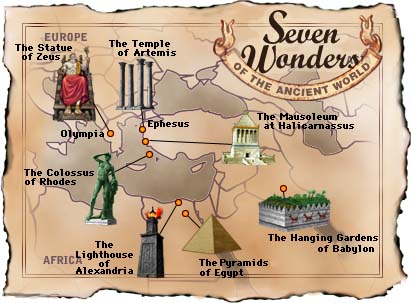
It is a very comprehensive and interesting list of the “Seven Wonders of the World.”  Oddly enough, there is not a single list.  The famed “Seven Wonders of the World” has changed over time.  This site has a pretty good listing of the various interpretations, with good links and maps.  Well done, wonderclub.com.  In any case, the list gets your creative juices flowing, which is always good for us fiction authors in particular.

sevenwondersmap

Complete Listing of World Wonders

The Seven Wonders of the Ancient World

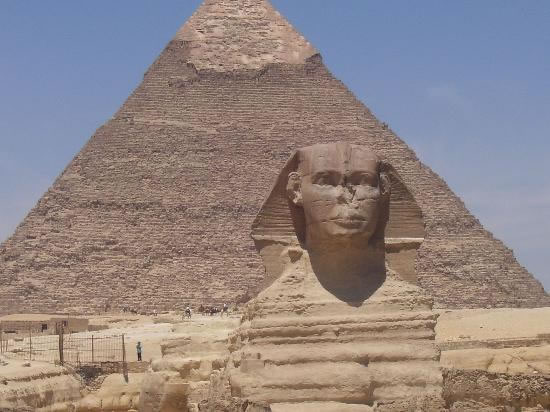
Seven-Wonders-World-giza-pyramids_jpg

The Seven Wonders of the Medieval Mind

The Seven Natural Wonders of the World

The Seven Underwater Wonders of the World

The Seven Wonders of the Modern World

The Seven Forgotten Natural Wonders of the World

The Seven Forgotten Modern Wonders of the World

The Seven Forgotten Wonders of the Medeival Mind

The Forgotten Wonders

Read our World Wonder FAQ by clicking here

 Maps of the World Wonders

1 Comment

Filed under Humor and Observations

Top 100 April Fool’s Day Hoaxes In History

I found this post on StumbleUpon at:

http://www.stumbleupon.com/su/2DCzKM/:miDwrRe+:U$zH2.73/www.museumofhoaxes.com/hoax/aprilfool/

It lists ten pages of hoaxes, ten per page.  Since this is just a blog site, I only re-posted the first ten.  They are very cool and I suggest you check them all out at the link above if you like these samples.  I tried to reach the original site but was unable for some reason.  Either it is gone, or my Chrome was not working…  Enjoy!

The Museum of Hoaxes


Top 100 April Fool’s Day Hoaxes of All Time
As judged by notoriety, creativity, and number of people duped.

Note from the Curator: I created the first version of this list in the late 1990s. Back then, there was hardly any information collected about April Fool’s Day pranks, so I had to do a lot of research in newspaper archives to put this together. Luckily I was in grad school, so I had a lot of spare time on my hands ;-). Over the years I’ve tweaked the list, rearranging it slightly and adding new entries based on reader feedback and ongoing research, but my top choices have remained pretty much the same. This list is easily the most popular article I’ve ever posted on the Museum of Hoaxes. Extracts from it (some attributed, some not) can be found on hundreds of other websites. Plus, it’s inspired some spinoffs. A couple of years ago, someone created an iPhone app version of it (which I’ve never seen because I don’t have an iPhone), and the folks at the Drama Pod created a dramatized audio version of it in 2011. I hope you enjoy it — and if you know of any old hoaxes that I haven’t mentioned on the site, send me an email and let me know. ~Alex

On 1 April 1957, the respected BBC news show Panorama announced that thanks to a very mild winter and the virtual elimination of the dreaded spaghetti weevil, Swiss farmers were enjoying a bumper spaghetti crop. It accompanied this announcement with footage of Swiss peasants pulling strands of spaghetti down from trees. Huge numbers of viewers were taken in. Many called the BBC wanting to know how they could grow their own spaghetti tree. To this the BBC diplomatically replied, “place a sprig of spaghetti in a tin of tomato sauce and hope for the best.” More→

The April 1985 issue of Sports Illustrated contained a story about a new rookie pitcher who planned to play for the Mets. His name was Sidd Finch, and he could reportedly throw a baseball at 168 mph with pinpoint accuracy. This was 65 mph faster than the previous record. Surprisingly, Sidd Finch had never even played the game before. Instead, he had mastered the “art of the pitch” in a Tibetan monastery under the guidance of the “great poet-saint Lama Milaraspa.” Mets fans celebrated their teams’ amazing luck at having found such a gifted player, and they flooded Sports Illustrated with requests for more information. In reality this legendary player only existed in the imagination of the author of the article, George Plimpton, who left a clue in the sub-heading of the article: “He’s a pitcher, part yogi and part recluse. Impressively liberated from our opulent life-style, Sidd’s deciding about yoga —and his future in baseball.” The first letter of each of these words, taken together, spelled “H-a-p-p-y A-p-r-i-l F-o-o-l-s D-a-y — A-h F-i-b”. More→

In 1962 there was only one tv channel in Sweden, and it broadcast in black and white. But on 1 April 1962, the station’s technical expert, Kjell Stensson, appeared on the news to announce that, thanks to a new technology, viewers could convert their existing sets to display color reception. All they had to do was pull a nylon stocking over their tv screen. Stensson proceeded to demonstrate the process. Thousands of people were taken in. Regular color broadcasts only commenced in Sweden on April 1, 1970. More→


The Taco Bell Corporation took out a full-page ad that appeared in six major newspapers on 1 April 1996, announcing it had bought the Liberty Bell and was renaming it the Taco Liberty Bell. Hundreds of outraged citizens called the National Historic Park in Philadelphia where the bell was housed to express their anger. Their nerves were only calmed when Taco Bell revealed, a few hours later, that it was all a practical joke. The best line of the day came when White House press secretary Mike McCurry was asked about the sale. Thinking on his feet, he responded that the Lincoln Memorial had also been sold. It would now be known, he said, as the Ford Lincoln Mercury Memorial. More→


On 1 April 1977, the British newspaper The Guardian published a special seven-page supplement devoted to San Serriffe, a small republic said to consist of several semi-colon-shaped islands located in the Indian Ocean. A series of articles affectionately described the geography and culture of this obscure nation. Its two main islands were named Upper Caisse and Lower Caisse. Its capital was Bodoni, and its leader was General Pica. The Guardian‘s phones rang all day as readers sought more information about the idyllic holiday spot. Only a few noticed that everything about the island was named after printer’s terminology. The success of this hoax is widely credited with launching the enthusiasm for April Foolery that gripped the British tabloids in subsequent decades. More→

The 1 April 1992 broadcast of National Public Radio’s Talk of the Nation revealed that Richard Nixon, in a surprise move, was running for President again. His new campaign slogan was, “I didn’t do anything wrong, and I won’t do it again.” Accompanying this announcement were audio clips of Nixon delivering his candidacy speech. Listeners responded viscerally to the announcement, flooding the show with calls expressing shock and outrage. Only during the second half of the show did the host John Hockenberry reveal that the announcement was a practical joke. Nixon’s voice was impersonated by comedian Rich Little.

The April 1998 issue of the New Mexicans for Science and Reason newsletter contained an article claiming that the Alabama state legislature had voted to change the value of the mathematical constant pi from 3.14159 to the ‘Biblical value’ of 3.0. Soon the article made its way onto the internet, and then it rapidly spread around the world, forwarded by email. It only became apparent how far the article had spread when the Alabama legislature began receiving hundreds of calls from people protesting the legislation. The original article, which was intended as a parody of legislative attempts to circumscribe the teaching of evolution, was written by physicist Mark Boslough.


Burger King published a full page advertisement in the April 1st edition of USA Today announcing the introduction of a new item to their menu: a “Left-Handed Whopper” specially designed for the 32 million left-handed Americans. According to the advertisement, the new whopper included the same ingredients as the original Whopper (lettuce, tomato, hamburger patty, etc.), but all the condiments were rotated 180 degrees for the benefit of their left-handed customers. The following day Burger King issued a follow-up release revealing that although the Left-Handed Whopper was a hoax, thousands of customers had gone into restaurants to request the new sandwich. Simultaneously, according to the press release, “many others requested their own ‘right handed’ version.”

The April 1995 issue of Discover Magazine reported that the highly respected wildlife biologist Dr. Aprile Pazzo had found a new species in Antarctica: the hotheaded naked ice borer. These fascinating creatures had bony plates on their heads that, fed by numerous blood vessels, could become burning hot, allowing the animals to bore through ice at high speeds. They used this ability to hunt penguins, melting the ice beneath the penguins and causing them to sink downwards into the resulting slush where the hotheads consumed them. After much research, Dr. Pazzo theorized that the hotheads might have been responsible for the mysterious disappearance of noted Antarctic explorer Philippe Poisson in 1837. “To the ice borers, he would have looked like a penguin,” the article quoted her as saying.Discover received more mail in response to this article than they had received for any other article in their history.


During an interview on BBC Radio 2, on the morning of 1 April 1976, the British astronomer Patrick Moore announced that at 9:47 AM a once-in-a-lifetime astronomical event was going to occur that listeners could experience in their very own homes. The planet Pluto would pass behind Jupiter, temporarily causing a gravitational alignment that would counteract and lessen the Earth’s own gravity. Moore told his listeners that if they jumped in the air at the exact moment this planetary alignment occurred, they would experience a strange floating sensation. When 9:47 AM arrived, BBC2 began to receive hundreds of phone calls from listeners claiming to have felt the sensation. One woman even reported that she and her eleven friends had risen from their chairs and floated around the room. Moore’s announcement (which, of course, was a joke) was inspired by a pseudoscientific astronomical theory that had recently been promoted in a book called The Jupiter Effect, alleging that a rare alignment of the planets was going to cause massive earthquakes and the destruction of Los Angeles in 1982. More→

Leave a comment

Filed under Humor and Observations, Uncategorized