Tag Archives: inventions

Glass Invented for Drinking Whiskey in Space – Finally!

A Special Whisky Glass for Special Space Whisky

If Galactic’s first commercial flights are any indication, life in space could use a bit more glamour. Astronauts may be fine drinking recycled pee, but celebrities and wealthy space enthusiasts, who have spent hundreds of thousands of dollars to get beyond Earth’s atmosphere, may want to sip something a little stronger. Enter Scotch-maker Ballantine’s new space glass, designed for drinking in microgravity.

Without Earth’s gravity, a regular snifter would send droplets of fancy Scotch soaring into the air—and away from mouths. The Ballantine’s glass is designed to keep the whisky where it belongs. A metal plate at the bottom of the glass creates surface tension to keep the Scotch—poured into the bottom of the cupcontained. Rivulets running up the side of the glass channel the liquid directly into the mouth via a gold mouthpiece. (The company details the design process here.)

Scotch whisky companies seem particularly determined to corner the space drinking market. Ardberg whisky, for instance, is already an old pro at intergalactic refreshments, as vials of the Scotch spent several years on the International Space Station before returning last year. (The verdict: space makes smoky Scotch even smokier.) Several breweries also offer beer made from yeast that’s left Earth and returned, in case hard liquor isn’t your cup of astro-tea.

Naturally, those of us who are earthbound can still buy Ballantine’s space glass for an out-of-this-world experience.

[h/t: The New York Times]

All images by Ballantine’s via Medium

September 8, 2015 – 5:00pm

Leave a comment

Filed under Humor and Observations

Awesome Scientific Device Diagrams from 1850

c. 1850: Scientific Diagrams by John Philipps Emslie

V0025335EL Electricity: page to a partwork on science, with pictures of V0025335ER Magnetism: page to a partwork on science, with pictures of e V0025332ER Hydrostatics: page to a partwork on science, with pictures o V0025333EL Hydraulics: page to a partwork on science, with pictures of V0025332EL Mechanics: page to a partwork on science, with pictures of v V0025331EL Physics: the decorative titlepage to a partwork on science, V0025334EL Acoustics: page to a partwork on science, with pictures of m V0025331ER Physics: page to a partwork on science, with pictures of mec V0025334ER Optics: page to a partwork on science, with pictures of opti V0025333ER Pneumatics: page to a partwork on science, with pictures of

Leave a comment

Filed under Humor and Observations

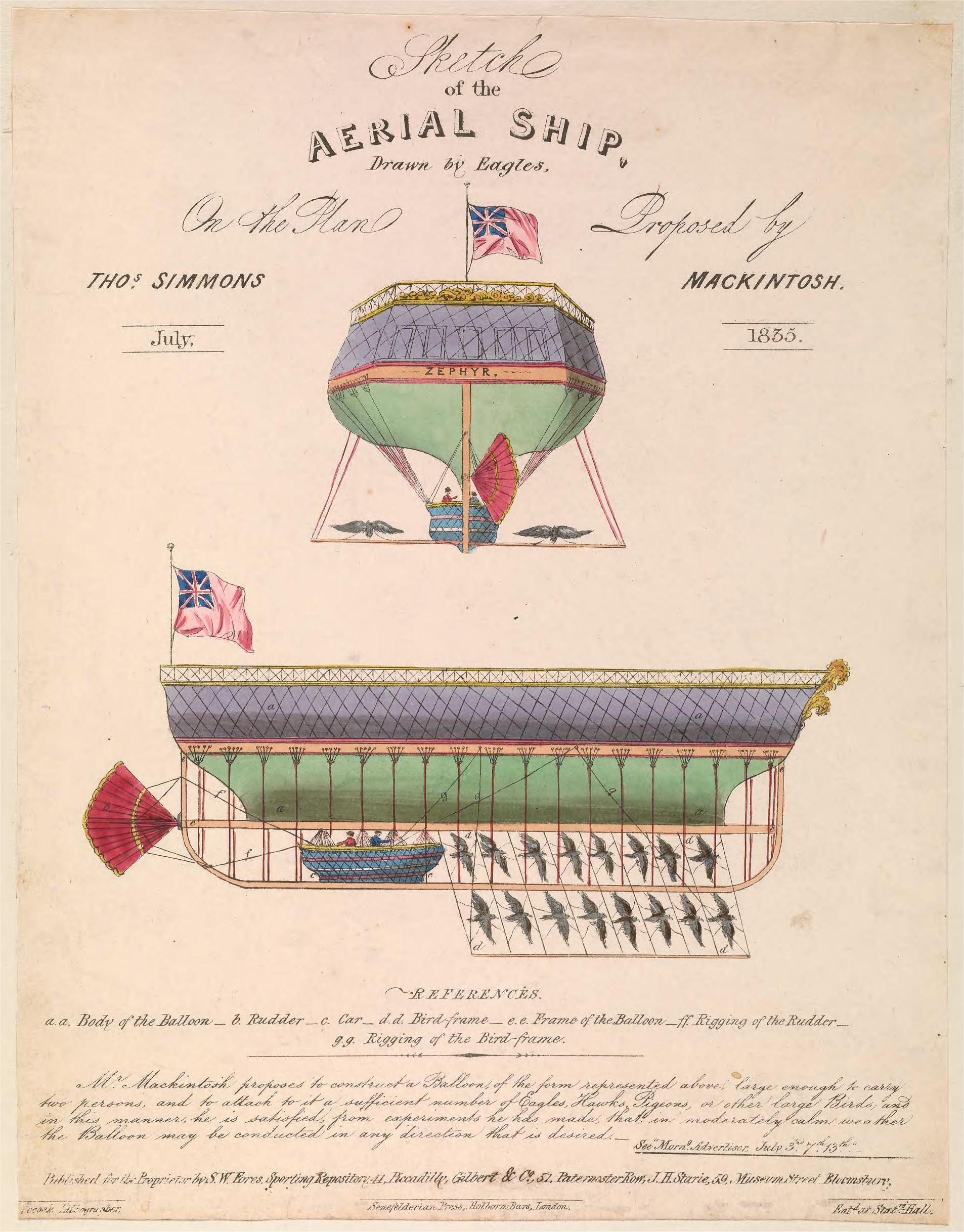
1835: Mackintosh’s Aerial Ship “Drawn by Eagles”

1835: Mackintosh’s Aerial Ship “Drawn by Eagles”

 Amanda

 August 25, 2013

 1800-1899, Transport

Mackintoshs-Aerial-Ship-Drawn-by-Eagles

Source: The Internet Archive

3 Comments

Filed under Humor and Observations

1879 Darby Steam-Digger

c. 1879 The Darby steam-digger

Darby-Steam-Digger

“Image with consent of the descendants of Robert Hasler.

“The Darby Steam-Digger, a light traction engine, was invented circa 1879 by farmer Thomas Darby and built at Lodge Farm Pleshey, near Chelmsford in Essex, England. Robert Hasler, seen driving the Digger, helped to build this first prototype.

“In effect the machine was an early tractor designed mainly for ploughing, and could accomplish 1-acre (4,000 m2) an hour (1 m²/s) to a maximum depth of 14 inches (360 mm). This first digger was constructed on pedestrian principles and had six “feet” and really did walk over the fields. Unfortunately it jumped too much to be really successful. The digger was later modified to have wheels in place of the legs.”

– Wikipedia

2 Comments

Filed under Humor and Observations

MIT students develop wearable cooling device that could make air conditioning obsolete

MIT students develop wearable cooling device that could make air conditioning obsolete

By Drew Prindle

Published November 03, 2013

Digital Trends
  • wristify-mit
    MIT

We come across quite a lot of cool technology, but it’s not every day that we find something that can literally cool you down.

Developed by four engineering students at MIT, Wristify is a prototype wearable device that leverages the physical phenomenon known as the Peltier effect to reduce your body temperature.

The Peltier effect, named for French physicist Jean Charles Athanase Peltier who discovered it in 1834, describes the phenomenon of heating or cooling caused by an electric current flowing across the junction of two different conductors. As the current moves from one conductor to another, the transfer of energy causes one side to heat up and the other to cool down.

Wristify is basically a series of these junctions (called a Peltier cooler) powered by a small battery and attached to a wrist strap. When placed against the skin, the device makes you feel cooler by reducing the temperature of your wrist a few fractions of a degree per second for a couple seconds at a time. Over the course of a few minutes, this process will cause you to perceive a whole-body cooling of a couple degrees Celsius.

The team developing the device is still tinkering with it to figure out the optimal cooling cycle, but at this point in time they say the most effective method is to cool your wrist by 0.4 degrees Celsius (0.7F) per second for five seconds, and then turn off for 10 seconds.

The chief benefit of this device is that it offers a more personalized approach to temperature control, one that’s vastly more efficient than current heating and cooling methods. It takes millions of watts to raise or lower the temperature of an entire building, but Wristify can run on a small lithium battery. If everybody had one of these things on their wrist instead of relying on air conditioning or heaters all the time, the potential energy savings could be massive.

Of course, it’s still just a prototype, but the idea recently won the $10,000 top prize in MIT’s annual Making And Designing Materials Engineering Competition, and the team plans to put all that cheddar toward further development of the device.

Leave a comment

Filed under Humor and Observations

13-Year-Old Makes $100K Reinventing the Scooter Wheel

13-Year-Old Makes $100K Reinventing the Scooter Wheel

By Gabrielle Karol

Published September 13, 2013

FOXBusiness
  • IMG_7972.jpg
  • LB Scoots - Home (1).png

Nicholas Pinto may be one year away from high school, but he’s already doing big business.

The 13-year-old says he’s always loved scooters, but was frustrated by how quickly the wheels would break.

“As you develop your skills, like landing on the scooter harder when you’re going off of a ramp, what you want is for the parts not to break,” says Pinto, who lives with his parents and three siblings in Cranford, New Jersey.  He says he was spending a lot of money replacing the wheels every few weeks.

“I was saying, ‘Wow, this can’t be!’ I was trying so many wheels, I thought I better make my own and help the world,” says Pinto, who enjoys competing in scooter competitions.

Over a year ago, the entrepreneurial eighth-grader began researching manufacturers who could reinvent the wheel, so to speak. He says he finally located a manufacturer in California to make a durable, polyurethane wheel that would be tougher than the breakable plastic wheels found on most scooters.

“I made a step-by-step design with all of the dimensions and they did it,” says Pinto, who borrowed $2,000 from his parents to create 500 wheels, bringing his fledgling company LB Scoots to life.

“The LB stands for ‘Little Boy.’ It’s the name of my dog, a chocolate lab,” says Pinto.

Grassroots Marketing Helps LB Scoots Get Off the Ground

Once the wheels were made, Pinto says he built an e-commerce website with the help of Youtube tutorials and his mother, who had created a website herself for her own small business, a modeling and acting agency.

From there, Pinto says he started selling wheels thanks to word of mouth, showcasing his new wheels at skate parks and competitions.

“We went to competitions and had a big banner there.  We were giving out stickers and saying, ‘Everyone check us out online!’” says Pinto.

Within a year, Pinto was receiving orders from all over the country, and even as far away as Australia. “We made about $100,000 in the first year,” says Pinto.

Pinto says he’s going to stick to LB Scoots for now, but isn’t ruling out the possibility of branching out down the road.
“As I grow up, I want to keep having LB Scoots, and I would also like to start other companies,” says Pinto. He’s also mentoring his little sister, who’s an entrepreneur in her own right.

“She makes duct-tape wallets and paintings and sells them online,” says Pinto.

And with three years on his little sister and experience running a $100,000 business, Pinto’s got a lot of advice to share.

“She’s 10 … I help her out a lot,” he says.

Read more: http://smallbusiness.foxbusiness.com/entrepreneurs/2013/09/13/13-year-old-makes-100k-reinventing-scooter-wheel/#ixzz2eu1uwftR

Leave a comment

Filed under Humor and Observations

What People Thought Vehicles Would Like Today

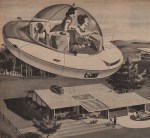
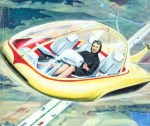
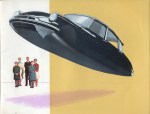
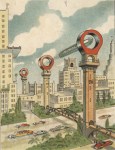
These are all pictures and illustrations of what people predicted future vehicles would be like today.  To me, beyond the coolness of the pictures, is the analysis of where they went wrong. You see, predicting the future does not usually work, because we are too fixed on how things are right now.  For instance, the clothing in the pictures is the most wrong.  Men don’t dress nice in suits all the time like they used to.  It is a way for futurists such as myself to look at the mistakes in predicting made before and try to avoid them.  Society, dress and appearance is likely to change just as much as technology.  The pictures also do not reflect a change in urban buildings or lifestyle as technology changes.  With that added thought, enjoy!

6 Comments

Filed under Humor and Observations

27 Science Fiction Technologies Made Real in 2012

27 SCIENCE FICTIONS THAT BECAME SCIENCE FACTS IN 2012

We may never have our flying cars, but the future is here. From creating fully functioning artificial leaves to hacking the human brain, science made a lot of breakthroughs this year.
 1. QUADRIPLEGIC USES HER MIND TO CONTROL HER ROBOTIC ARM


At the University of Pittsburgh, the neurobiology department worked with 52-year-old Jan Scheuermann over the course of 13 weeks to create a robotic arm controlled only by the power of Scheuermann’s mind.
The team implanted her with two 96-channel intracortical microelectrodes. Placed in the motor cortex, which controls all limb movement, the integration process was faster than anyone expected. On the second day, Jan could use her new arm with a 3-D workspace. By the end of the 13 weeks, she was capable of performing complex tasks with seven-dimensional movement, just like a biological arm.
To date, there have been no negative side effects.
Source: gizmodo.com

2. DARPA ROBOT CAN TRAVERSE AN OBSTACLE COURSE

Once the robot figures out how to do that without all the wires, humanity is doomed.
DARPA was also hard at work this year making robots to track humans and run as fast as a cheetah, which seems like a great combination with no possibility of horrible side effects.
Source: jwherrman

3. GENETICALLY MODIFIED SILK IS STRONGER THAN STEEL


Photo Courtesy of Indigo Moon Yarns.

At the University of Wyoming, scientists modified a group of silkworms to produce silk that is, weight for weight, stronger than steel. Different groups hope to benefit from the super-strength silk, including stronger sutures for the medical community, a biodegradable alternative to plastics, and even lightweight armor for military purposes.
Source: bbc.co.uk

4. DNA WAS PHOTOGRAPHED FOR THE FIRST TIME


Using an electron microscope, Enzo di Fabrizio and his team at the Italian Institute of Technology in Genoa snapped the first photos of the famous double helix.
Source: newscientist.com / via: davi296

5. INVISIBILITY CLOAK TECHNOLOGY TOOK A HUGE LEAP FORWARD


British Columbia company HyperStealth Biotechnology showed a functioning prototype of its new fabric to the U.S. and Canadian military this year. The material, called Quantum Stealth, bends light waves around the wearer without the use of batteries, mirrors, or cameras. It blocks the subject from being seen by visual means but also keeps them hidden from thermal scans and infrared.
Source: toxel.com

6. SPRAY-ON SKIN


ReCell by Avita Medical is a medical breakthrough for severe-burn victims. The technology uses a postage stamp–size piece of skin from the patient, leaving the donor site with what looks like a rug burn. Then the sample is mixed with an enzyme harvested from pigs and sprayed back onto the burn site. Each tiny graft expands, covering a space up to the size of a book page within a week. Since the donor skin comes from the patient, the risk of rejection is minimal.
Source: news.discovery.com

7. JAMES CAMERON REACHED THE DEEPEST KNOWN POINT IN THE OCEAN


Cameron was the first solo human to reach the bottom of the Mariana Trench. At 6.8 miles deep, it is perhaps more a more alien place to scientists than some foreign planets are. The 2.5-story “vertical torpedo” sub descended over a period of two and a half hours before taking a variety of samples.
Source: news.nationalgeographic.com

8. STEM CELLS COULD EXTEND HUMAN LIFE BY OVER 100 YEARS


When fast-aging elderly mice with a usual lifespan of 21 days were injected with stem cells from younger mice at the Institute for Regenerative Medicine in Pittsburgh, the results were staggering. Given the injection approximately four days before they were expected to die, not only did the elderly mice live — they lived threefold their normal lifespan, sticking around for 71 days. In human terms, that would be the equivalent of an 80-year-old living to be 200.
Source: news.nationalgeographic.com

9. 3-D PRINTER CREATES FULL-SIZE HOUSES IN ONE SESSION


The D-Shape printer, created by Enrico Dini, is capable of printing a two-story building, complete with rooms, stairs, pipes, and partitions. Using nothing but sand and an inorganic binding compound, the resulting material has the same durability as reinforced concrete with the look of marble. The building process takes approximately a fourth of the time as traditional buildings, as long as it sticks to rounded structures, and can be built without specialist knowledge or skill sets.
Source: gizmag.com

10. SELF-DRIVING CARS ARE LEGAL IN NEVADA, FLORIDA, AND CALIFORNIA


Google started testing its driverless cars in the beginning of 2012, and by May, Nevada was the first state to take the leap in letting them roam free on the roads. With these cars logging over 300,000 autonomous hours so far, the only two accidents involving them happened when they were being manually piloted.
Source: en.wikipedia.org

11. VOYAGER I LEAVES THE SOLAR SYSTEM


Launched in 1977, Voyager I is the first manmade object to fly beyond the confines of our solar system and out into the blackness of deep space. It was originally designed to send home images of Saturn and Jupiter, but NASA scientists soon realized eventually the probe would float out into the great unknown. To that end, a recording was placed on Voyager I with sounds ranging from music to whale calls, and greetings in 55 languages.
Source: space.com

12. CUSTOM JAW TRANSPLANT CREATED WITH 3-D PRINTER


A custom working jawbone was created for an 83-year-old patient using titanium powder and bioceramic coating. The first of its kind, the successful surgery opens the door for individualized bone replacement and, perhaps one day, the ability to print out new muscles and organs.
Source: telegraph.co.uk

13. ROGUE PLANET FLOATING THROUGH SPACE


Until this year, scientists knew planets orbited a star. Then, in came CFBDSIR2149. With four to seven times the mass of Jupiter, it is the first free-floating object to be officially defined as an exoplanet and not a brown dwarf.
Source: sciencenews.org

14. CHIMERA MONKEYS CREATED FROM MULTIPLE EMBRYOS


While all the donor cells were from rhesus monkeys, the researchers combined up to six distinct embryos into three baby monkeys. According to Dr. Mitalipov, “The cells never fuse, but they stay together and work together to form tissues and organs.” Chimera species are used in order to understand the role specific genes play in embryonic development and may lead to a better understanding of genetic mutation in humans.
Source: bbc.co.uk

15. ARTIFICIAL LEAVES GENERATE ELECTRICITY


Using relatively inexpensive materials, Daniel G. Nocera created the world’s first practical artificial leaf. The self-contained units mimic the process of photosynthesis, but the end result is hydrogen instead of oxygen. The hydrogen can then be captured into fuel cells and used for electricity, even in the most remote locations on Earth.
Source: sciencedaily.com

16. GOOGLE GOGGLES BRING THE INTERNET EVERYWHERE


Almost everyone has seen the video of Google’s vision of the future. With their Goggles, everyday life is overlaid with a HUD (Head’s Up Display). Controlled by a combination of voice control and where the user is looking, the Goggles show pertinent information, surf the web, or call a loved one.
Source: heraldsun.com.au

17. THE HIGGS-BOSON PARTICLE WAS DISCOVERED


Over the summer, multinational research center CERN confirmed it had discovered a particle that behaved enough like a Higgs boson to be given the title. For scientists, this meant there could be a Higgs field, similar to an electromagnetic field. In turn, this could lead to the scientists’ ability to interact with mass the same way we currently do with magnetic fields.
Source: forbes.com

18. FLEXIBLE, INEXPENSIVE SOLAR PANELS CHALLENGE FOSSIL FUEL


At half the price of today’s cheapest solar cells, Twin Creeks’ Hyperion uses an ion canon to bombard wafer-thin panels. The result is a commercially viable, mass-produced solar panel that costs around 40 cents per watt.
Source: extremetech.com

19. DIAMOND PLANET DISCOVERED


An exoplanet made entirely of diamonds was discovered this year by an international research team. Approximately five times the size of Earth, the small planet had mass similar to that of Jupiter. Scientists believe the short distance from its star coupled with the exoplanet’s mass means the planet, remnants of another star, is mostly crystalline carbon.
Source: io9.com

20. EYE IMPLANTS GIVE SIGHT TO THE BLIND


Two blind men in the U.K. were fitted with eye implants during an eight-hour surgery with promising results. After years of blindness, both had regained “useful” vision within weeks, picking up the outlines of objects and dreaming in color. Doctors expect continued improvement as their brains rewire themselves for sight.
Source: telegraph.co.uk

21. WALES BARCODES DNA OF EVERY FLOWERING PLANT SPECIES IN THE COUNTRY


Photo Courtesy of Virtual Tourist.

Led by the National Botanic Garden’s head of research and conversation, a database of DNA for all 1,143 native species of Wales has been created. With the use of over 5,700 barcodes, plants can now be identified by photos of their seeds, roots, wood, or pollen. The goal is to help researchers track things such as bee migration patterns or how a plant species encroaches on a new area. The hope is to eventually barcode both animal and plant species across the world.
Source: walesonline.co.uk

22. FIRST UNMANNED COMMERCIAL SPACE FLIGHT DOCKS WITH THE ISS


SpaceX docked its unmanned cargo craft, the Dragon, with the International Space Station. It marked the first time in history a private company had sent a craft to the station. The robotic arm of the ISS grabbed the capsule in the first of what will be many resupply trips.
Source: nytimes.com

23. ULTRA-FLEXIBLE “WILLOW” GLASS WILL ALLOW FOR CURVED ELECTRONIC DEVICES


Created by New York–based developer Corning, the flexible glass prototype was shown off at an industry trade show in Boston. At only 0.05mm thick, it’s as thin as a sheet of paper. Perhaps Sony’s wearable PC concept will actually be possible before 2020.
Source: bbc.co.uk

24. NASA BEGINS USING ROBOTIC EXOSKELETONS


The X1 Robotic Exoskeleton weighs in at 57 lbs. and contains four motorized joints along with six passive ones. With two settings, it can either hinder movement, such as when helping astronauts exercise in space, or aid movement, assisting paraplegics with walking.
Source: news.cnet.com

25. HUMAN BRAIN IS HACKED


Usenix Security had a team of researchers use off-the-shelf technology to show how vulnerable the human brain really is. With an EEG (electroencephalograph) headset attached to the scalp and software to figure out what the neurons firing are trying to do, it watches for spikes in brain activity when the user recognizes something like one’s ATM PIN number or a child’s face.
Source: extremetech.com

26. FIRST PLANET WITH FOUR SUNS DISCOVERED


Discovered by amateur astronomers, the planet closely orbits a pair of stars, which in turn orbit another set of more distant stars. It’s approximately the size of Neptune, so scientists are still trying to work out how the planet has avoided being pulled apart by the gravitational force of that many stars.
Source: io9.com

27. MICROSOFT PATENTED THE “HOLODECK”


The patent suggests Microsoft wants to take gaming beyond a single screen and turn it into an immersive experience — beaming images all over the room, accounting for things like furniture, and bending the graphics around them to create a seamless environment.
Source: bbc.co.uk

Found on: buzzfeed.com

2 Comments

Filed under Humor and Observations

Inventors killed by their own inventions

Inventors killed by their own inventions

Reposted from Wikipedia

Direct casualties

Automotive

Aviation

Industrial

Maritime

Hunley Submarine

  • Horace Lawson Hunley (died 1863, age 40), Confederate marine engineer and inventor of the first combat submarineCSS Hunley, died during a trial of his vessel. During a routine exercise of the submarine, which had already sunk twice previously, Hunley took command. After failing to resurface, Hunley and the seven other crew members drowned.[11]
  • Thomas Andrews (shipbuilder) (7 February 1873 – 15 April 1912) was an Irish businessman and shipbuilder; managing director and head of the drafting department for the shipbuilding company Harland and Wolff in Belfast, Ireland. Andrews was the naval architect in charge of the plans for the ocean liner RMS Titanic. He was travelling on board the Titanic during its maiden voyage when it hit an iceberg on 14 April 1912 and was one of the 1,507 people who perished in the disaster. [12]

Medical

  • Thomas Midgley, Jr. (1889–1944) was an American engineer and chemist who contracted polio at age 51, leaving him severely disabled. He devised an elaborate system of strings and pulleys to help others lift him from bed. This system was the eventual cause of his death when he was accidentally entangled in the ropes of this device and died of strangulation at the age of 55. However, he is more famous—and infamous—for developing not only the tetraethyl lead (TEL) additive to gasoline, but also chlorofluorocarbons (CFCs).[13][14][15]
  • Alexander Bogdanov (22 August 1873 – 7 April 1928) was a Russian physician, philosopher, science fiction writer and revolutionary of Belarusian ethnicity who started blood transfusion experiments, apparently hoping to achieve eternal youth or at least partial rejuvenation. He died after he took the blood of a student suffering from malaria and tuberculosis, possibly due to blood type incompatibility. [16] [17]

Physics

Publicity and Entertainment

Karel Soucek in his barrel

  • Karel Soucek (19 April 1947 – 20 January 1985) was a Canadian professional stuntman who developed a shock-absorbent barrel nine feet long and five feet in diameter. He died when his barrel, with him inside, was prematurely dropped down a waterfall from the top of the Houston Astrodome.[21]

Punishment

Railways

Rocketry

  • Max Valier (1895–1930) invented liquid-fuelled rocket engines as a member of the 1920s German rocketeering society Verein für Raumschiffahrt. On 17 May 1930, an alcohol-fuelled engine exploded on his test bench in Berlin, killing him instantly.[27]

Popular myths and related stories

Perillos being pushed into his brazen bull

  • Jim Fixx (1932–1984) was the author of the 1977 best-selling book, The Complete Book of Running. He is credited with helping start America’s fitness revolution, popularizing the sport of running and demonstrating the health benefits of regular jogging. On 20 July 1984, Fixx died at the age of 52 of a fulminant heart attack, after his daily run, on Vermont Route 15 in Hardwick.[28][29]
  • Joseph-Ignace Guillotin (1738–1814) While he did not invent the guillotine, his name became an eponym for it.[30] Rumors circulated that he died by the machine, but historical references show that he died of natural causes.[31]
  • Perillos of Athens (circa 550 BCE), according to legend, was the first to be roasted in the brazen bull he made for Phalaris of Sicily for executing criminals.[32][33]
  • James Heselden (1948–2010), having recently purchased the Segway production company, died in a single-vehicle Segway accident. (Dean Kamen invented the Segway.)[34]
  • Wan Hu, a sixteenth-century Chinese official, is said to have attempted to launch himself into outer space in a chair to which 47 rockets were attached. The rockets exploded, and it is said that neither he nor the chair were ever seen again.

1 Comment

Filed under Humor and Observations

Plasma Gas Hand Cleaner

This little black box cleans your hands with plasma gas

This little black box cleans your hands with plasma gas

The idea of plasma gas may have you thinking twice about sticking your hand in this box, but at room temperature and pressure and in the controlled environment its in, it can get your hand — from your skin to under your fingernails — entirely sterilized in under four seconds. It’s so effective, in fact, that researchers found it could get rid of said Athlete’s Foot without the patient ever having to remove a sock.

The technology is geared toward hospitals, hotels and the service industry, where cleanliness is key. Plasma-cleaning itself isn’t new as it’s been used to sterilize medical instruments for years, but to use it on human tissue several advancements in both the way plasma gas is handled and the technology behind industrial hand sanitizers had to be made.

In the future, the plasma gas sanitizer could open up new areas elsewhere, such as being used in air conditioners to purify air. In other words, get ready to see all those ion air purifiers at Sharper Image replaced by plasma ones.

Leave a comment

Filed under Humor and Observations