Monthly Archives: July 2013

Lost medieval mansion found at UK construction site

Lost medieval mansion found at UK construction site

By Sasha Bogursky

Published July 25, 2013

FoxNews.com
  • wessexarch1.jpg

    British archaeologists have uncovered the remains of stone foundations in a pattern which suggests that there may have been a series of medieval buildings on a modern construction site. The mystery lies in exactly what the buildings were once used for. (Wessex Archaeology)

  • wessextile.jpg

    These medieval decorated floor tiles suggest that these were substantial buildings of high status. (Wessex Archaeology)

  • wessexday.jpg

    Somerset locals visit the site on July 13th to learn more about the mysterious medieval structure at Longforth Farm on Archaeology Day; hosted by Bloor Homes. (Rob Perrett/Wessex Archaeology)

It sounds like a case for Sherlock Holmes: a 900-year-old medieval manor mysteriously vanishes, only to be uncovered later by British archaeologists.

The ancient site has been stripped of its materials except for the foundation — and there is no record of it ever existing.

Got chills? So do the archaeologists who discovered it.

“This is a significant find and therefore very exciting, particularly as there are no documentary records that such a site ever existed here,” said Wessex Archaeology’s senior buildings archaeologist Bob Davis, who participated in the excavation.

Excavators from the company arrived on April 8 at the site in Longforth Farm in Wellington, Somerset, a small agricultural county in southwest England. They planned to perform an archaeological dig prior to the construction of a housing development by Bloor Homes, as required by the Somerset Country Council.

PHOTOS: Ancient Maya Cave Exploration

They had no way of knowing their routine excavation would reveal a hidden series of buildings dating to the 12th through 14th century.

“Such things are as rare as hen’s teeth.”

– Bob Davis of Wessex Archaeology 

“This sort of thing turning up — a large medieval building of such high status without any surviving historical records — it’s exceptionally mysterious and strange,” senior historic environment officer for the Somerset Country Council Steve Membery told ThisIsCornwall.co.uk.

“It looks as if it’s a previously unrecorded, undocumented, high-status, ecclesiastical manor house,” Davis told the British paper. “Such things are as rare as hen’s teeth.”

All that remains from what appears to have been an impressive, affluent mansion is the stone foundation and a few leftover artifacts. It is expected that antiquities thieves would steal valuables from the site, but archaeologists are literally picking at scraps to find out what happened to the doors, windows, stones and other materials that are to be found in a large manor.

They were able to uncover stunningly glazed ceramic roof tiles and carefully decorated floor tiles, however, suggesting the buildings were of high status, perhaps used for religious services.

But much like the American colony of Roanoke, N.C., whomever used the buildings left no trace or record of their existence; they appear to have simply vanished.

“We do not yet know who owned or used the buildings,” community and education officer for Wessex Archaeology Laura Joyner told FoxNews.com. “They appear to form a distinct complex of buildings.”

The most recent discovery has helped shed some light on the use for some of the structures.

According to Wessex Archaeology, the two tiles pictured below confirm the existence of private chambers and a possible chapel at the Longforth Farm site.

Milford Sound in New Zealand

The tile on the left includes a checkered agent or shield motif, which possibly relates to the family name of St. Barbe, a medieval aristocratic British family. Centuries later, Ursula St. Barbe, the daughter of Henry St. Barbe from Somerset with the same last name, was a lady in the court of Queen Elizabeth I of England in the late 1500s.

RELATED: Ancient Graffiti Found in Rome’s Colosseum 

The second tile, similar to one found at Glastonbury Abbey, is a depiction of a helmeted King Richard I (1189-1199) on horseback, charging his enemy. The tile “would originally have had an opposing tile showing Saladin, Sultan of Egypt, also in a symbolic combat pose,” according to Wessex Archaeology. “These two great adversaries were involved in the Third Crusade (1189–1192) and are often depicted together on this type of floor tile.”

Based on the artifacts, the owners of the buildings were wealthy and powerful. So what happened to those medieval VIPs?

The approximately 1,400 locals who flocked to the site when it opened to the public want to know as well.

“Hopefully, this fills in a missing bit of the jigsaw of medieval Somerset,” Davis added.

“Excavation is ongoing, but will come to an end next week,” Joyner confirmed to FoxNews.com. Wessex archaeologists hope to have more answers soon.

Read more: http://www.foxnews.com/science/2013/07/25/medieval-mansion-mysteriously-appears/?intcmp=features#ixzz2aHlTvYxA

4 Comments

Filed under Humor and Observations

Pixar Made 14 Films in the Same Alternate Universe? (see for yourself)

Pixar fan theory that will blow your mind 

JULY 20, 2013

FOLLOW  ON TAPITURE

 

Leave a comment

Filed under Humor and Observations

Raspberry Pi is Changing Our World

If you have not heard about Raspberry Pi, it is a very cheap computer circuit board that is changing the world.  It can be used to turn normal things into computerized robots and devices.  Read below and have your mind blown…

World’s cheapest computer gets millions tinkering

By Judith Evans

Published July 20, 2013

  • photo_1374378770461-1-HD.jpg

    Japanese engineer Shota Ishiwatari displays the humanoid robot “Rapiro” which works with a “Raspberry Pi” in Tokyo on July 8, 2013. Raspberry Pi, the world’s cheapest computer, costing just $25 (??17, 19.50 euros), has astonished its British creators by selling almost 1.5 million units in 18 months. (AFP)

  • photo_1374378828553-1-HD.jpg

    Japanese engineer Shota Ishiwatari displays the humanoid robot “Rapiro” which works with a “Raspberry Pi” circuit board in Tokyo on July 8, 2013. The Raspberry Pi is now powering robots in Japan and warehouse doors in Malawi, photographing astral bodies from the United States and helping to dodge censorship in China. (AFP)

LONDON (AFP) –  It’s a single circuit board the size of a credit card with no screen or keyboard, a far cry from the smooth tablets that dominate the technology market.

But the world’s cheapest computer, costing just $25 (??17, 19.50 euros), has astonished its British creators by selling almost 1.5 million units in 18 months.

The Raspberry Pi is now powering robots in Japan and warehouse doors in Malawi, photographing astral bodies from the United States and helping to dodge censorship in China.

“We’re closing in on one and and half million (sales) for something that we thought would sell a thousand,” said Eben Upton, executive director of the Raspberry Pi Foundation.

“It was just supposed to be a little thing to solve a little problem.

“We’ve sold many more to children than we expected to sell, but even more to adults. They’re using it like Lego to connect things up.”

The device, which runs the open-source Linux operating system, was designed as an educational tool for children to learn coding.

But its potential for almost infinite tinkering and customisation has fired up the imaginations of hobbyists and inventors around the world.

Tokyo inventor Shota Ishiwatari has created a small humanoid robot run by a Pi, which can tell you the weather, manage your diary and even make coffee.

“I wanted to create something by using a 3D printer and the Raspberry Pi – two cool items,” he told AFP, adding that he also wanted to demonstrate the potential of the microcomputer.

“Many Raspberry Pi users did not know how to have fun with the chip. I wanted to present practical ways to play with it.”

Upton and his colleagues first thought of creating a cheap computer suited to programming when they were teaching computer science at Cambridge University.

They noticed that children of the wired generation lacked the day-to-day experience of coding that was so formative for the computer geeks who grew up in the 1980s.

“They didn’t have the grungy familiarity with the dirty bits, the hacking,” Upton told AFP.

“The theory of computer science is maths, but the practice is a craft, like carpentry.”

Upton reminisces happily about his childhood coding on a BBC Micro, a rugged early personal computer from 1982.

Back then, you had to know a computer “language” in order to use one at all. But home computers are now so complex that parents often ban children from interfering with the underlying code.

Upton and his colleagues saw that developments in technology meant something like the Micro could now be created for a fraction of the cost, in pocket size, with the capacity to run multimedia programmes.

The team behind the Pi grew as the project developed; it now includes David Braben — the designer of a classic Micro game, Elite — and tech entrepreneur and investor Jack Lang.

By 2012, with Upton now working for a chip design firm, the Pi was ready to launch.

Demand for the device, assembled in Wales, was so high that the websites of its distributors crashed.

User groups called Raspberry Jams now meet monthly in cities from Manchester to Singapore to share ideas.

A Raspberry Jam brought together the team behind a Pi camera that will photograph rhinos and other endangered animals in east Africa, generating data on their habits and on poaching.

The Instant Wild system, backed by the Zoological Society of London, already operates in several countries, beaming images via satellite to park rangers and to an app that crowdsources identifications of animals.

But by replacing expensive purpose-built equipment with cheaper Raspberry Pis, Instant Wild hopes to vastly expand its work.

A grid of 100 Pi cameras will be set up in 2015 on a Kenyan ranch, while another Pi will make its way to Antarctica to record penguin behaviour.

“It used to be very expensive — you’d have to run a laptop, with a huge car battery to power the thing. This saves countless power and it’s easy for it to send out alerts automatically,” said Alasdair Davies, technical advisor to the project.

Upton, however, is focused closer to home.

The Raspberry Pi Foundation is nonprofit and the design freely available, so he and his team will not be retiring on the proceeds of their success.

Instead they are working on software to make the Pi more accessible for children without expert help, and Upton remains intent on improving computer education.

The foundation is in discussions with the British government on a new IT curriculum.

For the country that invented some of the earliest computers, Upton feels that teaching coding should be a matter of national pride.

“The definition of computing is being reworked to be less about PowerPoint and more about computer programming — the useful stuff. The real stuff,” he said.

Read more: http://www.foxnews.com/world/2013/07/20/world-cheapest-computer-gets-millions-tinkering/?intcmp=obnetwork#ixzz2aHjSnjI9

2 Comments

Filed under Humor and Observations

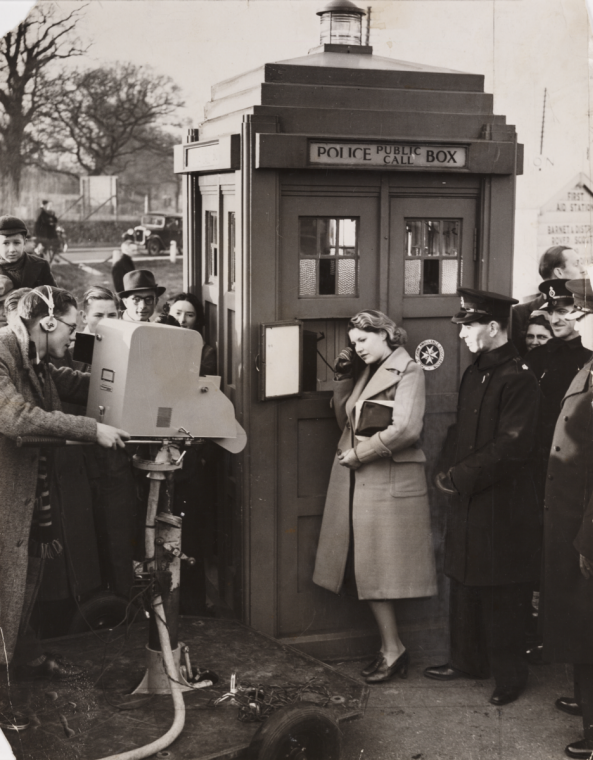
Real Picture of the Tardis from 1939.

In 1939, Dr. Who arrives in London to save the world.  The BBC, unwitting of the significance of the public call box, use it to film a public service advertisement on vehicle safety and what to do if you are in a driving accident.  Meanwhile, the Doctor and his Companion wait inside impatiently, hoping alien forces do not win before the film crew leaves them alone.

At least, that is the way I see it…


tardis

A photograph of the making of a programme by the BBC about driving errors, taken by Saidman in 1939 for the Daily Herald.

2 Comments

Filed under Humor and Observations

More Awesome Cosplay Pictures

Once again, more awesome cosplay pictures.  For more, type “cosplay” into the search block on my home page.  I have posted about twenty sets so far.  Keep the awesome pictures coming in.

Leave a comment

Filed under Humor and Observations

Amazing Miniature Food Artwork

You won’t believe how awesome this artwork is.  Seriously.

Most Amazing Miniature Food Artworks by Shay Aaron

By , on December 17, 2011

– See more at: http://thewondrous.com/most-amazing-miniature-food-artworks-by-shay-aaron#sthash.naejbece.dpuf

Shay Aaron is a brilliant artist from Israel who makes the most astonishing miniature food jewelry. These foodstuffs look so beautiful that we would desire to eat them.

Actually, there’s a whole market out there for miniature food. Not actual stuff you can eat, but beautifully hand made designs of steaks, burgers, pies, vegetables, eggs and pretty much anything you can think of.

– See more at: http://thewondrous.com/most-amazing-miniature-food-artworks-by-shay-aaron#sthash.naejbece.dpuf

5 Comments

Filed under Humor and Observations, Uncategorized

Stone coffin to be opened at Richard III grave site

Stone coffin to be opened at Richard III grave site

By Megan Gannon

Published July 24, 2013

LiveScience
  • Hunt for King Richard 4.jpg

    A stained glass window at Cardiff Castle depicts King Richard III and Queen Anne Neville. (University of Leicester)

  • richard-stone-coffin-2

    An intact stone coffin found in the ruins of Grey Friars, the monastery where Richard III was buried. (University of Leicester)

  • King Richard III remains 1.jpg

    Feb. 4 2013: Remains found underneath a parking lot last September at the Grey Friars excavation in Leicester, which have been declared “beyond reasonable doubt” to be the long lost remains of England’s King Richard III, missing for 500 years. (AP Photo/ University of Leicester)

Archaeologists are set to lift the lid on a stone coffin discovered at the site of the English friary where Richard III’s remains were found.

Excavators suspect the tomb billed as the only intact stone coffin found in Leicester may contain the skeleton of a medieval knight or one of the high-status friars thought to have been buried at the church.

Richard III, the last king of the House of York, ruled England from 1483 to 1485, when was killed in battle during the War of Roses, an English civil war. He received a hasty burial at the Grey Friars monastery in Leicester as his defeater, Henry Tudor, ascended to the throne. Grey Friars was destroyed in the 16th century during the Protestant Reformation, and its ruins became somewhat lost to history. [Photos: The Discovery of Richard III]

‘This is the first time we have found a fully intact stone coffin during all our excavations.’

– Mathew Morris, of the University of Leicester Archaeological Services

A dig beneath a parking lot in Leicester last summer revealed the remains of Grey Friars and a battle-ravaged skeleton later confirmed to be that of Richard III. Excavators also found a handful of other graves, including this coffin, which the researchers think was put in the ground more than 100 years before Richard’s burial.

This month, the team from the University of Leicester started a fresh excavation at the site. Now in their final week of digging, the researchers plan to open the coffin in the days ahead.

They think it might contain the remains of the knight Sir William de Moton of Peckleton, who died between 1356 and 1362, or one of two heads of the Grey Friars order in England, Peter Swynsfeld or William of Nottingham.

“Stone coffins are unusual in Leicester and this is the first time we have found a fully intact stone coffin during all our excavations of medieval sites in the city,” site director Mathew Morris, of the University of Leicester Archaeological Services (ULAS), said in a statement. “I am excited that it appears to be intact.”

Morris and his team intend to measure and take photos of the coffin before they lift the lid, which they say they will do out of view of the media.

Meanwhile, Richard’s remains are set to be reinterred next year. Last week, the Leicester Cathedral announced its $1.5 million ($1 million U.S.) plans to rebury the king in a new raised tomb at the church.

Read more: http://www.foxnews.com/science/2013/07/24/stone-coffin-to-be-opened-at-richard-iii-site/?intcmp=features#ixzz2a7Tv66R3

1 Comment

Filed under Humor and Observations

Latest Issue of The WOD

The WOD (weavers of dreams) is the premier magazine for pop culture in the Southwestern United States.  ConNotations Newszine is no longer printed separately, but is an insert into the middle of The WOD.  Here is a link to read this awesome publication for free:

TheWOD_Issue1-5_Color_LowRes (1)

I have several stories in this month’s edition, including:  1) an interview with Toni Darling, beautiful, nice, athletic and vivacious, she tells about her life as a model and cosplayer; 2) part two of my sci-fi serial story – The Drifter; 3) the History of Superman, in honor of the 75th Anniversary this year of the comic superhero; 4) the Politics of Superman, a brief essay on the socio-political slant of the man of steel; 5) and two book reviews, one on Conspiracy of Alchemists the other on After Earth.

Toni Darling

Toni Darling

Toni Darling

Toni Darling

Also in this issue are stories and columns by my great friends Hal Astell, Sean Ellis, Alfred Trujillo and Cara Nicole.  Don’t miss out on this exciting issue when they cost is – ZERO.

Cara Nicole (AZ Powergirl) and Alfred Trujillo

Cara Nicole (AZ Powergirl) and Alfred Trujillo

You might also want to look at some of the advertisements.  There is a particularly good one for The Travelers’ Club and The Ghost Ship and for Twisted Nightmares.  Both only 99 cents RIGHT NOW on Kindle!!!!

kindle gs T-Nightmares-Cover

Enjoy!

1 Comment

Filed under Uncategorized

Landscaping is Like Hair

It is 105 degrees outside here on the surface of Hell in Phoenix, Arizona.  My homeowner’s association – evil minions – insist my trees and other plants not hang over the sidewalk.  You would think there were high power lines or a bike path.  Nope – just one angry old man who lives two houses down and complains if he has to move one foot out of the way for a limb while walking in the mornings.

So, here I am using pruning shears and a green limb saw on a pole to cut the thorny, spindly limbs of my palo verde tree, entwined with the rare flowering of my century plant.  I got half way done before fear of imminent heat stroke sent me scurrying indoors for water and air conditioning.  The 77 degree house, about thirty degrees cooler, feels great.  That is until I realize my electric bill during the summer runs $500 to $1,000 per month…

palo verde tree

Palo Verde Tree in bloom. Most of the time just spindly green limbs.

Due to this heat and anger infused fugue state, I have a catharsis.  Yes, trees and plants are like hair – they never grow where you want them to and you have to cut them constantly for them to look decent.  The recent storm dropped my favorite twenty foot high palm tree smack onto my hot tub.  The plants around the pool insist on dying or looking scraggly.  The plants in front, where the HOA Nazis investigate every hour tend to grow at a verdant jungle pace as if Mother Nature herself blessed them or they were super seeds found at a strange radioactive site.

It is with dread I realize I must go out into the furnace another time today to finish the mutilation of my vegetation to please the codger down the street.  Thoughts of suing the HOA for differential enforcement and harrassment swell in my mind.  Unfortunately, that means more work and aggravation and the last time I did that I ended up as HOA President for fourteen consecutive terms.  People get less time for violent crimes.

I hope you have enjoyed my rant, rare as these are on my blog.  As they say, misery loves company.  Perhaps my suffering can become your salve.


7 Comments

Filed under Humor and Observations

So Today I went shopping for a Used Submarine

Excerpts from a cool story about shopping for used submarines.  I never realized there was such a market and so many choices.  For the full story, go here:

http://www.messynessychic.com/2013/06/28/so-today-i-went-shopping-for-a-used-submarine/

So Today I went shopping for a Used Submarine

In “Boys click here” on June 28, 2013 at 3:30 pm

So apparently Vancouver has something of a submarine graveyard,” says graphic designer/ photographer Emanuel Smedbøl alongside his instagram photos that popped up on my newsfeed and subsequently sent me into a spiral of google searches, from “used research submarines for sale” to “de-militarised Russian sub for cheap“. (I’m easily distracted).

A bathysphere in a Vancouver junkyard, from the instagram account of Emanuel Smedbøl (who you should definitely follow here @secretcities for a daily dose of instagram awesomeness)

 Alas, it’s not as easy as one might think in this day and age of online shopping to find a second-hand submarine for sale, and the size of the industry is difficult to gauge. While the sale of submarines catering to tourist attractions and researchers is more visible, decommissioned military attack submarines will go on the market with a little more discretion.

In the decade following the collapse of the Soviet Union, 170 nuclear submarines were taken out of service, but only 40 of those were ever officially dismantled. Even today, Russia doesn’t have enough resources to entirely scrap their former fleet, so they’re still out there somewhere, rusty and non-functioning, discretely on the market for private buyers or even developing third-world navies.

And then there are the narco subs…


Leave a comment

Filed under Humor and Observations