Category Archives: Animals

Send Your Dog on $74,000 Vacation!

Pooch package gives your dog a $74,000 vacation

Published June 18, 2013

FoxNews.com
  • doggie_vacation.jpg

    This luxury dog vacation package includes surfing lessons for your pet. (VeryFirstTo.com)

This trip is really for the dogs.

A U.K. website has put together the world’s most expensive vacation package for one very lucky pooch that includes a two-week stay at the luxury Paw Seasons Hotel — near Bristol, England, limousine transfers, spa treatments –and even one psychiatry session by an animal behavior expert Stan Rawlinson.

Pet owners have be be prepared to plunk down a whopping $74,000 for the deal, which also comes with a personal chef who will prepare Fido’s every meal and movie screenings of pooch-friendly flicks like “101 Dalmatians and Lassie” (and yes, dog popcorn will be served).

And if this all sounds too good to be true, other perks include surfing lesson (for the dog) and a solid bronze car mascot of the dog and portrait by artist Jo Chambers.

“Being the leaders in luxury breaks for dogs, we wanted to be the first to offer the most spectacular luxury holiday a dog could wish for,” Paw Seasons founder Jenny Hytner-Marriott said in a press release.

The package is offered through the luxury site VeryFirstTo.com, which recently sold the world’s most expensive human holiday.  That trip included a stop to every World Heritage site over two years (that 150 countries) going for $1.2 million per couple.

Sadly, owners won’t be allowed on this holiday, but they able to get updates on their pet’s activities via Facebook and YouTube that will be provided by the Paw Season’s staff.

Read more: http://www.foxnews.com/travel/2013/06/18/pooch-package-gives-your-dog-74000-vacation/#ixzz2WdY5wM8P

1 Comment

Filed under Animals, Humor and Observations

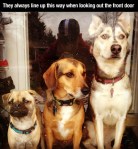
Cute Dogs for Your Monday Blues

More cute dog pictures to cheer you up for the start of the work week.

1 Comment

Filed under Animals

Cute Dogs for Your Monday Blues

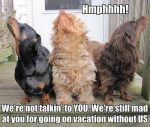
Your weekly dose of cute dogs:

1 Comment

Filed under Animals

Cute Dogs – Tuesday Edition

Since yesterday was Memorial Day holiday for many of you, I put the cute dogs post on Tuesday this week.  Enjoy!

4 Comments

Filed under Animals

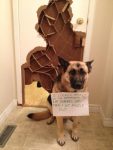
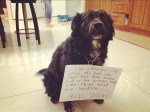
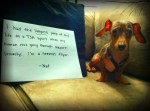
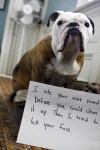
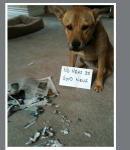
Dog Shaming for Your Monday Blues

I have posted these before and they seem to be very popular, so here we go again.  Pictures of a dog shaming, where people have the culprit with a sign describing their crime.  Enjoy!

1 Comment

Filed under Animals, Humor and Observations

More Cute Dogs for Your Monday Blues

My weekly post of cute dog pictures to help get you through Monday.  Enjoy!

1 Comment

Filed under Animals

Cute Dogs For Your Monday Blues

Cute dogs for your Monday Blues!  Enjoy!

1 Comment

Filed under Animals

The Causes of the Disappearing Bees

Feds blame combination of parasite, virus, bacteria, pesticides for strange bee disappearance

Published May 05, 2013

Associated Press

  • Disappearing Bees 2013.jpg

    May 2, 2013: A bee looks for a pollen laden flower in Kennewick, Wash. A new U.S. report blames a combination of problems for a mysterious and dramatic disappearance of honeybees across the country since 2006. (AP Photo/The Tri-City Herald, Richard Dickin)

  • Disappearing Bees 2013 2.jpg

    Jeffery Pettis, a top bee scientist at the Agriculture Department’s Bee Research Laboratory, talks about his work with honeybees, in Beltsville, Md in 2007. (AP Photo/Haraz N. Ghanbari)

  • Disappearing Bees 2013 1.jpg

    A new federal report blames a combination of problems for a mysterious and dramatic disappearance of U.S. honeybees since 2006. The factors cited include a parasitic mite, multiple viruses, bacteria, poor nutrition and pesticides. Experts say having so many causes makes it harder to do something about what’s called colony collapse disorder. The disorder has caused as much as one-third of the nation’s bees to just disappear over the winter each year since 2006. (AP Photo/Haraz N. Ghanbari)

A new federal report blames a combination of problems for a mysterious and dramatic disappearance of U.S. honeybees since 2006.
The intertwined factors cited include a parasitic mite, multiple viruses, bacteria, poor nutrition, genetics, habitat loss and pesticides.

The multiple causes make it harder to do something about what’s called colony collapse disorder, experts say. The disorder has caused as much as one-third of the nation’s bees to just disappear each winter since 2006.

Bees, especially honeybees, are needed to pollinate crops.

The federal report, issued Thursday by the Agriculture Department and the Environmental Protection Agency, said the biggest culprit is the parasitic mite varroa destructor, calling it “the single most detrimental pest of honeybees.”

The problem has also hit bee colonies in Europe, where regulators are considering a ban on a type of pesticides known as neonicotinoids that some environmental groups blame for the bee collapse. The U.S. report cites pesticides, but near the bottom of the list of factors. And federal officials and researchers advising them said the science doesn’t justify a ban of the pesticides yet.

May Berenbaum, a top bee researcher from the University of Illinois, said in an interview that she was “extremely dubious” that banning the pesticide would have any effect on bee health. She participated in a large conference of scientists that the government brought together last year to figure out what’s going on, and the new report is the result of that conference.

Berenbaum said more than 100 different chemicals – not just the pesticides that may be banned in Europe – have been found in bee colonies. Scientists find it hard to calculate how they react in different dosages and at different combinations, she said.

Some of these chemicals harm the immune systems of bees or amplify viruses, said Penn State University bee expert Diana Cox-Foster.

At a news conference Thursday, Sonny Ramaswamy, a top USDA official, said the scientific consensus is that there are multiple factors “and you can’t parse any one out to be the smoking gun.”

USDA bee researcher Jeff Pettis also cited modern farming practices that often leave little forage area for bees.

Dave Gaulson of the University of Stirling in Scotland, who conducted a study last year that implicated the chemical, said he can’t disagree with the overall conclusions of the U.S. government report. However, he said it could have emphasized pesticides more.

The environmental group, Pesticide Action Network North America blasted the federal government for not following Europe’s lead in looking at a ban of certain pesticides.

Pollinators, like honeybees, are crucial to the U.S. food supply. About $30 billion a year in agriculture depends on their health, said Ramaswamy.

Besides making honey, honeybees pollinate more than 90 flowering crops. Among them are a variety of fruits and vegetables: apples, nuts, avocados, soybeans, asparagus, broccoli, citrus fruit and cranberries. About one-third of the human diet comes from insect-pollinated plants, and the honeybee is responsible for 80 percent of that pollination.

“It affects virtually every American whether they realize it or not,” said EPA acting administrator Bob Perciasepe.

Zac Browning, a fourth-generation commercial beekeeper who has hives in Idaho, North Dakota and California, said the nation is “on the brink” of not having enough bees to pollinate its crops.

University of Maryland entomologist David Inouye, who was not part of the federal report, said he agrees that there are multiple causes.

“It’s not a simple situation. If it were one factor we would have identified it by now,” he said.

Inouye, president-elect of the Ecological Society of America, said the problems in Europe and United States may be slightly different. In America, bee hives are trucked from farm to farm to pollinate large tracts of land and that may help spread the parasites and disease, as well as add stress to the colonies, while in Europe they stay put so those issues may not be as big a factor.

At the news conference, Berenbaum said there’s no single solution to the U.S. bee problem: “We’re not really well equipped or even used to fighting on multiple fronts.

Read more: http://www.foxnews.com/science/2013/05/05/feds-blame-combination-parasite-virus-bacteria-pesticides-for-strange-bee/?intcmp=features#ixzz2SQlUIKuZ

Leave a comment

Filed under Animals, Humor and Observations

Dogs Praying to God (very cute)

As a believer and a penultimate dog lover, I found this post very cute.  Hopefully, you will as well.  🙂

Reposted via StumbleUpon via GoPetplan.com.

Dear God; from the dog

Dear God: Is it on purpose our names are the same, only reversed?

image

Dear God: Why do humans smell the flowers, but seldom, if ever, smell one another?

image

Dear God:
When we get to heaven, can we sit on your couch? Or is it still the same old story?

image

Dear God:
Why are there cars named after the jaguar, the cougar, the mustang, the colt, the stingray, and the rabbit, but not ONE named for a Dog? How often do you see a cougar riding around? We do love a nice ride! Would it be so hard to rename the ‘Chrysler Eagle’ the ‘Chrysler Beagle’?

image

Dear God:
If a Dog barks his head off in the forest and no human hears him, is he still a bad Dog?

image

Dear God:
We Dogs can understand human verbal instructions, hand signals, whistles, horns,
clickers, beepers, scent ID’s, electromagnetic energy fields, and frisbee flight paths.
What do humans understand?

image

Dear God: More meatballs, less spaghetti, please.

image

Dear God: Are there mailmen in Heaven? If there are, will I have to apologize?

image

Dear God:
Let me give you a list of just some of the things I must remember to be a good Dog:

1. I will not eat the cats’ food before they eat it or after they throw it up.

2. I will not roll on dead seagulls, fish, crabs, etc., just because I like the way they smell.

3. The Litter Box is not a cookie jar.

4. The sofa is not a ‘face towel’.

5. The garbage collector is not stealing our stuff.

image

6. I will not play tug-of-war with Dad’s underwear when he’s on the toilet.

7. Sticking my nose into someone’s crotch is an unacceptable way of saying ‘hello’.

8. I don’t need to suddenly stand straight up when I’m under the coffee table

9. I must shake the rainwater out of my fur before entering the house – not after.

10. I will not come in from outside and immediately drag my butt across the carpet.

11. I will not sit in the middle of the living room and lick my crotch.

12. The cat is not a ‘squeaky toy’ so when I play with him and he makes that noise,
it’s usually not a good thing.

image

P.S. Dear God: When I get to Heaven may I have my testicles back?

Leave a comment

Filed under Animals, Humor and Observations

Animal Eyes Up Close

Extreme close-ups of Animal Eyes reposted via The Chive, via Tapiture.  I view them as an example of God’s art.  Non-believers can view them as nature’s art.  In any case, pretty amazing.

Animals eyes up close are kind of trippy (21 Photos)

APRIL 19, 2013

FOLLOW  ON TAPITURE


2 Comments

Filed under Animals, Humor and Observations