Category Archives: Humor and Observations

Sun’s 8.2-billion-year-old twin found

Sun’s 8.2-billion-year-old twin found

By Irene Klotz

Published August 28, 2013

Discovery News
  • sunstwin2.jpg

    This image tracks the life of a Sun-like star, from its birth on the left side of the frame to its evolution into a red giant star on the right. (ESO/M. Kornmesser)

  • SUNSTWIN.jpg

    This image shows solar twin HIP 102152, a star located 250 light-years from Earth in the constellation of Capricornus (The Sea Goat). (ESO/Digitized Sky Survey 2. Ack: Davide De Martin)

About 250 light-years away in the constellation Capricornus (The Sea Goat) lies a star that looks awfully familiar.

Known as HIP 102152, the star is a virtual twin of our sun, which in and of itself is not so unusual. But HIP 102152 is older than our 4.6-billion-year old sun — by nearly 4 billion years, making it the oldest solar twin found to date.

“It is important for us to understand our sun in the proper context of stellar astronomy and to identify which of its properties are unique and normal, to predict what its fate may someday be,” astronomer TalaWanda Monroe, a postdoctoral fellow at the University of San Paulo in Brazil, wrote in an email to Discovery News.

New high-definition footage from the Solar Dynamic Observatory shows coronal mass ejections, huge eruptions of plasma blasting into space before showering back down on the sun’s surface.

NASA’s Solar Dynamics Observatory

With human lifespans so limited, seeing the sun in context means astronomers must find stars with similar mass, chemical composition, temperature and other characteristics. From that, they can then extrapolate information about our sun, such as how bright it shined in its youth and how different its radiation may be in the future.

“HIP 102152 is an ideal star to anchor the end of the timeline,” Monroe said.

Stars like the sun last about 10 billion years before running out of hydrogen fuel for their thermonuclear reactions. They then cool and expand into what is known as a “red giant” phase.

HIP 102152 may be like the sun in another way as well. Unlike other solar twins, chemical analysis of HIP 102152’s light shows a good match to the sun’s, including a telltale sign of possible rocky planets.

Scientists found elements common in dust and meteorites missing from HIP 102152’s light — “a strong hint … that the elements may have gone into making rocky bodies and/or planets” around the star,” Monroe wrote.

So far, attempts to search for any orbiting planets have not been successful.

The group also was able to make a direct tie between the amount of lithium in a star and the star’s age.

Some previous studies suggested a low lithium content may indicate the presence of giant planets, said astronomer Jorge Melendez, also with the University of San Paulo.

The new research shows that as a solar-type star ages, its lithium content decreases.

“We could use lithium to estimate the age of a star, something that is very difficult to obtain,” Melendez wrote in an email to Discovery News.

The discovery, made with the European Southern Observatory’s Very Large Telescope, was unveiled at press conference on Wednesday and is the subject of an upcoming paper in Astrophysical Journal Letters.

Read more: http://www.foxnews.com/science/2013/08/28/sun-82-billion-year-old-twin-found/?intcmp=trending#ixzz2eKKEX1LY

1 Comment

Filed under Humor and Observations

Fellow Author Releases Novel

I met Colin James while attending the West Valley Writers’ Workshop in Avondale, Arizona.  Colin has a number of works and has just released his first novel – Lord Alf.  Here is a picture of Colin James, his bio, a picture of his new novel, a link to Amazon if you wish to purchase it or check it out, and the book description.

Remember to support our new authors.  You can also find my books, although I am sure you have already purchased them *wink, at my Store Tab on this site.  Thanks!

colin james

Colin James

Colin James, an Englishman by birth and a Yorkshireman by the grace of the gods, who emigrated to the U.S back in 2001, is a happily married man with two terrible children. After various junctures in New Mexico and New York he and his family are now settled in Arizona. The career path he has followed has taken him from the ranks of the British Army (R.E.M.E.) to the tops of Austrian mountains as a ski guide. A former engineering professional in the semi-conductor industry, he currently runs a successful window cleaning company in sunny Phoenix. As well as helping the local population to see through clean glass, he is a writer, author, and blogger.

A 3rd year student of English literature at Arizona State University and a member of the WEST VALLEY WRITERS WORKSHP Colin has already been published in several on line literary magazines including ‘THE FRONT PORCH’ and ‘AT THE BIJOU’. His work has appeared in print at ‘THE STARVING ARTIST’ and he has received accolades in several prestigious writing competitions. A rising literary star of the future his first novel LORD ALF is completed.

To date Colin has published three books which are available at AMAZON. COM

lord alf

http://www.amazon.com/Lord-Alf-ebook/dp/B00ETISGXC/ref=sr_1_1?s=digital-text&ie=UTF8&qid=1377799836&sr=1-1&keywords=LORD+ALF

The hammer is poised, the metal is hot and the atmosphere in the auditorium is electric. The boys burst through the dry ice, on to the stage, and into their routine. Tennyson’s charge comes alive; a hoof-thundering dash of British humor, classic literature, wailing guitars, and schoolboy inadequacy.

It’s the end of the school year, exams are finished, and Jake and his mates are going out with a bang. The sixth form ‘Blast’ is ahead of them as the lads prepare for one final blow out. Ending their time at ‘Woldcroft Comprehensive’ and taking their rightful place in the annals of high-school history before disappearing to leafy college nowheres. They have practiced, they are word perfect, the act is finely tuned, and they sort of look the part!

‘Lord Alf’ traces the experiences not only of the boys’ performance, but of a soldier who actually rode in the charge, Tennyson himself, and his creation ‘The Charge of the Light Brigade.’ The story unfolds in the corridors of an English secondary school with all the foibles of a depressed Thatcher Britain. It takes us across the battlefields of the Crimea, placing the reader in the center of the charge, and walks the reader through the streets of Victorian England.

‘Lord Alf’ documents the quirks of British adolescence in a dwindling age of empire, a riveting story which shows depth, historical nuance, emotion and humor. It highlights the wastage of war and compares and contrasts the social issues of Victorian England with the modern age.

1 Comment

Filed under Humor and Observations, Writing

Zombie Apocalypse

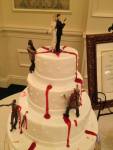
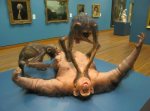
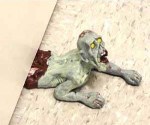
Zombie apocalypse photos.  If you would like to see earlier zombie posts, please type “zombie” into the search block on my home page.

Leave a comment

Filed under Humor and Observations

Indian Caste Heads

These were used in the mid to late 1800s as models to teach British personnel to recognize the various castes in India by their hair, headwear and markings.  These are from the Horniman Museum.

1894:

Indian Caste Heads

Indian-Caste-Heads

Leave a comment

Filed under Humor and Observations

Fun Football Facts

Football factoids reposted from The Chive:

1 Comment

Filed under Humor and Observations

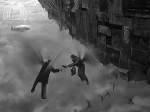
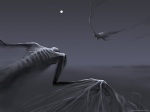
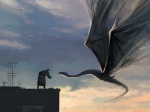
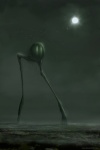
The Amazing Sci-Fi Artwork of Alex Andreyev

I saw this story and collection online and thought you all might enjoy it as well.  I could write so many stories with just these pictures as prompts.  First, the pictures, then the story.  You can click on the photos to enlarge as usual.

Collection: A Separate Reality
by Alex Andreyev

Often when I start a new project, whether it be a painting or piece of animation, I ask myself the question; should I avoid doing something science-fictiony this time?
Usually the answer is no, but I can imagine that you might wonder why I’d consider avoiding the genre in the first place. Well, first and foremost there’s the whole “being called a nerd” thing that none of us like.  And then there’s this idea out there that fantasy-based art isn’t to be taken seriously. It seems that to many, otherworldly art belongs on the covers of nerdy pulp novels and role playing books, and nowhere near a gallery.
So why do sci-fi art then? What’s the point of working so hard on something that won’t ever advance your artsy street-cred?
Well, I can’t answer that question for Alex Andreyev, who’s fine work you see below, but based on my own feelings I bet I can take a guess. His work, done over a number of years, isn’t really the geeked-out sci-fi art you may have seen before. Rather Alex creates a ‘separate reality’, just as the title of his collection suggests. From his work it seems that Alex often wonders what the world would look like if things were just a little bit different, and these paintings may be an attempt to find out for himself.
In my opinion, that’s why sci-fi art is so prevalent, even if it’s never widely appreciated. It’s a venue for a certain type of person to ‘see’ the worlds they otherwise could only imagine. It’s a place where people who feel constrained by this reality can go have a romp outside of it. It’s not meant for galleries, because sci-fi art is a highly personal, self indulgent genre, made more for the artist him/her self rather than any particular viewer.
Well, I suppose at least that’s why I do it. Enjoy Alex’s work, and follow the links below the gallery to learn more.
ABOUT ALEX 
Hello, my name is Alex Andreyev. I’m an artist living in Saint – Petersburg.
I’ve been drawing, painting and doing graphic design over last 20 years.
Now I’m searching for a job in movie production or game development industry.
You can buy all my pictures in a high resolution for print on my site – http://www.alexandreev.com/
Buy prints, posters, and greeting cards – http://alexandreev.imagekind.com

1 Comment

Filed under Humor and Observations

Taylor Swift Leaves HUGE Tip For Very Lucky Fans

Taylor Swift Leaves HUGE Tip For Very Lucky Fans

The Huffington Post  |  Posted: 07/25/2013 10:29 am EDT  |  Updated: 07/26/2013 8:36 am EDT

taylor swift

Last Friday night was a very good one for the head chef at Ralph’s Italian Restaurant in Philadelphia.

And it was all because of Taylor Swift.

She didn’t even kiss anyone! And after her creepy fan incident, we could use some good T-Swift news.

Instead, she and her tour mates, Ed Sheeran and Austin Mahone, were craving some late-night Italian after their show. They chose Ralph’s.

The head chef immediately called his mother.

“I called my mom to tell her Swift was there, and she wanted me to take a picture because she is a big fan,” he told E! News.

“My son has autism, and while I’m at work my mom and my son love to listen to her music. He loves her music!”

Swift took pictures with the staff and had some more surprises in store. She handed over two tickets to her concert for the following night.

“It was so kind-hearted of her,” the chef told E! News. “My son is 11. It was my son and I’s first concert we’ve ever been to! It was really special.”

And to top it all of, she left a $500 tip.

That’s some good karma right there, Swifty!

Leave a comment

Filed under Humor and Observations

New explanation for mysterious ‘fairy circles’ in African desert

New explanation for mysterious ‘fairy circles’ in African desert

By Joseph Castro

Published September 05, 2013

LiveScience
  • fairy-circles-1

    Fairy circles are circular patches of perennial grasses with a barren center that emerge in the deserts along the southwest coast of Africa. Here, numerous tracks of Oryx antelopes crossing fairy circles in an interdune pan, shown in this aeria (Image courtesy of N. Juergens)

The bizarre circular patches of bare land called “fairy circles” in the grasslands of Africa’s Namib Desert have defied explanation, with hypotheses ranging from ants to termites to grass-killing gas that seeps out of the soil. But the patches may be the natural result of the subsurface competition for resources among plants, new research suggests.

Grasslands in the Namib Desert start off homogenous, but sparse rainfall and nutrient-poor soil spark intense competition between the grasses, according to the new theory. Strong grasses sap all of the water and nutrients from the soil, causing their weaker neighbors to die and a barren gap to form in the landscape.

The vegetation gap expands as the competition ensues, and the grass-free zone becomes a reservoir for nutrients and water. With the additional resources, larger grass species are then able to take root at the periphery of the gap, and a stable fairy circle develops. [See Photos of Mysterious Fairy Circles of the Namib Desert]

“It’s a really good theory because it accounts for all the characteristics of fairy circles,” including the presence of tall grass species, Florida State University biologist Walter Tschinkel, who was not involved in the study, told LiveScience. “No other proposed cause for fairy circles has ever done that.”

A lingering mystery
Fairy circles have been a mystery to scientists for decades. Last year, Tschinkel discovered that small fairy circles last for an average of 24 years, whereas larger circles can stick around for up to 75 years. However, his research didn’t determine why the circles form in the first place, or why they disappear.

‘It accounts for all the characteristics of fairy circles.’

– Florida State University biologist Walter Tschinkel 

Earlier this year, University of Hamburg biologist Norbert Juergens claimed to have found evidence for a termite theory of fairy circles. Essentially, he discovered colonies of the sand termite, Psammotermes allocerus, were nearly always found in the centers of fairy circles, where he also found increased soil moisture. He reasoned that the termites feed on the grasses’ roots, killing the plants, which usually use up the soil’s water, and then slurp up the water in the resulting circular patches to survive during the dry season.

But Tschinkel is critical of the work, stressing that Juergens confused correlation with causation.

Michael Cramer, a biologist at the University of Cape Town in South Africa and lead researcher of the current study, which was published recently in the journal PLOS ONE, also thinks the termite theory falls short.

“I think the major hurdle that explanations have to overcome is explaining the regular spacing of the circles, their approximate circularity and their size,” Cramer told LiveScience. “There’s no real reason why termites would produce such large circles that are so evenly spaced.”

Scientists have also previously proposed that fairy circles are an example of a “self-organizing vegetation pattern,” which arises from plant interactions. In 2008, researchers developed a mathematical model showing the vegetation patterning of fairy circles could depend on water availability.

A fierce competition
To test this theory, Cramer and his colleague Nichole Barger from the University of Colorado at Boulder first measured the size, density and landscape occupancy of fairy circle sites across Namibia, using both Google Earth and ground surveys. They then collected soil samples at various depths from inside and outside the circles, and analyzed them for water and nutrient content. Finally, they plugged the information, along with climate data such as seasonal precipitation and temperatures, into their computer models. [Images: The 10 Strangest Sights on Google Earth]

“We found that the size of the circle, the density and degree to which they occupy the landscape are all associated with the amount of resources available,” Cramer said. Specifically, fairy circles are smaller if they have more resources, such as soil nitrogen and rainfall.

This makes sense, Cramer explained, because the taller grasses won’t need a large reservoir of resourcesto get started and survive if water and nutrients are already available in the environment. On the other hand, the grasses require a large reservoir to sustain themselves if the soil is poor in water and nutrients.

The researchers also discovered that rainfall strongly determines the distribution of the fairy circles across Namibia, with circles only appearing in areas where there is just the right amount of rain (not too little, but not too much). If there’s too much rain, the bountiful resources would “relax” the competition for resources and the circles would close up; but if there’s too little rain, the competition would become too severe and the circles would again disappear, Cramer said. Because the circles can only occur in this narrow moisture range, differences in rainfall from year to year may cause them to suddenly disappear and reappear in an area over time. With this information, they found that they could predict the distribution of the fairy circles with 95 percent accuracy.

Additionally, the regular spacing between fairy circles may be the result of inter-circle competition, with grasses from each circle “battling” with other circle grasses for resources, Cramer said.

Experimental tests
Cramer notes that termites may still be involved in fairy circles. “What sets up the circles is the competition between plants,” he said. “Termites are a secondary phenomenon, and their role is to serve as a maintenance for the circles by killing off the grasses that spring up in the center of the circles.”

Yvette Naud, a chemist at the University of Pretoria, South Africa, who was not involved in the study, thinks it’s refreshing to see a noninsect hypothesis for fairy circles, though she expressed some doubts about its validity.

“It is unclear how peripheral grass resource-competition could induce such abrupt and synchronized plant mortality over an entire patch,” Naud, who has previously studied fairy circles, told LiveScience in an email. (Cramer actually thinks the plant mortality starts off small, and the patch grows as the competition continues.) “The answer to the enigma [of fairy circles] remains elsewhere.”

To examine whether the theory is correct, Cramer plans to conduct experimental tests, as his study only provides correlative evidence for the competition theory.

“If fairy circles really do develop from a shortage of water and nutrients, then simply watering and fertilizing the circles should cause them to close up with vegetation,” Tschinkel said.

Read more: http://www.foxnews.com/science/2013/09/05/mysterious-fairy-circles-in-african-desert-get-new-explanation/?intcmp=features#ixzz2e417iQkL

Leave a comment

Filed under Humor and Observations

Update on Heroes of Cosplay – Ya Ya Han and Jessica Nigri Release Video Message

After Ya Ya Han looked to be putting down Jessica Nigri on Heroes of Cosplay, many were upset, including me.  The result is the following video, in which Ya Ya apologizes and the two jointly appear to say they are friends.  I also like that they both make it clear than cosplay is about having fun, not about the crap drama the show tries to portray.

http://www.youtube.com/watch?v=sLoE8XZX_Ck

post 2

L-R, Monika Lee, Ya Ya Han, Jessica Nigri

post3

L-R, Jessica Nigri, Ya Ya Han

post4

Action photo, Monika Lee, Ya Ya Han, Jessica Nigri as Wonder Woman, Catwoman and Harley Quinn.


1 Comment

Filed under Humor and Observations

Mysterious Amazon Web Baffles Scientists

What Is This? Mysterious Amazon Web Baffles Scientists

By Douglas Main, Staff Writer   |   September 04, 2013 11:22am ET
This strange formation found in the Peruvian Amazon resembles a tiny spire surrounded by a webby picket fence and is about 2 centimeters (0.8 inches) wide.

This strange formation found in the Peruvian Amazon resembles a tiny spire surrounded by a webby picket fence and is about 2 centimeters (0.8 inches) wide.
Credit: Troy Alexander / Tambopata Research Center

A bizarre-looking web structure has been found in the Peruvian Amazon, and apparently nobody knows what it is, not even scientists.

The strange formation resembles a tiny spire surrounded by a webby picket fence and is about 2 centimeters (0.8 inches) wide. Georgia Techgraduate student Troy Alexander first spotted one of these on the underside of a tarp near the Tambopata Research Center in the Peruvian Amazon. At first he thought it might have been an aborted moth cocoon, he wrote on Reddit. But then he found several more, all of which looked quite similar.

He posted the photos to Reddit and asked other scientists to helphim out, besides making queries around the Tambopata Research Center, to no avail. His guess is that “there are eggs in the base of the maypole in the middle of the horse corral, though it might be something pupating,” he wrote on Reddit.

Chris Buddle, an arachnologist at McGill University, said that neither he nor any of his associates know what it is. “I have no clue,” he said. It’s “a seriously fascinating mystery.”

“I have no idea what animal made that,” Norman Platnick, curator emeritus of spiders at the American Museum of Natural History inNew York, told LiveScience.

The weird structure was first spotted on the underside of a tarp near the Tambopata Research Center in the Peruvian Amazon.

The weird structure was first spotted on the underside of a tarp near the Tambopata Research Center in the Peruvian Amazon.
Credit: Troy Alexander / Tambopata Research Center

So far, Redditors and others have guessed that it could be some kind of moth cocoon, an intricate defense for spider eggs, or even the fruiting body of some type of fungus.

Alexander fell in love with the Peruvian Amazon while on vacation there, he told Colossal, an art blog. So he asked his adviser if he could take a leave of absence to be a volunteer researcher. Shortly thereafter, Alexander flew back to Peru to work at the Tambopata Macaw Project, which focuses on parrot biology and conservation, he told Colossal.

If whatever produces this structure turns out to be a new species, it should come as no surprise — the world’s rain forests are expected to perhaps contain millions of new species of arthropods (a group of animals with hard exoskeletons, which includes spiders and insects), according to various scientific estimates. One survey of arthropods in Panama’s jungle, in an area about the size of Manhattan, found 25,000 species of insects, spiders and other arthropods, 70 percent of which were new to science. That study also found that there were 300 arthropod species for every one mammal species.

2 Comments

Filed under Humor and Observations