Category Archives: Humor and Observations

Old Spock vs. New Spock in Commercial

This is hilarious, you have to see it.  Make sure you watch all the way to the end, even when you think it is over.  There is a little post-trailer clip lol.

http://io9.com/old-spock-battles-new-spock-in-the-greatest-car-commerc-493836696

Well worth your time if you like Star Trek at all.


2 Comments

Filed under Humor and Observations

My Interview with Ruth Jacobs – In the Booth with Ruth

I am pleased to say that Ruth Jacobs of Hertfordshire, England, “In the Booth with Ruth” has posted her interview with me.  Below is the link and the text.  Please check out her blog at ruthjacobs.co.uk and also her store.  She has novels for sale and also petitions for various human rights causes.  Thanks Ruth!

http://ruthjacobs.co.uk/2013/06/16/michael-bradley-interview/

IN THE BOOTH WITH RUTH – MICHAEL BRADLEY

Michael Bradley

What’s your writing background? When did you begin writing and what inspired you? 

I was an abused child and escaped from reality by reading. I started reading encyclopedia at age four. I have read at least a book a week since I was twelve, and probably close to 5,000 at this point. I have always wanted to be a writer, but adults discouraged me and I went into various fields. Finally, at age forty-seven, I retired on my savings and started writing full time on April 1, 2011. 

How often do you write? And how do you manage to fit in writing among other commitments? 

I write every day and can pace up to a chapter per day. I write full time for the most part, but also do some consulting, public appearances, and teaching. I am a bit of a word processor. I have so many ideas and stories fully written in my head, that the actual act of writing feels like dictation from my own internal voice. 

In which genre do you most enjoy writing? 

I like writing the same genres I love to read. Fiction, historical fiction, steampunk, and fantasy. I write what I refer to as “pulp fiction” in that it is story and character rich, enjoyable, easy to read, and takes the reader away from the normal world. I do not try to write deep literary fiction with nuanced meanings you have to dwell on for days to understand. 

What draws you to write in that genre? 

I am a strong believer in writing what you enjoy reading. I feel you are a bit of a charlatan if you try to write something because it is popular or marketable. Ideas and writing come easily if you would want to read your own novels and stories if someone else had written them. I tell my readers honestly, that had I not written the stories, I would love to read them. 

Tell me about your current project(s)? 

I work on several things at once. For novels, my next is Blood Bank, a unique post-apocalyptic vampire novel, that is more about what it means to be human than about vampires. It is due out late summer 2013. After that, the third in the Travelers’ Club steampunk series will come out, The Travelers’ Club and The Lost City, late Fall 2013. I am working on next year’s Twistedanthology series, and on The Second Civil War, a political thriller set in 2024. Both I hope to release in early 2014. 

What are your writing plans for the future? 

My goal is to continue to release two or three books per year and a dozen short stories. My career goal is to have thousands of readers who enjoy my writing and look forward to the next story. Financially, I plan to break even, but I would trade profits for readers any day. I have stories bursting to get out and on to paper, and I just want others to read and enjoy them. 

Where can people find out more about you? 

My blog site at www.mbtimetraveler.com is a very eclectic selection of posts that interest me. Usually, I update the blog two or three times daily. Some are pictures, some are reposts of stories, some are original writing of mine. If you follow my blog, you will certainly gain insight into the unusual mix of interests floating around inside my head.

Twitter: @mbtimetraveler

My books can be found on Amazon: Twisted NightmaresThe Travelers’ Club and The Ghost ShipThe Travelers’ Club – Fire and Ash, and Twisted History. I also write movie reviews, book reviews, true science and other columns for multiple magazines, and I have had around forty short stories published in various publications.

Leave a comment

Filed under Humor and Observations, Writing

History of Father’s Day

Reposted from http://www.fathersdaycelebration.com

History of Father’s Day

History of Father’s Day Festival as seen today is not even a hundred years old. Thanks to the hard work and struggle of Ms Sonora Louise Smart Dodd of Washington that just as we have set aside Mother’s Day to honor mothers we have a day to acknowledge the important role played by the father. However, some scholars opine that Father’s Day history is much older than we actually believe it to be. They say that the custom of honoring dad’s on a special day is over 4,000 years old. There are a few more claims about the Father’s Day origin about which we will learn in this page.

fathers-day43

Earliest History of Father’s Day
Scholars believe that the origin of Father’s Day is not a latest phenomenon, as many believe it to be. Rather they claim that the tradition of Father’s Day can be traced in the ruins of Babylon. They have recorded that a young boy called Elmesu carved a Father’s Day message on a card made out of clay nearly 4,000 years ago. Elmesu wished his Babylonian father good health and a long life. Though there is no record of what happened to Elmesu and his father but the tradition of celebrating Father’s Day remained in several countries all over the world.

History of Father’s Day in US
Modern version of Father’s Day celebration originated in United States of America and thereafter the tradition spread in countries around the world. The world owes thanks to Ms Sonora Louise Smart Dodd a loving daughter from Spokane, Washington as it is because of her struggle that Father’s Day saw the light of the day.

The idea of Father’s Day celebration originated in Sonora’s mind when she per chance listened to Mother’s Day sermon in 1909. Fairly mature at the age 27, Sonora pondered if there is a day to honor mother then why not for father? Sonora felt strongly for fathers because of the affection she received from her own father Mr William Jackson Smart, a Civil War veteran. Sonora’s mother died while childbirth when she was just 16. Mr Smart raised the newborn and five other children with love and care.

Fathers-Day-300x300

Inspired by Ms Anna Jarvis’s struggle to promote Mother’s Day, Ms Dodd began a rigorous campaign to celebrate Father’s Day in US. The Spokane Ministerial Association and the local Young Men’s Christian Association (YMCA) supported Sonora’s cause. As a result Spokane celebrated its first Father’s Day on June 19, 1910. Though there was initial hesitation the idea gained gradual popularity all over US and Fathers Day came to be celebrated in cities across the country.

Looking at the heightened popularity of Father’s Day in US, President Woodrow Wilson approved of this idea in 1916. President Calvin Coolidge too supported the idea of a national Father’s Day in 1924 to, “establish more intimate relations between fathers and their children and to impress upon fathers the full measure of their obligations”. After a protracted struggle of over four decades, President Lyndon Johnson signed a presidential proclamation declaring the third Sunday of June as Father’s Day in 1966. Then in 1972, President Richard Nixon established a permanent national observance of Father’s Day to be held on the third Sunday of June. Sonora Smart Dodd was honored for her contribution at the World’s Fair in Spokane in 1974. Mrs. Dodd died in 1978 at age 96.

Other Theories of Fathers Day Origin

  • There are several theories behind the origination of Father’s Day.
  • Some believe that the first Fathers Day church service was held in West Virginia in 1908.
  • Others opine that the ceremony was first held in Vancouver, Washington.
  • The president of Lions’ Club, Chicago, Harry Meek is said to have celebrated the first Father’s Day with his organization in 1915 to stress on the need to honor fathers. He selected third Sunday in June for celebration, the closest date to Meek’s own birthday. In appreciation for Meek’s work, the Lions Clubs of America presented him with a gold watch, with the inscription “Originator of Father’s Day,” on his birthday, June 20, 1920.
  • Some historians honor Mrs. Charles Clayton of West Virginia, as the Founder of Father’s Day.
  • In 1957, Senator Margaret Chase Smith wrote Congress that, “Either we honor both our parents, mother and father, or let us desist from honoring either one. But to single out just one of our two parents and omit the other is the most grievous insult imaginable.”
  • In countries where Catholic Church holds greater influence Father’s Day is celebrated on St. Joseph’s Day (March 19).

Present Day Celebrations
Father’s Day Festival has gained amazing popularity over the years. The festival is considered to be a secular one and is celebrated not just in US but in a large number of countries around the world including Argentina, Australia, Belgium, Brazil, France, Germany, Japan, New Zealand, Norway and India though on differentdates. World over people take Father’s Day as an opportunity to thank father and pay tribute to them. On this day children present Father’s Day cards not just to their dads but also grandfathers, uncles, stepfathers or any other person who commands the position of a father in their life. There is also a trend to presentFather’s Day gift to dad, most popular of all being necktie. Other popular gift being roses, the official Father’s Day flower. Many people rue that the trend of presenting gifts to fathers has led to over commercialization of the festival relegating the noble idea behind Father’s Day celebration.

1 Comment

Filed under Humor and Observations

Anti-Rape Underwear Devices

It is a shame that violence against women is so high that we are designing such things.  Still, I would step up and pay the money for my daughter or wife to wear such clothing when they go out.

anti-rape 558x279

Taking their cues from a brutal December 16th rape in Delhi last year, three engineering students in India developed a foundation garment they’re calling a “Society Harnessing Equipment” or (SHE) and it’s being referred to as the latest in “anti-rape” lingerie. It took the students three months to invent it.

The garment is designed to help women ward off unwanted sexual advances by detecting the touch of a potential assailant and delivering 82 electric shocks. And it’s smart enough to contact the local police station as well as a victim’s family alert them she’s in danger.

SRM University student Manisha Mohan, 20, (located in Chennai) is one of the creators of the project. She calls the invention “a retaliation against menaces in society.”

The slip-like piece looks like an average white nightgown lined with a polymer. It is form-fitted to the body and can apparently be worn with a dress or skirt. The students say studies have shown that attackers often reach for a woman’s breasts first, so the bra-area is outfitted with a series of sensors “calibrated to detect pinching and squeezing.”

Mohan told the Daily Beast  that once a pressure censor is activated, the garment sends out an electric shock so strong that when she tried it out, it left burn marks on her skin for weeks–the side that touches the skin is insulated so that the wearer doesn’t feel any of the shock.

Mohan further explained that a woman can flip an electric switch attached to the waist of the garment when she feels she is in potential danger. The slip comes equipped with a GPS device designed to be programmed by the wearer to send an SMS alert to family an to the nearest police department when she’s in trouble.

The students are in the process of launching the product and hope to have available for purchase within a few weeks.

Leave a comment

Filed under Humor and Observations, Uncategorized

More Cosplay Pictures

Enjoy!

1 Comment

Filed under Humor and Observations

Our Endangered Languages List

In a reverse Tower of Babel, mankind is consolidating its languages with globalism.  Our species speaks over 7,000 languages right now, but those are quickly being reduced to 20 or fewer.  Below is an article on some of the most endangered languages.  I was kind of surprised to find that Rapa Nui (the Easter Island language) was not already extinct.  If you look up my Irish history post on St. Patrick’s Day, you will find my ancestral language of Gaelic is nearly snuffed out on purpose by the Brits.

Endangered-languages-625x329

languagevitality

Irish Gaelic, Rapa Nui And More Endangered Languages From Around The World

by Libby Zay (RSS feed) on Jun 7th 2013 at 1:00PM

Mariano Kamp, Flickr

There are nearly 7,000 languages spoken throughout the world today, the majority of which are predicted to become extinct by the end of this century. Half the world’s population speaks the top 20 world languages – with Mandarin, Spanish and English leading the charge, in that order – and most linguists point to globalization as the main cause for the rapid pace languages are falling off the map.

The problem is, when a language dies so does much of the knowledge and traditions that were passed won using it. So when Mental Floss used data from the Alliance for Linguistic Diversity to post a list of several at-risk languages, we here at Gadling were saddened by the disappearing native tongues and decided to use data from the Alliance for Linguistic Diversityto highlight some in our own list.

Irish Gaelic: Despite the fact that the government requires Irish students to learn this language and it currently has an estimated 40,000 native speakers, it is still classified as vulnerable.

Rapa Nui: The mother tongue of Chile’s famous Easter Island has fewer than 4,000 native speakers, and is quickly being taken over by Spanish.

SenecaOnly approximately 100 people in three Native American reservation communities in the United States speak this language, with the youngest speaker in his 50s.

Yaw: Most young people living in the Gangaw District of Burma understand but do not speak this critically endangered language that has less than 10,000 native speakers.

Kariyarra: Although there are many people who have a passive understanding of this aboriginal language, only two fluent Kariyarra speakers are left in Western Australia.

Francoprovençal: There are only about 130,000 native speakers of this language, mostly in secluded towns in east-central France, western Switzerland and the Italian Aosta Valley.

Yagan: This indigenous language of Chile purportedly has only one remaining native speaker. Others are familiar with the language, but it will likely disappear soon.

Patuá: Derived from Malay, Sinhalese, Cantonese and Portuguese, less than 50 people in Macau, China and their diaspora speak this language. It is now the object of folkloric interest amongst those who still speak it.

3 Comments

Filed under Humor and Observations, Uncategorized

More Crossovers

Crossovers or mash-ups are mixing two or more concepts or genres, hopefully in an amusing or funny way.  For earlier crossover posts, type “crossovers” in the Search box on the home page.  Enjoy!

Leave a comment

Filed under Humor and Observations

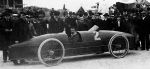
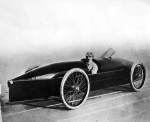
Steam-powered Race Cars

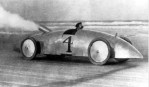
Scalding hot speeds achieved by automobiles blowing off a little steam…  These are real historical steam-powered racing cars.  How cool is that?

“A Stanley Steamer setting a record mile at the Daytona Beach Road Course.

“The Stanley Motor Carriage Company was an American manufacturer of steam-engine vehicles from 1902 to 1924. The cars made by the company were colloquially called Stanley Steamers, although several different models were produced. The Stanley Steamer was sometimes nicknamed “The Flying Teapot”.The Stanley company produced a series of advertising campaigns trying to woo the car-buying public away from the “internal explosion engine,” to little effect.”

1 Comment

Filed under Humor and Observations

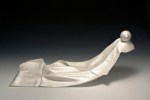
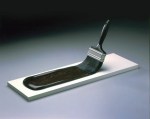
Art Sculptures Surprisingly Made of Only Wood

Hyper-realistic Sculptures are Made Entirely of Wood by Tom Eckert

Thursday, May 23, 2013  Jazlyn  

Artist and Professor Tom Eckert uses traditional processes to carve these hyper-realistic sculptures of everyday objects entirely made of wood. He uses plenty of carpentry techniques in his creative sculptured pieces, such as constructing, bending, laminating, carving and painting. 
After receiving his M.F.A. degree from Arizona State University, Eckert began teaching at the university. He has exhibited his work in over 150 national and international exhibitions. Recently his incredible artwork has been featured in the Netherlands after getting lot of appreciation throughout the United States.
For more details about his work please visit Eckert’s website www.tomeckertart.com


3 Comments

Filed under Humor and Observations

Butterfly Inspired Technology

Butterflies inspire anti-counterfeit tech

By Joel N. Shurkin

Published June 10, 2013

Inside Science News Service

  • Morpho Butterfly.jpg

    Nanotechnology emulates a South American insect’s wings. (Creativity+ Timothy K Hamilton, Flickr)

A Canadian company is fighting counterfeiters by employing one of the most sophisticated structures in nature: a butterfly wing.

To be precise, Nanotech Security Corp. in Vancouver is using the natural structure of the wings of a Morpho butterfly, a South American insect famous for its bright, iridescent blue or green wings, to create a visual image that would be practically impossible to counterfeit. The technology was developed at British Columbia’s Simon Fraser University, and licensed to the company.

The phenomenon Nanotech employs is similar to the way some animals, including male peacocks, produce iridescent colors: instead of using proteins and other chemicals to produce a hue, the creature’s feathers or scales play with light, using very tiny holes that reflect different colors or wavelengths. The Morpho does this with complicated scales on its wing that produce shimmering blues and greens.

‘It lends itself to anything your imagination can come up with. Even brake pads.’

– Clint Landrock, Nanotech’s chief technical officer 

Nanotech’s printed security image can be embossed on virtually any surface, including plastics, metals, solar cells, fabrics, and paper, according to Clint Landrock, Nanotech’s chief technical officer. They even could be embedded on pills and capsules to ensure they are genuine pharmaceuticals, instead of fakes.

“It lends itself to anything your imagination can come up with,” he said, “even brake pads.”

The work is another example of what scientists call biomimicry, which adapts nature’s solutions for innovative human devices, in this instance, nano-optics, a burgeoning new technology.

Researchers at the University of Michigan, for example, use nano-optics to print pictures and images without ink or dyes.

Landrock, one of the inventors, said the Simon Fraser researchers actually studied the shingled, patterned plates of a Morpho wing to see how it handled incoming light. The trick was to make artificial “nano-hole arrays,” which produce similar iridescent efforts with simpler structures. That way, the company can mass-produce billions of nano-holes.

“We can tune the colors by changing the geometry of those hole arrays,” he said.

They used a method similar to the manufacturing of computer chips, known as electron beam lithography, to produce master nano-hole patterns embossed on silicon or quartz.

They worked at the scale of nanometers. A single nanometer is hundreds of times smaller than even the tiniest bacterial cell. The holes in the template ranged from 50 to 300 nanometers in diameter, spaced 300-600 nanometers apart. The process takes from a few hours to a couple of days to produce a master pattern, or mask, depending on the size of the mask and the number of structures. After the mastering, a second process grows the image on nickel. From there it can be transferred to any material.

The entire image could be large enough to be seen from a distance, and, if embossed on high-priced items like designer handbags, would make it easy to spot the phonies, said Doug Blakeway, Nanotech’s CEO.

“If you had a hand bag and the clasp on it had the company’s logo on it you would see it and it would turn on and off in very bright colors.” Simply moving the item or the observer would make the color flicker.

There shouldn’t be any issue with putting the image on a capsule or pill, he said. You could see the brand on it to be sure the medicine was authentic. It would not require Food and Drug Administration approval because the image would not involve dyes or pigments so medicine would not be altered in any way.

Counterfeiting this technology is unlikely, Landrock said. The image would be very difficult to reverse engineer, and expensive because of the equipment needed. The image is much brighter than any created by any other technology, he explained, including holograms.

“I like to say it is similar to describing how an old CRT television display looks compared to a new Ultra HD LED TV,” he said “They may be showing the same thing but you would never mistake one for the other.”

Landrock said the most logical use for the technology would be an anti-counterfeiting device on bank notes.

A nano-optics image can be embossed on coated paper, but many countries, including Canada and Australia, have switched to polymer plastics for its bank notes, which are even more receptive to nano-optics images. Those bills last much longer than U.S. paper currency and are much harder to counterfeit.

Since the company has only begun commercializing the technology, no country has yet signed up.

Even so, it is unlikely the U.S. dollar will see nano-optics any time soon. U.S. bank notes do not even use holograms, common in other currencies, or coated or polymer paper, according to Darlene Anderson, a spokeswoman for the U.S. Bureau of Engraving and Printing.

The reason for the conservative bills, is that most American currency is held overseas, where it is often used as the reserve currency for the undeveloped world, said Owen Linzmayer, publisher of Banknote News, an industry observer. A radical change to U.S. bills could upset international economies and flood the country with the old bills.

The same restraints do not apply for Gucci handbags.

Read more: http://www.foxnews.com/tech/2013/06/10/butterflies-inspire-anti-counterfeit-tech/?intcmp=features#ixzz2VzGPNjL3

Leave a comment

Filed under Humor and Observations