Category Archives: Humor and Observations

Still More Cosplay Pictures

An increasingly popular feature is to post cosplay pictures.  Cosplay is costume play, or anything from dressing up for non-Halloween up to and including lifestyles.  It ranges from steampunk, to comic book characters, movie and TV shows, originals, manga, just about anything.  I post steampunk cosplay under “steampunk airship crew” posts.  You can find those in the search, for more cosplay, type “cosplay” in the search box on the home page.

I try to post a variety and I know a lot of the pictures have pretty women.  However, those ladies have photographers shooting them, post them, and show up to conventions and most get little or no compensation.  If you wish to have your photo here, it is easy.  Mail it to me at eiverness@cox.net.  Put “Picture for Blog site” as the Message.  I don’t care how old, young, gender, gender preference, weight or attractiveness.  If you are having fun, I will post it.  Except…  please nothing vulgar, no nudity, and no fetish cosplay.  I keep my blog PG-13.

4 Comments

Filed under Humor and Observations

New Meteorite Found In Antartica

Huge Meteorite Found In Antarctica, Largest Discovered There In 25 Years 

The Huffington Post  |  By Posted: 03/01/2013 1:00 pm EST

Meteorite Found Antarctica
An unusually large meteorite has been discovered by an international team of researchers in Antarctica.

The team, searching an area known as the Nansen Ice Field, discovered the 40-pound space rock in late January, according to OurAmazingPlanet.

Scientists from Université Libre de Bruxelles (ULB), Vrije Universiteit Brussel (VUB), Japan’s National Institute of Polar Research (NIPR) and Tokyo University were part of the expedition that discovered the extraterrestrial chunk, the largest such meteorite found in the region in close to a quarter century. The team was based out of the Princess Elisabeth Antarctica research station.

“This meteorite was a very unexpected find for us, not only due to its weight, but because we don’t normally find such large meteorites in Antarctica,” Vinciane Debaille, a geologist who led the Belgian arm of the research team, said in a written statement on Feb. 28. “This is the biggest meteorite found in East Antarctica for 25 years, so it’s a very special discovery for us, only made possible by the existence and location of Princess Elisabeth Antarctica.”

Known collectively as SAMBA, the international team had been searching the ice field since mid-December, according to the group’s website. The team’s current project is to collect large meteorites and study them. Eventually, the meteorites will be publicly displayed.

The SAMBA website describes the goal of such research:

Understanding how our planet works necessitates studying its interior. Direct geological records only document the crustal or uppermost fraction of our planet while the deeper parts remain totally outside of our reach. Meteorites coming from the asteroid belt between Mars and Jupiter have recorded information on how other planets formed and evolved through time; from undifferentiated primitive asteroids to differentiated small planets, showing the development of a crust, a mantle, and a metallic core just like those of the Earth.

Debaille’s Feb. 28 statement also explained the group’s work. “We study meteorites in order to better understand how the solar system formed, how it evolved, how the Earth became such a unique planet in our solar system,” said Debaille.

OurAmazingPlanet notes that United States scientists also ventured “out on the polar ice to collect meteorites this season,” but they were searching on the opposite end of Antarctica from the SAMBA outfit.

While meteors generally burn up in the atmosphere, in mid-February a huge meteor exploded over central Russia, showering the area in debris and creating a shock wave that injured hundreds.

Leave a comment

Filed under Humor and Observations

Incredible Pencil Sculpturing

Reposted from The Chive

Some people take boredom a bit more seriously (15 HQ Photos)

MARCH 2, 2013 | IN: ARTHIGH-RESMIND BLOWING

FOLLOW  ON TAPITURE


Leave a comment

Filed under Humor and Observations, Uncategorized

26 Moments That Restored Our Faith In Humanity This Year

Some good news on the humanity front…

26 Moments That Restored Our Faith In Humanity This Year

Sometimes you need a reminder that people can do wonderful things.posted on December 14, 2012 at 6:40pm EST

Matt StoperaBuzzFeed Staff
1. The parents who made their son’s wheelchair into the best Halloween costume ever

The parents who made their son's wheelchair into the best Halloween costume ever

2. The terminally ill man who loves receiving mail… and got more than he ever expected

The terminally ill man who loves receiving mail... and got more than he ever expected

Scott Widak has Down syndrome and suffers from liver disease, and he loves receiving mail. His nephew Sean posted his P.O. Box on Reddit and the site’s users responded with hundreds of letters, packages, and gifts.

3. A kind stranger who stopped a day from being ruined

A kind stranger who stopped a day from being ruined

4. The doctor who offered free medical care after Hurricane Sandy

The doctor who offered free medical care after Hurricane Sandy

5. And the people that helped out any way that they could

And the people that helped out any way that they could

Hospital employees make a human chain passing containers of fuel up 13 flights of stairs to the backup generator at Bellevue Hospital in New York City.

6. The older couple who saw themselves in two young parents

The older couple who saw themselves in two young parents

7. This Libyan child who doesn’t believe in hate

This Libyan child who doesn't believe in hate

8. The parents who tattooed insulin pumps on their bellies so their diabetic son wouldn’t feel “different”

The parents who tattooed insulin pumps on their bellies so their diabetic son wouldn't feel "different"

9. The police officer who bought shoes for a barefoot homeless man

The police officer who bought shoes for a barefoot homeless man

Jennifer Foster was visiting Times Square on Nov. 14 when she snapped the heartwarming moment. Here’s her account of what happened:

“Right when I was about to approach, one of your officers came up behind him. The officer said, ‘I have these size 12 boots for you, they are all-weather. Let’s put them on and take care of you.’ The officer squatted down on the ground and proceeded to put socks and the new boots on this man. The officer expected NOTHING in return and did not know I was watching*. I have been in law enforcement for 17 years. I was never so impressed in my life. I did not get the officer’s name. It is important, I think, for all of us to remember the real reason we are in this line of work. The reminder this officer gave to our profession in his presentation of human kindness has not been lost on myself or any of the Arizona law enforcement officials with whom this story has been shared.”

10. And the police officers who made blind 13-year-old Gage Hancock-Stevens’ dream of being a cop come true

And the police officers who made blind 13-year-old Gage Hancock-Stevens' dream of being a cop come true

They even gave him a cake

They even gave him a cake

11. The Michigan soccer team who gave their team manager with Down syndrome an opportunity to start

The Michigan soccer team who gave their team manager with Down syndrome an opportunity to start

Source: Courtney Sacco  /  via: annarbor.com

Source: Courtney Sacco  /  via: annarbor.com

Source: Courtney Sacco  /  via: annarbor.com

12. The Texas A&M students that blocked Westboro Baptist Church protesters with a human wall

The Texas A&M students that blocked Westboro Baptist Church protesters with a human wall

When students heard that Westboro Baptist Church planned on protesting the funeral of a soldier, they formed a human barricade around the funeral service to block them out.

13. And this brave kid who stood up against hate

And this brave kid who stood up against hate

14. The woman who kept a homeless man dry during a downpour

The woman who kept a homeless man dry during a downpour

15. The Disney security guard who is amazing at his job

The Disney security guard who is amazing at his job

16. The Icelandic heroes who rescued sheep during a major snowstorm

The Icelandic heroes who rescued sheep during a major snowstorm

17. The quick-thinking little girl who saved her mom’s life by slapping her with a piece of pizza

18. The young girl who loves her dog unconditionally

The young girl who loves her dog unconditionally

Source: twentytwowords.com  /  via: cheezburger.com

19. The famous rugby player who visited his biggest fan in the hospital

The famous rugby player who visited his biggest fan in the hospital

20. The bros who worked together to save a cat

The bros who worked together to save a cat

21. The community that came together to make Caine’s dream a reality

The community that came together to make Caine's dream a reality

You can watch the full story here.

22. The football star who gives children in need a shopping spree each year

The football star who gives children in need a shopping spree each year

This is a receipt for $19,000 in toys.

23. The man who comforts the old dog that saved his life

The man who comforts the old dog that saved his life

When John Unger had suicidal thoughts after a breakup, it was his dog Shoep who brought him back from the brink. This photograph shows Unger cradling his friend in lake Superior to soothe the dog’s arthritis.

24. These candidates for parents of the year

These candidates for parents of the year

25. The amazing couple who stuck together through unbelievable odds

The amazing couple who stuck together through unbelievable odds

26. And every single time anything like this happened.

And every single time anything like this happened.

Leave a comment

Filed under Humor and Observations

More Random Humor

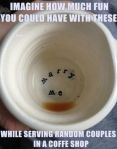
More random humor for your enjoyment.  For more, type “humor” in the search box on the home page.

Leave a comment

Filed under Humor and Observations

Did Phoenicians Beat Columbus by 2,000 years?

Transatlantic crossing: Did Phoenicians beat Columbus by 2000 years?

By Sheena McKenzie, for CNN
February 28, 2013 — Updated 1317 GMT (2117 HKT)
Setting sail from Spain with a crew of 90 men, Christopher Columbus landed in the Caribbean in 1492. But it's unlikely he was the first European to set foot in the New World... Setting sail from Spain with a crew of 90 men, Christopher Columbus landed in the Caribbean in 1492. But it’s unlikely he was the first European to set foot in the New World…
Was Columbus first?
  • British adventurer aims to sail replica Phoenician sailboat across Atlantic
  • Journey could prove ancient civilization capable of reaching America
  • Could challenge theory Christopher Columbus first discovered New World
  • Historian dispute likelihood Phoenicians landed in America

Editor’s note: MainSail is CNN’s monthly sailing show, exploring the sport of sailing, luxury travel and the latest in design and technology.

(CNN) — Christopher Columbus has long been the poster boy Renaissance explorer who found fame and fortune by sailing from the Old World to the New.

Crossing the great unknown waters between Spain and the Caribbean in 1492, he became one of the most renowned — and pivotal — Europeans to set foot in America.

But more than five centuries later, a British adventurer plans to show that the New World could have been reached by another seafaring nation 2,000 years before Columbus.

Former Royal Navy officer Philip Beale hopes to sail a replica Phoenician boat 10,000 kilometers across the Atlantic in an ambitious voyage that could challenge maritime history.

Expedition leader Philip Beale.

Expedition leader Philip Beale.

By completing the journey, Beale aims to demonstrate that the Phoenicians — the ancient Mediterranean civilization that prospered from 1500BC to 300BC — had the capability to sail to the U.S.; a theory disputed by historians.

“It is one of the greatest voyages of mankind and if anyone could have done it [before Columbus], it was the Phoenicians,” said Beale.

“Of all the ancient civilizations they were the greatest seafarers — Lebanon had cedar trees perfect for building strong boats, they were the first to use iron nails, and they had knowledge of astrology and currents.”


The prospect of sailing a 50-ton wooden vessel identical to those built 2,600 years ago across the Atlantic might appear foolhardy, had Beale not already challenged maritime history two years ago.

Beale sailed the replica boat — aptly named The Phoenician — around Africa in 2010, in a bid to demonstrate the ancient civilization had the capability to circumnavigate the continent 2,000 years before the first recorded European; Bartolomeu Dias, in 1488.

Setting sail from Syria in 2008, The Phoenician covered 32,000 kilometers over two years, battling everything from six-meter waves off the Cape of Good Hope to Somali pirates.

“We had run the gauntlet of pirate-infested waters, overcome numerous technical problems and traveled deep into the Indian and Atlantic Oceans,” Beale says in a new book on the incredible voyage; ‘Sailing Close to the Wind.’

“I had proved she was an ocean-going vessel and when she was coasting along the waves, her sail billowing in the wind; to captain her had been an unforgettable experience.”

Beale based his ambitious quest on a quote by Greek Historian Herodotus, who claimed the Phoenicians circumnavigated Africa in 600BC.

Along with their sophisticated seafaring skills, the Phoenicians were renowned as an intellectual and industrious civilization who helped develop the alphabet we still use today.

Highly skilled in metalwork, ivory carving and glass-making, the name Phoenician derives from the iconic purple color they used to dye their superior textiles.

Dr Julian Whitewright, maritime archaeologist at the University of Southampton, added that a Phoenician voyage around Africa was “quite a plausible undertaking, based on the capabilities of the vessel of the period and historical material stating it took place.”

The boat was modeled on an ancient 19-meter Phoenician shipwreck excavated off the coast of Marseille. Using locally-sourced materials, shipbuilders stayed true to the original down to the exact thickness of the planks and position of the mast.

The crew of volunteers ranged from six to 15 people at any time, with 53 sailors from 14 different countries taking part over the entire journey.

It is one of the greatest voyages of mankind and if anyone could have done it, it was the Phoenicians
Philip Beale

“We didn’t have any mechanical winches and the anchor had to be pulled up and down by hand — it was back-breaking work,” Beale said.

“There was just one traditional toilet which dropped straight into the ocean, so you literally had to step out on the side of the boat to use it. When you had big waves coming at you in the middle of the night it could be quite scary. But at least there was no cleaning.”

The final leg of the journey took them wide out across the Atlantic and a mere 965 kilometers off the coast of Florida. It was here Beale got his inspiration for the journey to the U.S.

“Archeologists have found Egyptian mummies with traces of tobacco and cocaine which could only have come from the New World,” Beale said. “It indicates there was something going on across the Atlantic.”

Dr Mark McMenamin, professor of geology at Holyoke College, also points to evidence of Phoenician coins bearing maps of the Old and New World. He said copper coins with Phoenician iconography have also also been discovered in North America.

“The available evidence suggests that the Carthaginians (the western tribe of the Phoenicians) had the ability to cross the Atlantic at will,” he said.

Many historians however, remain doubtful. “If the Phoenicians got to England — which we think they did — I wouldn’t be surprised if the boat could get to America physically. But whether they could have done it without running out of food is a different matter,” maritimehistorian Sam Willis said.

There’s plenty of solid archeological proof the vikings got to America
Historian Sam Willis

“If you’re circumnavigating Africa you can always stop along the way. But you can’t when you’re going to America — it’s a massive stretch of sea and that’s the difference.”

Setting off from Tunisia, the modern-day Phoenician vessel is expected to take two to three months to reach America — granted Beale can raise £100,000 ($156,000) for the expedition.

New York’s Metropolitan Museum of Art has already invited him to display the boat as part of their upcoming exhibition on the Phoenicians, opening in September 2014.

“The conventional wisdom is that Christopher Columbus discovered America. But anyone who looks a little closer will see the Vikings were there around 900AD. They’ve found Viking settlements in Newfoundland, it’s undisputed,” Beale said.

“So Columbus was definitely second — at best. I put forward the theory that the Phoenicians could have been first and I hope to prove that was the case.”

Leave a comment

Filed under Humor and Observations

Civil War Medical Innovations

5 Medical Innovations of the Civil War

IMAGE CREDIT:
GETTY IMAGES

by Chip Rowe

As it turns out, the bloodiest war in American history was also one of the most influential in battlefield medicine. Civil War surgeons learned fast, and many of their MacGyver-like solutions have had a lasting impact. Here are some of the advances and the people behind them.

1. Life-Saving Amputation

The General Who Visited His Leg

The old battlefield technique of trying to save limbs with doses of TLC (aided by wound-cleaning rats and maggots) quickly fell out of favor during the Civil War, even for top officers. The sheer number of injured was too high, and war surgeons quickly discovered that the best way to stave deadly infections was simply to lop off the area—quickly.

Among those saved by the saw was Daniel E. Sickles, the eccentric commander of the 3rd Army Corps. In 1863, at the Battle of Gettysburg, the major general’s right leg was shattered by a Confederate shell. Within the hour, the leg was amputated just above the knee. His procedure, publicized in the military press, paved the way for many more. Since the new Army Medical Museum in Washington, D.C., had requested battle-field donations, Sickles sent the limb to them in a box labeled “With the compliments of Major General D.E.S.” Sickles visited his leg yearly on the anniversary of its emancipation.

Amputation saved more lives than any other wartime medical procedure by instantly turning complex injuries into simple ones. Battlefield surgeons eventually took no more than six minutes to get each moaning man on the table, apply a handkerchief soaked in chloroform or ether, and make the deep cut. Union surgeons became the most skilled limb hackers in history. Even in deplorable conditions, they lost only about 25 percent of their patients—compared to a 75 percent mortality rate among similarly injured civilians at the time. The techniques invented by wartime surgeons—including cutting as far from the heart as possible and never slicing through joints—became the standard.

As for the nutty-sounding behavior of the leg-visiting commander, Sickles can be justifiably accused. In 1859, while serving in Congress, he shot and killed U.S. Attorney Philip Barton Key, the son of Francis Scott Key, for sleeping with Sickles’s wife. Charged with murder, Sickles became the first person in the United States to be found not guilty by reason of temporary insanity.

2. The Anesthesia Inhaler

A Knockout Breakthrough

In 1863, Stonewall Jackson’s surgeon recommended the removal of his left arm, which had been badly damaged by friendly fire. When a chloroform-soaked cloth was placed over his nose, the Confederate general, in great pain, muttered, “What an infinite blessing,” before going limp.

But such blessings were in short supply. The Confederate Army had a tough time securing enough anesthesia because of the Northern blockade. The standard method of soaking a handkerchief with chloroform wasted the liquid as it evaporated. Dr. Julian John Chisolm solved the dilemma by inventing a 2.5-inch inhaler, the first of its type. Chloroform was dripped through a perforated circle on the side onto a sponge in the interior; as the patient inhaled through tubes, the vapors mixed with air. This new method required only one-eighth of an ounce of chloroform, compared to the old 2-ounce dose. So while Union surgeons knocked out their patients 80,000 times during the war, rebels treated nearly as many with a fraction of the supplies.

3. Closing Chest Wounds

The Cub Doctor Who Kept Lungs From Collapsing

In the early part of the war, Benjamin Howard, a lowly young assistant surgeon, was shuttled to the sidelines with medical grunt work: changing bandages, suturing wounds, and grabbing grub for the docs. But when the other surgeons decided there was no point in treating chest wounds, Howard experimented with a new life-saving procedure.

At the onset of the war, a sucking chest wound was almost certainly a death sentence. Among French soldiers shot in the chest during the Crimean War (1853–1856), only 8 percent survived. The problem, as Howard came to realize, wasn’t the wound itself, but the sucking. The negative pressure in the thorax was created by the opening in the chest cavity. The effect often caused the lungs to collapse, leading to suffocation.

The cub doctor found that if he closed the wound with metal sutures, followed by alternating layers of lint or linen bandages and a few drops of collodion (a syrupy solution that forms an adhesive film when it dries), he could create an airtight seal. Survival rates quadrupled, and Howard’s innovation soon became standard treatment.

4. Facial Reconstruction

The Plastic Surgery Revolution

Carleton Burgan of Maryland was in terrible shape. The 20-year-old private had survived pneumonia, but the mercury pills he took as a treatment led to gangrene, which quickly spread from his mouth to his eye and led to the removal of his right cheekbone. He was willing to try anything. In a pioneering series of operations in 1862, a surgeon from City Hospital in New York used dental and facial fixtures to fill in the missing bone until Burgan’s face regained its shape.

The doctor was Gurdon Buck, now considered the father of modern plastic surgery. During the war, he and other Union surgeons completed 32 revolutionary “plastic operations” on disfigured soldiers. Buck was the first to photograph the progress of his repairs and the first to make gradual changes over several operations. He also pioneered the use of tiny sutures to minimize scarring.

To some, it seemed pretty wacky, like sci-fi for the 19th century. An Illinois newspaper enthusiastically and erroneously described the new treatments: “Such is the progress of the medical department in these parts that half of a man’s face demolished by a ball or piece of shell is replaced by a cork face!”

5. The Ambulance-to-ER System

The End of Drunks and Cowards

President Abraham Lincoln and General George B. McClellan at Antietam

The Union went into the First Battle of Bull Run on July 21, 1861, expecting a mere skirmish. The rebels brought a war. Although 1,011 Union soldiers were wounded, empty ambulances led the retreat to Washington, D.C. Most of the civilian drivers at the time were untrained and “of the lowest character,” according to Dr. Henry Ingersoll Bowditch, an activist whose son died after lying wounded for hours following a charge. Many were cowards or drunkards, he added.

It took Jonathan Letterman, the medical director of the Army of the Potomac, just six weeks to implement a brilliant system to evacuate and care for the wounded, becoming the model for the ambulance-to-ER system we know today. On September 17, 1862, the Battle of Antietam left 2,108 Union soldiers dead and nearly 10,000 wounded. Letterman established caravans of 50 ambulances, each with a driver and two stretcher bearers, to ferry the injured to field hospitals. He hired private wagons to carry medical supplies to circumvent enemy damage to railroad lines. He even introduced spring suspensions to ambulances and added a lock box under the driver’s seat to make it harder for soldiers to steal protein, bedsacks, and morphine reserved for the wounded. The rest is history.

This article originally appeared in the November-December 2011 issue of mental_floss magazine.

– See more at: http://mentalfloss.com/article/31326/5-medical-innovations-civil-war#sthash.Ci4q2j4D.dpuf

Read the full text here: http://mentalfloss.com/article/31326/5-medical-innovations-civil-war#ixzz2MRf2WhmO
–brought to you by mental_floss!

Leave a comment

Filed under Humor and Observations

Vote for Jettie!

VOTE FOR JETTIE!

A good friend with a big heart and a local star of the cosplay scene is looking to get votes for The Geekie Awards!  Her name is Jettie Monday, but her entry is just “Jettie” so type in Jettie or look for more entries until you find her.  She is usually a redhead, but this has her in a blonde wig in her famous meme picture.  She is also an aspiring author. I have the link here, followed by a photo gallery of Jettie. Get out there and vote!

http://thegeekieawards.offerpop.com/campaign/288829?fb_action_ids=300024290124360&fb_action_types=op-photo-contest%3Aenter&fb_ref=enter&fb_source=og_timeline_photo_robotext


Leave a comment

Filed under Humor and Observations, Uncategorized

The Borg Are Here!

That’s right, semi-robot, semi-animal with collective intelligence, thinking as one unit.  Science fiction?  No, our scientists, never mindful of the negative possibilities, have now been able to link rats thousands of miles apart, to operate as one through an electro-mechanical brain link.  One of the test rats was quoted as saying, “Resistance is Futile!”  Species One, Earth rats, have now been assimilated.  President Obama was quoted when asked, “I don’t think the Jedi mind meld is anything to worry about.”  Read more below:

borg1

Rats, thousands of miles apart, communicate through brain link

Published February 28, 2013

FoxNews.com

  • rat-brain-one.jpg
    Nicolelis Lab, Duke University
  • rat-brain-two.JPG
    Nicolelis Labs, Duke University
Is telepathy just around the corner?

Researchers from Duke University have allowed rats to communicate with each through brain signals.

Placed in separate cages, the rats were able to solve puzzles with the aid of microelectrodes 1/100th the width of a hair implanted into their brains. One rat was able to interpret the other’s actions and intentions even when they couldn’t see or hear each other.

The same experiment worked when the rats were thousands of miles apart with one in Brazil and another in North Carolina.

‘The animal realizes: Oops! The solution is in my head. It’s coming to me and he gets it right.’

– Miguel Nicolelis, Neuroscientist 

Scientists have so far been able to interpret a rat’s thoughts and intentions by downloading those brain waves into a computer, but this is the first time another rat has been able to understand the signals directly.

“Until recently we used to record this brain activity and send it to a computer,” said Miguel Nicolelis of Duke’s Medical Center in North Carolina. Nicolelis, who led the studytold the BBC’s Science in Action program how the the system works. “And the [computer] tells us what the animal is going to do.”

“We basically created a computational unit out of two brains,” Nicolelis said.

He believes the findings could help shed light on therapy for those dealing with brain injuries and paralysis, such as stroke victims. Any sort of treatment coming to market is still a long way off but that hasn’t deterred Nicolelis, who heads one of the leading research teams in the brain space.

They’re most well known for one particularly lofty goal: allowing a paralyzed person to kick a ball at the 2014 World Cup in Brazil by developing a brain-controlled robot exoskeleton. The team has already fooled monkey brains into artificially feeling touch and given rats the ability to detect infrared light.

But getting rats to communicate with each other using only their brains was no easy feat. In the experiment, the “encoder” rat had to respond to a visual cue and press a lever to receive its reward. While it’s doing this, its brain would send a signal to the “decoder” rat, who then has to interprets this information and also press the right lever to get its prize. If the decoder rat gets it right, the encoder gets an extra reward, creating a feedback loop that encourage cleaner brain signaling.

It took a month and a half of training before the rats “got it.”

“[It] takes about 45 days of training an hour a day,” Prof Nicolelis said. “There is a moment in time when … it clicks. Suddenly the [decoder] animal realizes: ‘Oops! The solution is in my head. It’s coming to me’ and he gets it right.”

The team is already developing a version of the experiment that would combine the thoughts of more than one animal. Eventually — and Nicolelis admits this is many decades away — we would be able to crowdsource our brainpower.

“You could actually have millions of brains tackling the same problem and sharing a solution” Nicolelis said.

Read more: http://www.foxnews.com/science/2013/02/28/rats-communicate-through-electronic-brain-link/?intcmp=features#ixzz2MQpEiKpg

2 Comments

Filed under Animals, Humor and Observations

Israel’s Moon Program

SpaceIL: Israel’s race to the moon  ‘If you will it, it is no dream’

BY TOM TUGEND

February 19, 2013

Follow JewishJournal.com on 

The challenge is to become the first team to successfully launch, fly and land an unmanned spacecraft on the Moon. Photo courtesy SpaceIL

The challenge is to become the first team to successfully launch, fly and land an unmanned spacecraft on the Moon. Photo courtesy SpaceIL

One day in 2015, a small Israeli spacecraft will land on and reconnoiter the moon, joining the United States and former Soviet Union in the world’s most exclusive extraterrestrial club.

That vision is not fantasy or chauvinistic braggadocio, but the sober prediction of Israel’s most experienced engineers and space scientists.

According to the leaders of the SpaceIL (for Israel) project, the unmanned micro-spaceship will pack more instrumentation into a smaller and lighter capsule than ever achieved before.

During a visit to Los Angeles in mid-February, Yariv Bash, founder and CEO of SpaceIL, and Ronna Rubinstein, the chief of staff, outlined the genesis, scope and anticipated impact of the moon mission.

In late 2010, Bash heard about the Google Lunar X competition, which offered awards up to $30 million for the first team to land a robotic craft on the moon that would perform several complex missions. For one, the craft had to move 500 meters (1,640 feet) from its landing site to explore the moon’s surface – or send out a search vehicle to do so – and beam high-definition videos back to earth.

Bash, an electronics and computer engineer, said that SpaceIL will traverse the distance in one spectacular jump. SpaceIL, by the way, is only an interim name and when the time comes will be replaced with an official designation.

Initial names suggested by the project staff include Golda, for the former Israeli prime minister, Ramon, for Israeli astronaut Ilan Ramon, who perished in the Columbia shuttle disaster, and Hatikvah, Hebrew for “hope” and the title of the Israeli national anthem.

As soon as Bash absorbed the details of the Google competition, he posted one sentence on Facebook, asking, “Who is coming with me to the moon?” Among the first respondents was Rubinstein, a lawyer who now oversees the project’s organization, marketing and fundraising.

The total estimated cost for the project will be $30 million, of which $20 million has been raised so far, primarily from industry and private contributors. The Israeli government has allotted funds for 10 percent of the total cost, the maximum a government can put up under the contest rules.

Shimon

Israeli President Shimon Peres visits SpaceIL. Photo courtesy SpaceIL

According to Israeli statistics, the government money will be well spent, since for every $1 invested in Israel’s 10 satellites and other high-tech research, $7 are returned in civilian and commercial applications.

The prize for the winning entry is $20 million, with another $10 million available in bonus prizes for accomplishing different aspects of the mission.

But it’s not the prize money that is driving the 11 full-time staff members and some 300 professionals who are volunteering their services evenings and weekends, after finishing their regular day jobs. In any case, any money won will go to schools to enhance math and technology programs.

“What counts for us is the impact the moon landing will have on Israelis and Jews around the world, to show what Israel is and what it can do,” Bash said.

Most important is to instill both pride and scientific curiosity in Israeli youngsters, Bash added. Together with the Weizmann Institute of Science, the project has launched a nationwide program of high school visits, which so far has involved 27,000 students.

Plans also call for lectures and exhibits in Diaspora communities, and Bash and Rubinstein will address a plenary session at the AIPAC Policy Conference in Washington, DC during the first week of March.

Other key partners in the project are Israel Aerospace Industries, Tel Aviv University, Technion, Israeli Space Agency, Ramon Foundation and private companies like Rafael and Bezeq.

The Israeli spacecraft, whatever its final name, will compete against 24 other entries, of which 11 will be launched by various U.S. teams. Other competitors will come mainly from Europe and some from South American countries, but none from China, or, for that matter, Iran.

Early favorites are entries from the United States, Israel and Spain, Bash said.

Israel’s main strength, he noted, “lies in its nano-miniaturized technology, and SpaceIL will be the smallest craft ever sent into space.”

At liftoff, it will weigh 120 kilograms (264 pounds), but on landing, after burning off its fuel, it will weigh less than 40 kilograms (88 pounds). To get into orbit, SpaceIL will piggyback onto a commercial rocket, either American or Russian, at a cost of between $3 million to $5 million.

To Israelis watching the moon landing from 239,000 miles away, “it will be the most exciting reality show of all,” Bash hopes.

The impact on Israelis, especially young people, would be similar to that created in 1969 by astronaut Neil Armstrong as he descended from the Apollo spacecraft to the moon’s surface, proclaiming, “That’s one step for man, one giant leap for mankind.”

Israeli supporters of SpaceIL already have their own inspirational motto, taken from Theodor Herzl’s words as he prophesized the future creation of a Jewish state.

“Im Tirzu Ein Zo Agada” – “If you will it, it is no dream.”

For additional information, visit www.spaceil.com.

Tracker Pixel for Entry


Leave a comment

Filed under Humor and Observations