Category Archives: Humor and Observations

25 Amazing Electron Microscope Images!

in Photography

25 Amazing Electron Microscope Images

Writen by Bogdan

All the common objects are kinda boring when you look at them, but the situation changes when an awesome Electron Microscope comes in the scene. I mean, take a look at the Salt and pepper image. Isn’t it cool? Is like you’re eating massive stones and pieces of wood. Next, check out the 50x zoom of human eyelash hairs image. Oh my god, we have some ugly eyelashes! Anyway, in this article you can see 25 amazing super zoomed images that look from another planet.

Computer hard disk read/write head

Magnification: x20 at 6x7cm size. Photo: Power And Syred/Science Photo Library

Salt and pepper

20.000x zoom-in on a CD

The larva of a bluebottle fly

Picture: EYE OF SCIENCE / SPL / BARCROFT MEDIA

1000x zoom-in on a vinyl disc

The eye of a needle, threaded with red cotton.

Magnification: x16 at 35mm size; x32 at 5x7cm size. Photo: Power And Syred/Science Photo Library.

Mascara brush

Magnification: x4 at 5x7cm size. Photo: Power And Syred/Science Photo Library

Coloured scanning electron micrograph of a cat flea

Picture: EYE OF SCIENCE / SPL / BARCROFT MEDIA

Refined and raw sugar crystals

Magnification x85 at 10cm wide. Photo: Power And Syred/Science Photo Library.

Guitar string

Coloured scanning electron micrograph (SEM) of “superwound” guitar string (piano wire design). Magnification: x60 at 6x7cm size. x148 at 8×6″,x78 at 10x7cm master size. Photo: Power And Syred/Science Photo Library.

Common housefly

Picture: EYE OF SCIENCE/SPL/BARCROFT MEDIA

Toothbrush bristles

Magnification: x40 when printed at 10 centimetres across. Photo: Steve Gschmeissner/Science Photo Library.

Velcro

Magnification: x15 at 6x7cm size. Photo: Power And Syred/Science Photo Library.

The head of a human flea

Picture: STEVE GSCHMEISSNER / SCIENCE PHOTO LIBRARY/ BARCROFT MEDIA

Ear wax  collected on cotton bud fibers

Photo: Power And Syred/Science Photo Library.

Dust, magnified 22million times

Used dental floss

Magnification: x525 when printed at 10 centimetres wide. Photo: Power And Syred/Science Photo Library

Torn postage stamp

Magnification: x26 at 6x7cm size. Photo: Power And Syred/Science Photo Library.

50x zoom of human eyelash hairs

Blood clot crystals

Blood clot crystals. Coloured scanning electron micrograph (SEM) of crystals of albumin from a blood clot. Albumin is the most abundant protein in the blood plasma. When the skin is cut, small blood vessels are ruptured, releasing blood. Some proteins in the blood plasma (such as albumin) harden in the air to form crystals (pink) over the wound.  Credit: STEVE GSCHMEISSNER/SCIENCE PHOTO LIBRARY

Ruptured capillary

Ruptured capillary. Coloured scanning electron micrograph (SEM) of a red blood cell squeezing out of a torn capillary. A capillary is the smallest type of blood vessel, often only just large enough for red blood cells to pass through. Red blood cells (erythrocytes) are biconcave, disc-shaped cells that transport oxygen from the lungs to body cells. Credit: STEVE GSCHMEISSNER/SCIENCE PHOTO LIBRARY

Football shirt material

Football shirt material, coloured scanning electron micrograph (SEM). This material has been designed to let the skin breathe. Magnification: x40 when printed at 10 centimetres wide. Credit:EYE OF SCIENCE/SCIENCE PHOTO LIBRARY

Ear wax secretion

Ear wax secretion. Coloured scanning electron micrograph (SEM) of ear wax, or cerumen, being secreted by a gland in the ear canal. Ear wax helps to clean and lubricate the ear canal and prevent the entry of bacteria, water and foreign objects. Magnification: x4000 when printed at 10 centimetres wide. Credit: STEVE GSCHMEISSNER/SCIENCE PHOTO LIBRARY

Instant coffee granule

Instant coffee granule, coloured scanning electron micrograph (SEM). Instant coffee is a dried aqueous solution of roasted coffee. The drying process produces hollow particles of low density by either spray-drying or freeze-drying. Both processes avoid nutritional and functional damage and the resulting beverage usually contains 400 grams of coffee per litre. Magnification x26 at 10cm wide. Credit: POWER AND SYRED/SCIENCE PHOTO LIBRARY

Sutured wound

Colored scanning electron micrograph (SEM) of a suture in a dog’s skin wound. Magnification: x20 when printed at 10 centimetres wide. Credit: STEVE GSCHMEISSNER/SCIENCE PHOTO LIBRARY

Chocolate

Colored scanning electron micrograph (SEM) of a section through a mint aero bubble chocolate.Credit: DAVID MCCARTHY/SCIENCE PHOTO LIBRARY

Enteric coated drug delivery capsule

Coloured scanning electron micrograph (SEM) of an open drug delivery capsule (blue), showing the drug particles (orange) inside. The outer layer (blue) has an enteric coating that resists being digested by the stomach. When it reaches the small intestine the coating breaks down and releases the drug particles inside. This allows the drug to be delivered to the correct part of the intestine. Microparticle delivery systems such as this are used to treat conditions such as Crohn’s disease. Credit: DAVID MCCARTHY/SCIENCE PHOTO LIBRARY

Leave a comment

Filed under Humor and Observations

Even Worse Portraits of Kate Middleton…

You thought the official portrait was bad that I posted earlier, what about these…

Leave a comment

Filed under Humor and Observations

Michael J. Fox disses Taylor Swift

I like Michael J. Fox, but he is totally off base here.  Taylor Swift is beautiful, talented, smart and successful.  My son is in a great relationship right now and hopefully things will go well, but if he were unattached, I would let him date Taylor Swift in a heartbeat.  I wish rock girls would take a cue from country singer girls and stay relatively wholesome.  Miley Cyrus aside…  Taylor Swift gets all this heat for musical boyfriends…  Earth to Michael J. Fox – 22 year old girls date a lot of different guys.  They are fresh out of school, adults for the first time, in high demand, and don’t know what they want.  Give her a break.  Singers write about their relationships and break-ups?  Oh my God, she might be the first one to do that!  (heavy sarcasm added).  Lastly, you might not know who she is Michael J. Fox, but I bet in a poll of people, a lot more know her than know who you are…  She probably is getting close or passed you in earnings too at just age 22.  Perhaps jealousy is involved?

Michael J. Fox: Taylor Swift is never, ever, ever dating my son

Published January 18, 2013 TVGuide


The lovely and talented Taylor Swift.

It’s sometimes hard to believe that the country cutie is only 22.

Michael J. Fox does not want his son Sam to be Taylor Swift‘s next target.
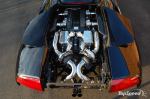
On Sunday’s Golden Globes, co-host Tina Fey cautioned the serial dater to stay away from Sam, who was Mr. Golden Globe. “She needs some time to learn about herself,” Fey quipped.

Vulture later caught up with the “Family Ties” alum who admitted, “I don’t keep up with it all, but Taylor Swift writes songs about everybody she goes out with, right? What a way to build a career.”

Fox added that if Sam brought her home, “I wouldn’t even know who she was.” That is, until he hears her next breakup tune: “‘Sam, You Piece of Sh–.’ Oh … that was the girl you brought home!”

Read more: http://www.foxnews.com/entertainment/2013/01/18/michael-j-fox-taylor-swift-is-never-ever-ever-dating-my-son/?intcmp=features#ixzz2IUHwBu4J

Leave a comment

Filed under Humor and Observations

Release the Kraken!

‘Kraken’ caught on film at last

Nature’s Mysteries

Published January 07, 2013

FoxNews.com

  • giant squid filmed.jpg

    Footage captured by NHK and Discovery Channel in July 2012 shows a giant squid in the sea near Chichi island. (NHK/NEP/Discovery Channel)

  • giant squid filmed 2.jpg

    Footage captured by NHK and Discovery Channel in July 2012 shows a giant squid in the sea’s depths. (NHK/NEP/Discovery Channel)

The elusive giant squid, which can grow to a monstrous 26 feet in length and is likely the source of the Nordic legend of the kraken, has been captured on film at last.

The creature spends its days trawling the depths of the Pacific Ocean, at a depth where there is little oxygen or light and crushing pressure from the immense weight of the water above. It was spied by Japan’s National Science Museum, working in tandem with Japanese broadcaster NHK and the Discovery Channel, according to AFP.

‘It was shining and so beautiful.’

– Museum researcher Tsunemi Kubodera 

“It was shining and so beautiful,” museum researcher Tsunemi Kubodera told AFP. “I was so thrilled when I saw it first hand, but I was confident we would because we rigorously researched the areas we might find it, based on past data.”

The immense creature, which has razor-toothed suckers and eyes the size of dinner plates, has been the subject of fables and fairy tales since ancient times. The Norse legend of the sea monster and the Scylla from Greek mythology might have derived from the giant squid.

This is the first recorded footage of the giant squid in its natural habitat, squid specialist Kudobera said. He also filmed what he says was the first live video footage of a giant squid in 2006, but only from his boat after it was hooked and brought up to the surface.

“Researchers around the world have tried to film giant squid in their natural habitats, but all attempts were in vain before,” Kubodera said.

The squid was spotted at a depth of around 2,000 feet using a submersible in July, about 10 miles east of Chichi island in the north Pacific Ocean.

“With this footage we hope to discover more about the life of the species,” he told AFP, adding that he planned to publish his findings soon.

Discovery Channel will air the footage in the special “Monster Squid: The Giant Is Real,” on Sunday, Jan. 27 at 10PM EST.

“Our crew came face-to-face with the giant squid, and it’s the ideal season finale for our ‘Curiousity’ series that stirs the imagination of our audience, bravely asking questions and fearlessly seeking answers. This latest production, four years in the making, is a world-first achievement for television, and I’m excited to share it,” said Eileen O’Neill, group president of Discovery and TLC Networks.

Read more: http://www.foxnews.com/science/2013/01/07/kraken-caught-on-film-at-last/?intcmp=features#ixzz2IUF6Eot1

Leave a comment

Filed under Animals, Humor and Observations

Choose Your Vehicle

If you could own any of the following, which one would you choose?

Leave a comment

Filed under Humor and Observations

More Crossovers

More crossovers or mashups where two genres, movies, ideas, etc. are squashed together.  For previous crossover posts, type “crossover” in the search box on my home page.  Enjoy!

Leave a comment

Filed under Humor and Observations

Ancient Cult Temple from Time of King David

Tel Motza Discovery: Temple And Ritual Vessels Of Cult From King David Era Found Near Jerusalem (PHOTOS)

The Huffington Post  |  By Posted: 12/27/2012 5:46 pm EST  |  Updated: 12/28/2012 7:29 am EST

 
Temple King David Tel Motza
Evidence of religious practices dating back to the early days of King David and the Kingdom of Judah have been discovered at excavations run by the Israel Antiquities Authority in Tel Motza, west of Jerusalem.

According to the Israel Ministry of Foreign Affairs, the finds — which include 2,750-year-old pottery figurines of men and horses — provide rare evidence of a ritual cult at the beginning of the period of the monarchy.

“The ritual building at Tel Motza is an unusual and striking find, in light of the fact that there are hardly any remains of ritual buildings of the period in Judea at the time of the First Temple,” excavation directors Anna Eirikh, Hamoudi Khalaily and Shua Kisilevitz told The Times of Israel.

The Jerusalem Post noted the rarity of the find, given that “around the time of Hezekiah and Isaiah, Judaism abolished many ritual sites” so the Temple in Jerusalem could concentrate its symbolic power.

During this time period, the city of Jerusalem was also the region’s main hub and the home to King David and King Solomon, according to the Times of Israel.

King David’s son King Solomon built Jerusalem’s First Temple, around the 10th century, B.C.

This is not the first time archaeological artifacts have been discovered at the Tel Motza site, however, the Jewish Telegraphic Agency reports, as previous finds have revealed artifacts from a number of periods.

An IAA statement described the walls of the religious structure as “massive,” according to the Jewish Press, and described it as including a wide, east-facing entrance, which would be typical of temple construction for that time period and region. The structure also included a square structure — possibly an altar — in the temple courtyard.

Getty Images

Leave a comment

Filed under Humor and Observations

Inflatable Space Station Plans

Alpha Station: plans for an inflatable space station

By Leonard David

Published January 17, 2013

Space.com

  • bigelow-expandable activity-module.jpg

    Artists conception of the private-sector supplied Bigelow Expandable Activity Module (BEAM) to be launched around the summer of 2015. (Bigelow Aerospace)

  • bigelow-alpha-station.jpg

    Artists view of the Bigelow Alpha Station comprised of two BA 330 expandable habitats built by private spaceflight company Bigelow Aerospace. (Bigelow Aerospace)

The formal unveiling Jan. 16 of a NASA deal to add an inflatable room developed by commercial company Bigelow Aerospace to the International Space Station is a forerunner of things to come. The private space firm has its eyes on setting up its own commercial space outpost, which it is calling Alpha Station.

The new room to be attached to the International Space Station — a Bigelow Expandable Activity Module (BEAM) — will remain part of the orbiting laboratory for at least two years. During that time, astronauts will monitor the environment inside the module, recording a variety of parameters including temperature, pressure and radiation levels.

According to company details provided to SPACE.com, Bigelow Aerospace officials intend to use the BEAM to further validate the promise and benefits of expandable space habitats.

Space industry in orbit

The benefits of an expandable space habitat would be fully manifested by the Bigelow Aerospace’s BA 330 module, far larger than the BEAM. A single BA 330 expandable habitat would offer 330 cubic meters of internal volume and be able to support a crew of up to six astronauts, Bigelow says. [Photos: Bigelow’s Inflatable Space Station Idea]

‘Countries with no human spaceflight experience could take their first bold steps into space in a rapid and affordable fashion.’

– Bigelow Aerospace documents 

Bigelow Aerospace is pushing forward with Alpha Station, which it bills as the “historic first commercial space station. The station initially would consist of two BA 330s. The company plans to have the two BA 330s ready by late 2016.

Alpha Station would be the first of a number of commercial Bigelow space stations deployed as demand grows and the on-orbit industry matures.

Bigelow Aerospace is open to entering into joint ventures with interested partners, be they governments, corporations or even individuals, for future stations.

“Nations such as Japan, Canada, Brazil, the United Kingdom, the Netherlands and Sweden could secure the future of their human spaceflight programs and dramatically increase the size of their astronaut corps. Smaller countries with no human spaceflight experience such as Singapore or the United Arab Emirates could take their first bold steps into space in a rapid and affordable fashion,” according to a Bigelow Aerospace document.

Private space station costs

“The key to unlocking the potential of such opportunities is affordability,” the company observes, and is rolling out a description of costs “that represent a sea change from historic aerospace pricing.”

That pricing is being categorized as:

  • Astronaut Flight Costs: $26.25 to $36.75 million for a 60-day stay, depending on taxi selected.
  • Lease Block Cost: $25 million for exclusive use of and control over 110 cubic meters of volume for a two-month period.
  • Naming Rights: Full Alpha Station yearly for $25 million; half of Alpha Station (one BA 330 module) yearly for $12.5 million.

Customer base for space

Bigelow Aerospace would be able to transport an astronaut to Alpha Station for $26.25 million for countries, companies or even visiting individuals that wish to utilize SpaceX’s Falcon 9 rocket and Dragon capsule. Using Boeing’s CST-100 capsule and the Atlas 5 rocket, astronauts can be launched to Alpha Station for $36.75 million per seat, company officials said.

For clients that wish to enjoy exclusive access to and control over their own on-orbit volume and facilities, Bigelow Aerospace customers can lease a third of a BA 330 habitat (roughly 110 cubic meters, equal to an entire International Space Station module) for a period of 60 days for $25 million.

“Whether the customer is NASA, international clientele, corporations or even wealthy individuals, Bigelow Aerospace stands ready to leverage its robust, affordable technology to implement exceptional human spaceflight missions,” the Bigelow Aerospace document concludes.

Read more: http://www.foxnews.com/science/2013/01/17/alpha-station-private-inflatable-spacebase/#ixzz2IJJAcrkP

1 Comment

Filed under Humor and Observations

Must Watch Sci-Fi Short

Video by Kaleb Lechowski.   Averaging over 100,000 views per day.  See what everyone is looking at:

https://vimeo.com/57148705

r'ha

https://www.facebook.com/rha.movie


Leave a comment

Filed under Humor and Observations

Ancient Pills Found in Shipwreck

HealthDay News | 

Ancient Pills Found in Shipwreck Offer Rare Insight Into Early Medicine

Evidence of value of some natural medicines that have been used for thousands of years.

By Barbara Bronson Gray, HealthDay News
  

TUESDAY, Jan. 8, 2013 (HealthDay News) — Archeologists investigating an ancient shipwreck off the coast of Tuscany report they have stumbled upon a rare find: a tightly closed tin container with well-preserved medicine dating back to about 140-130 B.C.

A multi-disciplinary team analyzed fragments of the green-gray tablets to decipher their chemical, mineralogical and botanical composition. The results offer a peek into the complexity and sophistication of ancient therapeutics.

“The research highlights the continuity from then until now in the use of some substances for the treatment of human diseases,” said archeologist and lead researcher Gianna Giachi, a chemist at the Archeological Heritage of Tuscany, in Florence, Italy. “The research also shows the care that was taken in choosing complex mixtures of products — olive oil, pine resin, starch — in order to get the desired therapeutic effect and to help in the preparation and application of medicine.”

The medicines and other materials were found together in a tight space and are thought to have been originally packed in a chest that seems to have belonged to a physician, said Alain Touwaide, scientific director of the Institute for the Preservation of Medical Traditions, in Washington, D.C. Touwaide is a member of the multi-disciplinary team that analyzed the materials.

The tablets contained an iron oxide, as well as starch, beeswax, pine resin and a mixture of plant-and-animal-derived lipids, or fats. Touwaide said botanists on the research team discovered that the tablets also contained carrot, radish, parsley, celery, wild onion and cabbage — simple plants that would be found in a garden.

Giachi said that the composition and shape of the tablets suggest they may have been used to treat the eyes, perhaps as an eyewash. But Touwaide, who compared findings from the analysis to what has been understood from ancient texts about medicine, said the metallic component found in the tablets was evidently used not just for eyewashes but also to treat wounds.

The discovery, Touwaide said, is evidence of the effectiveness of some natural medicines that have been used for literally thousands of years. “This information potentially represents essentially several centuries of clinical trials,” he explained. “If natural medicine is used for centuries and centuries, it’s not because it doesn’t work.”

A report on the analysis of the tablets was published in this week’s issue of the Proceedings of the National Academy of Sciences.

The shipwrecked boat — the Relitto del Pozzino — was found in the Gulf of Baratti in 1974 and first explored eight years later. The analysis of the tablets was begun about two years ago, Giachi said. The vessel, about 50 to 60 feet long, was found in an area considered a key east-west trade route.

In addition to the pills, archeologists found other remnants of early medicine: a copper bleeding cup, a tin pitcher, 136 boxwood vials, and tin containers.

The tablets were well preserved for the last 2,000 years because the cylindrical tin container in which they were stored, called a pyxis, was hermetically sealed by the natural degradation of the metal, Giachi said, adding that very few other ancient medicines have been discovered elsewhere.

“In London, a granular cream was discovered in a small tin canister. It was dated to the second century A.D. and was probably used as moistening or medicinal cream,” Giachi said.

Giachi noted that another botanical medicine was found at the bottom of a dolium — a large Roman earthenware container — from the first century A.D., recovered near Pompeii. Also, in Lyon, France, cylindrical rods recovered from a second century A.D. burial site were considered to be eyewashes.

To analyze the material found in the shipwreck, a fragment from the original tablets was studied with light microscopy and a scanning electron microscope, Giachi explained. DNA sequencing was used to analyze the organic elements.

Other experts in the field lauded the discovery as a rare find that offered valuable clues to the actual types of materials used in ancient medicine.

“What we know about ancient medicine is largely contained in manuscripts, often corrupt — copied and recopied and fragmentary,” said Michael Sappol, an historian in the history of medicine division of the U.S. National Library of Medicine. “When the manuscripts refer to plants, it’s not always evident what they’re referring to. There’s a lot we don’t know.”

Dr. Mark Fromer, an ophthalmologist at Lenox Hill Hospital in New York City, said it makes sense that the medicine that was discovered on the ship was an eye wash to treat dry eye, a common condition even today. “It’s easy to make: it’s saline, which has a pH [acid balance] close to tears,” he explained. “It’s fascinating to realize that the problems that faced men and women thousands of years ago haven’t changed.”

Photo Credit: G. Giachi et al./PNAS

Leave a comment

Filed under Humor and Observations