Category Archives: Humor and Observations

A Zimbabwean villager fistfights crocodile to save child, says local media

A Zimbabwean villager fistfights crocodile to save child, says local media

Published December 27, 2013

Associated Press

HARARE, ZIMBABWE – State media in Zimbabwe says a villager fought a crocodile with his bare hands to free his son from its jaws in northeastern rural Mutoko. The Herald newspaper reported Tafadzwa Kachere and his 11-year-old son Tapiwa were trying to cross a river on Christmas eve when the crocodile attacked the boy. It reported that Kachere jumped onto the crocodile’s back and tried to force open its jaws, beating at its head with his fists and poking at its eyes with reeds. The crocodile released the child and turned on Kachere who wrestled free of its grasp. The newspaper says the child lost a leg and his father’s arm was severely gored. Both survived. Crocodile attacks are common in rural Zimbabwe during the rainy season but many go unreported.

Leave a comment

Filed under Humor and Observations

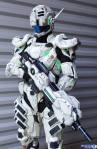
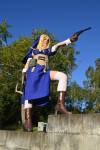
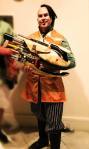
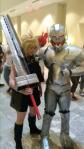
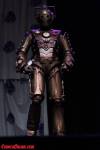
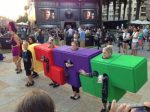
Cosplay Pictures for your Saturday

Cosplay pictures for your Saturday.  Enjoy!

Leave a comment

Filed under Humor and Observations

Antarctica sets low temperature record of -135.8 degrees

Antarctica sets low temperature record of -135.8 degrees

Published December 10, 2013

Associated Press

WASHINGTON –  Feeling chilly? Here’s cold comfort: You could be in East Antarctica which new data says set a record for “soul-crushing” cold.

Try 135.8 degrees Fahrenheit below zero; that’s 93.2 degrees below zero Celsius, which sounds only slightly toastier. Better yet, don’t try it. That’s so cold scientists say it hurts to breathe.

A new look at NASA satellite data revealed that Earth set a new record for coldest temperature recorded. It happened in August 2010 when it hit -135.8 degrees. Then on July 31 of this year, it came close again: -135.3 degrees.

The old record had been -128.6 degrees, which is -89.2 degrees Celsius.

Ice scientist Ted Scambos at the National Snow and Ice Data Center said the new record is “50 degrees colder than anything that has ever been seen in Alaska or Siberia or certainly North Dakota.”

“It’s more like you’d see on Mars on a nice summer day in the poles,” Scambos said, from the American Geophysical Union scientific meeting in San Francisco Monday, where he announced the data. “I’m confident that these pockets are the coldest places on Earth.”

However, it won’t be in the Guinness Book of World Records because these were satellite measured, not from thermometers, Scambos said.

“Thank God, I don’t know how exactly it feels,” Scambos said. But he said scientists do routinely make naked 100 degree below zero dashes outside in the South Pole, so people can survive that temperature for about three minutes.

Most of the time researchers need to breathe through a snorkel that brings air into the coat through a sleeve and warms it up “so you don’t inhale by accident” the cold air, Scambos said.

On Monday, the coldest U.S. temperature was a relatively balmy 27 degrees below zero Fahrenheit in Yellowstone, Wyo., said Jeff Masters, meteorology director of the private firm Weather Underground.

“If you want soul-crushing cold, you really have to go overseas,” Scambos said in a phone interview. “It’s just a whole other level of cold because on that cold plateau, conditions are perfect.”

Scambos said the air is dry, the ground chilly, the skies cloudless and cold air swoops down off a dome and gets trapped in a chilly lower spot “hugging the surface and sliding around.”

Just because one spot on Earth has set records for cold that has little to do with global warming because it is one spot in one place, said Waleed Abdalati, an ice scientist at the University of Colorado and NASA’s former chief scientist. Both Abdalati, who wasn’t part of the measurement team, and Scambos said this is likely an unusual random reading in a place that hasn’t been measured much before and could have been colder or hotter in the past and we wouldn’t know.

“It does speak to the range of conditions on this Earth, some of which we haven’t been able to observe,” Abdalati said.

Leave a comment

Filed under Humor and Observations

Film School Thesis Generator

This is one of those strange sites I come across that tickle my funny bone.  This site basically comes up with film school thesis statements for you to base an appropriately erudite and pretentious analysis for your film school professors.

http://www.stumbleupon.com/su/4oBZ8c/:1JsCLPyr_:Q-+4SX6T/wonder-tonic.com/filmthesis/

film school

2 Comments

Filed under Humor and Observations, Writing

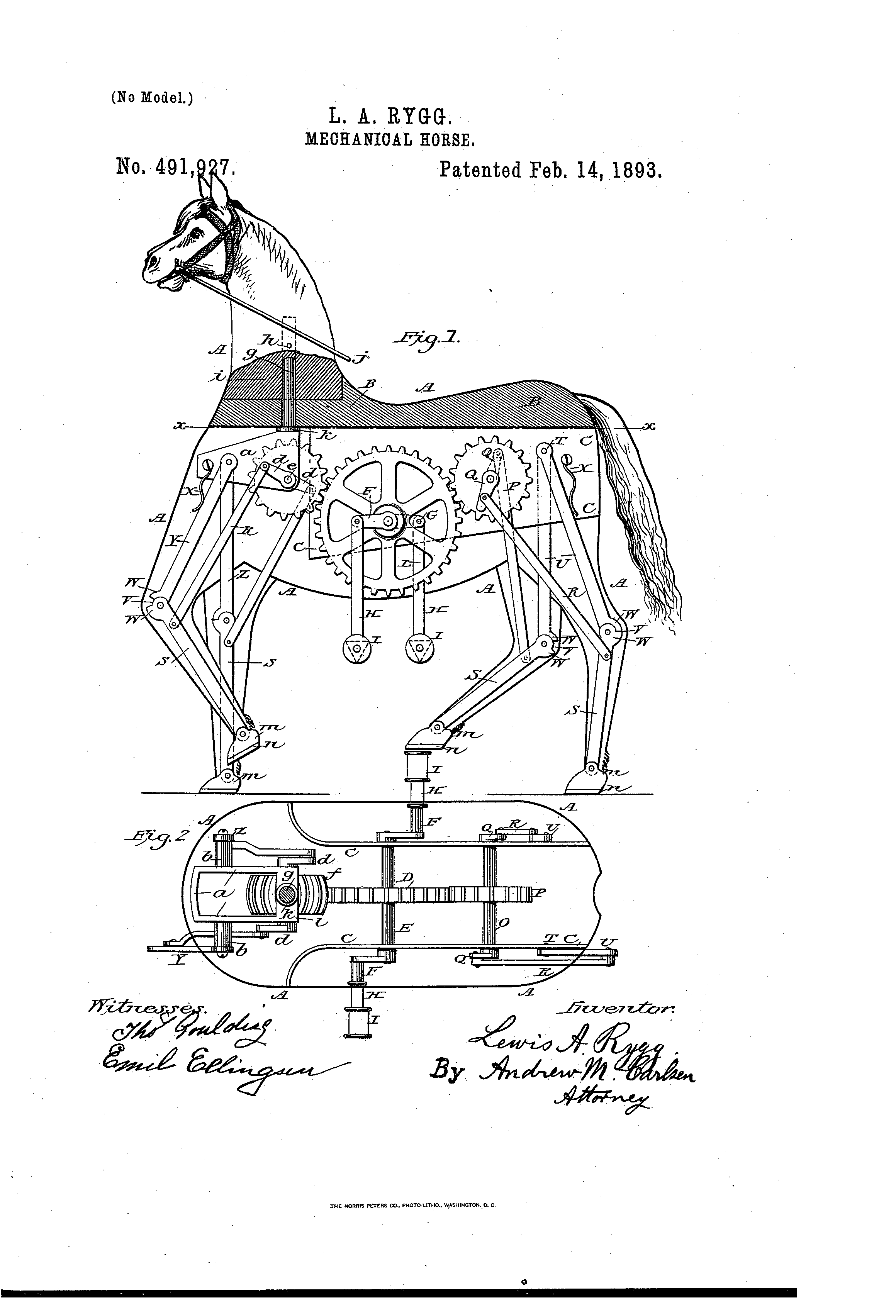
1893: Patent for Rygg’s Mechanical Horse

1893

Rygg’s mechanical horse

Ryggs-Mechanical-Horse

Leave a comment

Filed under Humor and Observations

Carnivorous fish injure 70 Argentine river bathers

Carnivorous fish injure 70 Argentine river bathers; 7 children lose parts of fingers or toes

Published December 26, 2013

Associated Press

BUENOS AIRES, ARGENTINA –  A surprise attack by a school of carnivorous fish has injured 70 people bathing in an Argentine river, including seven children who lost parts of their fingers or toes.

Director of lifeguards Federico Cornier said Thursday that thousands of bathers were cooling off from 100-degree temperatures in the Parana River in Rosario on Wednesday when bathers suddenly began complaining of bite marks on their hands and feet. He blamed the attack on palometas, “a type of piranha, big, voracious and with sharp teeth that can really bite.”

Palometas

Palometas

Paramedic Alberto Manino said some children he treated lost entire digits. He told the Todo Noticias channel that city beaches were closed, but it was so hot that within a half-hour, many people went back to the water.

pal

Leave a comment

Filed under Animals, Humor and Observations

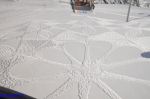
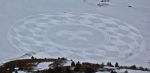
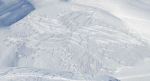
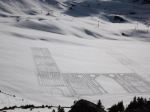
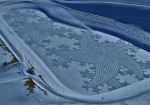
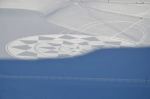
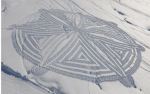
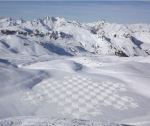
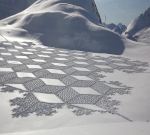
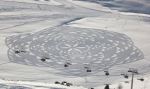
Amazing Art Made by Snowshoe

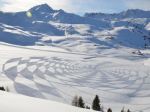
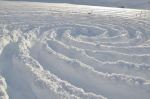
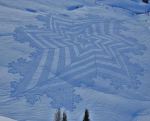
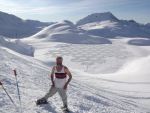
English based artist Simon Beck created these amazing works of art by stomping around French ski resorts with nothing but a pair of snowshoes.

“I made a work of art out of snow in my high school football field once. It was displayed on the news and I got suspended.”

Reposted from repost on The Chive.  Enjoy!


Leave a comment

Filed under Humor and Observations, Uncategorized

Largest gathering ever of exoskeleton-wearers walk for charity

The bionic bunch: Largest gathering ever of exoskeleton-wearers walk for charity

By Sasha Bogursky

Published November 18, 2013

FoxNews.com
  • rewalkgroupnyc.jpg

    ReWalk inventor Dr. Amit Goffer (bottom row) and other ReWalkers participate in a 5K walk in New York City’s Riverside Park.(ARGO MEDICAL TECHNOLOGIES)

Using new exoskeleton technology that allows the paralyzed to walk again, the largest gathering ever of ReWalk users from across the world came together in New York City on Sunday to participate in the Generosity 5K to raise money for the Bronx Veterans Medical Research Foundation.

ARGO Medical’s Rewalk suit is living up to its promise: to revolutionize the way paraplegics and other people with disabilities live.

“Regardless of whether it’s from ARGO or another company, it’s a technology that none of us realize how big of a difference it makes in the health of a patient,” ARGO Medical Technologies CEO Larry Jasinski told FoxNews.com.

Although it rained in New York City on Monday, the rain stayed away Sunday while seven ReWalkers and hundreds of supporters successfully made their way through Manhattan’s Riverside Park.

“I think the most important thing was that the ReWalkers completed the walk,” Jasinski said.

Among the participants was the inventor of the suit, Dr. Amit Goffer. Goffer is himself a quadriplegic who became frustrated by the outdated wheelchair and wanted to create something that would allow people with spinal cord injuries to walk again.

“What’s unique about ReWalk is that behind the left elbow of the user is a motion sensor that picks up a user’s movement when they walk,” Jasinski said. “That is attached to a computer that can replicate human gait to create a non-robotic walking step.”

Most other types of technologies cause an unnatural, stiff walk closer to a robot than to the way humans stride. ReWalk helps to create a more natural and human-like step.

“It’s the closest to walking that I can get. It’s a very good feeling,” ReWalker Gene Laureano, a father of four who became paralyzed 12 years ago after falling from a ladder at his construction job, told theNew York Post.

The 44-pound ReWalk suit is composed of two motorized limbs that strap to the legs, hips and trunk. The motion sensors detect when the user leans forward and begins moving.

The suit is currently available only in the Middle East and Europe, but Jasinski says he hopes to have FDA approval to sell the suits in the United States for an approximate $65,000.

“We believe the cost of the device will be more than offset by cost savings in reduction of medication and medical care,” he said.

“When we ask people why they buy the suit, the top five answers do not include walking again,” Jasinski told FoxNews.com. “Reduction in pain, medication and overall improvement in their wellbeing are more important. [ReWalk] is really making a difference in people’s lives.”

Leave a comment

Filed under Humor and Observations

How the Football Got Its Shape

How the Football Got Its Shape

And why its shape determines outcomes of the game

The developers for EA Sports’ video game Madden NFL 13 have 10 million lines of code at their disposal, but when they need  to capture the movement of a football, they spend hours in  offices and hallways and even on the lawns outside, dropping, bouncing and  rolling footballs and then poring over the results. “If I throw a spherical  ball in the air, I know exactly where it’s going,” says software engineer Ryan  Morse. “If you throw a football in the air and it lands, it can go 30 different  ways.”

“It’s more like 30 thousand. Or 30 billion,” adds physicist Toan Pham, the  group’s technical director.

The reason a football bounces so strangely is because of its shape. A  football is a prolate spheroid, and it’s shaped that way because that’s also the  shape of an inflated pig’s bladder, which is what the first footballs were made  of. Soccer balls were also made of pig’s bladders, but as soon as technology  permitted, those balls got rounder, which made them easier to kick. But as the  football evolved — and was constructed of cowhide and rubber — it got even  more prolate, which made it easier to carry and easier to throw. And much harder  to pick up when it bounces on the ground.

What this oddly shaped ball — and the physics behind it — lends to our  national pastime is randomness. The randomness of a bouncing ball  adds an element of uncertainty that coaches and players try mightily to  minimize. Indeed, the unpredictable bounce is powerful enough to determine which  teams will be vying for a trip to the Super  Bowl and which teams will be watching the playoffs from the comfort of their  couches.

Consider the fumble. Forcing a fumble is a skill that can be practiced and  learned. Some teams are better at it than others. But once the ball hits the  ground, all bets are off. It will elude the grasp of a future Hall of Famer and  leap into the arms of a sub from the taxi squad. The subsequent change of  possession — or lack thereof — from a fumble can result in a swing of 14 points  or more. In a league where the average margin of victory is 12 points, it’s no  exaggeration to suggest that one random bounce can determine the outcome of a  game.

That’s what happened with DeSean Jackson’s game-winning  punt return against the Giants in 2010. The ball took a lucky bounce after  the Eagles’ return man fumbled it, and Jackson was able to scoop it up and run  for an improbable touchdown, a play selected by NFL fans as the greatest of all  time.

The random bounce of the ball can even change the course of history.

Newton's Football cover 

Random  House

In the 2012 regular season, the San Francisco 49ers recovered 23 of 37  fumbles for a 62% success rate. The Detroit Lions recovered only 9 of 24, or  37%. Their success at collecting bouncing footballs is one of the reasons why  the 49ers went 11-4-1 and made it all the way to the Super Bowl. As for the  Lions, they ended up a disappointing 4-12.

Just as it does in the world of science, where it drives everything from  evolution to cryptography, randomness is a powerful, disruptive force in  football. Coaches and players work all week to devise a game plan and execute it  to perfection. Then on Sunday afternoon, the pigskin hits the turf and squirts  this way instead of that. The fans erupt with frenzied cheers. Viewers at home  watch the instant replay in disbelief. And the scoreboard tells a story that  borders on the unbelievable.

All because of a bouncing ball.

Read more: How the Football Got Its Shape | TIME.com http://ideas.time.com/2013/12/30/how-the-football-got-its-shape/#ixzz2p7WCgkPb

Leave a comment

Filed under Humor and Observations

Breaking New Year’s Resolutions – The Neuroscience Explanation

Blame It on the Brain

The latest neuroscience research suggests spreading resolutions out over time is the best approach

By

Jonah Lehrer

Updated Dec. 26, 2009 12:01 a.m. ET
Willpower, like a bicep, can only exert itself so long before it gives out; it’s an extremely limited mental resource.

Given its limitations, New Year’s resolutions are exactly the wrong way to change our behavior. It makes no sense to try to quit smoking and lose weight at the same time, or to clean the apartment and give up wine in the same month. Instead, we should respect the feebleness of self-control, and spread our resolutions out over the entire year. Human routines are stubborn things, which helps explain why 88% of all resolutions end in failure, according to a 2007 survey of over 3,000 people conducted by the British psychologist Richard Wiseman. Bad habits are hard to break—and they’re impossible to break if we try to break them all at once.

James Steinberg

Some simple tricks can help. The first step is self-awareness: The only way to fix willpower flaws is to know about them. Only then can the right mental muscles get strengthened, making it easier to succeed at our annual ritual of self-improvement.

The brain area largely responsible for willpower, the prefrontal cortex, is located just behind the forehead. While this bit of tissue has greatly expanded during human evolution, it probably hasn’t expanded enough. That’s because the prefrontal cortex has many other things to worry about besides New Year’s resolutions. For instance, scientists have discovered that this chunk of cortex is also in charge of keeping us focused, handling short-term memory and solving abstract problems. Asking it to lose weight is often asking it to do one thing too many.

In one experiment, led by Baba Shiv at Stanford University, several dozen undergraduates were divided into two groups. One group was given a two-digit number to remember, while the second group was given a seven-digit number. Then they were told to walk down the hall, where they were presented with two different snack options: a slice of chocolate cake or a bowl of fruit salad.

Here’s where the results get weird. The students with seven digits to remember were nearly twice as likely to choose the cake as students given two digits. The reason, according to Prof. Shiv, is that those extra numbers took up valuable space in the brain—they were a “cognitive load”—making it that much harder to resist a decadent dessert. In other words, willpower is so weak, and the prefrontal cortex is so overtaxed, that all it takes is five extra bits of information before the brain starts to give in to temptation.

This helps explain why, after a long day at the office, we’re more likely to indulge in a pint of ice cream, or eat one too many slices of leftover pizza. (In fact, one study by researchers at the University of Michigan found that just walking down a crowded city street was enough to reduce measures of self-control, as all the stimuli stressed out the cortex.) A tired brain, preoccupied with its problems, is going to struggle to resist what it wants, even when what it wants isn’t what we need.

There’s something unsettling about this scientific model of willpower. Most of us assume that self-control is largely a character issue, and that we would follow through on our New Year’s resolutions if only we had a bit more discipline. But this research suggests that willpower itself is inherently limited, and that our January promises fail in large part because the brain wasn’t built for success.

Everybody knows that the bicep has practical limitations: If we ask the muscle to hold too much, it will give out and drop everything on the floor. And just as our muscles get tired after a tough workout, and require a rest to recuperate, so does the poor prefrontal cortex need some time off.

In a 2002 experiment, led by Mark Muraven at the University at Albany, a group of male subjects was asked to not think about a white elephant for five minutes while writing down their thoughts. That turns out to be a rather difficult mental challenge, akin to staying focused on a tedious project at work. (A control group was given a few simple arithmetic problems to solve.) Then, Mr. Muraven had the subjects take a beer taste test, although he warned them that their next task involved driving a car. Sure enough, people in the white elephant group drank significantly more beer than people in the control group, which suggests that they had a harder time not indulging in alcohol.

The implications of this muscle metaphor are vast. For one thing, it suggests that making lots of New Year’s resolutions is the wrong way to go about changing our habits. When we ask the brain to suddenly stop eating its favorite foods and focus more at work and pay off the Visa…we’re probably asking for too much.

The willpower-as-muscle metaphor should also change the way we think about dieting. Roy Baumeister, a psychologist at Florida State University who has pioneered the muscle metaphor, has demonstrated in several clever studies that the ability to do the right thing requires a well-fed prefrontal cortex.

In a 2007 experiment, Prof. Baumeister and his colleagues found that students who fasted for three hours and then had to perform a variety of self-control tasks, such as focusing on a boring video or suppressing negative stereotypes, had significantly lower glucose levels than students who didn’t have to exert self-control. Willpower, in other words, requires real energy.

In another experiment, Mr. Baumeister and his colleagues gave students an arduous attention task—they had to watch a boring video while ignoring words at the bottom of the screen—before asking them to drink a glass of lemonade. Half of the students got lemonade with real sugar, while the other half got a drink with Splenda. On a series of subsequent tests of self-control, the group given fake sugar performed consistently worse. The scientists argue that their lack of discipline was caused by a lack of energy, which hampered the performance of the prefrontal cortex.

Since the most popular New Year’s resolution is weight loss, it’s important to be aware that starving the brain of calories—even for just a few hours—can impact behavior. Skipping meals makes it significantly harder to summon up the strength to, say, quit cigarettes. Even moderation must be done in moderation.

The final piece of the willpower puzzle is distraction. Research by Walter Mischel at Columbia University and others has demonstrated that people who are better at delaying gratification don’t necessarily have more restraint. Instead, they seem to be better at finding ways to get tempting thoughts out of their minds.

For instance, Prof. Mischel has found that four-year-old children who are better at resisting the allure of eating a marshmal low—they get a second marshmallow if they can wait for 20 minutes—are the ones who sing songs, play with their shoelaces or pretend the marshmallow is a cloud. In other words, they’re able to temporarily clear the temptation out of consciousness. (Prof. Mischel has also shown that these “high delayers” go on to get higher SAT scores and have lower body-mass indexes as adults.) Because they know that willpower is weak, they excel at controlling the spotlight of attention: When faced with candy, they stare at the carrots.

While this willpower research can get dispiriting—the mind is a bounded machine, defined by its frailties—it also illustrates some potential remedies. Prof. Baumeister figured that it might be possible to strengthen willpower by exercising it, and in 1999, he asked a group of students to improve their posture for two weeks. Interestingly, these students showed a marked improvement on subsequent measures of self-control, at least when compared to a group that didn’t work on sitting up and standing straight.

The lesson is that the prefrontal cortex can be bulked up, and that practicing mental discipline in one area, such as posture, can also make it easier to resist Christmas cookies. And when a dangerous desire starts coming on, just remember: Gritting your teeth isn’t the best approach, as even the strongest mental muscles quickly get tired. Instead, find a way to look at something else.

—Jonah Lehrer is the author of “How We Decide” and “Proust Was a Neuroscientist.”


Leave a comment

Filed under Humor and Observations