Category Archives: Writing

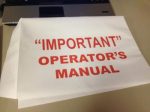
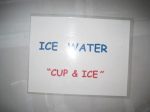
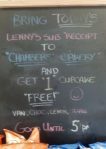
Strange Quotation Marks

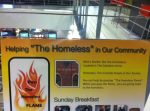
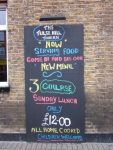
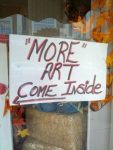
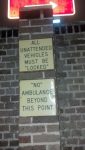
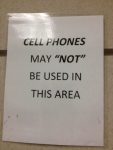
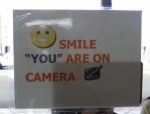
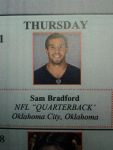
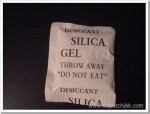
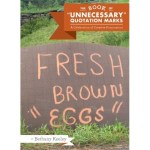
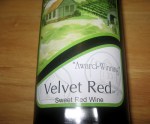
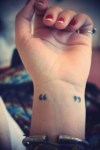
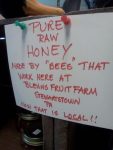
Some of these are just strange with no explanation.  Others, I think people are mistaking quotation marks for underlining, bold, or italics to emphasize words.  Even an exclamation point would work better.  There are even a blog and web sites on the topic, no joke, at http://www.unnecessaryquotes.com/ and http://www.juvalamu.com/qmarks/, among others.  Quotation marks are used ordinarily to show quotations, or attributions in fiction to a particular speaker.  They can also be used to offset story titles and other titles in part of a sentence.  An increasing use is to use them to show irony, or sarcasm.  Like you disapprove of your sister’s new boyfriend, so you write:

Yeah, he is a real “winner.”

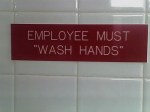
In that case, to indicate the opposite, that he is a loser.  So why would someone post a sign:

Employees must “wash their hands.”

It is not a quote, title, or attribution, so it can only mean irony or sarcasm.  Are they supposed to wash something besides their hands?  Are they not supposed to wash?  Anyway, you get the point.  Here is a gallery of them.  “Enjoy.” [sic.]

7 Comments

Filed under Humor and Observations, Writing

I Will Be At Phoenix ComicCon 2013!

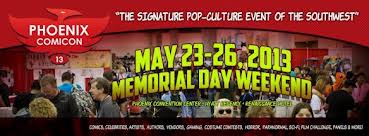
I will be at booth #1629 which will be on the end next to the Star Wars Display and the Lego Display.  I will be selling copies of my first three books, and at least my fourth, Twisted Nightmares.  Hopefully, I can finish Blood Bank by then, but I am not sure.  My wife will also be selling vintage style jewelry, steampunk items, zombie response team medallions, Cthulhu wear and other very cool items.  The link to her Etsy shop is below, her creations are SusannesPassion, all one word, no apostrophe.

I also have two tentative discussions to be on panels; one on steampunk and one on writing and publishing.  Not sure if either will pan out, but will let you know.  Also, in discussions for the Gaslamp Gathering in San Diego, but not sure on that yet.

http://www.etsy.com/shop/SusannesPassion


pcc13 two

http://www.phoenixcomicon.com/

pcc13


Leave a comment

Filed under Humor and Observations, Uncategorized, Writing

Word Trivia

Word Trivia

Fun Fridays – May 11, 2012

Word Trivia

“Stewardesses” and “reverberated” are the two longest (and commonly used) words (12 letters each) that can be typed with only the left hand.

“lollipop” is the longest word typed with your right hand.

The only 15 letter word that can be spelled without repeating a letter is uncopyrightable.

No word in the English language rhymes with month, orange, silver, or purple.

“Dreamt” is the only English word that ends in the letters “mt”.

The sentence: “The quick brown fox jumps over the lazy dog” uses every letter of the alphabet.

The words ‘racecar,’ ‘kayak’ and ‘level’ are the same whether they are read left to right or right to left (palindromes).

There are only four words in the English language which end in “dous”: tremendous, horrendous, stupendous, and hazardous.

There are two words in the English language that have all five vowels in order: “abstemious” and “facetious.” (a e i o u)

Typewriter is the longest word that can be made using the letters only on one row of the keyboard.

A “jiffy” is an actual unit of time for 1/100th of a second.

The only city whose name can be spelled completely with vowels is Aiea, Hawaii.

[Editor’s Note:  I did in fact live in Aiea for many years during a six year stint in Hawaii on the island of Oahu.  My wife and I had a terrible time getting mail.  All of our friends and family could not believe we lived in a place with only four vowels and no consonents – A I E A.  Pronounced “EYE -A- Uh”  The most common misspelling was ALEA.  They just randomly put an L in for the Aiea.  Curious folks my wonder where Aiea is located.  It is between Honolulu and Pearl Ridge.  We lived in a ten story apartment complex across the street from Aiea Chop Suey and Speedy’s Supermarket.  Aloha Stadium (home to the Aloha Bowl, the Hula Bowl, and The Pro Bowl and to the University of Hawaii Rainbow Warrior all played there.  From our lanai (balcony) we would look out over all of Pearl Harbor.  The Arizona Memorial was right in front of us.]


Leave a comment

Filed under Uncategorized, Writing

Come By the Wild Wild West Con 2 Tomorrow and Say Hello!

Friday, March 8th, 2013, I will be appearing as a guest at Wild Wild West Con 2, the only Steampunk only Con at an actual 1880s theme park.  Old Tucson Studios, the site of over 300 movies and TV shows, will be hosting the event for the Friday, Saturday and Sunday.  It is hosted by the great folks at the Arizona Steampunk Society who have put tons of work into it.  A shout out to Diana, Jason and Noe and to the hundreds of others working to make this a fun and exciting weekend event.

Thanks to their gracious invitation, I will be there Friday, on a panel at 2 pm discussing writing steampunk, steampunk themes in literature and indie publishing.  Joining me on the panel are author/publisher/magazine editor Patti Hulstrand, and author/cover designer/computer whiz Chris Wilke.  Please stop by not only to see us, but all the great costumes, events, performances and live bands.  Here is a link:

http://www.wildwildwestcon.com/d/

logo

Unfortunately, due to still recovering from recent medical procedures, I will only be able to attend the first day.  I will not have a vendor booth, but will be available briefly before and after the panel to sign copies of my Steampunk and other books.  You will also get to see me as my alter ego, dressed in 1880s western steampunk garb.  It is sure to be a great day for you and all you bring.  Lots of fun, and a unique experience.

Leave a comment

Filed under Humor and Observations, Uncategorized, Writing

Project: Shadows

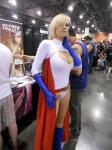
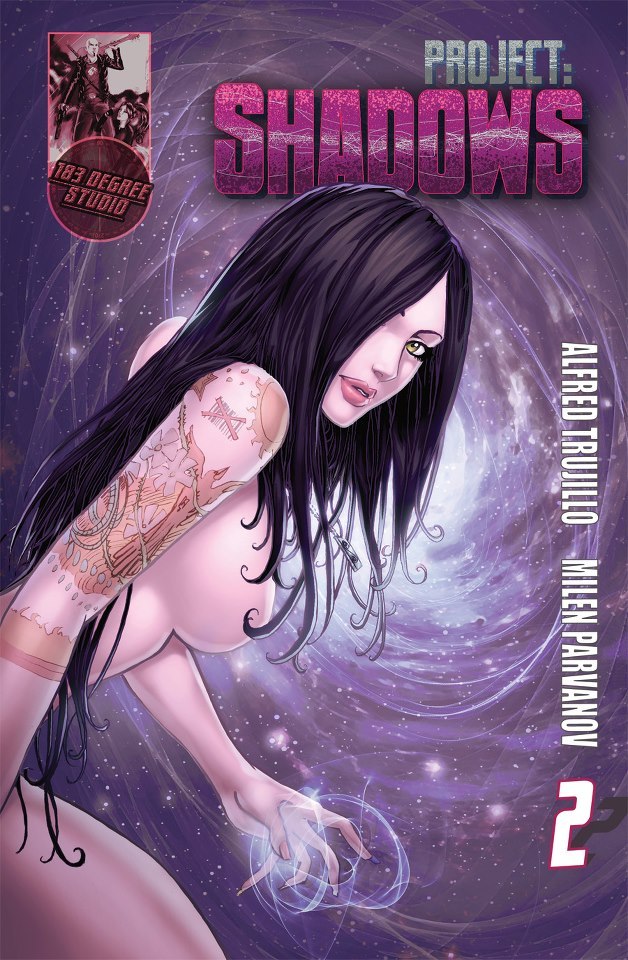
My good friends, and recently married couple, Alfred “T-Virus” Trujillo and Cara Nicole (AZ Powergirl and cover model for Twisted History and the upcoming Blood Bank novel by yours truly) are producing a new comic book series called Project: Shadows.  Alfred is already a famous comic producer and artist, invited to many conventions and a featured guest at the Phoenix ComicCon as well as many others.  Cara Nicole is well known as AZ Powergirl.  Please help support this dynamic duo and the rest of their team.

Here is the kickstarter link:

Project shadows

Leave a comment

Filed under Humor and Observations, Uncategorized, Writing

New Punctuation Marks We Need

8 New Punctuation Marks We Desperately Need

by Mike Trapp on February 20, 2013

  • Reposted from CollegeHumor
8 New Punctuation Marks - Image 10


8 New Punctuation Marks We Desperately Need - Image 10


8 New Punctuation Marks - Image 10


8 New and Necessary Punctuation Marks - Image 1


8 New and Necessary Punctuation Marks - Image 1


8 New and Necessary Punctuation Marks - Image 1


8 New and Necessary Punctuation Marks - Image 1


8 New and Necessary Punctuation Marks - Image 1

2 Comments

Filed under Humor and Observations, Writing

Robin, The Boy Wonder, Dies…

DC killing off Batman’s ‘Boy Wonder’ Damian Wayne in new comic book

  • By JOSH SAUL
  • Last Updated: 8:17 AM, February 25, 2013
  • Posted: 3:25 AM, February 25, 2013

Robin the Boy Wonder, Batman’s aide-de-camp, will be killed battling a brutal enemy in a comic book published Wednesday.

The shocking demise of the Dark Knight’s sidekick will first appear in issue No. 8 of the offshoot title “Batman Incorporated,” but the aftermath of his death will ripple throughout the DC Comics universe, the publisher confirmed exclusively to The Post.


Damian Wayne — the son of Bruce Wayne and the latest hero to assume the mantle of Robin — has a heart-to-heart with fellow superhero Nightwing before his final, and ultimately fatal, battle in the pages of “Batman Incorporated” No. 8, out Wednesday.


“He saves the world. He does his job as Robin,” writer Grant Morrison said. “He dies an absolute hero.”

Robin — a k a Damian Wayne, the 10-year-old son of Bruce Wayne — is slain fighting a hulking assassin who happens to be, in true comic-book form, a “brother” cloned from his genetic material.

And — SPOILER ALERT ! — unlike all the times he has swooped in at the last minute, Batman arrives too late to save his protégé.

A number of heroes have filled the role of Robin over the decades, including the first and best known, Dick Grayson, introduced in 1940.

PHOTOS: ROBIN THROUGH THE YEARS

The latest Robin, however, was the brilliant and caustic Damian, the illegitimate son of billionaire Bruce Wayne and Talia, the beautiful daughter of one of his deadliest enemies, Ra’s al Ghul.

Morrison, one of the industry’s top talents, brings an adult perspective to the grim tale.

Robin’s death, he said, will illustrate how parents lose sight of their kids when they fight.

“It’s all about the family and the family going to hell,” said Morrison, who threw in elements of his own parents’ divorce. “The two adults in the story are both culpable. The kid’s the good guy.”


Morrison, who brought Damian to the forefront in 2006, said he had created a full arc for the character, who grew from a violent, fledgling assassin to a selfless leader.

“What we did was turn this little monster into a superhero,” he said. “He’s a little brat, but he’s a super-brat.”

Damian isn’t the first Robin to die, but he’s the first to die at the height of his popularity with fans.

In 1988, a few years after Grayson moved on, the next Robin — the disliked, surly Jason Todd — was slain by the Joker after an infamous phone poll let fans choose whether the teen should be killed off.

Todd was resurrected in 2005.

So who knows if Damian will stay dead, or if a new Boy (or perhaps Girl) Wonder will take his place.

Noted Morrison: “You can never say never in a comic book . . . Batman will ultimately always have a partner.”

Leave a comment

Filed under Humor and Observations, Writing

Writing – Is it Creative?

Most people think as an author and a magazine columnist that I create new things and new stories.  Oddly, the answer is yes and no.  We are the sum of our neural connections and memories.  I do not believe you can create anything new.  All you can do is take what is already in your head, and mix and match it into something new.  A good friend and fellow author disagreed with me.  In fact, he intentionally made up a name at random and put it in his story.  He was very proud to “prove me wrong.”  That week, he made the same turn he always did on his way home and noticed a small sign – with his entirely random name on it.  He changed the name in his story – to another random one, and went on his way, maybe a little more interested in my theory.
Throughout history, their are certain motifs, stories, and character archetypes which have been laid down in verbal tradition, through religion, stories, movies, TV, pretty much every interaction you have with your fellow man.  Here it is in the Bible:

Ecclesiastes 1:9

New International Version (NIV)

 What has been will be again,
what has been done will be done again;
there is nothing new under the sun.

So how then do you come up with “new” ideas if there is nothing “new”?  Stephen King in On Writing said as an author you should at least as much time reading as you do writing.  The more inputs you have, the more combinations can be made.  I have read at least one book a week since I was twelve.  I estimate I have read around 4,000 books.  I watch movies, I travel to new places, try new things, eat new foods.  People you meet, movies you see, conversations you have, failures and successes in careers all stay inside that grey matter in magical ways.

right left brain garden

So, in my own opinion, the only way to be “creative” in your writing, is to constantly explore, learn and put more little bits of potential into your head.  Mine usually come together best in that twilight moment of falling asleep.  I have written chapters, even entire books in my head as I drift off.  For some reason, for me, that is the time when all those life bits and memories swirl around in a big ocean and rejoin to make original patterns out of old data.

Writing is creative for sure.  Writing is even original to everyone else who reads it, because they do not share all the bits and pieces that you do in your brain.  They see with a different collection of fragments floating in their ocean.  But to me, as a writer, I know everything I write came from somewhere else, even if I don’t know what strange combination floated together.

child Head

Having indulged my philosophical side, here is a list of common Character Archetypes used in literature, compiled at Listology:

Character archetypes

 Submitted by diaskeaus on Wed, 02/15/2006 – 02:24
  1. Willing Hero — King Arthur; Leelu from The Fifth Element; Hercules
  2. Unwilling Hero — Bilbo Baggins from The Hobbitt, Phillipe Gaston from Ladyhawke
  3. Cynical Anti-hero — Han Solo from Star Wars
  4. Tragic Anti-hero –Lestat from Ann Rices’ Vampire Chronicles; Darth Vader from Star Wars
  5. Group-oriented Hero — CuChulainn from Irish myth.
  6. Loner Hero –Indiana Jones, Xena from Xena: Warrior Princess
  7. Catalyst Hero — Any mentor (s/he’s the hero of their own stories)
  8. Dark Mentor — anti-heroic character, the inversion of heroic values
  9. Fallen Mentor — characters who are having difficulty with their own heroic journey
  10. Continuing Mentor — recurring characters in a series of stories
  11. Multiple Mentors — a hero may have more than one Mentor, learning a new skill from each one
  12. Comic Mentor — often a type of advising sidekick to the Hero
  13. Shaman — helper who aids the Hero in seeking a guiding vision to help him/her on the journey
  14. The Herald — Herald characters issue challenges and announce the coming of significant change
  15. The Threshold Guardian — Threshold Guardians protect the Special World and its secrets from the Hero, and provide essential tests to prove a Hero’s commitment and worth
  16. Shapeshifter — The Shapeshifter’s mask misleads the Hero by hiding a character’s intentions and loyalties
  17. Trickster — Tricksters relish the disruption of the status quo, turning the Ordinary World into chaos with their quick turns of phrase and physical antics
  18. Fool — In Europe, the court jester was not necessarily a simpleton, and in fact, often served to remind the monarch of his own folly and humanity
  19. Shadow — the Shadow represents the energy of the dark side, the unexpressed, unrealized, or rejected aspects of something
  20. The Anima/Animus — form generally reflects either the condition or the needs of our soul presently
  21. The Divine Couple — The opposites of the outer and the inner life are now joined in marriage
  22. The Child — The Child Archetype is a pattern related to the hope and promise for new beginnings
  23. The Self — The Spirit descends as a Dove upon Jesus in the wilderness (example), true self
  24. The Magician — He once was ignorant but through the experience of taking the Fool’s “step of faith” over the edge and into the unknown he has made a decision to master the Four Elements and therefore seek to balance his personal Karma
  25. The Virgin/Maiden/High Priestess — She is the guardian of the Mystery Temple of Solomon; Protectress of the Secret Wisdom that lifts human consciousness from the depths of materialism to the heights of illumination
  26. The Empress — She is the image of Fertility; the creative Life Force that perpetuates the continuity of life forms on the planet; She is Mother Nature; guardian of the natural process and rhythms of growth and procreation
  27. The Authority/Emperor (King, Chief, Leader) — He is the representative image of Father Time; in charge of the seed and the withdrawal of the Life Force when the period of Life is done
  28. The Medicine Woman/Hierophant — This Archetypal Figure represents the external Form and function of the internal Mysteries; The Hierophant stands as a barrier to those who are yet unable to comprehend the True creative Life principles and therefore the External Teaching is all that they receive. However, if they can pass beyond the Form via choice to join the Spirit of Illumination radiating from within their Souls then the High Priestess is waiting to reveal the heretofore hidden Mysteries inscribed in the Scroll she is holding in reserve for those who are truly ready
  29. The Hermit — His search has led him to the Summit of his own perfection. Now, from this great height he can see 360 degrees without obscuration. His Lantern is held high as an inspiration to all who aspire to attain the Wisdom which he has come to realize during the process of his own Soul journey. The isolation and abstinence image sometimes given to the Hermit is one of the past; a glimpse of his travels through the physical and emotional wasteland where the misrepresentations of life as seen through the perception of the Physical Plane have been experienced and eventually transcended. This Archetype passed through a period of solitude and alienation during this walk through the proverbial “Valley of the Shadow of Death” that could have driven him Mad had it not been for the Light in his Lantern penetrating the Darkness and illuminating his Soul thus granting him hope of deliverance. The Hermit has indeed been carried through this initiatory Journey via his unwavering Faith in the Universal Source who Teaches and Guides all of us internally. The Lantern which he carries symbolizes his inner Vision provided via his “Third Eye” (Candle) which grants this Archetypal traveler a keen sense of Spiritual insight
  30. The Wanderer (aka chariot) — An invisible barrier stands between the mind of Man and the Mind of God, and this blinds the Charioteer, thus preventing his conscious realization of union with the Source, Victory in the material sense, on all levels. Mastery of the Elements, but not the Spirit which Guides them, therefore the Chariot rides in service to a higher authority even though the driver might presume that he is in complete control
  31. The Hunter/ Strongman (strength) — The senses of sight, smell, hearing, taste, and touch are directed by the sixth sense, intuition, thus resulting in perfect Harmony
  32. The Judge (law, justice) — The Dispensation of punishments and rewards according to the precepts of Karmic Law, which is represented on the Physical Plane by external legal systems: lawyers, courts, prisons, etc. However, it is the Spiritual workings of an involuntary nature of which this Archetype speaks
  33. The Weaver — Temperance, i.e. the balanced management of Life taking all things in moderation, is the means of maintaining steady progress during humanity’s long Search through Limitations of material existence for eventual Transformation into Divine Beings of Light
  34. Death (personification) — Transformation via Dramatic Change, as symbolized by the image of physical Life being terminated and the Afterlife commencing. Therefore, a sudden pole reversal occurs, i.e. orientation or circumstances change is indicated. That which was the order of things has been totally shattered
  35. The Sacred Messenger/ The Giver
  36. The Hanged Man (meditation, suspension) — Its symbolism points to divinity, linking it to the death of Christ in Christianity and the stories of Osiris (Egyptian mythology) and Mithras (Roman mythology). In all of these stories, the destruction of self brings life to humanity.
  37. The Devil — The Devil is both the Ur-Adversary, and a tremendous source of strength. He represents nearly an inexhaustible source of energy. Battling him gives us strength. Submitting completely to him is ego-death.
  38. The Unity of the Universe — continually changing universe. Here is the supreme unity of attainment and joy ruled by that incalculable factor – the element of luck; This ultimately manifests as the spiral progression of the unfolding Universe. The counterbalance of Night and Day, and to a greater extent passage of the Seasons, is indicated. However, more importantly, the Cycle of birth, death, and rebirth is depicted here. This is symbolic of the proverbial “Phoenix Principle.”
  39. The Sacrificial Dance
  40. The Tower (Babel, falsity)
  41. The Star(s) — People have always looked to the stars as a source of inspiration and hope. There is something about their twinkling light that draws us out of ourselves and up into a higher plane. When we turn our eyes heavenward, we no longer feel the distress of earth. The Star reminds one of the clear, high voice of a soprano. There is something otherworldly about it. All the harshness and density of everyday life has been refined away leaving only the purest essence. After being exposed to the Star, we feel uplifted and blessed.
  42. The Moon — The Moon is the light of this realm – the world of shadow and night. Although this place is awesome, it does not have to be frightening. In the right circumstances, the Moon inspires and enchants. It holds out the promise that all one can imagine can be obtained. The Moon guides one to the unknown so one can allow the unusual into one’s life.
  43. The Sun — Throughout history, people have honored the Sun as the source of light and warmth. In the myths of many cultures, the Sun is a prominent god – full of vigor and courage. He is the vital energy center that makes life on earth possible.
  44. The Spirit World
  45. The World — The World represents an ending to a cycle of life, a pause in life before the next big cycle beginning with the fool. The figure is at once male and female, above and below, suspended between the heavens and the earth. It is completeness.
  46. Übermensch — An Übermensch, (sometimes “Overman”, or “superman”) is a term coined by philosopher Friedrich Nietzsche, in Thus Spoke Zarathustra (in German, Also sprach Zarathustra). He argues that a man can become an Übermensch (homo superior; the common equivalent English translation would be ‘super-human’; see below) through the following steps: 1. By his will to power, manifested destructively in the rejection of, and rebellion against, societal ideals and moral codes; 2. By his will to power, manifested creatively in overcoming nihilism and re-evaluating old ideals or creating new ones. 3. By a continual process of self-overcoming.
  47. Wise Old Man — In works of fiction, this kind of character is typically represented by a kind and wise, older father-type figure who uses personal knowledge of people and the world, to help tell stories and offer guidance, that in a mystical way illuminate to his audience a sense of who they are and who they might become.
  48. The Puer Aeternus — (Latin for “eternal boy”), e.g. Peter Pan
  1. Enneagrams:minor archetypes
  2. One: Reformer, Critic, Perfectionist [Anger]. This type focuses on integrity. Ones can be wise, discerning and inspiring in their quest for the truth. They also tend to dissociate themselves from their flaws and can become hypocritical and hyper-critical of others, seeking the illusion of virtue to hide their own vices. The One’s greatest fear is to be flawed and their ultimate goal is perfection.
  3. Two: Helper, Giver, Caretaker [Pride]. Twos, at their best, are compassionate, thoughtful and astonishingly generous; they can also be prone to passive-aggressive behavior, clinginess and manipulation. Twos want, above all, to be loved and needed and fear being unworthy of love.
  4. Three: Achiever, Performer, Succeeder [Deceit]. Highly adaptable and changeable. Some walk the world with confidence and unstinting authenticity; others wear a series of public masks, acting the way they think will bring them approval and losing track of their true self. Threes fear being worthless and strive to be worthwhile.
  5. Four: Romantic, Individualist, Artist [Envy]. Driven by a fear that they have no identity or personal significance, Fours embrace individualism and are often profoundly creative. However, they have a habit of withdrawing to internalize, searching desperately inside themselves for something they never find and creating a spiral of depression. The angsty musician or tortured artist is often a stereotypical Four.
  6. Five: Observer, Thinker, Investigator [Avarice]. Believing they are only worth what they contribute, Fives have learned to withdraw, to watch with keen eyes and speak only when they can shake the world with their observations. Sometimes they do just that. Often, instead, they withdraw from the world, becoming reclusive hermits and fending off social contact with abrasive cynicism. Fives fear incompetency or uselessness and want to be capable above all else.
  7. Six: Loyalist, Devil’s Advocate, Defender [Fear]. Sixes long for stability above all else. They exhibit unwavering loyalty and responsibility, but are prone to extreme anxiety and passive-aggressive behavior. Their greatest fear is to lack support and guidance. There are two types of sixes, phobic and counter phobic. Phobic sixes will have a tendency to run from or hide from what they fear, while a counter phobic six is more likely to attack or confront said fear.
  8. Seven: Enthusiast, Adventurer, Materialist [Gluttony]. Eternal Peter Pans, Sevens flit from one activity to another. Above all they fear being unable to provide for themselves. At their best they embrace life for its varied joys and wonders and truly live in the moment; but at their worst they dash frantically from one new experience to another, being too scared of disappointment to enjoy what they have.
  9. Eight: Leader, Protector, Challenger [Lust]. Eights worry about self-protection and control. Natural leaders, capable and passionate but also manipulative, ruthless and willing to destroy anything and everything in their way. Eights seek control over their own life and their own destiny and fear being harmed or controlled by others.
  10. Nine: Mediator, Peacemaker, Preservationist [Sloth]. Nines are ruled by their empathy. At their best they are perceptive, receptive, gentle, calming and at peace with the world. On the other hand they prefer to dissociate from conflicts and indifferently go along with others’ wishes or simply withdraw, acting via inaction. They fear the conflict caused by their ability to simultaneously understand opposing points of view and seek peace of mind above all else.
  11. RPG Archetypes:
  12. (taken from Foxfire and Afira’s Guide to Roleplaying, http://www.angelfire.com/tx/afira/archetypes.html)
  13. The Scholar: The scholar is perhaps the most underestimated type of individual that exists in character building. He can be extremely calculating, highly intelligent, rational, an excellent strategist, and extraordinarily… vain. After all, he has all this excess intelligence, why not spend a little on himself? Scholars are guided by the pursuit of knowledge and the usage and implimentation thereof. This can range from the trivial, to the extensive knowledge and inner workings of political culture, computer design, or magic lore. Of course, like the rest of the archetypes, he comes in many forms. Usually the stereotypical scholar spends 10 years in hermitville studying on his choosen craft, he wears the scholarly glasses, the slightly balding head with a bit of wildly unmanagable tufts of hair sticking out, the plain and unassuming clothes of someone living on the edge of financial existance, however, as roleplaying of this character becomes divergent from the typical Hollywood influences, many new types are becomming apparent. Jesters and technology or weapons gurus also fit into this catergory. Jesters for their high levels of intelligence and strong usage of, and technology or weapons gurus for the same reasons.
  14. The Soldier: Strong, willful, and looking for a fight, whether it be for profit, or to avenge the death of a loved one. One type of soldier encompasses those who seek to do justice in an evil and dark world: The rugged heroes who are strong in arm and wit, but have some fatal character flaw (dealing with the death of a loved one, pride or vanity, a weakness for damsels in distress…) that will be the end of them if they don’t figure out how to solve it. Another type refers to those who always use sheer force to solve any problem. Big, hairy, and usually extraordinarily stupid, these individuals are almost always hopeless at accomplishing complex tasks. Still others might seek to cause destruction or chaos to appease a higher entity or leader. Persons of action, and extreme calculation, these people tend to make fantastic villains. Overall, the soldier class of characters seek to force their will on the world, directly, or indirectly.
  15. The Politician: The politician archetype usually encompasses the most diverse groupings of individuals: Poets, Rogues, and of course, Politicians. The Poet is the hopeless romantic that is usually more skilled with his instrument of choice, rather than sheer brute force. The instrument can range from musical lyres, lutes, and the like, to the musical sound an axe or gun makes when going through flesh. They are socially capable of holding conversations, but most people tend to view them as lost or dreamy souls. They tend to be stereotyped with the thin, wiry, tall, and dreamy; however, the jovial, heavy-set drunkard leaning on a wall with his mug of ale is just as susceptible to being a Poet. A Rogue is the strongly misunderstood man of the moment. Usually an attention getter striving to better himself at his trade or skill, the rogue is a drifter, never really settling down with someone or something. This could be caused by profession, reputation, or self-inflicted torture. Impulsive activity mixes with the common traits of exceptionally specialized skills in one or more areas, high levels of reflex, agility, and intelligence. They could potentially be very dangerous given the right circumstances, or alignment, for example, the Great Rogue himself-Robin Hood. Politicians are exactly as their name implies-great talkers who love to listen to the sound of their own voice. Rather than facing conflict, they seek to beguile, distract, and utilize words to walk around it. Usually they are highly intelligent with strong social skills, specifically dominate, persuade, or manipulate.
  16. The Priest: Priests, Clerics, Necromancers, Fortune-tellers, Mediums, and anything else dealing with the spiritual and supernatural world fall into this genre. These types of characters usually come in the most unlimited range of styles, body types, and personalities, as the effects of dealing with the spiritual or supernatural may have odd effects on someone’s psyche and physical appearence. Your average neighborhood Catholic Priest heavy in the midsection, could mingle with your thin teenage punk kid who has more than a few run-ins with walking zombies-and won. These individuals are either guided, aided, cursed, or replused by an driving force in their lives, and a sense that something bigger than them exists. Hunters that seek out supernatural creatures to kill for their own means portray aspects of the priest as well, as they seek to impose a vision of the world without those creatures. The priest is above all a visionary-he can see something that no one else can, and through his faith-in himself, or something higher-everything he sees will be accomplished.
  17. Combinations: To some extent, gypsies fit all of these profiles and work as a good combination. Very intelligent jesters at heart(Scholar), without a sense of the limits of their own physical property, mixed with a bit of old world swindling, story-telling, and pan-handling(Politician), perhaps guided by an overwhelming guiding force that lets them see the words, “I’m naive, steal from me.” in bold letters on someone’s forehead(Priest), and take advantage of the situation for their own ends(Soldier).
  18. Chinese Zodiac Animal-types
  19. Rat: Essentially charming. Compassionate. Renowned for thrift and love of family, at times rather superficial.
  20. Ox: Calm, patient, studied character. Takes things slow, steady pace. At times rather dictatorial. Always industrious.
  21. Tiger: Very warm, loving. Independent minded. Pays scant regard for other’s feelings while pursuing fun and freedom.
  22. Rabbit: Also know as the Cat or Hare. Very sensitive soul. Loves spending time at home. Although quiet and discreet, still ambitious. Self-indulgent.
  23. Dragon: Charismatic and colorful. Wants to be center of attention. Very arrogant.
  24. Snake: High moral principles, mostly when applied to other. Sophisticated and charming. More than meets the eye.
  25. Horse: Confident and proud. Prone to erratic behavior. Heart is in right place. Scatty.
  26. Goat: Sensitive, creative and multitalented. Eccentric. Much Fortitude. Loves to be loved, hates to be pushed.
  27. Monkey: Wily and cunning. Ignores regimented rules. Free spirit.
  28. Rooster: Brave and enthusiastic. Notoriously picky. Highly intelligent. Rarely has wool pulled over its eyes.
  29. Dog: Honest, loyal, sincere. Believes in justice for all. Fights for principles. Sometimes bad tempered, self-righteous.
  30. Boar: Will do anything for anybody. Model of sincerity and honor. Occasionally fits of rage. Self-sacrificing and altruistic.
  1. Carolyn Myss’s Archetypes:
  2. Included are many repeats, but kept for the sake of keeping her list whole
  3. Addict (Conspicuous Consumer, Glutton, Workaholic–see also Gambler)
  4. Advocate (Attorney, Defender, Legislator, Lobbyist, Environmentalist)
  5. Alchemist (Wizard, Magician, Scientist, Inventor–see also Visionary)
  6. Angel (Fairy Godmother/Godfather)
  7. Artist (Artisan, Craftsperson, Sculptor, Weaver)
  8. Athlete (Olympian)
  9. Avenger (Avenging Angel, Savior, Messiah)
  10. Beggar (Homeless person/ Indigent)
  11. Bully (Coward)
  12. Child (Orphan, Wounded, Magical/Innocent, Nature, Divine, Puer/Puella Eternis, or Eternal Boy/Girl)
  13. Clown (Court Jester, Fool, Dummling)
  14. Companion (Friend, Sidekick, Right Arm, Consort)
  15. Damsel (Princess)
  16. Destroyer (Attila, Mad Scientist, Serial Killer, Spoiler)
  17. Detective (Spy, Double Agent, Sleuth, Snoop, Sherlock Holmes, Private Investigator, Profiler–see also Warrior/Crime Fighter)
  18. Dilettante (Amateur)
  19. Don Juan (Casanova, Gigolo, Seducer, Sex Addict)
  20. Engineer (Architect, Builder, Schemer)
  21. Exorcist (Shaman)
  22. Father (Patriarch, Progenitor)
  23. Femme Fatale (Black Widow, Flirt, Siren, Circe, Seductress, Enchantress)
  24. Gambler
  25. God (Adonis, see also Hero)
  26. Gossip (see also Networker)
  27. Guide (Guru, Sage, Crone, Wise Woman, Spiritual Master, Evangelist, Preacher)
  28. Healer (Wounded Healer, Intuitive Healer, Caregiver, Nurse, Therapist, Analyst, Counselor)
  29. Hedonist (Bon Vivant, Chef, Gourmet, Gourmand, Sybarite–see also Mystic)
  30. Hero/Heroine (see also Knight, Warrior)
  31. Judge (Critic, Examiner, Mediator, Arbitrator)
  32. King (Emperor, Ruler, Leader, Chief)
  33. Knight (see also Warrior, Rescuer)
  34. Liberator
  35. Lover
  36. Martyr
  37. Mediator (Ambassador, Diplomat, Go-Between)
  38. Mentor (Master, Counselor, Tutor)
  39. Messiah (Redeemer, Savior)
  40. Midas/Miser
  41. Monk/Nun (Celibate)
  42. Mother (Matriarch, Mother Nature)
  43. Mystic (Renunciate, Anchorite, Hermit)
  44. Networker (Messenger, Herald, Courier, Journalist, Communicator)
  45. Pioneer (Explorer, Settler, Pilgrim, Innovator)
  46. Poet
  47. Priest (Priestess, Minister, Rabbi, Evangelist)
  48. Prince
  49. Prostitute
  50. Queen (Empress)
  51. Rebel (Anarchist, Revolutionary, Political Protester, Nonconformist, Pirate)
  52. Rescuer
  53. Saboteur
  54. Samaritan
  55. Scribe (Copyist, Secretary, Accountant–see also Journalist)
  56. Seeker (Wanderer, Vagabond, Nomad)
  57. Servant (Indentured Servant)
  58. Shape-shifter (Spell-caster–see also Trickster)
  59. Slave
  60. Storyteller (Minstrel, Narrator)
  61. Student (Disciple, Devotee, Follower, Apprentice)
  62. Teacher (Instructor, see also Mentor)
  63. Thief (Swindler, Con Artist, Pickpocket, Burglar, Robin Hood)
  64. Trickster (Puck, Provocateur)
  65. Vampire
  66. Victim
  67. Virgin (see also Celibate)
  68. Visionary (Dreamer, Prophet, Seer–see also Guide, Alchemist)
  69. Warrior (Soldier, Crime Fighter, Amazon, Mercenary, Soldier of Fortune, Gunslinger, Samurai)

4 Comments

Filed under Writing

Friend Needs Book Printer In Phoenix

My good friend Jake Friedman needs a printer for his literary publication.  It will have a full color cover and around 170 interior pages.  I have given him a few names of people I know, but he needs someone reliable and inexpensive.  Literary Magazines/books are not big money makers so he has to keep his costs very low.  He is also doing this to build up the local Arizona culture and arts scene.

If you know someone let me know.  Again, it is for book format, so if you don’t know your printer does books, you might not want to mention them.  Book production is different than other printing and not everyone does it.  Here is the specs he was looking for:

Can I  get a quote for (5.5 x 8.5″, perfect binding, 170 pages, with cover, for 500, 750, and 1000 copies).

I print my books in 7″x 9″ perfect press trade paperback style, so if you need to change the dimensions a bit I don’t think it would matter.

Jake Friedman, Friend, Writer and Editor of a Community Literary Magazine

Jake Friedman, Friend, Writer and Editor of a Community Literary Magazine

4 Comments

Filed under Writing

Questionnaires for Writing Character Profiles

Reposted from the wonderful folks at Creative Writing Now.  Below the article is their information for contacts, etc.  These are some great flesh-out questions for both authors, and in my opinion, readers to get better stories.  Enjoy!

Questionnaires for Writing Character Profiles

Here are some questionnaires for writing character profiles. You’ll find more fiction-writing resources at the bottom of this page. 
Free Fiction Writing Course: ENDLESS STORY IDEAS

This free 3-day online writing course will show you techniques to find new creative writing ideas whenever you need them.

Writing Character Profiles – Questionnaire 1 (Adult Characters)

  1. Name:
  2. Age:
  3. General physical description:
  4. Hometown:
  5. Type of home/ neighborhood:
  6. Relationship status:
  7. Current family:
  8. Family background (parents, previous marriages, etc.):
  9. Friends:
  10. Other close relationships:
  11. Relationship with men:
  12. Relationship with women:
  13. Job:
  14. Dress style:
  15. Religion:
  16. Attitude to religion:
  17. Favorite pastimes:
  18. Hobbies:
  19. Favorite sports:
  20. Favorite foods:
  21. Strongest positive personality trait:
  22. Strongest negative personality trait:
  23. Sense of humor:
  24. Temper:
  25. Consideration for others:
  26. How other people see him/her:
  27. Opinion of him/herself:
  28. Other traits, especially those to be brought out in story:
  29. Ambitions:
  30. Philosophy of life:
  31. Most important thing to know about this character:
  32. Will readers like or dislike this character, and why?

Writing Character Profiles – Questionnaire 2 (Child Characters)

  1. Name:
  2. Age:
  3. Birthday:
  4. General physical description:
  5. Hometown:
  6. Type of home/ neighborhood:
  7. Father’s name, background, and occupation:
  8. Mother’s name, background, and occupation:
  9. Brothers and sisters:
  10. Position in family:
  11. Other close relatives:
  12. Family relationships:
  13. Special friends:
  14. Enemies:
  15. Influential person or event:
  16. Grade in school:
  17. Attitude toward school:
  18. Grades:
  19. Favorite pastimes:
  20. Hobbies (music/art/reading material):
  21. Favorite sports:
  22. Favorite foods:
  23. Dress style:
  24. Religion:
  25. Attitude toward religion:
  26. Relationship with boys:
  27. Relationship with girls:
  28. Leader or follower:
  29. Strongest positive personality trait:
  30. Strongest negative personality trait:
  31. Sense of humor:
  32. Temper:
  33. Consideration for others:
  34. How other people see him/her:
  35. Opinion of him/herself:
  36. Other traits, especially those to be brought out in story:
  37. Ambitions:
  38. Philosophy of life:
  39. Most important thing to know about character:
  40. Will readers like or dislike this character, and why?

Writing Character Profiles – Additional Questions

  1. If your character has a job, is he or she good at it? Does he or she like it?
  2. What are your character’s bad habits?
  3. If you asked about his or her greatest dream, what would your character tell you?
  4. What’s a secret dream that he or she wouldn’t tell you about?
  5. What kind of person does your character wish he or she could be? What is stopping him or her?
  6. What is your character afraid of? What keeps him or her up at night?
  7. What does your character think is his or her worst quality?
  8. What do other people think your character’s worst quality is?
  9. What is a talent your character thinks he or she has but is very wrong about?
  10. What did his or her childhood home look like?
  11. Who was his or her first love?
  12. What’s the most terrible thing that ever happened to him/her?
  13. What was his/her dream growing up? Did he/she achieve this dream? If so, in what ways was it not what the character expected? If your character never achieved the dream, why not?
  14. In what situation would your character become violent?
  15. In what situation would your character act heroic?

Click here for more on creating characters and using character profiles.


About Creative Writing Now

Creative Writing Now was founded by writing teachers to be a supportive and friendly online space for authors and poets at all stages in their writing lives.

Our mission:

  • Educate – with high-quality courses and free resources for independent study.
  • Encourage – by maintaining a positive atmosphere and providing guidance for beginning writers.
  • Inspire – by sharing our passion for literature and writing.


Meet some of our team

Nancy Strauss
Founder and Online Courses Director

Nancy taught creative and expository writing at the University of Michigan before moving to the Czech Republic and then Spain. Since then, she has worked as an English teacher and consultant, published a book about online communities, and founded a content writing and translation company. She has an M.F.A. in Creative Writing from the University of Michigan and a B.A. in English from Oberlin College.

Linda Leopold Strauss
Contributor

Linda is the author of numerous fiction and nonfiction books for young people, including Drop Everything and Write!: An Easy Breezy Guide for Kids Who Want to Write a Story (E & E Publishing, 2010). In addition to her thirty-year career as an author, she has taught writing courses for the Institute of Children’s Literature. Linda lives in Cincinnati with her husband, Bill.

Cristina Viejo and Graciela Garcia
Web Designers

Cristina and Graciela are responsible for the new look of the Creative Writing Now website and created the woman with the laptop that you see at the top of this page. They are currently available for new design projects, including websites, illustrations, and other types of graphic design. Enquiries can be sent using the e-mail form below.

Legal information

This website is owned by William Victor, S.L. You can find the company’s legal information here.

Contact us

Questions? Feedback? We’d love to hear from you. You can use our e-mail form below to drop us a line, or write to us by snail mail c/o William Victor, Calle Viriato 2, puerta 639, 28010 Madrid, Spain.

2 Comments

Filed under Writing