Saturday Cosplay Pictures

Your Saturday cosplay pictures for your enjoyment!  Thanks to all my fellow cosplayers who come up with so many cool outfits and make this so much fun.

Leave a comment

Filed under Humor and Observations

8 Abandoned Antarctic Whaling Stations and Bases that are Still Amazing


8 Abandoned Antarctic Whaling Stations and Bases that are Still Amazing


The Antarctic region has been home to numerous fishing villages, whaling stations, scientific bases, and way stations for exploration. Many of these facilities have since been abandoned, left to the snow and ice. But they still serve as remarkable time capsules to the industries and expeditions of their times.


Whaling station and British base, Whalers Bay, Deception Island

8 Abandoned Antarctic Whaling Stations and Bases that are Still Amazing

The Whalers Bay station was used by a Norwegian-Chilean whaling company in the early 1900s as a ship base. When oil prices dropped during the Great Depression, the place was abandoned.

8 Abandoned Antarctic Whaling Stations and Bases that are Still Amazing

In 1944, the British Admirality and the Colonial Office built a permanent base there as the part of Operation Tabarin to establish a year-round presence in the Antarctic. However, due to volcanic eruptions between 1967 and 1969, the spot was once again abandoned and has been for more than four decades.

(via Wikimedia Commons 1 – 2 and Otts World)

Oasis Station (Soviet Union, 1956-1959) later renamed A. B. Dobrowolski Station (Poland, 1959-1979), Bunger Hills, Knox Coast

8 Abandoned Antarctic Whaling Stations and Bases that are Still Amazing

8 Abandoned Antarctic Whaling Stations and Bases that are Still Amazing

(via Luminous LandscapeWikimapia and Skyscrapercity)

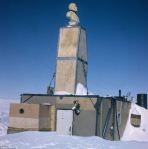
Pole of Inaccessibility, where Comrade Lenin is still watching, 1958

8 Abandoned Antarctic Whaling Stations and Bases that are Still Amazing

In December 1958, Soviet scientists set up a temporary base on The Inaccessibility Pole, marked with a bust of Lenin. This place has the world’s coldest year-round average temperature at -58.2°C (-72°F). The station is buried beneath the snow, but the plastic statue is still visible. If you dig down through the ice, you’ll find a golden visitor’s book to sign.

8 Abandoned Antarctic Whaling Stations and Bases that are Still Amazing

The photos were taken in 1965 (Olav Orhelm/Norwegian Polar Institute – above) and 2008 (Stein Tronstad/Norwegian Polar Institute – below).

8 Abandoned Antarctic Whaling Stations and Bases that are Still Amazing

The Expedition used these “Penguin” tractors to reach the Pole of Inaccessibility. Photo: N. Gvozdetsky

8 Abandoned Antarctic Whaling Stations and Bases that are Still Amazing

(via Sorpolen 2011 and Norwegian-U.S. Scientific Traverse of East Antarctica)

Shackleton’s Hut, 1909

8 Abandoned Antarctic Whaling Stations and Bases that are Still Amazing

The famous explorer simply left this fully stocked hut behind after the British Nimrod Expedition (1907-1909).

8 Abandoned Antarctic Whaling Stations and Bases that are Still Amazing

8 Abandoned Antarctic Whaling Stations and Bases that are Still Amazing

(via Wikimedia CommonsA Southern Migration and Flickr/Sandwichgirl)

Scott’s Hut, Ross Island, 1913

8 Abandoned Antarctic Whaling Stations and Bases that are Still Amazing

Robert Falcon Scott and his Terra Nova Expedition attempted to become the first people to reach the South Pole, but the Norwegian Roald Amundsen beat them by only a month. On the return journey, Scott and the other expedition members died from extreme cold, starvation, and exhaustion, but their hut, filled with lots of food, oil, and other goods, remains.

8 Abandoned Antarctic Whaling Stations and Bases that are Still Amazing

8 Abandoned Antarctic Whaling Stations and Bases that are Still Amazing

Later the building was used by Sir Ernest Shackleton (during the Imperial Trans Arctic Expedition, 1914-1917), and his supplies are still there, as well.

(via Flickr/sandwichgirl)

Base W, Detaille Island, 1956-1959

8 Abandoned Antarctic Whaling Stations and Bases that are Still Amazing

8 Abandoned Antarctic Whaling Stations and Bases that are Still Amazing

8 Abandoned Antarctic Whaling Stations and Bases that are Still Amazing

It was estabilished for meteorological and geological studies in 1956, but has been unmanned since 1959.

8 Abandoned Antarctic Whaling Stations and Bases that are Still Amazing

A stuffed penguin and some penguin eggs

(Photos by Kevin Fox and Rachel Lea Fox, via antarctic fox 1 – 2)

Grytviken, South Georgia

8 Abandoned Antarctic Whaling Stations and Bases that are Still Amazing

The settlement was established in 1904 by a Norwegian sea captain as a whaling station for his fishing company. It was closed in December 1966, but the church is still used occasionally for marriages.

8 Abandoned Antarctic Whaling Stations and Bases that are Still Amazing

The people had their own cinema (the photo above was taken in 1993), but it collapsed few years ago.

8 Abandoned Antarctic Whaling Stations and Bases that are Still Amazing

(via Wikimedia Commons 1 – 2 and DS World’s Lands)

Leith Harbour or Port Leith, 1909-1965

8 Abandoned Antarctic Whaling Stations and Bases that are Still Amazing

This was once the world’s largest whaling centre, but has been totally abandoned since 1965. The station housed a library, a cinema, and a hospital.

8 Abandoned Antarctic Whaling Stations and Bases that are Still Amazing

There is a gun mount on the hill behind the station, and another with the original 4.1′ gun on the west side of the harbour.

(via Penguinspirit and Peter Smith)

Leave a comment

Filed under Humor and Observations

Away From it All – Lenin’s Silent Vigil in Antarctica

Away From It All

http://www.stumbleupon.com/su/1Zcys9/:z!d9N!8.:Y.@noMBR/www.futilitycloset.com/2009/11/19/away-from-it-all-2/

http://commons.wikimedia.org/wiki/File:Southern_Pol_of_Inaccessibility_Henry_Cookson_team_n2i.JPG

Image: Wikimedia Commons

If you’re looking for a challenge, see if you can reach 82°06′S 54°58′E — it’s the most inaccessible point in Antarctica, the farthest from the ocean and the coldest place in the world.

You’ll know you’ve arrived because you’ll find a bust of Lenin peering weirdly across the ice toward Moscow.

Dig down 20 feet and you’ll uncover a pair of locked doors. Get those open and you can enter an old Soviet research hut, now completely entombed in snow.

And inside the hut is a golden visitors’ book to sign.

Leave a comment

Filed under Humor and Observations

Ballerina Takes Dancing “En Pointe” To A Whole New Level

Ballerina Wears Knife Shoes to Perform En Pointe

Ballerinas are often associated with beauty, grace, and elegant human forms. In his video En Puntas (‘On Points’), however, artist Javier Perez has managed to preserve all of these elements while also portraying the dark intensity, dedication and even violence that this graceful art form can represent.

En Puntas features ballerina Amelie Segarra dancing the en pointe ballet technique (in which the performer typically dances on the points of their toes) on the tips of huge, menacing kitchen knives in an empty, darkened theater. She struggles to maintain the grace that we typically expect of ballerinas as the knives scrape and stab ever more violently at the grand piano she’s standing on. Her composure, however, is periodically broken as she lets out a scream of frustration at the intense difficulty of her performance.

Coupled with the dark and empty theater she is performing in, the video makes for anything but light viewing. The intensity, frustration and violence of her performance (literally) on the razor’s edge are a testament to the intense dedication and sometimes physical suffering required of ballet performers.

Website: javierperez.es | via: (myampgoesto11mymodernmet)

4 Comments

Filed under Humor and Observations

Japan’s ‘toxic’ monster creeping towards US

Japan’s ‘toxic’ monster creeping towards US

By Maxim Lott

Published November 01, 2013

FoxNews.com
  • tsunami debris field graphic.jpg

    A NOAA model from Sept. 23 shows that a vast though disperse field of debris from a tsunami that struck Japan in 2011 is likely still dispersed north of the Main Hawaiian Islands and east of Midway Atoll. (NOAA)

  • Fukushima Tsunami Debris 5.jpg

    The 5 Gyres Institute, which monitors plastic pollution out at sea, said it found an abandoned boat, a tire, and a traditional Japanese tatami matt floating in the Pacific — all part of the massive debris field from the tsunami. (5GYRES.ORG)

  • Fukushima Tsunami Debris 1.jpg

    The 5 Gyres Institute, which monitors plastic pollution out at sea, said it found an abandoned boat, a tire, and a traditional Japanese tatami matt floating in the Pacific — all part of the massive debris field from the tsunami. (5GYRES.ORG)

  • Fukushima Tsunami Debris 2.jpg

    A giant dock from Japan that recently washed ashore in Oregon — carried across the Pacific after being torn loose by the tsunami.(NOAA)

  • Fukushima Tsunami Debris 4.jpg

    An aerial view of debris from the 8.9 magnitude earthquake and subsequent tsunami that struck northern Japan. (U.S. NAVY)

An enormous debris field is creeping toward the U.S. in the wake of the massive earthquake and tsunami that shook Japan in 2011, killing nearly 16,000 people and launching 1.5 million tons of floating objects into the sea.

That most concentrated part of the junk field is easily broader than Texas and centered approximately 1,700 miles off the Pacific coast, between California and Hawaii, although the National Oceanic and Atmospheric Administration (NOAA) hasn’t published more precise estimates. The agency estimates that the trash overall is scattered across an area in the ocean about three times the size of the continental United States.

The debris ranges from pulverized particles to entire docks that washed over from Japan, to intact boats, motorcycles, soccer balls, traditional Japanese flooring, and even some Japanese sea creatures never seen on the U.S. West Coast. “High windage” items reached the Pacific Northwest as early as winter 2011. Smaller debris is “sailing” here on the tides — NOAA estimates that the widely scattered detritus may show up intermittently along shorelines for a long period of time, over the next year or more.

In addition to physical junk, a wave of slightly radioactive water released from the broken Japanese Fukushima nuclear reactor is predicted to reach shore in 2014 — but scientists point out that it is so diluted that it is harmless.

‘We’re finding that all kinds of Japanese organisms are growing on the debris.’

– John Chapman of the Marine Science Center at Oregon State University 

In one of the more dramatic photos of debris, two rooftops and an upside-down boat can be seen floating in the ocean. In another, a giant dock from Japan washed ashore in Oregon.

Even more interesting may be what’s living on the dock.

“At first we were only thinking about objects like the floating docks, but now we’re finding that all kinds of Japanese organisms are growing on the debris,” John Chapman of the Marine Science Center at Oregon State University told FoxNews.com.

“We’ve found over 165 non-native species so far,” he added. “One type of insect, and almost all the others are marine organisms … we found the European blue mussel, which was introduced to Asia long ago, and then it grew on a lot of these things that are coming across the Pacific … we’d never seen it here, and we don’t particularly want it here,” he said, arguing that it could be “invasive” and displace current marine life.

Many other creatures have been found, too.

“In the debris we found the Northeastern sea star … as well as a type of brown algae that’s used to make miso soup. We’d never seen it here before.”

Chapman added that the migrant creatures took scientists completely by surprise.

“We thought, ‘the Pacific can’t be crossed by living organisms from Japan’ … and we were wrong, very wrong,” he said, adding that while a journey across the Pacific typically kills whatever clings to it, there were just so many pieces of debris launched by the tsunami that some were bound to take paths favorable to whatever organisms were on it.

“It wasn’t just the humans that were thrown around, it was these other things on the shore as well,” he said.

And he expects to see more creatures, because lot of debris is still out floating in the Pacific, according to the National Oceanic and Atmospheric Administration and to people who have been out to look for it.

“We found an abandoned boat, a tire, and a tatami matt — that’s traditional Japanese flooring made of woven reeds,” Stiv Wilson of the 5 Gyres Institute, which monitors plastic pollution out at sea, told FoxNews.com. Gyres was on an expedition to the “North Pacific Garbage Patch,” an area with few ocean currents where tons of plastic garbage accumulates, and that’s where he found the Japanese debris.

“We found a fishing vessel that was barely above water. It had Japanese characters on it and was made of fiberglass. On the front of the boat we found a rope that was ripped, so the tsunami wave probably hit it and tore it from dock. Then the wave must have hit it against something else, because the stern and the motor were missing.”

Gyres said he and his team also brought a Geiger counter with them to measure radiation.

“We didn’t find anything irradiated, we were getting inconsequential readings. I think there’s a little fearmongering about it.”

The National Oceanic and Atmospheric Administration agrees, and reports on its site: “Radiation experts agree that it is highly unlikely that any tsunami-generated marine debris will hold harmful levels of radiation from the Fukushima nuclear emergency.

Some debris in West Coast has been tested by the states, including items known to be from the tsunami, and no radioactive contamination above normal was found.”

That’s fortunate, as fisherman report seeing more debris lately.

“We have been seeing more and more,” Glen Spain, Northwest regional director of the Pacific Coast Federation of Fishermen’s Associations, told FoxNews.com.

“The major hazards of this stuff is that it can carry invasive species, like the pier that washed up. And the bigger stuff can be a navigational hazard.”

The next wave of debris will likely hit shores soon, Chapman noted.

“With winter and spring winds — that’s when it generally shows up. We’re going into that season again soon,” he said.

The author of the piece can be reached at maxim.lott@foxnews.com or on twitter at @maximlott.

4 Comments

Filed under Humor and Observations

Thorium-Fueled Automobile Engine Needs Refueling Once a Century

Thorium-Fueled Automobile Engine Needs Refueling Once a Century

By:  | October 28th, 2013

Thorium Concept CarThorium Concept Car – Image Courtesy http://www.greenpacks.com

There are now over one billion cars traveling roads around the world directly and indirectly costing trillions of dollars in material resources, time and noxious emissions. Imagine all these cars running cleanly for 100 years on just 8 grams of fuel each.

Laser Power Systems (LPS) from Connecticut, USA, is developing a new method of automotive propulsion with one of the most dense materials known in nature: thorium. Because thorium is so dense it has the potential to produce tremendous amounts of heat. The company has been experimenting with small bits of thorium, creating a laser that heats water, produces steam and powers a mini turbine.


Cadillac World Thorium Fuel Concept

Cadillac World Thorium Fuel Concept (Image Courtesy http://www.cutedesign.com)

Current models of the engine weigh 500 pounds, easily fitting into the engine area of a conventionally-designed vehicle. According to CEO Charles Stevens, just one gram of the substance yields more energy than 7,396 gallons (28,000 L) of gasoline and 8 grams would power the typical car for a century.

The idea of using thorium is not new. In 2009, Loren Kulesus designed the Cadillac World Thorium Fuel Concept Car. LPS is developing the technology so it can be mass-produced.

Wider Implications of Thorium

According to Robert Hargraves, “low or non-CO2 emitting energy sources must be cheaper than coal or will ultimately fail to displace fossil fuels.” The United States uses 20% of the world’s energy today and, according to Hargraves, if it cut its CO2 emissions to zero, 80% produced by other countries would still be a problem. With CO2 emissions climbing seemingly beyond all bounds, pessimism is rampant and bold ideas are needed.

Thorium may also be the answer to the world’s nuclear energy conundrum and Wikipedia provides some of its advantages:

  • Weapons-grade fissionable material (233U) is harder to retrieve safely and clandestinely from a thorium reactor; this means, for example, Iran could be asked to develop only a thorium based reactor, virtually eliminating the issue of nuclear weapon development.
  • Thorium produces 10 to 10,000 times less long-lived radioactive waste;
  • Thorium mining produces a single pure isotope, whereas the mixture of natural uranium isotopes must be enriched to function in most common reactor designs. The same cycle could also use the fissionable U-238 component of the natural uranium, and also contained in the depleted reactor fuel;
  • Thorium cannot sustain a nuclear chain reaction without priming,[29] so fission stops by default in an accelerator driven reactor.

Hargraves sees factories and other industrial concerns using thorium as well. Stay tuned as we track this idea and its development.

 David Schilling

David lives in the North End of Boston, Massachusetts, and regularly visits MIT, Harvard, Boston University, Northeastern, Boston’s leading companies and labs, the stacks at Boston Atheneaum and Boston Public Library to uncover and research story ideas. You can also find David on .

1 Comment

Filed under Humor and Observations

Study suggests life began with clay, echoing Bible creation story

Study suggests life began with clay, echoing Bible creation story

Published November 06, 2013

FoxNews.com
  • adamcreation.jpg

    Michelangelo’s Creation of Adam.

A new study suggests clay may have been the birthplace of life on Earth.

Cornell University researchers found that clay may have served as the first breeding ground for the complex biochemicals that make life possible, a finding that may reverberate with anyone familiar with the Biblical creation story.

“We propose that in early geological history, clay hydrogel provided a confinement function for biomolecules and biochemical reactions,” said Dan Luo, professor of biological and environmental engineering and a member of the Kavli Institute at Cornell for Nanoscale Science, according to Science Daily.

The clay absorbs liquids like a sponge and acts as the perfect place for chemicals to react with one another to form proteins, DNA and eventually living cells.

According to the Old Testament, God made the first man Adam from earth or clay. Adam comes from the Hebrew word adamah, which means earth. The Quaran, Greek mythology and other creation stories also say God molded man from clay.

Scientists found that the clay hydrogel could have protected the chemical processes until the membrane that surrounds living cells fully developed.

The study cites further evidence, nothing that geological history shows the first appearance of clay to be at the same time biomolecules began to form into cell-like structures.

How the biological machines evolved remains to be explained, Luo said. Luo and his fellow researchers are still trying to figure out why clay hydrogel is such a successful material in cell-free protein production.

1 Comment

Filed under Humor and Observations

Crossovers (Mash-ups) for Fun

A recurring post, the following are crossovers or mash-ups where you take two or more disparate things and put them together, hopefully with some humor:

2 Comments

Filed under Humor and Observations

One man, 100,000 toothpicks, and 35 years


One man, 100,000 toothpicks, and 35 years: An incredible kinetic sculpture of San Francisco

original link:  http://www.stumbleupon.com/su/2txGz9/:mhpIS4Er:aKmcH1ng/thisiscolossal.com/2011/04/one-man-100000-toothpicks-and-35-years-scott-weavers-rolling-through-the-bay/


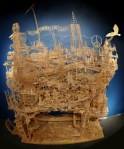
Thirty five years ago I had yet to be born, but artist Scott Weaver had already begun work on this insanely complex kinetic sculpture, Rolling through the Bay, that he continues to modify and expand even today. The elaborate sculpture is comprised of multiple “tours” that move pingpong balls through neighborhoods, historical locations, and iconic symbols of San Francisco, all recreated with a little glue, some toothpicks, and an incredible amount of ingenuity. He admits in the video that there are several toothpick sculptures even larger than his, but none has the unique kinetic components he’s constructed. Via his website Weaver estimates he’s spent over 3,000 hours on the project, and the toothpicks have been sourced from around the world:

I have used different brands of toothpicks depending on what I am building. I also have many friends and family members that collect toothpicks in their travels for me. For example, some of the trees in Golden Gate Park are made from toothpicks from Kenya, Morocco, Spain, West Germany and Italy. The heart inside the Palace of Fine Arts is made out of toothpicks people threw at our wedding.

See the sculpture for yourself at the Tinkering Studio through the end of June. Photos courtesy of their Flickr gallery.

2 Comments

Filed under Humor and Observations, Uncategorized

Ultra-rare cat species captured on camera in Borneo

Spotted: Ultra-rare cat species captured on camera in Borneo

By Douglas Main

Published November 05, 2013

LiveScience
  • borneo-bay-cat-2

    The bay cat, or Bornean marble cat, has only been recorded on video a handful of times before and was only first photographed in 2003. (OLIVER WEARN / SAFE PROJECT)

Several rare and endangered bay cats were spotted on camera in a heavily logged section of rainforest in Borneo, where scientists didn’t expect to find them, a group of researchers announced yesterday.

The bay cat, or Bornean marbled cat, has only been recorded on video a handful of times before and was only first photographed in 2003, according to a release from the Zoological Society of London and Imperial College London, whose scientists set up the cameras.

In the same area where the bay cats were found, in the northern Borneo, cameras also captured four other cat species, making it one of only four spots where all of these species have been recorded.

The four other cat species were the Sunda clouded leopard(Neofelis diardi), leopard cat (Prionailurus bengalensis), flat-headed cat (Prionailurus planiceps) and marbled cat (Pardofelis marmorata). Three out of four of these species are considered vulnerable to extinction by the International Union for Conservation of Nature (IUCN).

“We were completely surprised to see so many bay cats at these sites in Borneo where natural forests have been so heavily logged for the timber trade,” said Robert Ewers, an Imperial College London researcher, in the statement. [Watch: Cameras Spot Rare Bay Cats in Borneo]

Very little is known about Borneo bay cats because they are shy and have low population densities, according to the IUCN. However, scientists estimate there are fewer than 2,500 adults remaining in the wild, and that their population will decline by 20 percent in the next 12 years due to deforestation in Borneo, the IUCN reported.

Unlike other camera traps that are often set up at strategic locations, these were placed at random locations, which apparently helped to spot the endangered cats.

“We discovered that randomly placed cameras have a big influence on the species recorded,” said Oliver Wearn, a researcher at the Zoological Society of London. “This is something I was taught in school I remember doing a project on which plant species were most abundant on our playing field, and being taught to fling quadrats [a geometric tool used to define a study area] over my shoulder in a random direction before seeing what plants lay within it, rather than placing it somewhere that looked like a good place to put it the same principle applies here.”

Leave a comment

Filed under Animals