Remains of Ice Age infants uncovered in Alaska

Ice Age Infants

AP
In this Fall 2013 photo released Tuesday, Nov. 11, 2014 by the University of Alaska Fairbanks, members of the archaeology field team watch as University of Alaska Fairbanks professors Ben Potter and Josh Reuther, left, excavate the burial pit at the Upward Sun River site in central Alaska. Researchers have uncovered the remains of two Ice Age infants in Alaska’s interior, a discovery archaeologists call the youngest human remains found in northern North America. (AP Photo/University of Alaska Fairbanks, Courtesy of Ben Potter)

FAIRBANKS, Alaska (AP) — Researchers have uncovered the remains of two Ice Age infants in Alaska’s interior, a discovery archaeologists call the youngest human remains from that era found in northern North America.

The remains dating back about 11,500 years offer a new glimpse into ancient burial practices, the Fairbanks Daily News-Miner reported Tuesday.

Researchers have explored a large sand dune for nearly a decade at a dig site known as the Upward Sun River southeast of Fairbanks. In 2010, archaeologists found the partly cremated remains of a 3-year-old child.

The babies’ remains were discovered last year about 15 inches below in the same area. The bones are well preserved and appear to belong to one child who was stillborn and another who died soon after birth. The three children appear to have died during the same summer, according to researchers.

The infants were buried with stone spearheads and darts. Also found at the site were salmon bones.

“Every bit of new information we’re gathering from Upward Sun and other sites really show a sophisticated subsistence economy,” said University of Alaska Fairbanks researcher Ben Potter, whose team led the dig. Potter details the 2013 discovery in a new report published in the Proceedings of the National Academy of Sciences, according to the newspaper.

The infants are clearly Native American, according to Liverpool John Moores University researcher Joel Irish, who participated in the project. Researchers hope to follow up with DNA analysis to determine the gender and whether the babies were related, Irish said.

For the project, archaeologists worked with the Tanana Chiefs Conference and local tribes to set up rules on handling the remains.

The project received the backing of Jerry Isaac, who was the Tanana Chiefs Conference president at the time of the dig. Disturbing ancient burial sites is controversial, but Isaac said the knowledge gained could provide important links to Athabascan history. He is particularly interested in his ancestors’ subsistence practices.

“The reason that personally I’ve supported it is one of curiosity and one of proof that our Native diets have connection to our health and well-being,” he said.

Much more work remains at the dig site, according to Potter.

1 Comment

Filed under Humor and Observations

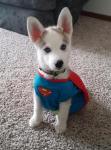
Cute Dogs for Your Monday Blues

Furry critters to cheer up the start of your week…

Leave a comment

Filed under Uncategorized

‘Pop-Up’ 3D structures can mimic brain circuits

pop-up-3d-structures

A 3D silicon microstructure. (J. Rogers, University of Illinois)

By mimicking children’s pop-up books, scientists can now make complex microscopic 3D shapes that model brain circuitry and blood vessels, researchers say.

These intricate structures, which could resemble tiny flowers and peacocks, may one day help scientists electronically control living tissue, the researchers added.

Naturally curved, thin and flexible 3D structures are common in biology; examples include the circuits of brain cells and networks of veins. Materials scientist John Rogers, at the University of Illinois at Urbana-Champaign, and his colleagues want to create similarly complex devices that can wrap around these biological structures, potentially supporting or improving their function. [5 Crazy Technologies That Are Revolutionizing Biotech]

“Our focus has been on the brain, heart and skin,” Rogers said.

Devices that mimic the complex structures found in nature are very difficult to manufacture on microscopic scales. But now, Rogers and his colleagues have developed a simple strategy for such manufacture that involves flat 2D structures that pop up into 3D shapes.

“The analogy would be children’s pop-up books,” Rogers told Live Science.

To manufacture these structures, the scientists fabricate 2D patterns of ribbons on stretched elastic silicone rubber. In experiments, the ribbons were as small as 100 nanometers wide, or about 1,000 times thinner than the average human hair, and could be made from a variety of materials, including silicon and nickel.

The 2D patterns are designed so that there are both strong and weak points of stickiness between the patterns and the silicone rubber they sit on. After the scientists fabricate the 2D designs, they release the tension on the silicone rubber. The weak points of stickiness break away, “and up pops a 3D structure,” study co-author Yonggang Huang, a professor of mechanical engineering at Northwestern University in Evanston, Illinois, said in a statement. “In just one shot, you get your structure.”

The researchers generated more than 40 different geometric designs, from single and multiple spirals and rings to spherical baskets, cubical boxes, peacocks, flowers, tents, tables and starfish. Scientists could even arrange patterns with multiple layers, a bit like multi-floor buildings.

This new pop-up technique has many advantages, the investigators said. The strategy is fast, inexpensive and can employ many different materials used in electronics today to build a wide variety of microscopic structures. Moreover, researchers can build many different structures at one time, and incorporate different materials into hybrid structures.

“We are excited about the fact that these simple ideas and schemes provide immediate paths to broad and previously inaccessible classes of 3D micro- and nano-structures in a way that is compatible with the highest-performance materials and processing techniques available,” Rogers said. “We feel that the findings have potential relevance to a wide range of microsystems technologies biomedical devices, optoelectronics, photovoltaics, 3D circuits, sensors and so on.”

The scientists said their pop-up assembly technique has many advantages over3D printers, which create 3D structures by depositing layers of material on top of one another. Although 3D printers are increasingly popular, they work slowly. In addition, it is difficult for 3D printers to build objects using more than one material, and it is nearly impossible for these printers to produce semiconductors or single crystalline metals, the researchers said.

Still, Rogers emphasized the team’s new strategy is complementary to 3D printing, and is not an attempt to replace that technique.

The scientists are currently using this pop-up assembly strategy to build electronic scaffolds that can monitor and control the growth of cells in lab experiments, Rogers said. “We are also using these ideas to form helical, springy metal interconnect coils and antennas for soft electronic devices designed to integrate with the human body,” he said.

The scientists detailed their findings online Jan. 8 in the journal Science.

Leave a comment

Filed under Humor and Observations

‘Uncontacted’ tribe attacks Amazon village

'Uncontacted' tribe attacks Amazon village

This Nov. 2011 file photo shows members of the Mashco-Piro tribe, photographed at an undisclosed location near the Manu National Park in southeastern Peru. (AP Photo/Diego Cortijo, Survival International, File)

Peru is evacuating a remote village near the Brazilian border after an unusual display of aggression from one of the 15 or so “uncontacted” tribes that live in its Amazon forests.

Last week, 200 men from the tribe, called Mashco-Piro, raided the village of Monte Salvado armed with bows and arrows.”There were no injuries although the men fired off arrows,” says a minister for intercultural affairs.

“The villagers took refuge in a guard post. They are safe but have no food and are terrified.” Officials are moving 39 people, 16 of whom are children, along with 22 more from nearby Puerto Nuevo to the region’s capital, Puerto Maldonado.

The Mashco-Piro raiders took tools, blankets, and food, reports the Guardian, as well as killed domestic animals. “We believe the Mashco-Piro are still in the area,” says the official running the evacuation.

It’s the third time this year that this particular tribe has traveled to Monte Salvado, reports the BBC, but this is the first time such a large group of just men (instead of families) have arrived armed.

Some suggest the tribe is growing desperate as loggers and drug-traffickers encroach on its protected land; others point to climate change, which has led to steeper drops in temperature.

“When there’s pressure on their territory or attacks against them, that’s when there are these violent reactions,” one anthropologist tells the Guardian. The Mashco-Piro were first spotted in May 2011; more on the tribe here.

Leave a comment

Filed under Humor and Observations

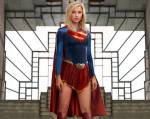
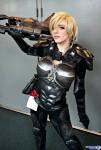
Cosplay Pictures for Your Weekend

Cosplayer pictures for your enjoyment!

Leave a comment

Filed under Humor and Observations

It’s hard to believe these photos are just miniatures

Leave a comment

Filed under Humor and Observations

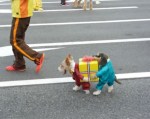
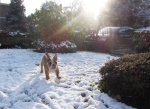
Cute Dogs for Your Monday Blues!

Dog pictures to cheer up the start of your work week…

Leave a comment

Filed under Animals, Humor and Observations

The Captivating Beauty of Libraries Around the World

New York-based, French photographer Franck Bohbot documents the breathtaking beauty of libraries in his ongoing series House of Books. Traveling to cities like Paris, Rome, and Boston, the photographer creates a visual record of the bastions of knowledge and learning that have been the pillars of civilization for thousands of years.

In addition to centuries’ worth of information, these libraries found around the world house artifacts and stunning architectural elements that date back hundreds of years. Endless shelves of books run along ornately decorated walls beneath arching ceilings, creating strikingly symmetrical scenes. Rows of desks, chairs, and lamps invite readers to sit and lose themselves in a quiet world filled with rich words, the soothing rustle of pages turning, and the comforting smell of ink on paper.
Above: Bibliothèque nationale de France (Paris)

Biblioteca Angelica (Rome)

Biblioteca Vallicelliana (Rome)

Bibliothèque Mazarine (Paris)

Bibliothèque du Sénat (Paris)

Bibliothèque interuniversitaire de la Sorbonne (Paris)

Bibliothèque Mazarine (Paris)

Bibliothèque nationale de France—Le site François-Mitterrand (Paris)

Boston Public Library (Boston)

Bibliothèque Sainte-Geneviève (Paris)

Franck Bohbot’s website

2 Comments

Filed under Humor and Observations

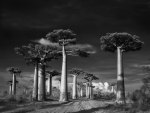
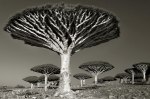
Ancient Trees: Woman Spends 14 Years Photographing World’s Oldest Trees

Ancient Trees: Woman Spends 14 Years Photographing World’s Oldest Trees
by Julija K.

Beth Moon, a photographer based in San Francisco, has been searching for the world’s oldest trees for the past 14 years. She has traveled all around the globe to capture the most magnificent trees that grow in remote locations and look as old as the world itself.
“Standing as the earth’s largest and oldest living monuments, I believe these symbolic trees will take on a greater significance, especially at a time when our focus is directed at finding better ways to live with the environment” writes Moon in her artist statement.
Sixty of Beth Moon’s duotone photos were published in a book titled “Ancient Trees: Portraits Of Time”. Here you can have a sneak preview of the book, full of strangest and most magnificent trees ever.
More info: bethmoon.com | abbeville.com (h/t: colossal)

1 Comment

Filed under Humor and Observations

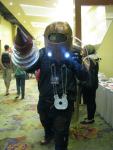
Cosplay Pictures for Your Saturday

Cosplay for your enjoyment!

Leave a comment

Filed under Humor and Observations