Field of thousands of classic car dreams for sale

  • octt-nice-660.jpg

  • octt-field-660.jpg

  • octt-feature-660.jpg

  • octt-bonny.jpg

  • octt-matador-660.jpg

Are you in the market for a hard-to-find, vintage car?

Try an online auction site.

Interested in a slightly larger quantity of vehicles? Say, 8,000 or so?

Well, then L&L Classic Auto may have a deal for you.

The Wendell, Idaho, salvage yard is selling its stock of thousands of cars, as its 79-year-old owner considers finally retiring after over a half-century in the business.

And he’s throwing in the 80 acres of land they’re sitting on for free.

Or, maybe it’s the other way around.

“I will miss this place, but I won’t miss the stress of running it,” Larry Harms tells FoxNews.com.

Harms’ daily driver is a chunky, cerise 1937 Ford Coupe with thick whitewall tires, but he keeps a small collection of domestic gems for himself.

L&L, owned and operated by Harms and a staff fiercely loyal to vintage cars, began life as a body shop in a much smaller location close to town.

As the accumulated assortment of classic metal began to grow, the outfit moved to a more accommodating location that is large enough today to strike an impressive pose on Google Earth’s satellite view.

The land is populated with vehicles of all sizes and shapes, from derelict, parts-car specials to classics in running condition, some nearly a century old.

Conservative estimates put the total number between 8,000 and 10,000 vehicles, but the shop’s staff admits that it has been unable to catalog all of them.

Nevertheless, it maintains a thorough running tally of available parts for sale on its website.

As much as Harms is looking intently toward retirement, he’s not in a hurry to unload his trove.

Instead, he is firmly determined to find a buyer who is interested in preserving L&L’s cadre of historic vehicles, rather than someone who would prefer to destroy the cars and keep the land.

“I won’t [piecemeal] sell it,” Harms said. “I don’t want it crushed. I could do that myself.”

That’s right, unless you are planning to take – and take care of – the whole kit and caboodle, you’d better sit this one out.

The sum for the whole lot, including the land and the myriad cars scattered upon it, is listed at $3 million.

That’s anywhere between $300 and $375 per car, if you ever get around to counting them one by one.

“Is [that] a fair price? No, it’s low,” says one L&L employee. “It’s a great deal.”

L&L currently lists prices for some of the cars individually, including a gobsmacking 1974 AMC Matador “Oleg Cassini Edition” at $8,500, and what appears to be a pristine 1961 Pontiac Bonneville two-door for $29,000.

Most others are well picked-over and clearly past their prime.

Harms’ staff says it has already had several serious inquiries into the property, in addition to frequent calls from interested parties from as far away as South America, England, Norway, Australia and New Zealand.

Despite the apparent demand, Harms remains adamant that the cars end up in the hands of a serious buyer who understands their mettle.

“This is stuff you can’t get new,” he said. “Once it’s gone, it’s gone.”

Leave a comment

Filed under Humor and Observations

Merriam-Webster adds 150 new words

Merriam-Webster adds 150 new words

May 19th 2014 10:40AM

Merriam-Webster Dictionary Adds 150 New Words

The latest edition of Merriam-Webster’s Collegiate Dictionary has one region celebrating.

For more than a decade, a prosecutor in Michigan has been fighting to add the word “Yooper” to the dictionary.

It refers to a native or longtime resident of the Lake Superior region and people there say it’s becoming more recognizable outside their area. Plus it’s quote, “… just a really colorful word.”

Now “Yooper” and 149 other words and phrases have made it into the 11th version of the dictionary. A few more that fall under the category of “colorful” are:

“Turducken” — a boneless chicken stuffed into a boneless duck stuffed into a boneless turkey.

And then there’s “freegan” — someone who scavenges for free food in trash bins as a way to reduce consumption of resources.

The Associated Press explains Merriam-Webster uses a network of observers who track word usage in everything from newspapers to soup can labels but three or four senior editors make the final cut.

Other words stem from social media and digital life.

Here are the top 15 from AP:
Auto-Tune or auto-tune vt (verb transitive) (2003): a proprietary signal processor, to adjust or alter (a recording of a voice) with Auto-Tune software or other audio-editing software, especially to correct sung notes that are out of tune

cap-and-trade adj (1995): relating to or being a system that caps the amount of carbon emissions a given company may produce but allows it to buy rights to produce additional emissions from a company that does not use the equivalent amount of its own allowance

catfish n (1612): (second definition) a person who sets up a false personal profile on a social networking site for fraudulent or deceptive purposes

crowdfunding n (2006): the practice of soliciting financial contributions from a large number of people, especially from the online community

dubstep n (2002): a type of electronic dance music having prominent bass lines and syncopated drum patterns

fangirl n (1934): a girl or woman who is an extremely or overly enthusiastic fan of someone or something

freegan n (2006): an activist who scavenges for free food (as in waste receptacles at stores and restaurants) as a means of reducing consumption of resources

gamification n (2010): the process of adding games or gameline elements to something (as a task) so as to encourage participation

hashtag n (2008): a word or phrase preceded by the symbol # that classifies or categorizes the accompanying text, such as a tweet

selfie n (2002): an image of oneself taken by oneself using a digital camera, especially for posting on social networks

social networking n (1998): the creation and maintenance of personal and business relationships, especially online

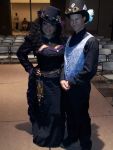
steampunk n (1987) science fiction dealing with 19th-century societies dominated by historical or imagined steam-powered technology

turducken n (1982): a boneless chicken stuffed into a boneless duck stuffed into a boneless turkey

tweep n (2008): a person who uses the Twitter online message service to send and receive tweets

Yooper n (1977): a native or resident of the Upper Peninsula of Michigan – used as a nickname

Leave a comment

Filed under Humor and Observations, Writing

Cute Dog Pics for Your Monday Blues

More cute dog pictures to start off your week happy.

Leave a comment

Filed under Animals

Rare deep sea fish washes ashore on North Carolina coast

scaryfish-176.gif

A Lancetfish was found in Nags Head on a beach in North Carolina.  Leif Rasmussen

A rarely seen deep sea fish washed up on the beaches of North Carolina on Monday, MyFox8.com reported.

A Lancetfish, which is known for its large mouths and sharp teeth, was found on  Nags Head Beach. The report said these fish can grow to 6 feet 6 inches in length, but little is known about their biology.

 Daryl Law, who sent the photo to the station, said the fish was released live after being photographed.

WISTV.com reported that the photographer had to release the fish twice, because it washed up to shore again, leading the observers to assume the fish is ill.

Leave a comment

Filed under Animals, Humor and Observations

Burst water pipe reveals century-old Crusader murals in Jerusalem

LiveScience

painted-storeroom-140513

Rediscovered late-1800s paintings in a storeroom in Saint-Louis Hospice, a Jerusalem hospital built by a prominant Christian.Israel Antiquities Authority

Wall murals portraying Crusader knights and symbols of medieval military orders have been rediscovered in a Jerusalem hospital thanks to a burst water pipe and a storeroom reorganization.

These paintings were the works of a French count, Comte Marie Paul Amde de Piellat, who believed himself to be a descendant of Crusaders. The count was a frequent visitor to Jerusalem and had the Saint-Louis Hospice built between 1879 and 1896, naming it after St. Louis IX, a king of France and leader of the Seventh Crusade between A.D. 1248 and 1254.

During World War I, however, the hospital came under the control of Turkish forces, who painted over the designs with black paint. The count returned to Jerusalem to restore his murals, but died in the hospital in 1925, his work undone. [See Images of the Rediscovered Murals]

A beautiful discovery
More recently, the nuns who run the hospital found some of the forgotten wall paintings while reorganizing storerooms in the building, according to the Israel Antiquities Authority (IAA). A burst water pipe also stripped away modern paint and plaster, revealing more sections of the paintings.

IAA conservators are now working to clean and stabilize the paintings, and are looking for funds to continue the preservation work. There are no plans to turn the paintings into a tourist attraction, however, as the hospital is still in use for chronic and terminally ill patients. Sisters of the order of St. Joseph of the Apparition run the facility.

De Piellat was a devout Christian who wanted to boost the Catholic presence in Jerusalem at a time when multiple religious factions vied for influence in the city. His two-story hospital replaced a smaller medical facility in the city’s Christian Quarter. For Saint-Louis, de Piellat chose a location where the Norman king Tancred and his forces camped before storming Jerusalem in A.D. 1099, during the First Crusade. Today, the hospital is next to the Jerusalem municipal building and IDF square, which is on the dividing line between Israeli-dominated West Jerusalem and heavily Palestinian East Jerusalem.

Artistic history
The murals themselves are enormous paintings of Crusader knights dressed in full battle gear. The count also painted the names and genealogy of the families of French Crusaders, including their heraldry symbols. The murals are further decorated with symbols of military and monastic orders and cities conquered in the Crusades.

At the time de Piellat was working, the city was under the control of the Ottoman Turks. During the upheaval of World War I, the Turks took control of the building, according to the IAA, and painted over the Christian murals. The British captured Jerusalem from the Turks in 1917, at the end of the war.

De Piellat returned to his beloved hospital after the war and worked to restore his murals. After his death in 1925, however, no one took up his fallen paintbrush, and the unrestored murals were mostly forgot

Leave a comment

Filed under Humor and Observations

Cosplay Pictures for Your Saturday

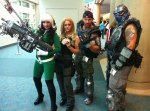
Cosplay pictures to enjoy.  For those of you new to the blog site, cosplay stands for “costume play.”  People dress up as superheroes, pop culture figures, TV, movie, steampunk, or other characters.  Like Halloween, but for the fun of it.  The point is to have fun, and many people spend a lot of time getting their outfits together and getting photographers to help out.

1 Comment

Filed under Humor and Observations

1897: Costume ball

Costume Ball 1


2 Comments

Filed under Humor and Observations

Ancient skeleton of teenage girl sheds new light on first Americans

firstamericans.jpg

FILE: Diver Susan Bird, working at the bottom of Hoyo Negro, a large dome-shaped underwater cave in Mexico’s Yucatan Peninsula, brushes a human skull found at the site while her team members take detailed photographs.AP

Thousands of years ago, a teenage girl toppled into a deep hole in a Mexican cave and died. Now, her skeleton and her DNA are bolstering the long-held theory that humans arrived in the Americas by way of a land bridge from Asia, scientists say.

The girl’s nearly complete skeleton was discovered by chance in 2007 by expert divers who were mapping water-filled caves north of the city of Tulum, in the eastern part of the Yucatan Peninsula. One day, they came across a huge chamber deep underground.

“The moment we entered inside, we knew it was an incredible place,” one of the divers, Alberto Nava, told reporters. “The floor disappeared under us and we could not see across to the other side.”

They named it Hoyo Negro, or black hole.

Months later, they returned and reached the floor of the 100-foot tall chamber, which was littered with animal bones. They came across the girl’s skull on a ledge, lying upside down “with a perfect set of teeth and dark eye sockets looking back at us,” Nava said.

The divers named the skeleton Naia, after a water nymph of Greek mythology, and joined up with a team of scientists to research the find.

The girl was 15 or 16 when she met her fate in a cave, which at that time was dry, researchers said. She may have been looking for water when she tumbled into the chamber some 12,000 or 13,000 years ago, said lead study author James Chatters of Applied Paleoscience, a consulting firm in Bothell, Washington. Her pelvis was broken, suggesting she had fallen a long distance, he said.

The analysis of her remains, reported Thursday in the journal Science by researchers from the United States, Canada, Mexico and Denmark, addresses a puzzle about the settling of the Americas.

Most scientists say the first Americans came from Siberian ancestors who lived on an ancient land bridge, now submerged, that connected Asia to Alaska across the Bering Strait. They are thought to have entered the Americas sometime after 17,000 years ago from that land mass, called Beringia.  And genetic evidence indicates that today’s native peoples of the Americas are related to these pioneers.

But the oldest skeletons from the Americas — including Naia’s — have skulls that look much different from those of today’s native peoples. To some researchers, that suggests the first Americans came from a different place.

Naia provides a crucial link. DNA recovered from a molar contains a distinctive marker found in today’s native peoples, especially those in Chile and Argentina. The genetic signature is thought to have arisen among people living in Beringia, researchers said.

That suggests that the early Americans and contemporary native populations both came from the same ancestral roots in Beringia — not different places, the researchers concluded. The anatomical differences apparently reflect evolution over time in Beringia or the Americas, they said.

The finding does not rule out the idea that some ancient settlers came from another place, noted Deborah Bolnick, a study author from the University of Texas at Austin.

Dennis O’Rourke, an expert in ancient DNA at the University of Utah who didn’t participate in the work, said the finding is the first to show a genetic link to Beringia in an individual who clearly had the anatomical signs of a very early American.  He said he considered the notion of multiple migrations from different places to be “quite unlikely.”

Last February, other researchers reported that DNA from a baby buried in Montana more than 12,000 years ago showed a close genetic relationship to modern-day native peoples, especially those in Central and South America. An author of that study, Mike Waters of Texas A&M University, said the Mexican finding fits with the one in Montana.

There are so few such early skeletons from the Americas, he said, that “every single one of them is important.”

However, Richard Jantz, a retired professor of forensic anthropology at the University of Tennessee in Knoxville, said he still believes early settlers arrived by boat from east Asia before any migration occurred via Beringia. That’s based on anatomical evidence, he said. The argument in the new paper “leaves a lot of unanswered questions,” he said in an email.

1 Comment

Filed under Humor and Observations

Random Humor

Random humor to close out your week…

Leave a comment

Filed under Humor and Observations

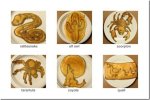
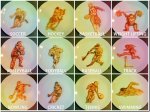
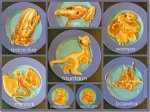
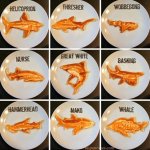
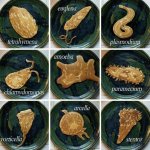
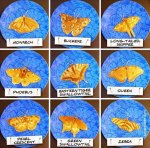
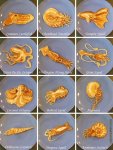
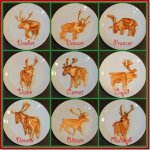
Pancake Art

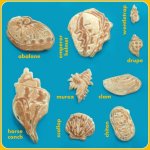
Nathan Shields is a former math teacher and current stay-at-home father of two. He enjoys teaching his young kids something new each day in the most unusual way: making pancakes. Nathan has made everything from sharks to parasites to seashells, and whether it’s truly an effective teaching tool or not let’s just say having a tasty pancake breakfast is never NOT worth the time.

Reposted from the Chive.

1 Comment

Filed under Humor and Observations, Uncategorized