‘Swamp monster’ skull found in Texas

‘Swamp monster’ skull found in Texas

By Stephanie Pappas

Published January 30, 2014

  • m-lottorum-skull-140129

    The skull of the phytosaur Machaeroprosopus lottorum. (Texas Tech University)

A toothy, long-nosed skull found in Texas belonged to a “swamp monster” that lived more than 200 million years ago.

The creature is a previously unknown type of phytosaur, an extinct creature that hunted fish and other prey along the shallow edges of rivers and lakes. Dubbed Machaeroprosopus lottorum, the phytosaur probably measured about 18 feet long.

“They had basically the same lifestyle as the modern crocodile, by living in and around the water, eating fish, and whatever animals came to the margins of the rivers and lakes,” study researcher Bill Mueller, assistant curator of paleontology at the Museum of Texas Tech University, said in a statement. [Predator X: See Images of Ancient Monsters of the Sea]

Discovering something new Phytosaurs are a common find in the Cooper Canyon formation in Garza County, Texas, where the new species was discovered. This area is now dry and scrubby, but in the late Triassic, it was a conifer forest with fern underbrush and an oxbow lake where phytosaurs hunted.

In 2001, Doug Cunningham, a research field assistant at the Texas Tech museum, unearthed the new skull during a dig.

“When he found it, just the very back end of the skull was sticking out of the ground. The rest was buried,” Mueller said. “We excavated it and brought it into the museum to finish preparation.”

That preparation took years. Once the skull was out of the rock surrounding it, Mueller and his colleagues compared the features of the skull with other phytosaur skulls (more than 200 have been found in North America). They also analyzed another phytosaur skull, found 120 feet from the first.

They discovered that their specimens represented a male and female from a new species, which they named M. lottorum in honor of the Lott family, the owners of the ranch where the fossil was found.

Extinct monster Phytosaurs lived from about 230 million to 203 million years ago. They were one of the victims of the Triassic-Jurassic mass extinction, a huge die-off that wiped out many large land animals.

The new female’s skull is about 3 feet long, and she would have grown to be about 17 feet total length, Mueller said. The male would have been about a foot longer. M. lottorum‘s delicate snout suggests it ate mostly fish, and not more robust prey. It would have looked very much like an alligator or crocodile, but its nostrils were up near its eyes at the base of its snout, rather than at the end.

The researchers reported their findings in the September 2013 issue of the journal Earth and Environmental Science Transactions of the Royal Society of Edinburgh.

Leave a comment

Filed under Humor and Observations

Who was ‘Adam’? Genetic ‘man’-hunt catches eye of Vatican scientists

Who was ‘Adam’? Genetic ‘man’-hunt catches eye of Vatican scientists

By ,

Published January 30, 2014

FoxNews.com
  • adamcreation.jpg

    Michelangelo’s Creation of Adam.

  • Human Sex Chromosomes.jpg

    Human sex-determining chromosomes: X chromosome (left) and the much smaller Y chromosome. (University of Arizona)

A pair of scientific studies using the latest genetic evidence are seeking to identify the very first man to walk the Earth, the so-called “Adam.”

The studies delve into phylogenetics, a forensic hunt through the Xs and Ys of our chromosomes to find the genetic “Adam,” to borrow the name from the Bible. And Eran Elhaik from the University of Sheffield says he knows exactly when that first man lived.

“We can say with some certainty that modern humans emerged in Africa a little over 200,000 years ago,” Elhaik said in a press release. That directly contradicts a March 2013 study from Arizona Research Labs at the University of Arizona, which found that the human Y chromosome (the hereditary factor determining male sex) originated through interbreeding among species and dates back even further than 200 millennia.

“Our analysis indicates this lineage diverged from previously known Y chromosomes about 338,000 years ago, a time when anatomically modern humans had not yet evolved,” said Michael Hammer, an associate professor in the University of Arizona’s Department of Ecology and Evolutionary Biology.

Elhaik published a paper in the January 2014 issue of the European Journal of Human Genetics on his work; he used the opportunity to take a swipe at Hammer’s paper, published in the American Journal of Human Genetics.

“We have shown that the University of Arizona study lacks any scientific merit,” Elhaik claimed. “In fact, their hypothesis creates a sort of ‘space-time paradox’ whereby the most ancient individual belonging to the Homo sapiens species has not yet been born.”

Think of the Michael J. Fox film, Back to the Future. Marty was worried that his parents would not meet and so he would not be born in the future. “It’s the same idea,” Elhaik said.

Hammer told FoxNews.com he stands by his work.

“The paper by Elhaik and colleagues … does not present a convincing argument against our paper and unfortunately at times appears to display a lack of technical understanding of the subject area. We are in the process of submitting a rebuttal,” he said.

Identifying the very first Y chromosome of a genetic “Adam” would not mean scientists had located the Biblical figure Adam, explained Werner Arber, the Vatican’s top scientist, told FoxNews.com.

“Scientific investigations have no means to identify Adam and Eve and to sequence their genomes,” said Arber, current president of The Pontifical Academy of Sciences (PAS), the world’s first exclusively scientific academy, and a Nobel prize winner for his work in physiology. “Therefore, identification of Adam and Eve remains a matter of religious belief.”

Arber and other members of the PAS do closely monitor the field of phylogenetics, which is one of the hottest topics for genetic researchers. Scientists call the most recent common ancestor MCRA or A00 — it’s misleading to call the bearer of that chromosome Adam, noted Joe Pickrell from the New York Genome Center.

“At some point, a population geneticist had the clever idea of calling this common ancestor ‘Adam,’” he wrote on the Pickrell Labs website. “This is a biblical allusion, of course, and it probably was good for a bit of amusement a couple of decades ago. But it’s time to retire this metaphor–not only because it confuses the public … but because it confuses even practicing human population geneticists.”

Indeed, while metaphors are useful in communicating science, modern terminology shouldn’t be conflated with the Bible, explained Marcelo Sánchez Sorondo, chancellor of the PAS.

“Contemporary scientific language is not the language of the Bible,” Sorondo told FoxNews.com in an email. “Therefore, although the Bible adopted an early scientific language, it cannot be read in the light of today’s scientific language…This was clarified during the scientific revolution of Galileo (the founder of our Academy) when Cardinal Cesare Baronio rightly pointed out that the Bible tells us how to reach Heaven but not what Heaven is.”

“Of course this is also true for phylogenetics.”

But in a 2012 address to the Synod of Bishops, Arber said that the Bible story of Adam and Eve details existing scientific knowledge from the time, proposing “a logical sequence of events in which the creation of our planet Earth may have been followed by the establishment of the conditions for life.”

“It is our duty today to preserve (and where necessary restore) this consistency on the basis of the improved scientific knowledge now available. I am convinced that scientific knowledge and faith are complementary elements in our orientational knowledge and should remain so.”

Jeremy A. Kaplan is Science and Technology editor at FoxNews.com, where he heads up coverage of gadgets, the online world, space travel, nature, the environment, and more. Prior to joining Fox, he was executive editor of PC Magazine, co-host of the Fastest Geek competition, and a founding editor of GoodCleanTech.

Leave a comment

Filed under Humor and Observations

Physicists see 27th dimension of photons

Physicists see 27th dimension of photons

By Jesse Emspak

Published January 29, 2014

  • photon-eye

    Scientists find a way to directly measure quantum states, such as momentum, of photons. (MPQ, Quantum Dynamics Division.)

Quantum computers and communications promise more powerful machines and unbreakable codes. But to make them work, it’s necessary to measure the quantum state of particles such as photons or atoms. Quantum states are numbers that describe particle characteristics such as momentum or energy.

But measuring quantum states is difficult and time-consuming, because the very act of doing so changes them, and because the mathematics can be complex. Now, an international team says they found a more efficient way to do it, which could make it simpler to build quantum-mechanical technologies.

In a study detailed in the Jan. 20 issue of the journal Nature Communications, researchers from the University of Rochester and the University of Glasgow took a direct measurement of a photon’s 27-dimensional quantum state. These dimensions are mathematical, not dimensions in space, and each one is a number that stores information.

To understand a 27-dimensional quantum state, think about a line described in 2 dimensions. A line would have a direction in the X and Y coordinates 3 inches left and 4 inches up, for instance. The quantum state has 27 such coordinates. [Quantum Physics: The Coolest Little Particles in Nature]

“We chose 27, kind of to make a point about 26 letters in the alphabet and throwing in one more,” said Mehul Malik, now a postdoctoral researcher at the University of Vienna. That means each quantum bit, or “qubit,” could store a letter instead of a simple 1 or 0.

Seeing a photon The group, led by Malik and Robert Boyd, a professor of optics and physics at the University of Rochester, was able to see a photon’s states directly. They measured the photon’s orbital angular momentum, which is how much the particles of light “twist” as they travel through space.

Ordinarily, finding the quantum state of a photon requires a two-step process. First, scientists have to measure some property of the photon, such as its polarization or momentum. The measurements are performed on many copies of the quantum state of a photon. But that process sometimes introduces errors. To get rid of the errors, the scientists have to look at what results they got that are “disallowed” states ones that don’t follow the laws of physics. But the only way to find them is to search through all the results and discard the ones that are impossible. That eats up a lot of computing time and effort. This process is called quantum tomography. [The 9 Biggest Unsolved Mysteries in Physics]

A light wave is a combination of an electric and magnetic field, each of which oscillates and makes a wave. Each wave moves in time with the other, and they are perpendicular to each other. A beam of light is made up of lots of these waves.

Light can have what is called orbital angular momentum. In a beam with no orbital angular momentum, the peaks of the waves the electric ones, for example are lined up. A plane connecting these peaks will be flat. If the beam has orbital angular momentum, a plane connecting these peaks will make a spiral, helical pattern, because the light waves are offset from one another slightly as you go around the beam. To measure the state of the photons, scientists must “unravel” this helical shape of the waves in the beam.

Measuring a photon’s quantum state The team first fired a laser through a piece of transparent polymer that refracted the light, “unraveling” the helix formed by the waves. The light then passed through special lenses and into a grating that makes many copies of the beam. After passing through the grating, the light is spread out to form a wider beam.

After the beam is widened, it hits a device called a spatial light modulator. The modulator carries out the first measurement. The beam then reflects back in the same direction it came from and passes through a beam splitter. At that point, part of thebeam moves toward a slit, which makes a second measurement. [Twisted Physics: 7 Mind-Blowing Experiments]

One of the two measurements is called “weak” and the other “strong.” By measuring two properties, the quantum state of the photons can be reconstructed without the lengthy error-correction calculations tomography requires.

In quantum computers, the quantum state of the particle is what stores the qubit. For instance, a qubit can be stored in the photon’s polarization or its orbital-angular momentum, or both. Atoms can also store qubits, in their momenta or spins.

Current quantum computers have only a few bits in them. Malik noted that the record is 14 qubits, using ions. Most of the time, ions or photons will only have acouple of bits they can store, as the states will be two-dimensional. Physicists use two-dimensional systems because that is what they can manipulate it would be very difficult to manipulate more than two dimensions, he said.

Direct measurement, as opposed to tomography, should make it easier to measure the states of particles (photons, in this case). That would mean it is simpler to add more dimensions three, four or even as in this experiment, 27 and store more information.

Mark Hillery, a professor of physics at Hunter College in New York, was skeptical that direct measurement would prove necessarily better than current techniques. “There is a controversy about weak measurements in particular, whether they really are useful or not,” Hillery wrote in an email to LiveScience. “To me, the main issue here is whether the technique they are using is better (more efficient) than quantum-state tomography for reconstructing the quantum state, and in the conclusion, they say they don’t really know.”

Jeff Savail, a master’s candidate researcher at Canada’s Simon Fraser University, worked on a similar direct measurement problem in Boyd’s lab, and his work was cited in Malik’s study. In an email he said one of the more exciting implications is the “measurement problem.” That is, in quantum mechanical systems the question of why some measurements spoil quantum states while others don’t is a deeper philosophical question than it is about the quantum technologies themselves.

“The direct measurement technique gives us a way to see right into the heart of the quantum state we’re dealing with,” he said. That doesn’t mean it’s not useful far from it. “There may also be applications in imaging, as knowing the wave function of the image, rather than the square, can be quite useful.”

Malik agreed that more experiments are needed, but he still thinks the advantages might be in the relative speed direct measurement offers. “Tomography reduces errors, but the post-processing [calculations] can take hours,” he said.

Leave a comment

Filed under Humor and Observations

1882: Patented Rat Exterminator

1882: Patent rat exterminator

January 23, 2014
Patent Rat Exterminator 1

To all whom it may concern –

Be it known that I, JAS. ALEXANDER WILLIAMS, 0f Fredonia, in the county of San Saba and State of Texas, have invented certain new and useful Improvements in Animal Traps; and 1 do hereby declare the following to be a full, clear, and exact description of the invention, such as will enable others skilled in the art to which it pertains to make and use it, reference being had to the accompanying drawing, which forms part of this specification.

My invention relates to an improvement in animal-traps; and it consists in the combination of a suitable frame upon which a revolver or pistol is secured, a treadle which is secured to the front end of this frame, and a suitable spring and levers, by which the fire arm is discharged when the animal steps upon the treadle.

The object of my invention is to provide a means by which animals which burrow in the ground can be destroyed, and which trap will give an alarm each time that it goes off, so that it can be reset.

The accompanying drawing represents the side elevation of my invention complete.

This invention may also be used in connection with a door or window, so as to kill any person or thing opening the door or window to which it is attached.

I am aware that burglar-alarms of various kinds have been used, and which have been connected to windows and doors in such a manner that the’opening of the window or door causes a pressure upon a lever which discharges a fire-arm; but in no case have the parts been arranged and combined as here shown and described.

Patent Rat Exterminator 2

Leave a comment

Filed under Animals, Humor and Observations

Random Humor

Random Humor to get you through the week:

Leave a comment

Filed under Humor and Observations

Sorry for the Slow Posts

It was a very busy week with tests last week, Amazing Arizona Con for three days, then catching up on my writing and other work.  I apologize for missing my usual posts, including cosplay Saturday and cute dogs for your Monday blues.  I should be back up to my 2-4 posts per day schedule now.  Thanks for sticking with me during a busy time.

1 Comment

Filed under Humor and Observations

First Two Days at Amazing Arizona Comic Con

I am already tired.  Cons are a sensory overload as you are surrounded by fund people, awesome costumes, products, guests, etc. all while walking on concrete floors for 16 hours.  It starts like an awesome stroll and turns into the Bataan Death March.  In any case, my wife and I are at booth 319 and we are selling well and having fun.  Here are some pictures of folks, mostly from my phone camera.  Enjoy!

Leave a comment

Filed under Humor and Observations

Ranking the most powerful forces in the Universe

Reposted from http://www.stumbleupon.com/su/1YetgF/:LYdzCxjD:TeSAV+gi/www.sentientdevelopments.com/2009/06/ranking-most-powerful-forces-in.html/

June 24, 2009

Ranking the most powerful forces in the Universe

There are a large number of forces at work in the Universe, some more powerful than others — and I’m not talking about the four fundamental forces of nature. A force in the context I’m talking about is any phenomenon in Universe that exhibits a powerful effect or influence on its environment. Many of these phenomenon quite obviously depend on the four basic forces to function (gravity, electromagnetism, the weak interaction and the strong interaction), but it’s the collective and emergent effects of these fundamental forces that I’m interested in.
And when I say power I don’t just mean the capacity to destroy or wreak havoc, though that’s an important criteria. A force should also be considered powerful if it can profoundly reorganize or manipulate its environment in a coherent or constructive way.
Albert Einstein once quipped that the most powerful force in the Universe was compound interest. While he does have a point, and with all due respect to the Master, I present to you my list of the four most powerful phenomenon currently making an impact in the Universe:
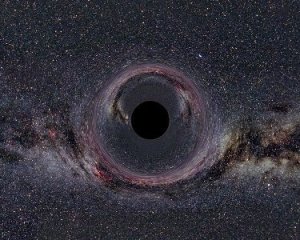
4. Supermassive Black Holes
There’s no question that black holes are scary; it’s the only part of the Universe that can truly destroy itself.
Indeed, Einstein himself, whose Theory of Relativity opened the door to the modern study of black holes, noted that “they are where God has divided by zero.” And it’s been said that the gravitational singularity, where the laws of physics collapse,  is the most complex mystery of science that still defies human knowledge.
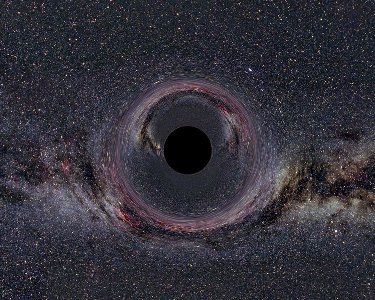
Somewhat counterintuitively, black holes take the weakest of the four basic forces, gravity, to create a region of space with a gravitational field so powerful that nothing, not even light, can escape its pull. They’re called “black” because they absorb all the light that hits them and reflect nothing. They have a one-way surface, the event horizon, into which objects can fall, but out of which nothing (save for Hawking Radiation) can escape.
Black holes can also vary in size and gravitational intensity. Supermassive black holes are a million to a billion times the mass of a typical black hole. Most galaxies, if not all, are believed to contain supermassive black holes at their centers (including the Milky Way).
And recent studies are now suggesting that they are much larger than previously thought. Computer models reveal that the supermassive black hole at the heart of the giant galaxy M87 weighs the same as 6.4 billion suns—two to three times heavier than previous estimates.
That’s a lot of pull.
Indeed, should anything have the misfortune of getting close enough to a supermassive black hole, whether it be gas, stars or entire solar systems, it would be sucked into oblivion. Its gravitational pull would be so overwhelming that it would hurl gas and stars around it at almost the speed of light; the violent clashing would heat the gas up to over a million degrees.
Some have suggested that the supermassive black hole is the most powerful force in the Universe. While its ability to destroy the very fabric of space and time itself is undeniably impressive (to say the least), its localized and limited nature prevent it from being ranked any higher than fourth on my list. A black hole would never subsume an entire Galaxy, for example, at least not within cosmologically long time frames.
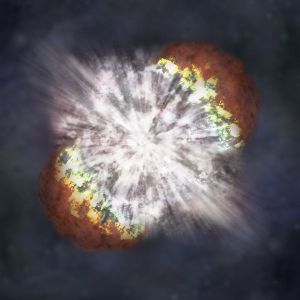
3. Gamma-Ray Bursts
The power of gamma-ray bursts (GRB) defies human comprehension.
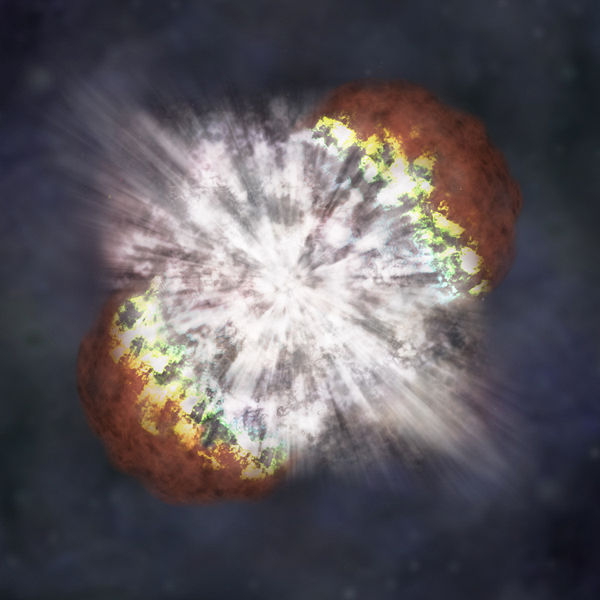
Imagine a hypergiant star at the end of its life, a massive object that’s 150 times larger than our own. Extremely high levels of gamma radiation from its core is causing its energy to transform to matter. The resultant drop in energy causes the star to collapse. This results in a dramatic increase in the thermonuclear reactions that was burning within it. All this added energy overpowers the gravitational attraction and it explodes in a fury of energy — the hypergiant has gone hypernova.
This is not the stuff of fiction or theory — explosions like this have been observed. Hypernovas of this size can instantly expel about 10X46 joules. This is more energy than our sun produces over a period of 10 billion years. 10 billion years! In one cataclysmic explosion!
Hypernovas can wreak tremendous havoc in its local area, effectively sterilizing the region. These explosions produce highly collimated beams of hard gamma-rays that extend outward from the exploding star. Any unfortunate life-bearing planet that should come into contact with those beams would suffer a mass extinction (if not total extinction depending on its proximity to the supernova). Gamma-rays would eat up the ozone layer and indirectly cause the onset of an ice age due to the prevalence of NO2 molecules.
Supernovas can shoot out directed beams of gamma-rays to a distance of 100 light years, while hypernovas disburse gamma ray bursts as far as 500 to 1,000 light years away.
We are currently able to detect an average of about one gamma-ray burst per day. Because gamma-ray bursts are visible to distances encompassing most of the observable Universe — a volume encompassing many billions of galaxies — this suggests that gamma-ray bursts are exceedingly rare events per galaxy. Determining an exact rate is difficult, but for a galaxy of approximately the same size as the Milky Way, the expected rate (for hypernova-type events) is about one burst every 100,000 to 1,000,000 years.
Thankfully, hypergiant Eta Carinae, which is on the verge of going nova, is well over 7,500 light years away from Earth. We’ll be safe when it goes off, but you’ll be able to read by its light at night-time.
But not so fast — our safety may not be guaranteed. Some scientists believe that gamma-ray busters may be responsible for sterilizing giagantic swaths of the galaxy — in some cases as much as a quarter of the galaxy. Such speculation has given rise to the theory that gamma-ray bursters are the reason for the Fermi Paradox; exploding stars are continually stunting the potential for life to advance, making it the 3rd most powerful force in the Universe.
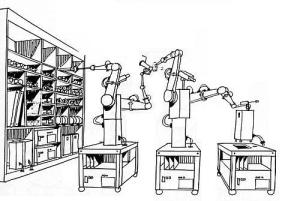
2. Self-Replication
A funny thing started to happen about 8 billion years ago: pieces of the Universe started to make copies of itself. This in turn kindled another phenomena: natural selection.
While this might not seem so impressive or powerful in its own right, it’s the complexification and the emergent effects of this process that’s interesting; what began as fairly straight forward cellular replication, at least on Earth, eventually progressed into viruses, dinosaurs, and human beings.
Self-replicating RNA/DNA has completely reshaped the planet, its surface and atmosphere molded by the processes of life. And it’s a process that has proven to be remarkably resilient. The Earth has been witness to some extremely calamitous events over its history, namely the Big Five Mass Extinctions, but life has picked itself up, dusted off, and started anew.
Now, what makes self-replication all the more powerful is that it is not limited to biological substrate. Computer viruses and memes provide other examples of how self-replication can work. Replicators can also be categorized according to the kind material support they require in order to go about self-assembly. In addition to natural replicators, which have all or most of their design from nonhuman sources (i.e. natural selection), there’s also the potential for:

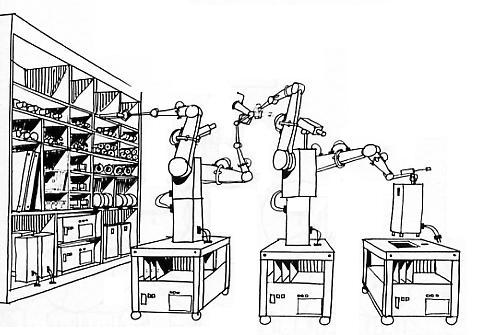
  • Autotrophic replicators: Devices that could reproduce themselves in the wild and mine their own materials. It’s thought that non-biological autotrophic replicators could be designed by humans and could easily accept specifications for human products.
  • Self-reproductive systems: Systems that could produce copies of itself from industrial feedstocks such as metal bar and wire.
  • Self-assembling systems: Systems that could assemble copies of themselves from finished and delivered parts. Simple examples of such systems have been demonstrated at the macro scale.

It’s conjectured that a particularly potent form of self-replication will eventually come in the form of molecular manufacturing and the introduction of self-replicating nanobots. One version of this vision is connected with the idea of swarms of coordinated nanoscale robots working in tandem.
Microscopic self-replicating nanobots may not sound particularly powerful or scary, but what is scary is the prospect for unchecked exponential growth. A fear exists that nanomechanical robots could self-replicate using naturally occurring materials and consume the entire planet in their hunger for raw materials. Alternately they could simply crowd out natural life, outcompeting it for energy. This is what has been referred to as the grey goo or ecophagy scenario. Some estimates show, for example, that the Earth’s atmosphere could be destroyed by such devices in a little under two years.
Self-replication is also powerful in terms of what it could mean for interstellar exploration and colonization. By using exponentially self-replicating Von Neumann probes, for example, the Galaxy could be colonized in as little as one to ten million years.
And of course, if you can build you can destroy; the same technology could be used to sterilize the Galaxy in the same amount of time [for more on this topic read my article, “Seven ways to control the Galaxy with self-replicating probes“].
Consequently, self-replication sits at #2 on my list; its remarkable ability to reshape matter, adapt, grow, consume, build and destroy make it a formidable force to be reckoned with.
1. Intelligence
Without a doubt the most powerful force in the universe is intelligence.
The capacity to collect, share, reorganize and act on information is unlike anything else in this universe. Intelligent beings can build tools, adapt to and radically change their environment, create complex systems and act with reasoned intention. Intelligent beings can plan, solve problems, think abstractly, comprehend ideas, use language and learn.
In addition, intelligence can reflect on itself, predict outcomes and avoid peril; autonomous systems, for the most part, are incapable of such action.
Humanity, a particularly intelligent bunch owing to a few fortuitous evolutionary traits, has — for better or worse — become a force of nature on Earth. Our species has reworked the surface of the planet to meet its needs, significantly impacting on virtually every other species (bringing many to extinction) and irrevocably altering the condition of the atmosphere itself. Not content to stay at home, we have even sent our artifacts into space and visited our very own moon.
While some cynics may scoff at so-called human ‘intelligence’, there’s no denying that it has made a significant impact on the biosphere.
Moreover, what we think of as intelligence today may be a far cry from what’s possible. The advent of artificial superintelligence is poised to be a game-changer. A superintelligent agent, which may or may not have conscious or subjective experiences, is an intellect that is much smarter than the best human brains in practically every field, including problem solving, brute calculation, scientific creativity, general wisdom and social skills. Such entities may function as super-expert systems that work to execute on any goal it is given so long as it falls within the laws of physics and it has access to the requisite resources. That’s power. And that’s why it’s called the Technological Singularity; we have no idea how such an agent will behave once we get past the horizon.
Another more radical possibility (if that’s not radical enough) is that the future of the Universe itself will be influenced by intelligent life. The nature of intelligence and its presence in the Universe must always be called into question. There exists only one of two possibilities: intelligence is either 1) cosmological epiphenomenon, or 2) an intrinsic part of the Universe’s inner workings. If it’s the latter, perhaps we have some work to do in the future to ensure the Universe’s survival or to take part in its reproductive strategy.
Theories already exist in regards to stellar engineering — where a local sun could be tweaked in such a way to extend its lifespan. Future civilizations may eventually figure out how to re-engineer the Universe itself (such as re-working the constants) or create an escape hatch to basement universes. Thinkers who have explored these possibilities include Milan CirkovicJohn Smart, Ray Kurzweil, Alan Guth and James N. Gardner (for example, see Gardner’s book Biocosm: The New Scientific Theory of Evolution: Intelligent Life is the Architect of the Universe).
Intelligence as a force may not be particularly impressive today when considered alongside supermassive black holes, gamma-ray bursts and exponential self-replication. But it may be someday. The ability of intelligence to re-engineer its environment and work towards growth, refinement and self-preservation give it the potential to become the most powerful force in the Universe.

Posted by at6/24/2009

Leave a comment

Filed under Humor and Observations

Why Did Knights Joust Snails and Lose So Often?

The knight fighting a snail in combat is a surprisingly common artistic motif of the Middle Ages.  Why?  Some few of you may not be aware of this particular historical curiosity enough to have already formed an opinion, so I have reposted the following article:

26 September 2013

Knight v Snail

Recently a group of us went into our manuscripts store to have a look at some medieval genealogical rolls.  We were examining Royal MS 14 B V, an English roll from the last part of the 13th century which contains quite a lot of marginalia, when one of our post-medieval colleagues noticed a painting of a knight engaging in combat with a snail.

Royal_ms_14_b_v_f003r_detail Knight v Snail  (from a genealogical roll of the kings of England, England, 4th quarter of the 13th century, Royal MS 14 B V, membrane 3)

This struck him as odd, which struck the medievalists in the group as odd; surely everyone has seen this sort of thing before, right?  As anyone who is familiar with 13th and 14th century illuminated manuscripts can attest, images of armed knights fighting snails are common, especially in marginalia.  But the ubiquity of these depictions doesn’t make them any less strange, and we had a long discussion about what such pictures might mean.

Add_ms_49622_f193v_detail Knight v Snail II:  Battle in the Margins (from the Gorleston Psalter, England (Suffolk), 1310-1324, Add MS 49622, f. 193v.  For more on the gorgeous Gorleston marginalia, please see our posts here and here)

There has been much scholarly debate about the significance of these depictions of snail combat.  As early as 1850, the magnificently-named bibliophile the Comte de Bastard theorised that a particular marginal image of a snail was intended to represent the Resurrection, since he discovered it in two manuscripts close to miniatures of the Raising of Lazarus.  In her famous survey of the subject, Lilian Randall proposed that the snail was a symbol of the Lombards, a group vilified in the early middle ages for treasonous behaviour, the sin of usury, and ‘non-chivalrous comportment in general.’  This interpretation accounts for why the snail is so frequently seen antagonising a knight in armour, but does not explain why the knight is often depicted on the losing end of this battle, or why this particular image became so popular in the margins of non-historical texts such as Psalters or Books of Hours.

Yates Thompson MS 19 f. 65r C1319-01b Knight v Snail III: Extreme Jousting (from Brunetto Latini’s Li Livres dou Tresor, France (Picardy), c. 1315-1325, Yates Thompson MS 19, f. 65r)

Other scholars have variously described the ‘knight v snail’ motif as a representation of the struggles of the poor against an oppressive aristocracy, a straightforward statement of the snail’s troublesome reputation as a garden pest, a commentary on social climbers, or even as a saucy symbol of female sexuality.  It is possible that these images could have meant all these things and more at one time or another; it is important to remember, as Michael Camille, who devoted a number of pages to this subject, once wrote: ‘marginal imagery lacks the iconographic stability of a religious narrative or icon’.   This motif was part of a rich visual tradition that we can understand only imperfectly today – not that this will stop us from trying!

Royal_ms_2_b_vii_f148r_detail Knight v Snail IV:  The Snails Attack (from the Queen Mary Psalter, England, 1310-1320, Royal MS 2 B VII, f. 148r)

Some more of our favourite British Library images are below, and please let us know what you think.  You can leave a comment below, or we can always be reached on Twitter at @BLMedieval.

Royal_ms_10_e_iv_f107r_detail Knight v Snail V:  Revenge of the Snail (from the Smithfield Decretals, southern France (probably Toulouse), with marginal scenes added in England (London), c. 1300-c. 1340, Royal MS 10 E IV, f. 107r)

Add_ms_49622_f162v_detail Knight v Snail VI:  The Gastropod Conqueror (from the Gorleston Psalter, England (Suffolk), 1310-1324, Add MS 49622, f. 162v)

Harley MS 6563 ff. 62v-63r Knight v Snail VII: A Pretty Comprehensive Defeat (from a fragmentary Book of Hours, England (London), c. 1320-c. 1330, Harley MS 6563, ff. 62v-63r)

Add_ms_49622_f210v_detail Knight v Snail VIII:  Switcheroo!  It’s a Monkey This Time (from the Gorleston Psalter, England (Suffolk), 1310-1324, Add MS 49622, f. 210v)

Harley_ms_4379_f023v_detail Knight v Snail IX:  Just for Fun:  A Rabbit, Monkeys, and a Snail Jousting (from the Harley Froissart, Netherlands (Bruges), c. 1470-1472, Harley MS 4379, f. 23v)

Further Reading

Lilian Randall, ‘The Snail in Gothic Marginal Warfare’ Speculum 37, no. 6 (June 1962), pp. 358-367.

Michael Camille, Image on the Edge (Reaktion Books: London, 1992), pp. 31-36.

Carl Prydum, What’s So Funny about Knights and Snails?, http://www.gotmedieval.com/2009/07/whats-so-funny-about-knights-and-snails.html

– Sarah J Biggs

Posted by Sarah J Biggs at 12:01 AM

– See more at: http://britishlibrary.typepad.co.uk/digitisedmanuscripts/2013/09/knight-v-snail.html#sthash.DN7CkKhT.dpuf

Leave a comment

Filed under Animals, Humor and Observations

American Holocaust

In World War 2 some 50-80 million people died.  The Holocaust, the actual planned extermination of people by the Nazis resulted in 12-14 million deaths, about half Jewish, the others slavs, political opponents, communists, performers and anyone else considered an enemy of Aryan rule.

In the United States at the height of slavery, Slave owners held captive around 4,000,000 black people as slaves.  During the Civil War, 620,000 men died in battle, or roughly the same amount as every other American war combined, including WW1, WW2 and Viet Nam.  A full 2% of the American population, or 1 in 50 died in the conflict.

I am sure you know about World War 2, the Holocaust and the Civil War fought to free 4 million slaves.  But what about the ongoing American Holocaust?  Since Roe vs. Wade in 1973, over 56 million abortions have occurred in the United States.  Black children are aborted at four to five times the rate of other children.  Though only 17% of the population, they represent half the abortions.

In the United States, roughly 9,000 murder victims are identified each year.  Half of them are black victims.  93% of the perpetrators are also black.  Why are these numbers not a clarion call for change?

We have lost around 28 million potential black American citizens in the last 50 years to abortion.  Seven times the number of slaves prior to emancipation, and twice the total number of dead in the holocaust, four times the numbers of Jews slain in the holocaust.

In murders, we lost another 250,000 young black people, many at the hands of their own fellows.

It’s time we stop race baiting over comments made on blogs or by politicians or by sports figures and look at the horror of our own American Holocaust.  Whether you are pro-life or pro-choice, I plead with you to consider the socio-economic impacts of a country that eliminates the same number of its citizens as the entire world lost in WW2.  And, like WW2, the victims are the poor and the minorities.

Something has to be done.  We have lost two generations of young black Americans that could have done so much for this country.  Help support adoption, birth control, strong families, counseling, domestic abuse prevention and our churches in needy communities.  If we have to, start small.  Adopt one child.  Pay for one family to choose life and adoption over abortion.  Help one family have housing and food.

Will history sweep under the rug one of the greatest atrocities in cost of life?  Is this magnitude of impact what any pro-choice advocate wants?  Let’s work together to stand up.  We need the next generation.  ALL of the next generation, not just the wealthy, not just the white, but everyone.

How many black leaders and heroes like the following have we missed out on their lives due to our holocaust?


1 Comment

Filed under Humor and Observations