Woolly mammoths (and rhinos) ate flowers

Woolly mammoths (and rhinos) ate flowers

By Tia Ghose

Published February 06, 2014

  • pleistocene-arctic

    The Arctic had much more diverse flora than previously thought during the Pleistocene Era (Mauricio Anton)

Woolly mammoths, rhinos and other ice age beasts may have munched on high-protein wildflowers called forbs, new research suggests.

And far from living in a monotonous grassland, the mega-beasts inhabited a colorful Arctic landscape filled with flowering plants and diverse vegetation, the study researchers found.

The new research “paints a different picture of the Arctic,” thousands of years ago, said study co-author Joseph Craine, an ecosystem ecologist at Kansas State University. “It makes us rethink how the vegetation looked and how those animals thrived on the landscape.”

The ancient ecosystem was detailed Wednesday in the journal Nature.

Pretty landscape In the past, scientists imagined that the now-vast Arctic tundra was once a brown grassland steppe that teemed with wooly mammoths, rhinos and bison. But recreations of the ancient Arctic vegetation relied on fossilized pollen found in permafrost, or frozen soil. Because grasses and sedges tend to produce more pollen than other plants, those analyses produced a biased picture of the landscape. [Image Gallery: Ancient Beasts Roam an Arctic Landscape]

To understand the ancient landscape better, researchers analyzed the plant genetic material found in 242 samples of permafrost from across Siberia, Northern Europe and Alaska that dated as far back as 50,000 years ago.

They also analyzed the DNA found in the gut contents and fossilized poop, or coprolites, of eight Pleistocene beasts woolly mammoths, rhinos, bison and horses found in museums throughout the world.

The DNA analysis showed that the Arctic at the time had a varied landscape filled with wildflowers, grasses and other vegetation.

And the shaggy ice age beasts that roamed the landscape took advantage of that cornucopia. The grazers supplemented their grassy diet with a hefty helping of wildflowerlike plants known as forbs, the stomach content analysis found.

These forbs are high in protein and other nutrients, which may have helped the grazers put on weight and reproduce in the otherwise sparse Arctic environment, Craine told Live Science.

Vanishing wildflowers Between 10,000 and 15,000 years ago, forbs declined in the Arctic,study co-author Mary E. Edwards, a physical geographer at the University of Southampton in England, wrote in an email.

Though it’s not exactly clear why, “we do know from much other evidence that the climate changed at this time,” Edwards said.

The ice age was ending and warmer, wetter weather was prevailing. That climate “allowed trees and shrubs to flourish and these would have outgrown forbs by shading them for example,” Edwards said.

It’s also possible that the vanishing of these high-protein plants hastened the extinction of ice age beasts such as the woolly mammoth. For example, grasslands may have been delicately balanced, with poop from the grazers nourishing the plants, which in turn kept the animals alive. If a big jolt in climate disrupted one part of the chain for instance by depleting the forbs that may have led the whole system to collapse, Edwards speculated.

The findings also raise questions about modern grazers such as bison, Craine said. If the ancient beasts dined on forbs, it’s possible these wildflower-like plants play a bigger role in the diet of modern bison as well, he said.

Leave a comment

Filed under Humor and Observations

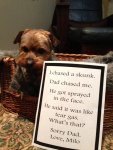
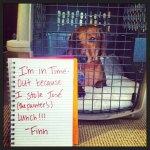
Dog Shaming For Your Tuesday Blues

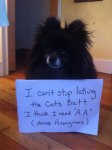
I apologize for the late post on cute dog pictures.  Unfortunately, I was back at the orthopedic surgeon yesterday.  Good news is they know what is wrong, bad news, probably looking at one or two surgeries again…sigh…  Anyway, to make up for it being late, I am posting the ever popular dog shaming photos.  This is the last of my current stock so send me more.  Also, if you want more now, type “dog shaming” into the search box on my home page for a bunch of them.  I think I have posted about ten sets.

Leave a comment

Filed under Animals, Humor and Observations

Denver Bronco Super Bowl Loss Humor

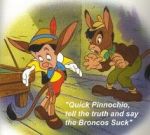
If you are a Bronco fan, you should probably skip this post…

  1. The Denver Broncos could not fly home after the game.  Apparently, someone had painted an end zone in front of the airports.
  2. At least Bruno Mars was able to make it to midfield by halftime.
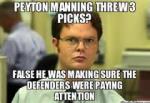
  3. They said Peyton Manning could be anyone – so he became Tony Romo.
  4. The Broncos logo is a horse’s head but they played like a horse’s ass.
  5. This was not the worst loss in Super Bowl history.  Unfortunately for Denver, they hold that record already.
  6. The game started off with a safety because Peyton Manning inadvertently audibled “Papa Johns” instead of “Omaha”.
  7. The Broncos now can claim the second largest disaster to hit New York.
  8. New York got the high taxes and New Jersey got the toxic waste dumps.  Colorado got the Broncos because they had third pick.
  9. The two states with legal marijuana made the Super Bowl.  The one with all legal slaughtered the medical marijuana.  Based on this statistical data, the Arizona Cardinal will win the Super Bowl next year if we not only legalize marijuana, but hand out free samples to all citizens.
  10. It was all a test to see if depressed Denver fans eat more Papa Johns than happy Denver fans.
  11. The Denver Broncos sacrificed a virgin to win the Super Bowl.  Unfortunately, they sent Tim Tebow to the Jets instead of the bottom of an active volcano, so it didn’t work.
  12. I guess for Denver it will always be Elway or the highway…
  13. At least Papa Johns delivers.
  14. Even ObamaCare does not cover this much choking.
  15. Fans wanted to help, but Google and Wikipedia have no listings for applying the Heimlich Maneouver to an entire football team.
  16. International fans were wondering if American Football had a limit for scoring or a way to stop the game out of mercy.

Leave a comment

Filed under Humor and Observations

4,600-year-old step pyramid uncovered in Egypt

4,600-year-old step pyramid uncovered in Egypt

By Owen Jarus

Published February 03, 2014

  • step-pyramid-1 new.JPG

    Archaeologists working near the ancient settlement of Edfu in southern Egypt have uncovered a step pyramid that dates back about 4,600 years. (Tell Edfu Project at the University of Chicagoâs Oriental Institute)

Archaeologists working near the ancient settlement of Edfu, in southern Egypt, have uncovered a step pyramid that dates back about 4,600 years, predating the Great Pyramid of Giza by at least a few decades.

The step pyramid, which once stood as high as 43 feet, is one of seven so-called “provincial” pyramids built by either the pharaoh Huni (reign ca. 2635-2610 B.C.) or Snefru (reign ca. 2610-2590 B.C.). Over time, the step pyramid’s stone blocks were pillaged, and the monument was exposed to weathering, so today, it’s only about 16 feet tall.

Scattered throughout central and southern Egypt, the provincial pyramids are located near major settlements, have no internal chambers and were not intended for burial. Six of the seven pyramids have almost identical dimensions, including the newly uncovered one at Edfu, which is about 60 × 61 feet. [See Photos of the Newly Uncovered Step Pyramid]

The purpose of these seven pyramids is a mystery. They may have been used as symbolic monuments dedicated to the royal cult that affirmed the power of the king in the southern provinces.

“The similarities from one pyramid to the other are really amazing, and there is definitely a common plan,” said Gregory Marouard, a research associate at the University of Chicago’s Oriental Institute who led the work at the Edfu pyramid. On the east side of the newly uncovered pyramid, his team found the remains of an installation where food offerings appear to have been made — a discovery that is important for understanding this kind of pyramid since it provides clues as to what they were used for.

The team also found hieroglyphic graffiti incised on the outer faces of the pyramid. The inscriptions are located beside the remains of babies and children who were buried at the foot of the pyramid. The researchers think the inscriptions and burials date to long after the pyramid was built and that the structure was not originally intended as a burial place.

Initial results of the excavation were presented at a symposium held in Toronto recently by the Society for the Study of Egyptian Antiquities.

Uncovering the pyramid Though scholars knew of the existence of the pyramid at Edfu, the structure had never been excavated before Marouard’s team started work in 2010, he said in the study. His team found that the pyramid was covered by a thick layer of sand, modern waste and remains from the pillaging of its blocks.

It didn’t look like a pyramid he said, and people in a nearby village even thought the structure was the tomb of a sheikh, a local Muslim saint. As the team went to work cleaning the monument, the ancient pyramid was revealed. [In Photos: The Seven Ancient Wonders of the World]

Built of sandstone blocks and clay mortar, it had been constructed in the form of a three-step pyramid. A core of blocks rises up vertically, with two layers of blocks beside it, on top of each other. This made the pyramid look like it had three steps. The style is similar to that of a step pyramid built by Djoser (reign ca. 2670-2640 B.C.), the pharaoh who constructed Egypt’s first pyramid at the beginning of the third ancient Egyptian dynasty. The technique is close to that used at the Meidum pyramid, which was built by either Snefru or Huni and started out as a step pyramid before being turned into a true pyramid.

“The construction itself reflects a certain care and a real expertise in the mastery of stone construction, especially for the adjustment of the most important blocks,” said Marouard in his paper. Marouard also noted that the pyramid was built directly on the bedrock and was constructed entirely with local raw materials. The quarry where the sandstone was extracted was discovered in 2011, and is located only about a half mile north of the pyramid.

The growth of a modern-day cemetery and village poses a danger to the newly uncovered pyramid. In order to help prevent further looting, a fence was built around the structure, thanks to financial assistance from the American Research Center in Egypt and the National Endowment for the Humanities.

Graffiti and child burials As the team uncovered the pyramid, they found that inscriptions had been incised on its outer faces. They include hieroglyphic depictions of a book roll, a seated man, a four-legged animal, a reed leaf and a bird.

“These are mostly private and rough inscriptions, and certainly dedicated to the child/babies’ burials located right under these inscriptions at the foot of the pyramid,” Marouard told Live Science in an email. One of the inscriptions appears to mean “head of the house” and may be a reference to the mother of a buried child.

Marouard said his team would be publishing these burials and images in more detail in the future.

A pyramid abandoned The archaeologists found that by the time of the reign of Khufu (the pharaoh who built the Great Pyramid), ca. 2590-2563 B.C., the pyramid at Edfu had been abandoned, and offerings were no longer being made. This occurred less than 50 years after its construction, Marouard said.
This suggests the seven small pyramids stopped being used when work on the Great Pyramid began. It seems Khufu no longer thought there was a need to maintain a small pyramid at Edfu, or elsewhere in southern Egypt, Marouard said. Rather, Khufu focused all the resources on building the Great Pyramid at Giza, which is close to the Egyptian capital at Memphis, he added.
Khufu may have felt politically secure in southern Egypt and saw no need to maintain or build pyramids there, Marouard said in the email. The “center of gravity of Egypt was then at Memphis for many centuries — this region draining resources and manpower from the provinces, all regions being put to use for the large construction sites of funerary complexes.”

At Wadi al-Jarf, a port found on the shore of the Red Sea that dates to Khufu’s time, papyri (written documents) dating to the end of Khufu’s reign were recently discovered that supports the idea that the pharaoh tried to converge all the resources he could toward Giza and the ancient wonder being constructed there.

Leave a comment

Filed under Humor and Observations

Heroin Addiction Claims Philip Seymour Hoffman – Dead at 46

I honestly don’t know how to solve our problem that we lose so many people, both famous and unknown, to addiction.  I grew up in drug central in California and almost everyone used drugs.  But even amongst the kids growing up in the drug plentiful late 1970s like me, we knew that if it involved a needle or a flame and spoon it was best to say no.  Even ‘druggies’ realized that meth, crack, and heroine were asking for an overdose.  The needles themselves spread disease, but the drugs were often of indeterminate strength and mixed with random ingredients to ‘cut them’ for more sales.  Mixed with partying, poor diet, lack of sleep, alcohol and cocaine, shooting up is a like playing Russian Roulette.

Philip Seymour Hoffman was one of my favorite actors and extremely talented.  He gets added to the list of my favorites like Mitch Hedburg, John Belushi, Chris Farley, Elvis, and Morrison that all died too soon due to drug addiction.  Were there family members or friends who could have forced an intervention?  Did their former rehab facilities not do proper follow-up?  What about all those we don’t hear about found every day, dead in their own vomit with a needle stuck in their arm?

Not sure what to do.  But we need to do something.

BREAKING: Philip Seymour Hoffman Found Dead at 46

By                             
.

Philip Seymour Hoffman found dead at 46. (Getty Images)

Academy Award winner Philip Seymour Hoffman was found dead in his New York City apartment on Sunday. He was 46.

The New York City Police Department  confirmed to “The Insider With Yahoo” that the actor was found dead at 12 p.m. ET in his fourth floor apartment in the West Village of New York City.

While the official cause of death is still unknown at this point, police confirm that he may have died of a drug overdose. The actor was found with a needle in his arm and apparent heroin was found at the scene. Playwright David Katz is believed to have made the initial discovery.

The New York Medical Examiner confirms that an autopsy of the remains will be conducted on Monday.

Hoffman’s family released a statement regarding his death:

“We are devastated by the loss of our beloved Phil and appreciate the outpouring of love and support we have received from everyone. This is a tragic and sudden loss and we ask that you respect our privacy during this time of grieving.  Please keep Phil in your thoughts and prayers.” The family will not be making any further statements at this time.

[Related: Celebrities React to Philip Seymour Hoffman’s Death]

Hoffman struggled with a heroin addiction and had checked into rehab in May 2013.

In a 2006 interview with CBS’ “60 Minutes,” Hoffman discussed his earlier drug use dating back to the time after his graduation from New York University’s drama school.

“It was all that [drugs and alcohol], yeah, it was anything I could get my hands on… I liked it all,” Hoffman said. Eventually, he chose to seek treatment. “I went [to rehab], I got sober when I was 22 years old. You get panicked… and I got panicked for my life. It really was just that.”


He also revealed that his drug habit was life-threatening. “I have so much empathy for these young actors that are 19 and all of a sudden they’re beautiful and famous and rich. I’m like, ‘Oh my God. I’d be dead.’ You know what I mean? I’d be 19, beautiful, famous and rich. That would be it. I think back at that time. I think if I had the money, that kind of money and stuff. So, yeah [I would have died].”


Bizarrely, Hoffman was the victim of a death hoax earlier this week. However, at the time, his rep confirmed that he was alive and well.

Hoffman won an Academy Award for Best Actor for his work in the 2005 film, “Capote.” He’s has been nominated for Oscars for his performances in “The Master,” “Doubt,” and “Charlie Wilson’s War.” The longtime thespian will also be remembered for a number of smaller films, including “Magnolia,” “Synecdoche, New York, and “The Talented Mr. Ripley,” as well as his breakout in “Twister” and his most recent turn as Plutarch Heavensbee in “The Hunger Games: Catching Fire.”

Hoffman was also active in the New York theater scene, and had been nominated for Tony Awards three times.

He has three children, Tallulah Hoffman, Cooper Alexander Hoffman and Willa Hoffman, all under the age of 11, with costume designer Mimi O’Donnell. While Hoffman and O’Donnell never married, they’ve been together since 1999, when they met on the set of the play “In Arabia We’d All Be Kings.”

3 Comments

Filed under Humor and Observations

First Porsche resurfaces after 112 years

First Porsche resurfaces after 112 years

By

Published January 28, 2014

FoxNews.com
  • first-porsche-660.jpg
    Porsche
  • first-porsche-engine-660.jpg
    Porsche
  • first-porsche-museum-660.jpg
    Porsche
The first car designed by Ferdinand Porsche has found its way into his namesake company’s museum after disappearing for 112 years.

Discovered last year in a warehouse at an undisclosed location in Austria, the “P1” had been sitting among a collection of horse-drawn carriages since 1902. It was purchased by one of Porsche’s living relatives, and is now on display at the museum located in Stuttgart-Zuffenhausen, Germany.

Officially known as the Egger-Lohner electric vehicle – C.2 Phaeton model, the car was designed and built by Porsche in 1898 when he was just 22 years old. It was the first of several motorized vehicles he developed for the luxury coachbuilder, Lohner, including the world’s first hybrid car. Porsche went on to found his own engineering firm in 1931.

As its name implies, the four-seat vehicle is electric and powered by a 3 hp motor mounted at the rear, which could be overloaded to 5 hp and propel it to a top speed of 21 mph. Its 44-cell, 1,103 pound battery pack provided enough energy for trips lasting as long as 3-5 hours, covering approximately 49 miles.

Setting the stage for Porsche’s later motorsports tradition, it won its first race in 1899, a 24-mile run across Berlin.

A Porsche museum spokesperson says the vehicle was found in surprisingly good condition and cleaned, but not restored. Its motor still functions, but the batteries have gone missing over the years, along with the seats and some of its bodywork. The last of those is somewhat fitting as the car was designed with exchangeable panels that allowed it to be converted from a closed to open car.

A transparent replica of the absent parts has been installed on top of the original wooden chassis for display, where Porsche hopes to keep it for another century, at least.

Leave a comment

Filed under Humor and Observations

Emotion Wheel for Writers

funny-chart-synonyms-words-fear-anger


Leave a comment

Filed under Writing

Cosplay Pictures for Your Saturday

Cosplay pictures for your Saturday enjoyment!

Leave a comment

Filed under Humor and Observations

Origins of Words and Phrases

Ever wonder about a particular   saying and where it came from? Have you come up empty handed? Are you stumped?   Well look no further! Some of the answers will have you saying “son of   a gun!”

I’ve compiled a list of   the phrases and words that I find most interesting. Some of the sayings are   hundreds of years old and their exact origins remain a mystery. Opinions vary  about the exact derivations of some, but I’ve decided to include only the most   interesting theories.

Check back soon for a bibliography.

raining       cats and dogs       – If you’ve corrected your child after he or she took this phrase literally,       you may owe them a slight apology! The origin of this saying dates back       to the 1600s. Poor drainage systems on buildings in the 17th century caused       gutters to overflow, spewing out along with water, garbage and a few unexpected       critters. It is possible that animals such as rodents lived in the thatched       roofs and when it rained heavily, the dead carcasses would fall––undoubtedly       unpleasant! As far as large dogs falling from the sky…well…that one       will have to remain a mystery.
to       be stumped       – Be stumped no more! Being “stumped” comes from the pioneering       days when the land was cleared to lay down train tracks. When the workers       came across a tree stump, it would cause a dilemma or “to be stumped.”
wrong       side of the tracks       -Before there were cars, trains were an important means of transportation.       Of course, pollution wasn’t a big concern so when a train rolled by, heavy       black smoke and soot went with it. Usually the wind blew the black smoke       to one side of the tracks and only the poorest of people would endure living       in that hard to breathe environment. No one wanted to be on “the wrong       side of the tracks.”
rule       of thumb -No, this phrase is definitely NOT “P.C”! Who knew? Some people think”Rule         of thumb” is derived from the days when woman were sometimes beaten with         a switch. To be “kind” the switch could not be thicker than a thumb’s width.         This was made law in 1782 when an English judge stated that men were allowed       to beat their wives but that the stick could not be thicker than one’s thumb.

There are other theories about the origin of this phrase. Perhaps using ones thumb to measure a switch is folk lore after all….

to       propose a toast       – This often used phrase comes from an 18th century punch bowl drink made       with cider, cinnamon, cloves, and other spices and garnished with pieces       of toast that would float on top. I’m unsure of the purpose of the toast       and can’t imagine a burnt piece of bread being “decorative,” but       next New Years Eve, don’t forget to include the toast!
Good       Samaritan       – comes from from the Bible (Luke 10:30-33), in which Jesus tells the parable       of a priest who passes by a man in need of help, laying on the ground. A       Samaritan, who was part of the enemy tribe, helps the man up and back to       health when the priest does not…the message being that you should treat       your enemy with the same good respect as your friend. Other meanings can       also be extracted, such as the golden rule: treat others the way you would       like to be treated, and so on.
upper       and lower case letters       – I’ve heard that the term started when letters were hand carved out of       wood and were then laid out to be type set. The letters were kept on a two       shelves in the work space…the big letters, or the upper case ones were       kept on the top or “upper” shelf and the small or lower case letters were       kept on the “lower” shelf to make it easy for the printer to keep things       organized.
wrong       end of the stick       -If you imaged the most disgusting origin then you were right! I’ve heard       two explanations that vary slightly. One comes from the outhouse days when       there were no flushing toilets and the other dates back much earlier, to       the days of the Roman baths. Regardless, the outcome was the same! The person       in the next stall may have asked for their neighbor to “pass the stick,”       instead of toilet paper since that was yet to exist. The stick had a sponge       on one end and if the recipient grabbed the wrong end, they’d be getting       the wrong end of the stick. Most definitely unpleasant!
mad       as a hatter       – This phrase comes from the days when felt hats were made using a mercury       on some cheaper furs, that caused the hatter to go mad, thus the “mad hatter”       in Alice In Wonderland. Mercury poisoning caused tremors, brain damage,       tooth loss, slurred speech, and more. A “mad hatter” was one to       be avoided. I think the lesson to be learned is 1) don’t make your own hats       and 2) don’t use mercury!
Everything       but the kitchen sink       – comes from World War Two when everything possible was used to contribute       to the war effort…all metal was used for the U.S arsenal. The only objects       left out were porcelain kitchen sinks. Does anyone still have a porcelain       sink?
big       wig– Picture       a big puffy white haired gentleman and then you’ll be picturing a “big       wig.” This term is derived from powdered wigs worn by men in the 18th       century. The bigger the wig, the more wealthy the individual. Who knows,       perhaps someday wigs for men will go back in style!
son       of a gun       – One version of this saying is that sailors traveling to the west Indies       sometimes raped native woman on ships, which sometimes occurred between       the cannons. When a woman gave birth to a son, he was called “son between       the guns.” This term was used later, using the word”gun” to mean soldier.       His son would thus be called a “son of a gun.” Other etymologists speculate       that son of a gun meant an illegitimate son of a soldier, who would be nicknamed       “gun.” How “son of a gun” transformed into it’s current       usage is unknown…well I”ll be damned or “son of a gun!”
 

don’t throw the         baby out with the bath water         – What’s one to do when they only have one basin of bath water and a litter         of children to be bathed? Easy! Use the same bath water and dump it out         when your last child gets lost in it! Back in the pre-running water days,         the order of the household determined which family member got to take         the bath first. The man (or head of the household) naturally went first,         followed by the children and the baby last. The water would become so         dirty that when a baby was bathed in it, he could possibly be lost or         even tossed out! Of course, one would hope that the parents would have         enough common sense to check first!

cut       to the chase       -Remember going to watch those old black and white silent films? Sure you       do! Well, you’ve probably heard of them, anyway. In the black and white       silent film movie era, in the 1920s, a chase scene was often the exciting       part of the film. Who really wanted to sit through that other stuff, anyway?       Cut to the chase meant to cut the film, or edit it down to the good part,       the chase scene––no speaking necessary!
spick       and span –       Perhaps you’ve polished your car and it looked “spick and span”       or maybe one day you were convinced       to buy that new cleaning product on TV because you were assured that your       kitchen would be “spick and span” after usage. The phrase is derived       from two archaic words: spick, which was a spike or nail and span, which       meant “wood chip.” When a ship was polished and new, it was called       “spick and span,” meaning every nail and piece of wood was untarnished.       The phrase originally meant “brand new” but is now used to indicate       cleanliness.

1 Comment

Filed under Humor and Observations, Writing

The Hunger Games: Catching Fire – Movie Review

untitled (9)

The Hunger Games: Catching Fire

Movie Review by Michael Bradley

The sequel to the hugely successful first Hunger Games movie was much anticipated and I looked forward to seeing it as everyone was telling me how it was better than the first one.  It is so rare for a sequel to exceed the original that I was skeptical.  I enjoyed the movie, but unfortunately, I did not find it an improvement, as it abandoned the original themes and seemed more of a set up for future movies than a stand alone film.

Katniss Everdeen, played by the awesome Jennifer Lawrence and Peeta Mellark, played by Josh Hutcherson, become targets of the oppressive government after their victory in the 74th Hunger Games sparks a rebellion in the Districts of Panem.  In order to survive, Katniss is supposed to continue to pretend to be in love with Peeta even though her real boyfriend, Gale Hawthorne is played by hunky heart throb Liam Hemsworth.

hunger-games-catching-fire-premiere

Spoiler alert – I can’t really explain what is wrong and right with the movie without going into some plot details.  What made the first movie great was the concept that you got to know the competitors and you were tense to see who survived and who would die.  The hunger game itself was the core of the movie with heroes and villains.  In the sequel, the hunger games are abbreviated.  The game itself is more important than the characters.

As a twist to kill off the victors, the Hunger Games for this movie select former victors to be the participants.  As most of them are older, you lose the pathos of kids competing and having to kill each other.  At the same time, you don’t learn enough about any of the competitors to care that much what happens to them.  Each is presented as a caricature, the electric engineer, the hiders, the swimmer, etc.  There is little or no dimension to any of them.  They also form into two large groups which further pulls you away from caring about individuals.  The deaths themselves are brief and more from the contrivance of the game than from each other.

Katniss is the heroine of the first movie but they betray her importance in the end of the sequel.  She finds she is a figurehead for the revolution who has been kept in the dark because she was not trusted to make a tough decision to leave others behind.  Her real boyfriend is part of the conspiracy as are many of her most trusted friends and advisors.  Making Katniss the dupe instead of the heroine really left the movie feeling flat.  At the end, she is being whisked away against her will while important characters are left behind.  Nothing is resolved, merely setting up a third film.  It could easily have said “to be continued” at the end credits.

The-Tributes-of-the-75th-Hunger-Games-catching-fire-movie-35052815-2498-916

Worse still is the strange love triangle between Katniss, Peeta and Gale.  At the beginning we have Peeta, still pining away with unrequited love.  Katniss and Gale struggle with whether to run away and be together.  That is why it is so strange when during the games, Katniss seems to genuinely fall in love with Peeta while Gale is secretly planning to rescue Katniss as part of the revolution.  Why does Gale try to get her to run away with him if he is plotting already?  Why does Katniss fall for Peeta after ignoring him for a year when he lives fifty feet from her and was just as noble in the first games?  The love triangle actually feels forced, even for an actress with Jennifer Lawrence’s talents.

If you like the Hunger Games series, as I do, you have to see the second movie.  It is not as good as the first, it is a set-up for the third movie, but as a fan you won’t care much.  If you are not a Hunger Games fan, then you will find it disjointed, confusing, and in the end it has more strings and unfinished plot lines than it does at the beginning.

Leave a comment

Filed under Humor and Observations, Writing