Tag Archives: bizarre

Harvard discovers three of its library books are bound in human flesh

Harvard discovers three of its library books are bound in human flesh

Harvard discovers three of its library books are bound in human flesh

There’s something undeniably creepy about big, expansive libraries. The hushed whispers, the almost artificial quiet, and the smell of dusty tomes combine to create a surreal experience. But when it comes to creepy libraries, Harvard University might take the cake… you see, at least two of its books are bound in human skin.

A few years ago, three separate books were discovered in Harvard University’s library that had particularly strange-looking leather covers. Upon further inspection, it was discovered that the smooth binding was actually human flesh… in one case, skin allegedly harvested from a man who was flayed alive. Yep, definitely the creepiest library ever.

17e6p1jmbzcl5jpg

As it turns out, the practice of using human skin to bind books was actually pretty popular during the 17th century. It’s referred to as Anthropodermic bibliopegy and proved pretty common when it came to anatomical textbooks. Medical professionals would often use the flesh of cadavers they’d dissected during their research. Waste not, want not, I suppose.

tumblr_mxyvg0y8vV1t8ii22o1_1280

Harvard’s creepy books deal with Roman poetry, French philosophy,  and a treatise on medieval Spanish law for which the previously mentioned flayed skin was supposedly used. The book, Practicarum quaestionum circa leges regias… has a very interesting inscription inside, as The Harvard Crimson reports.

The book’s 794th and final page includes an inscription in purple cursive: ‘the bynding of this booke is all that remains of my dear friende Jonas Wright, who was flayed alive by the Wavuma on the Fourth Day of August, 1632. King Mbesa did give me the book, it being one of poore Jonas chiefe possessions, together with ample of his skin to bynd it. Requiescat in pace.’

Years later, the infamous “flayed skin book” had garnered so much attention on campus that Harvard went ahead and had the thing tested, concluding that it was likely a morbid 17th century joke. Despite the creepy inscription, their tests showed that the book’s cover was actually made out of a mixture of “cattle and pig collagen”. Hey, two genuine flesh-books out of three ain’t bad.

According to Director of University Libraries Sidney Verba ’53, there are almost certainly more of the human flesh-books out there, but while it’s possible to touch the two identified skin-books in Harvard’s rare book room, the librarians aren’t exactly fond of all the attention they’ve received lately (even inciting a few tepid responses to this very post). In fact, they’ve made it a point to downplay their ownership of the real flesh-bound books in favor of reminding the media that one of them is fake. Nice try.

46942922

If you do decide to head to Harvard and check out the books for yourself, do us a favor – just don’t read them out loud. We all know how that ends.

Leave a comment

Filed under Humor and Observations

More Photos of Abandoned Cities (haikyo)

As an ongoing interest I post pictures of abandoned areas which have their own creepy art to them.  The form of photography is sometimes referred to as haikyo, or ruins, in Japanese, based on the original photographs of the abandoned amusement parks there.

Haunting Photos Of Abandoned Cities Around The World

There are more abandoned cities than you’d think. But they’re also probably at least as creepy as you would imagine in your nightmares. Take a look at these ghost towns and get even more close and personal with Chernobyl Diaries, Now Playing. posted on May 4, 2012 at 6:07pm EDT

Haunting Photos Of Abandoned Cities Around…

Chernobyl Diaries

Pripyat, Ukraine
Site of the infamous Chernobyl incident, the entire city had to be abandoned in 1986 due to nuclear radiation.

Sanzhi District, Taiwan
The “Sanzhi UFO houses” were a major development project for some pretty unusual-looking vacation homes, which was abandoned in 1978 before it could be completed. The site was demolished in 2008, and is now being redeveloped.

Craco, Italy
Craco was a medieval village built high up on a steep summit for defensive reasons, but recurring earthquakes eventually made it impossible to sustain. Today, less than 800 people live there in a commune, while the majority remains eerily uninhabited.

Kolmanskop, Namibia
Formerly a bustling diamond mining town, after the market declined, inhabitants began leaving the town after WWI; by 1954, it was completely deserted. As it was an enclave for German colonialists for many years, the architecture is not only out of place, but its abandonment enhances it even more.

Oradour-sur-Glane, France
Oradour-sur-Glane was a village destroyed by a German military unit in 1944, killing 642 of its inhabitants. Although a new village was built nearby to replace it, today the original village stands as a memorial.

Centralia, Pennsylvania
Centralia was once a prosperous mining town, but in 1962 a mine fire broke out, which continues to burn off the coal underground to this day. As a result, its population is 10 as of 2010, making it one of the least-populated municipalities in Pennsylvania.

1 Comment

Filed under Humor and Observations, Uncategorized

Random Humor

Random Humor for your weekend enjoyment!

2 Comments

Filed under Humor and Observations

Giant Human Finger Found in Egypt

NOTE:  This is a repost from ufoblogger and I am not able to verify the veracity of the following.  Still, it seemed bizarre, interesting and ancient, which means I like it and thought you might as well…

Giant Human Finger Found in Egypt

Allegedly down below pictures were photographed in Egypt by photographer Gregor Spörri in 1988. Europe’s biggest newspaper bild.de is showing them for the first time in public “exclusively”.
What you are looking at is a gigantic 15 inches long, mummified humanoid finger and the creatures height would be over 16.4 feet!
Article Translation : 
In 1988, on the last day of his private investigation trip, he contacted an old man from a grave robber dynasty. The meeting was took place in a farm-house in Bir Hooker, 100 kilometers northeast of Cairo.
After paying, $ 300 Spörri had a look at the grave robber unsold treasure. Wrapped in old rags was the bone and dermis.
Spörri told BILD.de: “It was an oblong package, smelled musty. I was totally flabbergasted when I saw the dark brown giant finger.
I was allowed to take it in hand and also to take pictures; a bill was put next to it to get a size comparison. “The bent finger was split open and covered with dried mold.”It was surprisingly easy, maybe a few hundred grams My heart was up to his neck. That was incredible. In size to a matching body should have been about 15 feet tall”
The grave robber also showed the Swiss certificate of authenticity and an X-ray image. Both are from the 60s.

Source: http://www.bild.de/news/mystery-themen/mystery/in-aegypten-gefunden-23053704.bild.html

Its not a first time that Giant human body part was discovered or photographed.
The down below petrified finger found in cretaceous limestone, belonged to a “prehistoric” human. Broken short of the middle joint, it measures 7.6 cm (3 inches). At full length it would measure about 15 cm (6 inches). In the photo, it is compared to a regular full-length finger. Excavations of this limestone has also revealed a child’s tooth and human hair.

Sectioning reveals the typical porous bone structure expected in a human finger. Cat-scan and MRI identified joints and traced tendons throughout the length of the fossil.
Cat-scan shows dark areas interpreted as the interior of bones and marrow. Areas less dense than surrounding stones, easily pass X-rays, causing darkening of the image. Black area is caused by sectioning.
Source :  http://www.scribd.com/doc/59685586/Giant-Humans
Giants in the Hindu epics and Vedas
In the world of the Ramayana and Mahabharata, Rakshasas are a populous race of supernatural humanoids. There were both good and evil rakshasas, and as warriors they fought along side the armies of both good and evil. They are powerful warriors, expert magicians and illusionists. As shape-changers, they can assume various physical forms, and it is not always clear whether they have a true or natural form. As illusionists, they are capable of creating appearances which are real to those who believe in them or who fail to dispel them. Some of the rakshasas are said to be man-eaters, and make their gleeful appearance when the slaughter on the battlefield is at its worst. Occasionally they serve as rank-and-file soldiers in the service of one or the other warlord.
Aside from its treatment of unnamed rank-and-file Rakshasas, the epic tells the stories of certain members of the race who rose to prominence, some of them as heroes, most of them as villains.
In the Ramayana
According to the Ramayana, the Raksha people (also known as Raksasas) were the inhabitants of Sri Lanka who were said to have lived among the Naga, Yakkha, and Deva, and governed Sri Lanka in 2370 BCE
In the Mahabharata
The Pandava hero Bhima was the nemesis of forest-dwelling Rakshasas who dined on human travellers and terrorized human settlements.
Hidimba was a cannibal Rakshasa who was slain by Bhima. The Mahabharata (Book I: Adi Parva, Section 154) describes him as a cruel cannibal with sharp, long teeth and prodigious strength. When Hidimba saw the Pandavas sleeping in his forest, he decided to eat them. He made the mistake of sending his sister Hidimbi to reconnoiter the situation, and the damsel fell in love with the handsome Bhima, whom she warned of the danger. Infuriated, Hidimba declared himself ready to kill not only the Pandavas but also his sister, but he was thwarted by the heroism of Bhima, who defeated and killed him in a duel.
Ghatotkacha, was the son of Bhima and Hidimbi. His name refers to his round bald head with ghata meaning pot and utkacha meaning head in Sanskrit.
Ghatotkacha, when he was young, lived with his mother Hidimbi, when one day he had a fight with Abhimanyu, his cousin, without knowing that Abhimanyu was Arjuna’s son.
Ghatotkacha is considered to be a loyal and humble figure. He made himself and his followers available to his father Bhima at any time; all Bhima had to do was to think of him and he would appear. Like his father, Ghatotkacha primarily fought with the mace. Rigveda 7.104.24 O warrior! You should destroy both the male Rakshas and female Rakshas who kills by deceit . May such Rakshas not see the light of dawn.
They are termed as Yatudhaan (those who attack human dwellings) and Kravyaad (those who eat raw flesh). Rigveda 7.104.17
A female Rakshasi who like an owl ventures out to kill in night should be destroyed along with other Rakshas. Rigveda 7.104.18
O Powerful Ones! You should stand up to protect the masses and capture the Rakshas who intend to kill and destroy peace in night. Rigveda 7.104.21
The king should destroy those Rakshas who kill others and destroy peaceful activities. Rigveda 7.104.22
Destroy the Rakshas who attack like an owl, hound, wolf , eagle or vulture.
Rigveda 7.104.15
May I be killed today itself, if I become a Yatudhaan (one who attacks human dwellings) or reduce the life of any human. But if I am not so, those who falsely implicate me as being a Yaatudhaan be destroyed.
Giant Human Femur

Leave a comment

Filed under Humor and Observations

Baby’s rare brain tumor had teeth

Baby’s rare brain tumor had teeth

By

Published February 27, 2014

A 4-month-old infant in Maryland may be the first person to have had teeth form in his brain as a result of a specific type of rare brain tumor, according to a new report of the case.

The boy is doing well now that his tumor has been removed, and doctors say the case sheds light on how these rare tumors develop.

Doctors first suspected something might be wrong when the child’s head appeared to be growing faster than is typical for children his age. A brain scan revealed a tumor containing structures that looked very similar to teeth normally found in the lower jaw.

The child underwent brain surgery to have the tumor removed, during which doctors found that the tumor contained several fully formed teeth, according to the report. [14 Oddest Medical Cases]

After an analysis of tumor tissue, doctors determined the child had a craniopharyngioma, a rare brain tumor that can grow to be larger than a golf ball, but does not spread.

Researchers had always suspected that these tumors form from the same cells involved in making teeth, but until now, doctors had never seen actual teeth in these tumors, said Dr. Narlin Beaty, a neurosurgeon at the University of Maryland Medical Center, who performed the boy’s surgery along with his colleague, Dr. Edward Ahn, of Johns Hopkins Children’s Center.

“It’s not every day you see teeth in any type of tumor in the brain. In a craniopharyngiomas, it’s unheard of,” Beaty said.

Craniopharyngiomas commonly contain calcium deposits, “but when we pulled out a full tooth…I think thats something slightly different,” Beaty told Live Science.

Teeth have been found in people’s brains before, but only in tumors known as teratomas, which are unique among tumors because they contain all three of the tissue types found in an early-stage human embryo, Beaty said. In contrast, craniopharyngiomas have only one layer of tissue.

The boy’s case provides more evidence that craniopharyngiomas do indeed develop from the cells that make teeth, Beaty said.

These tumors are most often diagnosed in children ages 5 to 14, and are rare in children younger than 2, according to the National Cancer Institute.

The boy is progressing well in his development, the researchers said. However, because craniopharyngiomas are tumors of the pituitary gland a gland in the brain that releases many important hormones they often cause hormone problems.

In the boy’s case, the tumor destroyed the normal connections in the brain that would allow certain hormones to be released, Beaty said, so he will need to receive hormone treatments for the rest of his life to replace these hormones, Beaty said.

“He’s doing extremely well, all things considered,” Beaty said. “This was a big tumor right in the center of his brain. Before the moderate surgical era this child would not have survived,” Beaty said.

The teeth were sent to a pathologist for further study, Beaty said, and generally, these types of tissue samples are saved for many years in case more investigation is needed.

The report is published in the Feb. 27 issue of the New England Journal of Medicine.

1 Comment

Filed under Humor and Observations

1882: Patented Rat Exterminator

1882: Patent rat exterminator

January 23, 2014
Patent Rat Exterminator 1

To all whom it may concern –

Be it known that I, JAS. ALEXANDER WILLIAMS, 0f Fredonia, in the county of San Saba and State of Texas, have invented certain new and useful Improvements in Animal Traps; and 1 do hereby declare the following to be a full, clear, and exact description of the invention, such as will enable others skilled in the art to which it pertains to make and use it, reference being had to the accompanying drawing, which forms part of this specification.

My invention relates to an improvement in animal-traps; and it consists in the combination of a suitable frame upon which a revolver or pistol is secured, a treadle which is secured to the front end of this frame, and a suitable spring and levers, by which the fire arm is discharged when the animal steps upon the treadle.

The object of my invention is to provide a means by which animals which burrow in the ground can be destroyed, and which trap will give an alarm each time that it goes off, so that it can be reset.

The accompanying drawing represents the side elevation of my invention complete.

This invention may also be used in connection with a door or window, so as to kill any person or thing opening the door or window to which it is attached.

I am aware that burglar-alarms of various kinds have been used, and which have been connected to windows and doors in such a manner that the’opening of the window or door causes a pressure upon a lever which discharges a fire-arm; but in no case have the parts been arranged and combined as here shown and described.

Patent Rat Exterminator 2

Leave a comment

Filed under Animals, Humor and Observations

Why Did Knights Joust Snails and Lose So Often?

The knight fighting a snail in combat is a surprisingly common artistic motif of the Middle Ages.  Why?  Some few of you may not be aware of this particular historical curiosity enough to have already formed an opinion, so I have reposted the following article:

26 September 2013

Knight v Snail

Recently a group of us went into our manuscripts store to have a look at some medieval genealogical rolls.  We were examining Royal MS 14 B V, an English roll from the last part of the 13th century which contains quite a lot of marginalia, when one of our post-medieval colleagues noticed a painting of a knight engaging in combat with a snail.

Royal_ms_14_b_v_f003r_detail Knight v Snail  (from a genealogical roll of the kings of England, England, 4th quarter of the 13th century, Royal MS 14 B V, membrane 3)

This struck him as odd, which struck the medievalists in the group as odd; surely everyone has seen this sort of thing before, right?  As anyone who is familiar with 13th and 14th century illuminated manuscripts can attest, images of armed knights fighting snails are common, especially in marginalia.  But the ubiquity of these depictions doesn’t make them any less strange, and we had a long discussion about what such pictures might mean.

Add_ms_49622_f193v_detail Knight v Snail II:  Battle in the Margins (from the Gorleston Psalter, England (Suffolk), 1310-1324, Add MS 49622, f. 193v.  For more on the gorgeous Gorleston marginalia, please see our posts here and here)

There has been much scholarly debate about the significance of these depictions of snail combat.  As early as 1850, the magnificently-named bibliophile the Comte de Bastard theorised that a particular marginal image of a snail was intended to represent the Resurrection, since he discovered it in two manuscripts close to miniatures of the Raising of Lazarus.  In her famous survey of the subject, Lilian Randall proposed that the snail was a symbol of the Lombards, a group vilified in the early middle ages for treasonous behaviour, the sin of usury, and ‘non-chivalrous comportment in general.’  This interpretation accounts for why the snail is so frequently seen antagonising a knight in armour, but does not explain why the knight is often depicted on the losing end of this battle, or why this particular image became so popular in the margins of non-historical texts such as Psalters or Books of Hours.

Yates Thompson MS 19 f. 65r C1319-01b Knight v Snail III: Extreme Jousting (from Brunetto Latini’s Li Livres dou Tresor, France (Picardy), c. 1315-1325, Yates Thompson MS 19, f. 65r)

Other scholars have variously described the ‘knight v snail’ motif as a representation of the struggles of the poor against an oppressive aristocracy, a straightforward statement of the snail’s troublesome reputation as a garden pest, a commentary on social climbers, or even as a saucy symbol of female sexuality.  It is possible that these images could have meant all these things and more at one time or another; it is important to remember, as Michael Camille, who devoted a number of pages to this subject, once wrote: ‘marginal imagery lacks the iconographic stability of a religious narrative or icon’.   This motif was part of a rich visual tradition that we can understand only imperfectly today – not that this will stop us from trying!

Royal_ms_2_b_vii_f148r_detail Knight v Snail IV:  The Snails Attack (from the Queen Mary Psalter, England, 1310-1320, Royal MS 2 B VII, f. 148r)

Some more of our favourite British Library images are below, and please let us know what you think.  You can leave a comment below, or we can always be reached on Twitter at @BLMedieval.

Royal_ms_10_e_iv_f107r_detail Knight v Snail V:  Revenge of the Snail (from the Smithfield Decretals, southern France (probably Toulouse), with marginal scenes added in England (London), c. 1300-c. 1340, Royal MS 10 E IV, f. 107r)

Add_ms_49622_f162v_detail Knight v Snail VI:  The Gastropod Conqueror (from the Gorleston Psalter, England (Suffolk), 1310-1324, Add MS 49622, f. 162v)

Harley MS 6563 ff. 62v-63r Knight v Snail VII: A Pretty Comprehensive Defeat (from a fragmentary Book of Hours, England (London), c. 1320-c. 1330, Harley MS 6563, ff. 62v-63r)

Add_ms_49622_f210v_detail Knight v Snail VIII:  Switcheroo!  It’s a Monkey This Time (from the Gorleston Psalter, England (Suffolk), 1310-1324, Add MS 49622, f. 210v)

Harley_ms_4379_f023v_detail Knight v Snail IX:  Just for Fun:  A Rabbit, Monkeys, and a Snail Jousting (from the Harley Froissart, Netherlands (Bruges), c. 1470-1472, Harley MS 4379, f. 23v)

Further Reading

Lilian Randall, ‘The Snail in Gothic Marginal Warfare’ Speculum 37, no. 6 (June 1962), pp. 358-367.

Michael Camille, Image on the Edge (Reaktion Books: London, 1992), pp. 31-36.

Carl Prydum, What’s So Funny about Knights and Snails?, http://www.gotmedieval.com/2009/07/whats-so-funny-about-knights-and-snails.html

– Sarah J Biggs

Posted by Sarah J Biggs at 12:01 AM

– See more at: http://britishlibrary.typepad.co.uk/digitisedmanuscripts/2013/09/knight-v-snail.html#sthash.DN7CkKhT.dpuf

Leave a comment

Filed under Animals, Humor and Observations

Planting Flowers with Shotguns – Yes, Really…

By   —   December 16, 2013
Flower Shells
**UPDATE: After enjoying a large amount of media coverage, Flower Shells has just launched a crowdfunding campaign on IndieGoGo. You can currently pre-order a box of four shells for $50 dollars.

Still toiling away with trowels and rakes to tend your unruly garden? Skip the hands-and-knees routine and show your soil who’s boss with Flower Shells.

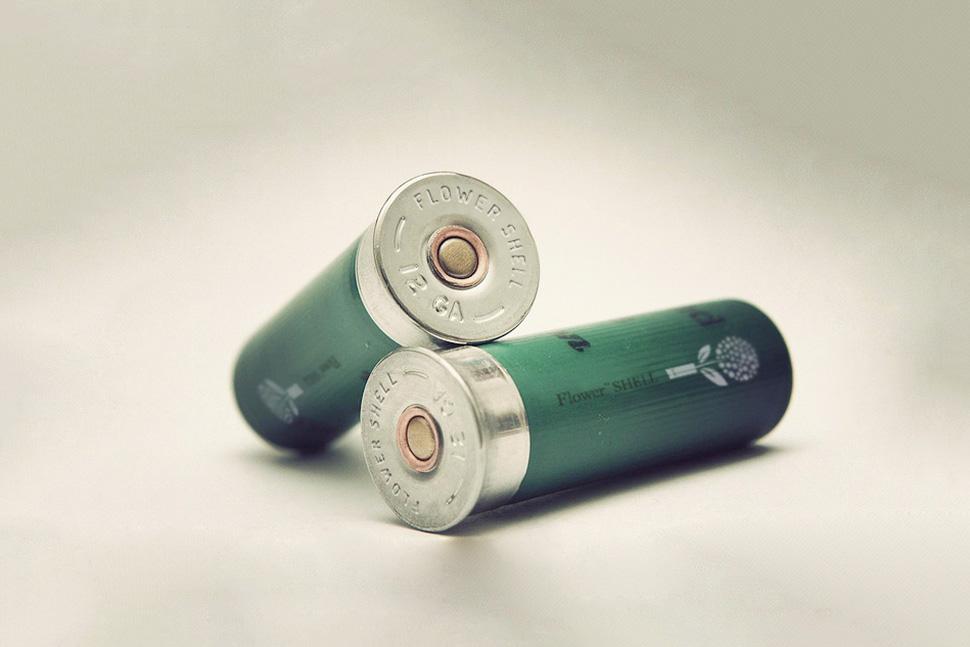
What’s a Flower Shell you ask? It’s exactly what it sounds like: a shotgun shell loaded with flower seeds. And no, just to clarify, you don’t stuff these things in the ground like little biodegradeable bulbs and wait for ‘em to sprout either – you actually load them into a shotgun and blast them into the soil like Rambo. The shells are standard 12 gauge (0.729 in, 18.5 mm) shotgun ammunition, but instead of being filled with birdshot or buckshot, they’re loaded with one of twelve different seed types.  You can currently blast your choice of cornflower, daisy, poppy, sunflower, clematis, columbine, lavender, sweet pea, lupine, carnation, peony, or an assortment of wildflowers.

To ensure that you’ve got the proper level of firepower for the seeds, the amount of gunpowder in each shell has been reduced in proportion to the type of seeds it’s loaded with. That means they’re ideal for violently reseeding your garden beds, but probably not so great for home protection and self defense. Then again, threatening intruders with a face full of hot peony seeds might be surprisingly effective, but we don’t recommend that you give it a shot (no pun intended).

Unfortunately, Flower Shells aren’t in large-scale production at this point, but it’s creators have made and tested a handful of them, which you can see in the video below. We’ll keep you posted on availability, but for the time being you can find out more at FlowerShells.com

Read more: http://www.digitaltrends.com/home/flowershells-let-plant-garden-shotgun/#ixzz2q1me2Zaz
Follow us: @digitaltrends on Twitter | digitaltrendsftw on Facebook

3 Comments

Filed under Humor and Observations

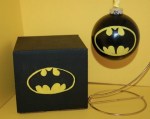
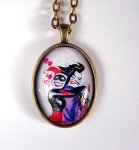
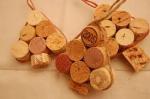
Strange Christmas Tree Ornaments

Leave a comment

December 23, 2013 · 9:06 pm

Cow Fart Apocalypse!

Big methane burp: Cow farts a greater problem than EPA previously thought, study says

Published November 26, 2013

Associated Press
  • cows.jpg
    AP GRAPHICSBANK
  • 0e10a3e0b9f52327440f6a70670069d4.jpg

    A Cessna plane, making continuous observations of carbon dioxide, flying over an Atmospheric Radiation Measurement tower used by the Energy Department near the town of Lamont, Oklahoma. (AP PHOTO/ROY KALTSCHMIDT, LAWRENCE BERKELEY NATIONAL LABORATORY)

  • cows feed at dairy farm.jpg

    July 16, 2013: Cows feed at a dairy owned by Lucas Loganberg and his family, that sits on one of the proposed routes of California’s high-speed rail system, near Hanford, Calif. (AP PHOTO/RICH PEDRONCELLI)

WASHINGTON –  The United States is spewing 50 percent more methane — a potent heat-trapping gas — than the federal government estimates, a new comprehensive scientific study says. Much of it is coming from just three states: Texas, Oklahoma and Kansas.

That means methane may be a bigger global warming issue than thought, scientists say. Methane is 21 times more potent at trapping heat than carbon dioxide, the most abundant global warming gas, although it doesn’t stay in the air as long.

Much of that extra methane, also called natural gas, seems to be coming from livestock, including manure, belches, and flatulence, as well as leaks from refining and drilling for oil and gas, the study says. It was published Monday in the Proceedings of the National Academy of Science.

The study estimates that in 2008, the U.S. poured 49 million tons of methane into the air. That means U.S. methane emissions trapped about as much heat as all the carbon dioxide pollution coming from cars, trucks, and planes in the country in six months.

While the world has a good handle on how much carbon dioxide is pumped into the air, scientists have been more baffled by methane emissions.

That’s more than the 32 million tons estimated by the U.S. Environmental Protection Administration or the nearly 29 million tons reckoned by the European Commission.

“Something is very much off in the inventories,” said study co-author Anna Michalak, an Earth scientist at the Carnegie Institution for Science in Stanford, Calif. “The total U.S. impact on the world’s energy budget is different than we thought, and it’s worse.”

EPA spokeswoman Alisha Johnson said her agency hasn’t had time to go through the study yet, but hopes it will help “refine our estimates going forward.”

While the world has a good handle on how much carbon dioxide is pumped into the air, scientists have been more baffled by methane emissions. They have had to use computer models to estimate how much methane is going into that air.

This study, however, was based on nearly 13,000 measurements from airplane flights and tall towers, the most used in any such research.

The information was collected in 2008, right at the beginning of the natural gas boom from hydraulic fracturing. So these measurements, which will be repeated for 2012, don’t include much impact from fracking, Michalak said. Studies recently have shown conflicting results about how much methane escapes during fracking and other forms of fossil fuel drilling.

Outside experts praised the study. Robert Howarth at Cornell University called “it very compelling and quite important. This is the most comprehensive study yet.”

Michalak said because of the way they measured methane — just looking for it in the air as opposed to tracking it from a source — it is hard to say what is putting more methane into the air. But she said by looking at concentrations — especially within Texas, Oklahoma and Kansas — the scientists have a good idea: Cows, oil and gas.

Nearly one-quarter of the U.S. methane emissions came from those three states. Texas is by far and away the No. 1 state for refineries that turn oil into gasoline. Texas and Oklahoma have been big oil and gas drilling states and Kansas is a big cow state.

Cows seem to be spewing twice the methane that scientists previously thought, Michalak said.

While burps and flatulence are part of the methane emission from cattle, University of California Santa Barbara professor Ira Leifer said a bigger factor is manure.

“If you shovel it into an artificial lagoon you are creating the perfect production for methane, but it cuts down on the smell and your neighbors complain less,” he said.

___

Online:

Journal: http://www.pnas.org

___

Seth Borenstein can be followed at http://twitter.com/borenbears

3 Comments

Filed under Humor and Observations