Category Archives: Humor and Observations

The Old Company Store – Now Called Student Loans

Tennessee Ernie Ford sang the tune, “You load sixteen tons and what do you get?  Another day older and deeper in debt.  St. Peter don’t you call me cause I can’t go…I owe my soul to the company store.”  You see companies would work you and pay you in scrip.  The scrip was good at the company store where you could buy food and other items.  The gimmick is that the more you work the more you got into debt.  You were basically a slave.

company store

Here is the new song for our generation – “You take fifteen credits and what do you get?  More indoctrination and deeper in debt.  St. Peter don’t you call me cause I can’t go…I owe my soul to the federal government.”

So how did this happen?  There are three ways colleges get money – tuition, grants, and taxes.  Public colleges want to grow just as much as private colleges.  To grow means more faculty, nicer campuses, better artwork, libraries and laboratories.  At some point, tax support competes against other things.  Parents and kids can only spend so much because they only have so much.  Enter the student loan era.  Have the parents and children go into debt so they can pay money they don’t have.  It increased college growth and tuition costs by 400 times the rate of growth of the economy.

Then the federal government looked out and realized that banks were making a profit.  The federal government likes to get taxes and not have to compete with the private sector.  So in 2010 – in Obamacare – yes the healthcare law, Congress and the President took away the ability of banks to issue student loans and had the federal government do so instead.  They said it would be more affordable for the students.  In reality, the Consumer Financial Protection Bureau estimates that there 38 million student loan borrowers in the United States and the total debt load has passed $1.1 trillion. The Project on Student Debt has estimated that 66 percent of graduating college seniors in 2011 had some student loan debt, with an average balance of $26,600.

Bottom line – the federal government took over a program that was making $51 billion in profits each year.  That money now goes into the federal coffers.  But of course that brought down costs for students right?  Of course not, the government bureaucracy always wants more.  $51 billion that the greedy banks got is not enough, we need to raise interest rates on loans from 3.4% the greedy banks charged to 8.75% through the federal government.  That would have raised “profit” to the federal government to over $131 billion per year so they could spend it on more programs.  It would have also helped out colleges who get a piece of that back.

tuition

Students protested, so the benevolent Congress brought the rate down to 4% for a few years, with a guarantee it won’t rise over 8.5%.  Wow.  Now you are supposed to thank them for saving you.  There was once a huge differential between earnings of a college graduate and a non-graduate.  Now those differentials only exist in key fields.  Many technical schools are churning out high paid workers with little or no debt.  So the government understands that right?

Of course not.  The federal government is using its control over students to force them into fields and areas of its choice.  Want to pay off your medical student loans?  Ok, be a general practice physician in one of the underserved areas.  Or join Americorps or whatever new program we devise.  It’s the old company store.  Get your education from government, owe your life to government, do what government tells you.  Don’t want to play?  Then the IRS suddenly gets interested in your delinquent debt and all the tax consequences.

Any time the government tells you they are taking over a chunk of the private sector to protect you from greedy businessman, know what is going to happen next.

2 Comments

Filed under Humor and Observations, Uncategorized

Could the Government Get a Search Warrant for Your Thoughts?

Why remain silent if they can just read your mind?

JUL 26 2013
From StumbleUpon From The Atlantic
C06086.jpgU.S. National Library of Medicine

We don’t have a mind reading machine. But what if we one day did? The technique of functional MRI (fMRI), which measures changes in localized brain activity over time, can now be used to infer information regarding who we are thinking aboutwhat we have seen, and the memories we are recalling. As the technology for inferring thought from brain activity continues to improve, the legal questions regarding its potential application in criminal and civil trials are gaining greater attention.

Last year, a Maryland man on trial for murdering his roommate tried to introduce results from an fMRI-based lie detection test to bolster his claim that the death was a suicide. The court ruled (PDF) the test results inadmissible, noting that the “fMRI lie detection method of testing is not yet accepted in the scientific community.” In a decision last year to exclude fMRI lie detection test results submitted by a defendant in a different case, the Sixth Circuit was even more skeptical, writing (PDF) that “there are concerns with not only whether fMRI lie detection of ‘real lies’ has been tested but whether it can be tested.”

So far, concerns regarding reliability have kept thought-inferring brain measurements out of U.S. (but not foreign) courtrooms. But is technology theonly barrier? Or, if more mature, reliable brain scanning methods for detecting truthfulness and reading thoughts are developed in the future, could they be employed not only by defendants hoping to demonstrate innocence but also by prosecutors attempting to establish guilt? Could prosecutors armed with a search warrant compel an unwilling suspect to submit to brain scans aimed at exploring his or her innermost thoughts?

The answer surely ought to be no. But getting to that answer isn’t as straightforward as it might seem. The central constitutional question relates to the Fifth Amendment, which states that “no person … shall be compelled in any criminal case to be a witness against himself.” In interpreting the Fifth Amendment, courts have distinguished between testimonial evidence, which is protected from compelled self-incriminating disclosure, and physical evidence, which is not. A suspected bank robber cannot refuse to participate in a lineup or provide fingerprints. But he or she can decline to answer a detective who asks, “Did you rob the bank last week?”

So is the information in a brain scan physical or testimonial? In some respects, it’s a mix of both. As Dov Fox wrote in a 2009 law review article, “Brain imaging is difficult to classify because it promises distinctly testimonial-like information about the content of a person’s mind that is packaged in demonstrably physical-like form, either as blood flows in the case of fMRI, or as brainwaves in the case of EEG.” Fox goes on to conclude that the compelled use of brain imaging techniques would “deprive individuals of control over their thoughts” and be a violation of the Fifth Amendment.

But there is an alternative view as well, under which the Fifth Amendment protects only testimonial communication, leaving the unexpressed thoughts in a suspect’s head potentially open to government discovery, technology permitting. In a recent law review article titled “A Modest Defense of Mind Reading,” Kiel Brennan-Marquez writes that “at least some mind-reading devices almost certainly would not” elicit “communicative acts” by the suspect, “making their use permissible under the Fifth Amendment.” Brennan-Marquez acknowledges that compelled mind-reading would raise privacy concerns, but argues that those should be addressed by the Fourth Amendment, which prohibits unreasonable searches and seizures.

That doesn’t seem right. It would make little sense to provide constitutional protection to a suspected bank robber’s refusal to answer a detective’s question if the thoughts preceding the refusal–e.g., “since I’m guilty, I’d better not answer this question”–are left unprotected. Stated another way, the right to remain silent would be meaningless if not accompanied by protection for the thinking required to exercise it.

And if that weren’t enough, concluding that compelled brain scans don’t violate the Fifth Amendment would raise another problem as well: In a future that might include mature mind-reading technology, it would leave the Fourth Amendment as the last barrier protecting our thoughts from unwanted discovery. That, in turn, would raise the possibility that the government could get a search warrant for our thoughts. It’s a chilling prospect, and one that we should hope never comes to pass.

2 Comments

Filed under Humor and Observations

China’s new doughnut-shaped hotel

A look at China’s new doughnut-shaped hotel

Published July 23, 2013

FoxNews.com
  • donuthotel.jpg
    Starwood Hotels & Resorts

It’s the newest concept building to mark China’s skyline.

Following the opening of the world’s largest building where the sun shines 24/7, and the construction of a five-star ‘groundscaping’ hotel built into a former mine, this hotel has a unique shape all its own: a glowing doughnut.

Officially known as Sheraton Huzhou Hot Spring Resort, this 27-story building is located in the city of Huzhou, near Shanghai.  Designed by Beijing-born architect Ma Yansong, the hotel appears to give off the appearance of a horseshoe, though the bottom ends are connected by two underground floors.

According to Sheraton’s website, the resort offers 321 spacious guest rooms, including 44 suites and 39 villas, all with private balconies.  The opulent lobby has 20,000 Swarovski and European natural crystal lamps on its ceiling which are arranged in a wave-like formation, and the  floor is paved with Afghanistan White Jade and Tiger’s Eye Stone from Brazil.

The hotel also features the company’s “Shine Spa for Sheraton,” with facilities including a steam room, saunas, and a hydrotherapy pool in each locker room.  For dining options, guests can choose from three restaurants and two lounges for an array of domestic and international food.

Currently in a soft-open phase, the hotel will officially open to the public in October 2013, and rooms are expected to cost about $400 per night.

Read more: http://www.foxnews.com/travel/2013/07/23/donut-shaped-hotel/?intcmp=features#ixzz2aJnx2Q7m

Leave a comment

Filed under Humor and Observations

Sand Dunes Threaten Mos Espa and Tatooine

Sand dunes expected to bury decade-old Star Wars Tatooine set

Saturday, July 20, 2013 – 3:02pm

Fans might’ve managed to save the classic site that served as Uncle Owen’s home on Tatooine, but it sounds like Mother Nature is on the verge of claiming another iconic Star Wars set in the Tunisian desert.

More than $10,000 was raised last year to restore the Lars Homestead that was featured in Star Wars Episode IV: A New Hope, Star Wars Episode II: Attack of the Clones and in Star Wars Episode III: Revenge of the Sith.

That’s awesome, but it sounds like the bustling sand dunes are now coming for the Tatooine spaceport site also located in the nation’s deserts. The sets that served as the city of Mos Espa inStar Wars Episode I: The Phantom Menace are still standing at the moment, but experts predict sand dunes could completely cover the site soon.

The BBC reports that scientists have been using the set as a fixed point to track the sand dunes — since structures aren’t typically built in those areas — and the results show they’re about to get overrun. Without intervention, the site will continue to be covered by sand in the coming years, until the dune eventually passes over.

But in the meantime, it could do a lot of damage to the classic sci-fi set. So c’mon, Star Wars fans, let’s save this one, too!

1 Comment

Filed under Humor and Observations

Lost medieval mansion found at UK construction site

Lost medieval mansion found at UK construction site

By Sasha Bogursky

Published July 25, 2013

FoxNews.com
  • wessexarch1.jpg

    British archaeologists have uncovered the remains of stone foundations in a pattern which suggests that there may have been a series of medieval buildings on a modern construction site. The mystery lies in exactly what the buildings were once used for. (Wessex Archaeology)

  • wessextile.jpg

    These medieval decorated floor tiles suggest that these were substantial buildings of high status. (Wessex Archaeology)

  • wessexday.jpg

    Somerset locals visit the site on July 13th to learn more about the mysterious medieval structure at Longforth Farm on Archaeology Day; hosted by Bloor Homes. (Rob Perrett/Wessex Archaeology)

It sounds like a case for Sherlock Holmes: a 900-year-old medieval manor mysteriously vanishes, only to be uncovered later by British archaeologists.

The ancient site has been stripped of its materials except for the foundation — and there is no record of it ever existing.

Got chills? So do the archaeologists who discovered it.

“This is a significant find and therefore very exciting, particularly as there are no documentary records that such a site ever existed here,” said Wessex Archaeology’s senior buildings archaeologist Bob Davis, who participated in the excavation.

Excavators from the company arrived on April 8 at the site in Longforth Farm in Wellington, Somerset, a small agricultural county in southwest England. They planned to perform an archaeological dig prior to the construction of a housing development by Bloor Homes, as required by the Somerset Country Council.

PHOTOS: Ancient Maya Cave Exploration

They had no way of knowing their routine excavation would reveal a hidden series of buildings dating to the 12th through 14th century.

“Such things are as rare as hen’s teeth.”

– Bob Davis of Wessex Archaeology 

“This sort of thing turning up — a large medieval building of such high status without any surviving historical records — it’s exceptionally mysterious and strange,” senior historic environment officer for the Somerset Country Council Steve Membery told ThisIsCornwall.co.uk.

“It looks as if it’s a previously unrecorded, undocumented, high-status, ecclesiastical manor house,” Davis told the British paper. “Such things are as rare as hen’s teeth.”

All that remains from what appears to have been an impressive, affluent mansion is the stone foundation and a few leftover artifacts. It is expected that antiquities thieves would steal valuables from the site, but archaeologists are literally picking at scraps to find out what happened to the doors, windows, stones and other materials that are to be found in a large manor.

They were able to uncover stunningly glazed ceramic roof tiles and carefully decorated floor tiles, however, suggesting the buildings were of high status, perhaps used for religious services.

But much like the American colony of Roanoke, N.C., whomever used the buildings left no trace or record of their existence; they appear to have simply vanished.

“We do not yet know who owned or used the buildings,” community and education officer for Wessex Archaeology Laura Joyner told FoxNews.com. “They appear to form a distinct complex of buildings.”

The most recent discovery has helped shed some light on the use for some of the structures.

According to Wessex Archaeology, the two tiles pictured below confirm the existence of private chambers and a possible chapel at the Longforth Farm site.

Milford Sound in New Zealand

The tile on the left includes a checkered agent or shield motif, which possibly relates to the family name of St. Barbe, a medieval aristocratic British family. Centuries later, Ursula St. Barbe, the daughter of Henry St. Barbe from Somerset with the same last name, was a lady in the court of Queen Elizabeth I of England in the late 1500s.

RELATED: Ancient Graffiti Found in Rome’s Colosseum 

The second tile, similar to one found at Glastonbury Abbey, is a depiction of a helmeted King Richard I (1189-1199) on horseback, charging his enemy. The tile “would originally have had an opposing tile showing Saladin, Sultan of Egypt, also in a symbolic combat pose,” according to Wessex Archaeology. “These two great adversaries were involved in the Third Crusade (1189–1192) and are often depicted together on this type of floor tile.”

Based on the artifacts, the owners of the buildings were wealthy and powerful. So what happened to those medieval VIPs?

The approximately 1,400 locals who flocked to the site when it opened to the public want to know as well.

“Hopefully, this fills in a missing bit of the jigsaw of medieval Somerset,” Davis added.

“Excavation is ongoing, but will come to an end next week,” Joyner confirmed to FoxNews.com. Wessex archaeologists hope to have more answers soon.

Read more: http://www.foxnews.com/science/2013/07/25/medieval-mansion-mysteriously-appears/?intcmp=features#ixzz2aHlTvYxA

4 Comments

Filed under Humor and Observations

Pixar Made 14 Films in the Same Alternate Universe? (see for yourself)

Pixar fan theory that will blow your mind 

JULY 20, 2013

FOLLOW  ON TAPITURE

 

Leave a comment

Filed under Humor and Observations

Raspberry Pi is Changing Our World

If you have not heard about Raspberry Pi, it is a very cheap computer circuit board that is changing the world.  It can be used to turn normal things into computerized robots and devices.  Read below and have your mind blown…

World’s cheapest computer gets millions tinkering

By Judith Evans

Published July 20, 2013

  • photo_1374378770461-1-HD.jpg

    Japanese engineer Shota Ishiwatari displays the humanoid robot “Rapiro” which works with a “Raspberry Pi” in Tokyo on July 8, 2013. Raspberry Pi, the world’s cheapest computer, costing just $25 (??17, 19.50 euros), has astonished its British creators by selling almost 1.5 million units in 18 months. (AFP)

  • photo_1374378828553-1-HD.jpg

    Japanese engineer Shota Ishiwatari displays the humanoid robot “Rapiro” which works with a “Raspberry Pi” circuit board in Tokyo on July 8, 2013. The Raspberry Pi is now powering robots in Japan and warehouse doors in Malawi, photographing astral bodies from the United States and helping to dodge censorship in China. (AFP)

LONDON (AFP) –  It’s a single circuit board the size of a credit card with no screen or keyboard, a far cry from the smooth tablets that dominate the technology market.

But the world’s cheapest computer, costing just $25 (??17, 19.50 euros), has astonished its British creators by selling almost 1.5 million units in 18 months.

The Raspberry Pi is now powering robots in Japan and warehouse doors in Malawi, photographing astral bodies from the United States and helping to dodge censorship in China.

“We’re closing in on one and and half million (sales) for something that we thought would sell a thousand,” said Eben Upton, executive director of the Raspberry Pi Foundation.

“It was just supposed to be a little thing to solve a little problem.

“We’ve sold many more to children than we expected to sell, but even more to adults. They’re using it like Lego to connect things up.”

The device, which runs the open-source Linux operating system, was designed as an educational tool for children to learn coding.

But its potential for almost infinite tinkering and customisation has fired up the imaginations of hobbyists and inventors around the world.

Tokyo inventor Shota Ishiwatari has created a small humanoid robot run by a Pi, which can tell you the weather, manage your diary and even make coffee.

“I wanted to create something by using a 3D printer and the Raspberry Pi – two cool items,” he told AFP, adding that he also wanted to demonstrate the potential of the microcomputer.

“Many Raspberry Pi users did not know how to have fun with the chip. I wanted to present practical ways to play with it.”

Upton and his colleagues first thought of creating a cheap computer suited to programming when they were teaching computer science at Cambridge University.

They noticed that children of the wired generation lacked the day-to-day experience of coding that was so formative for the computer geeks who grew up in the 1980s.

“They didn’t have the grungy familiarity with the dirty bits, the hacking,” Upton told AFP.

“The theory of computer science is maths, but the practice is a craft, like carpentry.”

Upton reminisces happily about his childhood coding on a BBC Micro, a rugged early personal computer from 1982.

Back then, you had to know a computer “language” in order to use one at all. But home computers are now so complex that parents often ban children from interfering with the underlying code.

Upton and his colleagues saw that developments in technology meant something like the Micro could now be created for a fraction of the cost, in pocket size, with the capacity to run multimedia programmes.

The team behind the Pi grew as the project developed; it now includes David Braben — the designer of a classic Micro game, Elite — and tech entrepreneur and investor Jack Lang.

By 2012, with Upton now working for a chip design firm, the Pi was ready to launch.

Demand for the device, assembled in Wales, was so high that the websites of its distributors crashed.

User groups called Raspberry Jams now meet monthly in cities from Manchester to Singapore to share ideas.

A Raspberry Jam brought together the team behind a Pi camera that will photograph rhinos and other endangered animals in east Africa, generating data on their habits and on poaching.

The Instant Wild system, backed by the Zoological Society of London, already operates in several countries, beaming images via satellite to park rangers and to an app that crowdsources identifications of animals.

But by replacing expensive purpose-built equipment with cheaper Raspberry Pis, Instant Wild hopes to vastly expand its work.

A grid of 100 Pi cameras will be set up in 2015 on a Kenyan ranch, while another Pi will make its way to Antarctica to record penguin behaviour.

“It used to be very expensive — you’d have to run a laptop, with a huge car battery to power the thing. This saves countless power and it’s easy for it to send out alerts automatically,” said Alasdair Davies, technical advisor to the project.

Upton, however, is focused closer to home.

The Raspberry Pi Foundation is nonprofit and the design freely available, so he and his team will not be retiring on the proceeds of their success.

Instead they are working on software to make the Pi more accessible for children without expert help, and Upton remains intent on improving computer education.

The foundation is in discussions with the British government on a new IT curriculum.

For the country that invented some of the earliest computers, Upton feels that teaching coding should be a matter of national pride.

“The definition of computing is being reworked to be less about PowerPoint and more about computer programming — the useful stuff. The real stuff,” he said.

Read more: http://www.foxnews.com/world/2013/07/20/world-cheapest-computer-gets-millions-tinkering/?intcmp=obnetwork#ixzz2aHjSnjI9

2 Comments

Filed under Humor and Observations

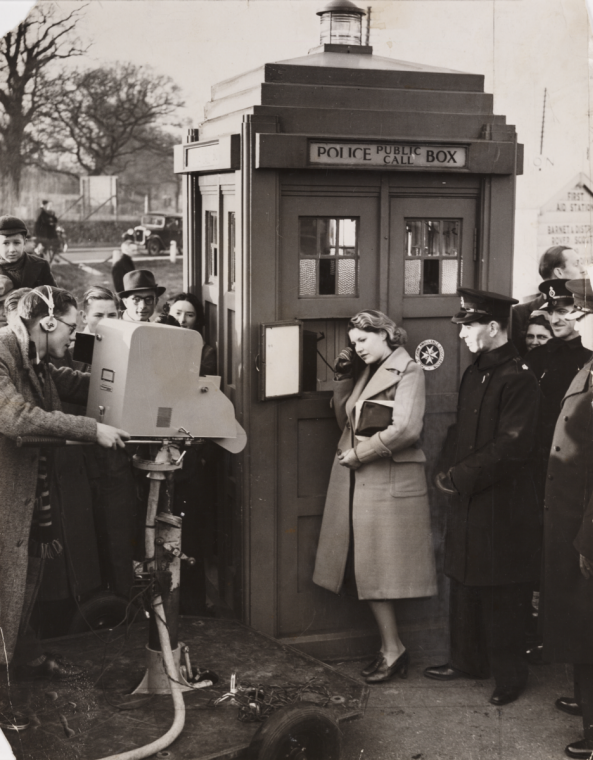
Real Picture of the Tardis from 1939.

In 1939, Dr. Who arrives in London to save the world.  The BBC, unwitting of the significance of the public call box, use it to film a public service advertisement on vehicle safety and what to do if you are in a driving accident.  Meanwhile, the Doctor and his Companion wait inside impatiently, hoping alien forces do not win before the film crew leaves them alone.

At least, that is the way I see it…


tardis

A photograph of the making of a programme by the BBC about driving errors, taken by Saidman in 1939 for the Daily Herald.

2 Comments

Filed under Humor and Observations

More Awesome Cosplay Pictures

Once again, more awesome cosplay pictures.  For more, type “cosplay” into the search block on my home page.  I have posted about twenty sets so far.  Keep the awesome pictures coming in.

Leave a comment

Filed under Humor and Observations

Amazing Miniature Food Artwork

You won’t believe how awesome this artwork is.  Seriously.

Most Amazing Miniature Food Artworks by Shay Aaron

By , on December 17, 2011

– See more at: http://thewondrous.com/most-amazing-miniature-food-artworks-by-shay-aaron#sthash.naejbece.dpuf

Shay Aaron is a brilliant artist from Israel who makes the most astonishing miniature food jewelry. These foodstuffs look so beautiful that we would desire to eat them.

Actually, there’s a whole market out there for miniature food. Not actual stuff you can eat, but beautifully hand made designs of steaks, burgers, pies, vegetables, eggs and pretty much anything you can think of.

– See more at: http://thewondrous.com/most-amazing-miniature-food-artworks-by-shay-aaron#sthash.naejbece.dpuf

5 Comments

Filed under Humor and Observations, Uncategorized