Category Archives: Uncategorized

HD 3D Sistine Chapel

This is one of the coolest HD interactive 3d renderings I have seen, simply because of the subject – The Sistine Chapel.  All I can say is WOW!  Can’t make the trip to Rome to visit The Vatican and hope to see it in person?  Enjoy.  The artwork is truly awe inspiring.  You can drag your mouse around to see floor, ceiling, front, back, everything.  Use your mouse wheel to zoom in or out.

Here is the link:

http://www.stumbleupon.com/su/1kpcQm/:84$b-iEc:U@lNLkDt/www.vatican.va/various/cappelle/sistina_vr/index.html/

This photo does it no justice:

sistine chapel

2 Comments

Filed under Humor and Observations, Uncategorized

Ancient Europeans mysteriously vanished 4,500 years ago

Ancient Europeans mysteriously vanished 4,500 years ago

Published April 23, 2013

LiveScience

  • ancient-euros.jpg

    DNA taken from ancient European skeletons reveals that the genetic makeup of Europe mysteriously transformed about 4,500 years ago, new research suggests. Here, a skeleton, not used in the study, but from the same time period, that was excavated from a grave in Sweden. (öran Burenhult)

The genetic lineage of Europe mysteriously transformed about 4,500 years ago, new research suggests.

The findings, detailed today (April 23) in the journal Nature Communications, were drawn from several skeletons unearthed in central Europe that were up to 7,500 years old.

“What is intriguing is that the genetic markers of this first pan-European culture, which was clearly very successful, were then suddenly replaced around 4,500 years ago, and we don’t know why,” said study co-author Alan Cooper, of the University of Adelaide Australian Center for Ancient DNA, in a statement. “Something major happened, and the hunt is now on to find out what that was.”

The new study also confirms that people sweeping out from Turkey colonized Europe, likely as a part of the agricultural revolution, reaching Germany about 7,500 years ago.

For decades, researchers have wondered whether people, or just ideas, spread from the Middle East during the agricultural revolution that occurred after the Mesolithic period.

To find out, Cooper and his colleagues analyzed mitochondrial DNA, which resides in the cells’ energy-making structures and is passed on through the maternal line, from 37 skeletal remains from Germany and two from Italy; the skeletons belonged to humans who lived in several different cultures that flourished between 7,500 and 2,500 years ago. The team looked a DNA specifically from a certain genetic group, called haplogroup h, which is found widely throughout Europe but is less common in East and Central Asia.

The researchers found that the earliest farmers in Germany were closely related to Near Eastern and Anatolian people, suggesting that the agricultural revolution did indeed bring migrations of people into Europe who replaced early hunter-gatherers.

But that initial influx isn’t a major part of Europe’s genetic heritage today.

Instead, about 5,000 to 4,000 years ago, the genetic profile changes radically, suggesting that some mysterious event led to a huge turnover in the population that made up Europe.

The Bell Beaker culture, which emerged from the Iberian Peninsula around 2800 B.C., may have played a role in this genetic turnover. The culture, which may have been responsible for erecting some of the megaliths at Stonehenge, is named for its distinctive bell-shaped ceramics and its rich grave goods. The culture also played a role in the expansion of Celtic languages along the coast.

“We have established that the genetic foundations for modern Europe were only established in the Mid-Neolithic, after this major genetic transition around 4,000 years ago,” study co-author Wolfgang Haak, also of the Australian Center for Ancient DNA, said in a statement. “This genetic diversity was then modified further by a series of incoming and expanding cultures from Iberia and Eastern Europe through the Late Neolithic.”

Read more: http://www.foxnews.com/science/2013/04/23/ancient-europeans-mysteriously-vanished-4500-years-ago-660620043/?intcmp=features#ixzz2RQK3fgeo

Leave a comment

Filed under Uncategorized

Invisible Life on Earth?

Not that I agree, but interesting article…

Life on Earth… but not as we know it

Never mind aliens in outer space. Some scientists believe we may be sharing the planet with ‘weird’ lifeforms that are so different from our own they’re invisible to us.

Animal figures cut into desert varnish

Animal figures cut into desert varnish by Native Americans in Utah. Photograph: BWAC Images/Alamy

Across the world’s great deserts, a mysterious sheen has been found on boulders and rock faces. These layers of manganese, arsenic and silica are known as desert varnish and they are found in the Atacama desert in Chile, the Mojave desert in California, and in many other arid places. They can make the desert glitter with surprising colour and, by scraping off pieces of varnish, native people have created intriguing symbols and images on rock walls and surfaces.

  1. Weird Life: The Search for Life That Is Very, Very Different from Our Own
  2. by David Toomey

How desert varnish forms has yet to be resolved, despite intense research by geologists. Most theories suggest it is produced by chemical reactions that act over thousands of years or by ecological processes yet to be determined.

Professor Carol Cleland, of Colorado University, has a very different suggestion. She believes desert varnish could be the manifestation of an alternative, invisible biological world. Cleland, a philosopher based at the university’s astrobiology centre, calls this ethereal dimension the shadow biosphere. “The idea is straightforward,” she says. “On Earth we may be co-inhabiting with microbial lifeforms that have a completely different biochemistry from the one shared by life as we currently know it.”

It is a striking idea: We share our planet with another domain of life that exists “like the realm of fairies and elves just beyond the hedgerow”, as David Toomey puts it in his newly publishedWeird Life: The Search for Life that is Very, Very Different from Our Own. But an alternative biosphere to our own would be more than a mere scientific curiosity: it is of crucial importance, for its existence would greatly boost expectations of finding life elsewhere in the cosmos. As Paul Davies, of Arizona State University, has put it: “If life started more than once on Earth, we could be virtually certain that the universe is teeming with it.”

However, by the same token, if it turns out we have failed to realise that we have been sharing a planet with these shadowy lifeforms for eons, despite all the scientific advances of the 19th and 20th centuries, then we may need to think again about the way we hunt for life on other worlds. Robot spacecraft – such as the Mars rover Curiosity – are certainly sophisticated. But what chance do they have of detecting alien entities if the massed laboratories of modern science have not yet spotted them on our own planet? This point is stressed by the US biologist Craig Venter. As he has remarked: “We’re looking for life on Mars and we don’t even know what’s on Earth!”

Cleland – working with her Colorado colleague Shelley Copley – outlined her vision of the shadow biosphere in a paper in 2006 in theInternational Journal of Astrobiology. Other astrobiologists have also proposed ideas along these lines. They include Chris McKay, who is based at Nasa’s Ames Research Centre, California, and Paul Davies, who put forward his vision of this alternative living zone in a paper in Astrobiology in 2005.

These researchers believe life may exist in more than one form on Earth: standard life – like ours – and “weird life”, as they term the conjectured inhabitants of the shadow biosphere. “All the micro-organisms we have detected on Earth to date have had a biology like our own: proteins made up of a maximum of 20 amino acids and a DNA genetic code made out of only four chemical bases: adenine, cytosine, guanine and thymine,” says Cleland. “Yet there are up to 100 amino acids in nature and at least a dozen bases. These could easily have combined in the remote past to create lifeforms with a very different biochemistry to our own. More to the point, some may still exist in corners of the planet.”

Science’s failure to date to spot this weird life may seem puzzling. The natural history of our planet has been scrupulously studied and analysed by scientists, so how could a whole new type of life, albeit a microbial one, have been missed? Cleland has an answer. The methods we use to detect micro-organisms today are based entirely on our own biochemistry and are therefore incapable of spotting shadow microbes, she argues. A sample of weird microbial life would simply not trigger responses to biochemists’ probes and would end up being thrown out with the rubbish.

That is why unexplained phenomena like desert varnish are important, she says, because they might provide us with clues about the shadow biosphere. We may have failed to detect the source of desert varnish for the simple reason that it is the handiwork of weird microbes which generate energy by oxidising minerals, leaving deposits behind them.

The idea of the shadow biosphere is also controversial and is challenged by several other scientists. “I think it is very unlikely that after 300 years of microbiology we would not have detected such organisms despite the fact that they are supposed to have a different biochemistry from the kind we know about today,” says Professor Charles Cockell, of the UK Centre for Astrobiology at Edinburgh University. “It is really quite unlikely,” adds Cockell, whose centre will be officially opened this week at a ceremony in Edinburgh.

Ways need to be found to determine whether or not the shadow biosphere exists, says Dimitar Sasselov, professor of astronomy at Harvard University and director of the Harvard Origins of Life Initiative. “If you want a clue you can count up the amount of carbon that is emitted by living things – cows, sheep, grass, plants, forests and all the planet’s bacteria. When you do, you find there is a discrepancy of around 5% when you compare the amount given off from Earth’s standard biosphere and the amount you find in the atmosphere.”

In other words, there is slightly too much carbon dioxide in the atmosphere than can be explained by the emissions of standard lifeforms on Earth. There could be an error in these calculations, of course. Alternatively, the shadow biosphere could be responsible for this excess, says Sasselov. “There is plenty of room for a shadow biosphere. That is clear. Certainly, it is not true, as some allege, that we have strong evidence to show that it does not exist. In fact, the opposite is true: we do not have good enough evidence to dismiss it.”

A key point to note is that scientists – although describing the inhabitants of the shadow biosphere as weird – still assume they will be carbon-based entities. Complex chemistry based on other elements, such as silicon, is possible, they acknowledge but these alternatives cannot create the vast range of organic materials that carbon can generate. In other words, the shadow biosphere, if it exists, will almost certainly be inhabited by carbon life, albeit of an alien variety.

“Billions of years ago, life based on different types of carbon biochemistry could have arisen in several places on Earth,” says Cleland. “These varieties would have been based on different combinations of bases and amino acids. Eventually, one – based on DNA and on proteins made from 20 amino acids – formed multicellular entities and became the dominant form of life on Earth. That is why we find that life as we know it, from insects to humans and from plants to birds, has DNA as its genetic code. However, other lifeforms based on different bases and proteins could still have survived – in the shadow biosphere.”

A different prospect is highlighted by Sasselov, who points out that a complex organic chemical can come in two different shapes even though they have the same chemical formula. Each is a mirror-image of the other and are said to have a different chirality. “Amino acids are an example,” says Sasselov. “Each comes in a right-handed version and a left-handed version. Our bodies – in common with all other lifeforms – only use left-handed versions to create proteins. Right-handed amino acids are simply ignored by our bodies. However, there may be some organisms, somewhere on the planet, that use only right-handed amino acids. They could make up the weird life of the shadow biosphere.”

But how can scientists pinpoint this weird life? Microbes are usually detected in laboratories by feeding nutrients to suspected samples so they grow and expend. Then the resulting cultures can be analysed. A weird lifeform – such as one made only of proteins formed out of right-handed amino acids – will not respond to left-handed nutrients, however. It will fail to form cultures and register its existence.

One solution to this problem is being pursued by Sasselov and colleagues’ Harvard Origins of Life Initiative. They are building an artificial cell – or bionic system – made only of right-handed components including right-handed DNA and right-handed ribosomes. “If there are right-handed lifeforms out there, many of them will be viruses – which will attempt to hijack the DNA of our bionic cells,” adds Sasselov. “When they do that they will leave evidence of their existence. Essentially we are building honey traps to catch any right-handed viruses that might live in the shadow biosphere and so reveal their existence.”

Other scientists suggest a different approach – by looking at Earth’s most inhospitable ecological niches: hot vents on the seafloor, mountaintops, highly saline lakes, Antarctic ice sheets and deserts. Standard lifeforms, mainly bacteria, have been found in these places but only a few. Some niches, researchers speculate, may prove to be just too inhospitable for standard life but may just be tolerable enough to support weird life. Microscopic studies would reveal their existence while standard culture tests would show they had a different biochemistry from standard lifeforms.

Stripes of desert varnishStripes of desert varnish line the canyon walls of Capitol Gorge in Utah. No laboratory has been able to re-create the phenomenon. Photograph: Larry Geddis/AlamyAnd a promising example is provided by the desert varnish proposed as a target by Cleland and backed by David Toomey in Weird Life. “No laboratory microbiologist has been able to coax bacteria or algae to make desert varnish,” he states. “It is also possible that the stuff is the end result of some very weird chemistry but no one has been able to reproduce that either.” So yes, these sites could provide proof of the shadow biosphere’s existence, he argues.

Not surprisingly, Cleland agrees. “The only trouble is that no one has yet got round to investigating desert varnish for weird life,” adds Cleland. “I confess I find that disappointing.”

1 Comment

Filed under Humor and Observations, Uncategorized

Amazing Pencil Art of Diego Fazio

Reposted via The Chive, via Tapiture, via Diego Fazio.

The amazing pencil art of Diego Fazio 

APRIL 20, 2013

FOLLOW  ON TAPITURE

This amazing art was created by Diego Fazio. Check out more of his art HERE


4 Comments

Filed under Humor and Observations, Uncategorized

Haikyoist Art – Photos of Ruins and Decay

This example of Haikyoist photography is reposted from the blog at:

http://www.japanistic.com/blog/tag/nara-dreamland/

There is a Ghost House on my street

nara-dreamland-ruins16

And I am feeling so inspired, I think I might have to photograph it and become a certified Haikyoist.

No-I didn’t know what was either. Basically, it is someone who explores and photographs abandoned properties. But this is no ordinary haunted house style-stuff. Instead, Haikyoists like Michael John Grist explore the forgotten places. This is a hobby I can completely understand, although I’m not sure I can even describe what makes it so compelling. It’s a gut thing.

Here’s how Grist defines Haikyo. “Haikyo’ is a Japanese word that simply means ruin, or abandonment. They’re the places that fell between the cracks; the old mining town in the mountains that died when the copper seams ran dry, the outlandish theme park that failed when the Bubble burst, the US Air Force Base abandoned to nature’s brambles.” (via)

Part of Haikyo, at least according to Grist, is the interaction between spaces abandoned by people, and what happens, naturally, as they are reclaimed by the world around them. I know it’s much more than just the fact that I am visiting Nara in a month that makes me so drawn to Grist’s Nara Dreamland series.

nara-dreamland-ruins10

Grist says that “Nara Dreamland is the epitome of many haikyo dreams; an abandoned theme park with all its roller-coasters and rides still standing…Nara Dreamland opened in 1961, inspired by Disneyland in California. For 45 years its central fantasy castle, massive wooden rollercoaster Aska, and corkscrewing Screwcoaster pulled in the big crowds. By then though it was outdated, and dying a slow death as Universal Studios Japan (built 2001) in nearby Osaka sucked all the oxygen out of the business. It closed its doors permanently in 2006.” (via)

nara-dreamland-ruins27

nara-dreamland-ruins23

nara-dreamland-ruins48

nara-dreamland-ruins49

nara-dreamland-ruins57

nara-dreamland-ruins32

nara-dreamland-ruins35

Why do I want one of these cable cars for my house?

Grist spends time in other Japanese haunts too, and there is plenty to see in hisRuins Gallery.

jungle-park-outside22

An abandoned Jungle Theme Park in Izu.

fort-drake-haikyo9

In fact, it’s difficult to not show you more and more and more.

3 Comments

Filed under Humor and Observations, Uncategorized

Evil and Cowardice

The bombs set for the Boston Marathon were the result of evil and cowardice.  Set to injure the most people at the spot where there would be the most photographers and cameras to capture their despicable acts for publicity.  I will not post any pictures.  I will also not post the names or cause whatever they may be when the perpetrator(s) is caught.  I refuse to be part of any aggrandizement of evil cowards.  If you believe in something, bravely speak out about it.  If you want publicity, try accomplishing something good, or go on some stupid reality show, or better yet, injure yourself on a YouTube video.  Taking innocent lives is the act of a coward and is pure evil.  Sociopaths who care nothing for their fellow people should receive no mercy.

My heart and prayers go out to all the poor souls who were killed or injured in this tragedy, and to their family and loved ones.  I also want to pray for all of those in Boston and around the world, that feel fear right now.  Events like this can add anxiety and fear to many to be seen at large public events, that something will happen to them.  In this world of instant world-wide media, we see every event immediately.  However, the world right now is the safest it has ever been.  The world has always had sociopaths and psychopaths and evil.  We just didn’t hear about them constantly.  Do not lead your life in fear.  If you do, you let evil win.

In World War 2, strategic bombing was used on London and other major cities, later on Germany and its major cities.  Despite the huge losses of life, millions of refugees, and cities destroyed, the effect was opposite the intended.  People of both countries had their morale go up, not down.  They lived underground, they shared, they worked all that much harder.  Oddly enough, the adversity imposed on them made them stronger, with a greater will to fight back.  Even wartime production increased in both nations after all the destruction.  Russia lost 30 million people in WW2, yet became more resolved to fight and increased production.  The Chinese fought on though they lost millions.  The Japanese would have fought on even after Hiroshima and Nagasaki if not for their Emperor stepping in.

Evil cowards never win.  They commit atrocities, but their actions only provide resolve to good and kind people to stand strong.  God bless and comfort those who are suffering today.


Leave a comment

Filed under Humor and Observations, Uncategorized

Women in the Military – History

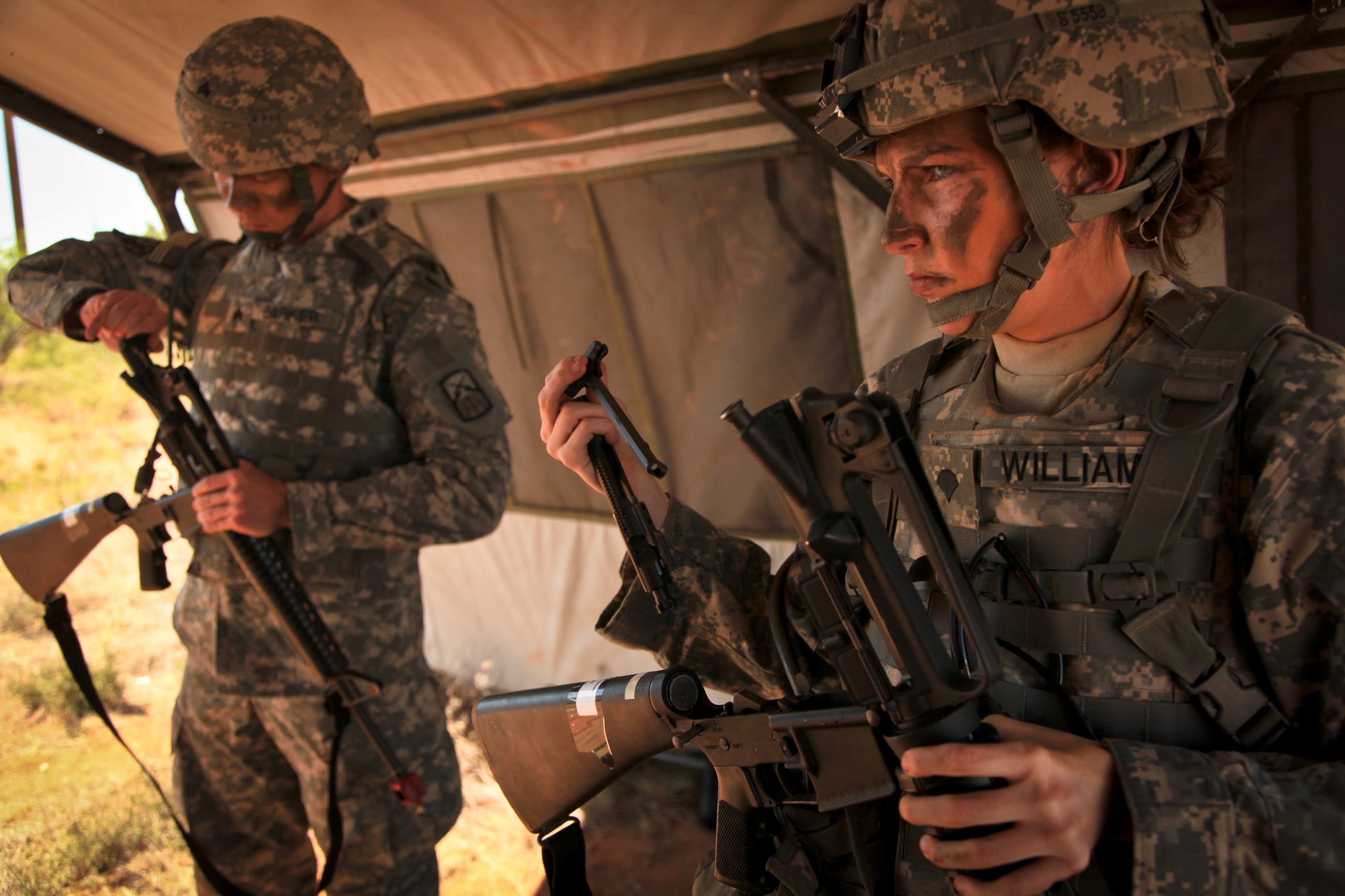
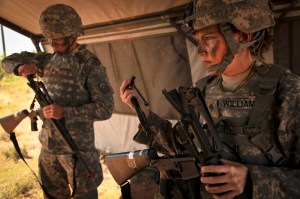
Oddly enough, none of the debaters on the issue of women in the military seem to have any real clue as to why women were excluded from combat in the first place.  It was never because women cannot fight well, nor that they cannot fight alongside men.  The fact is that historically, people went to war over women, to get women.  Women were the most valuable commodity after clean water, food and shelter.  The ancient Trojan War was fought because Troy kept taking women from the Greeks in order to have more women for their city.  The final straw was when one of the kings had his wife taken.  They launched the famous thousand ships because they could tolerate losing their women no more.
womenincombat

The Roman Empire started as a feud between the Romans, a small band, and the Iceni, over women.  If you had women, you could breed and grow as a nation, without them you died off.  Men could be replaced, but not child bearers.  Crudely speaking, one man can keep ten women pregnant, but not the other way around.  Women were simply too valuable to lose in battle.  Still, there is a long history of women fighting anyway.  Queen Boudicea was the Celtic Brittanic Queen who nearly defeated the Romans in England after they were stupid enough to rape her sisters to intimidate her.  The woad women were especially fierce.

That is why I find both sides of the “controversy” to have such strange arguments.  First, one argues women cannot do the same job, or men cannot fight clear headed with them alongside.  This ignores thousands of years of history, and contemporary history of such places as the Soviet Union in World War 2, or modern day Israel where everyone spends two years in the military.  The other side claims women are just like men.  No they are not.  Yes, they can fight, but in a volunteer force, not as many women are as drawn to the military as a career.  If they are fine, if not, don’t force them to go under some equality crusade.

Men and women should have equal rights, pay, privileges and opportunities, but they are not the same.  Women tend to be smaller which is great for flying fighter jets and crawling inside tanks.  It is not so great for carrying a 75 mm mortar, base mount or extra rounds.  Some women are stronger and bigger than some men and can do just fine.  I believe women should be allowed to any job in the military they qualify for, the same as a man.  I am a disabled veteran myself.  I could never have become a Navy seal or an Army ranger.  I am simply not strong enough physically.  We can keep our standards based on each position and men and women will both fill jobs as they can.

My only concern is what happened on somewhat second line units.  In the Navy, on vessels in the Gulf Conflicts, the pregnancy rate skyrocketed.  Men and women on the ships commingled and created progeny.  This by itself is not a problem, other than those women are sent back for nine months out of harm’s way, and their units receive men to replace them that are not part of the team.  Working with a team through drills, exercises and combats creates the most efficient units.  If women are intermixed with men, then birth control needs to be used so as to not disadvantage men with having to stay in the lines, while women return home.  I know it takes two to tango, but statistically, the Navy was ashamed at the sudden burst of pregnancies when the combat started.

Women in the military – YES!  Everyone who wants to serve their country should be able to do so.  Every person should have to qualify for what they do, just as I had to in my field.  Only people who could easily life 90 pounds over their head dead lift were allowed into my specialty (among other requirements).  I worked on classified electronics.  So, I also had to have good depth perception, no problems with color blindness (for reading electric wire colors – kind of important black vs. red), be able to run a mile in 7 minutes with a 60 lb pack, and other objective tasks.  My gender was really irrelevant.  Several women served in my unit, though as a volunteer force, my particular specialty did not attract a lot of women.  Those that did work there did everything as good or bad as the men.

What do you think?  Before you answer, here is a brief summary of women in combat in the United States:

Highlights in the History of Military Women

American Revolution (1775-1783): Women serve on the battlefield as nurses, water bearers, cooks, laundresses and saboteurs.

War of 1812: Mary Marshall and Mary Allen nurse aboard Commodore Stephen Decatur’s ship United States.

Mexican War (1846-1848): Elizabeth Newcom enlists in Company D of the Missouri Volunteer Infantry as Bill Newcom. She marches 600 miles from Missouri to winter camp at Pueblo, Colorado, before she is discovered to be a woman and discharged.

Civil War (1861-1865): Women provide casualty care and nursing to Union and Confederate troops at field hospitals and on the Union Hospital Ship Red Rover. Women soldiers on both sides disguise themselves as men in order to serve. In 1866, Dr. Mary Walker receives the Medal of Honor. She is the only woman to receive the nation’s highest military honor.

Spanish-American War (1898): Thousands of US soldiers sick with typhoid, malaria and yellow fever, overwhelm the capabilities of the Army Medical Department. Dr. Anita Newcomb McGee suggests to the Army Surgeon General that the Daughters of the American Revolution (DAR) be appointed to select professionally qualified nurses to serve under contract to the US Army. Before the war ends, 1,500 civilian contract nurses are assigned to Army hospitals in the US, Hawaii, Cuba, Puerto Rico, Guam and the Philippines, as well as to the Hospital Ship Relief. Twenty nurses die. The Army appoints Dr. McGee Acting Assistant Surgeon General, making her the first woman ever to hold the position. The Army is impressed by the performance of its contract nurses and asks Dr. McGee to write legislation creating a permanent corps of nurses.

1901: Army Nurse Corps is established.

1908: Navy Nurse Corps is established.

World War I (1917-1918): During the course of the war, 21,480 Army nurses serve in military hospitals in the United States and overseas. Eighteen African-American Army nurses serve stateside caring for German prisoners of war (POWs) and African-American soldiers. The Army recruits and trains 233 bilingual telephone operators to work at switchboards near the front in France and sends 50 skilled stenographers to France to work with the Quartermaster Corps. The Navy enlists 11,880 women as Yeomen (F) to serve stateside in shore billets and release sailors for sea duty. More than 1,476 Navy nurses serve in military hospitals stateside and overseas. The Marine Corps enlists 305 Marine Reservists (F) to “free men to fight” by filling positions such as clerks and telephone operators on the home front. Two women serve with the Coast Guard. More than 400 military nurses die in the line of duty during World War I. The vast majority of these women die from a highly contagious form of influenza known as the “Spanish Flu,” which sweeps through crowded military camps and hospitals and ports of embarkation.
wac

Army Reorganization Act (1920): A provision of the Army Reorganization Act grants military nurses the status of officers with “relative rank” from second lieutenant to major (but not full rights and privileges).

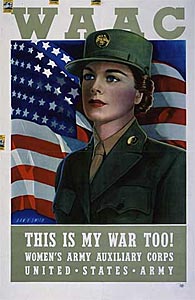
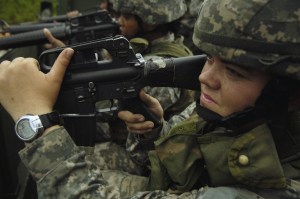
World War II (1941-1945): More than 60,000 Army nurses serve stateside and overseas during World War II. Sixty-seven Army nurses are captured by the Japanese in the Philippines in 1942 and are held as POWs for over two and a half years. The Army establishes the Women’s Army Auxiliary Corps (WAAC) in 1942, which is converted to the Women’s Army Corps (WAC) in 1943. More than 150,000 women serve as WACs during the war; thousands are sent to the European and Pacific theaters. The Women Airforce Service Pilots (WASP) are organized and fly as civil service pilots. WASPs fly stateside missions as ferriers, test pilots and anti-aircraft artillery trainers. More than 14,000 Navy nurses serve stateside, overseas on hospital ships and as flight nurses during the war. Five Navy nurses are captured by the Japanese on the island of Guam and held as POWs for five months before being exchanged. A second group of eleven Navy nurses are captured in the Philippines and held for 37 months. The Navy recruits women into its Navy Women’s Reserve, called Women Accepted for Volunteer Emergency Service (WAVES), starting in 1942. Before the war is over, more than 80,000 WAVES fill shore billets in a large variety of jobs in communications, intelligence, supply, medicine and administration. The Marine Corps creates the Marine Corps Women’s Reserve in 1943. Marine women serve stateside as clerks, cooks, mechanics, drivers, and in a variety of other positions. The Coast Guard establishes their Women’s Reserve known as the SPARs (after the motto Semper Paratus – Always Ready) in 1942. SPARs are assigned stateside and serve as storekeepers, clerks, photographers, pharmacist’s mates, cooks and in numerous other jobs. In 1943, the US Public Health Service establishes the Cadet Nurse Corps which trains some 125,000 women for possible military service. More than 400,000 American military women serve at home and overseas in nearly all non combat jobs. As the country demobilizes, all but a few servicewomen are mustered out, even though the United States, now a world power, is forced to maintain the largest peacetime military in the history of the nation.
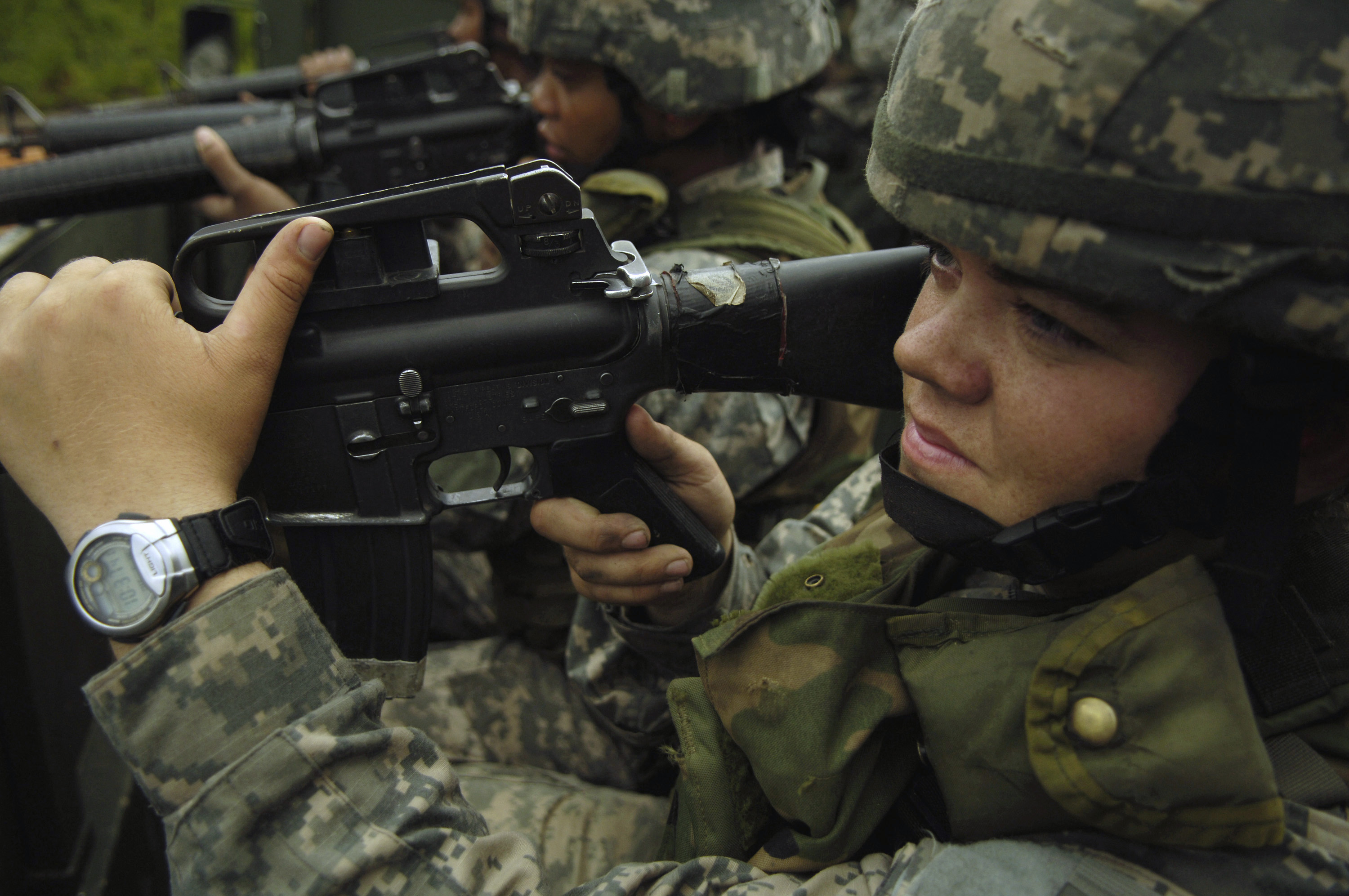
060614-F-7234P-462

1947: The Army-Navy Nurse Act of 1947 makes the Army Nurse Corps and Women’s Medical Specialist Corps part of the Regular Army and gives permanent commissioned officer status to Army and Navy nurses.

1948: The Women’s Armed Services Integration Act of 1948 grants women permanent status in the Regular and Reserve forces of the Army, Navy and Marine Corps as well as in the newly created Air Force.

Executive Order 9981 ends racial segregation in the armed services.

1949: Air Force Nurse Corps is established.

The first African-American women enlist in the Marine Corps.

Korean War (1950-1953): Servicewomen who had joined the Reserves following World War II are involuntarily recalled to active duty during the war. More than 500 Army nurses serve in the combat zone and many more are assigned to large hospitals in Japan during the war. One Army nurse dies in a plane crash en route to Korea on July 27, 1950, shortly after hostilities begin. Navy nurses serve on hospital ships in the Korean theater of war as well as at Navy hospitals stateside. Eleven Navy nurses die en route to Korea when their plane crashes in the Marshall Islands. Air Force nurses serve stateside, in Japan and as flight nurses in the Korean theater during the conflict. Three Air Force nurses are killed in plane crashes while on duty. Many other servicewomen are assigned to duty in the theater of operations in Japan and Okinawa.

1951: The Defense Advisory Committee on Women in the Services (DACOWITS) is created to advise on the recruitment of military women for the Korean War.

1953: The first woman physician is commissioned as a medical officer in the Regular Army.

Navy Hospital Corps women are assigned positions aboard Military Sea Transportation Service (MSTS) ships for the first time.

1955: Men are accepted into the Army and Air Force Nurse Corps and the Army Medical Specialist Corps.

1958: Lebanon Crisis. Military nurses are assigned to the hospitals which deploy during the crisis to support over 10,000 troops.

1961: The first woman Marine is promoted to Sergeant Major.

1965: Men are accepted into the Navy Nurse Corps.

The Marine Corps assigns the first woman to attaché duty. Later, she is the first woman Marine to serve under hostile fire.

Vietnam War (1965-1975): Some 7,000 American military women serve in Southeast Asia, the majority of them nurses. An Army nurse is the only US military woman to die from enemy fire in Vietnam. An Air Force flight nurse dies when the C-5A Galaxy transport evacuating Vietnamese orphans she was aboard crashes on takeoff. Six other American military women die in the line of duty.

1967: Legal provisions placing a two percent cap on the number of women serving and a ceiling on the highest grade a women can achieve are repealed.

1968: The first Air Force woman is sworn into the Air National Guard (ANG) with the passage of Public Law 90-130, which allows the ANG to enlist women.

1969: Air Force Reserve Officers Training Corps (AFROTC) opens to women.

1970: The first women in the history of the armed forces, the Chief of the Army Nurse Corps and the Women’s Army Corps Director, are promoted to brigadier general.

1971: The first Air Force woman is promoted to brigadier general.

An Air Force woman completes Aircraft Maintenance Officer’s School and becomes the first woman aircraft maintenance officer.

The first woman is assigned as a flight surgeon in the Air Force and the Air Force Reserve.

A staff sergeant becomes the first female technician in the Air Force Reserve.

1972: The Reserve Officer Training Corps (ROTC) is opened to Army and Navy women.

Chief of Naval Operations, Admiral Elmo R. Zumwalt, publishes Z-116 declaring the Navy’s commitment to equal rights and opportunities for women.

The Hospital Ship USS Sanctuary is the first Naval vessel to sail with a male/female crew.

The Navy promotes the first woman to rear admiral, Director of the Navy Nurse Corps.

1973: The end of draft and the establishment of the All Volunteer Force opens the door for expanding servicewomen’s roles and numbers.

The first Navy women earn military pilot wings.

The first woman in the history of the armed forces is promoted to major general.

The Navy accepts its first woman chaplain.

The Supreme Court rules unconstitutional inequities in benefits for the dependents of military women. Until then, military women with dependents were not authorized housing nor were their dependants eligible for the benefits and privileges afforded the dependents of male military members, such as medical, commissary and post exchange, etc.

1974: An Army woman becomes the first woman military helicopter pilot.

1975: DoD reverses policies and provides pregnant women with the option of electing discharge or remaining on active duty. Previous policies required women be discharged upon pregnancy or the adoption of children.

The Air Force places the first woman on operational crew status.

1976: Women are admitted to the service academies.

The Navy promotes the first woman line officer to rear admiral.

The Air Force selects the first woman reservist for the undergraduate pilot training program.

1977: The first Coast Guard women are assigned to sea duty as crew members aboard the Morgenthau and Gallatin.

Military veteran status is granted to the Women Airforce Service Pilots (WASP) who flew during WWII.

1978: The Coast Guard opens all assignments to women.

The Marine Corps promotes its first woman to brigadier general.

The first Army woman is promoted to two-star general. She is also the first woman officer to command a major military installation.

The Air Force Strategic Air Command (SAC) assigns the first woman aircrew member to alert duty.

Judge John Sirica rules the law banning Navy women from ships to be unconstitutional. Congress amends the law by opening non combat ships to women. The USS Vulcan, a repair ship, receives the first of many Navy women to be assigned shipboard under the amended law.

The Women’s Army Corps (WAC) is disestablished and its members integrated into the Regular Army.

1979: An Army Nurse Corps officer becomes the first African-American woman brigadier general in the history of the armed forces.

The first woman to command a military vessel assumes command of the Coast Guard Cutter Cape Newagen.

The first woman Naval aviator obtains carrier qualification.

The Marine Corps assigns women as embassy guards.

1980: The first women graduate from the service academies.

The first woman is assigned to command a Naval Training Command.

1982: The Air Force selects the first woman aviator for Test Pilot School.

The Marine Corps prohibits women from serving as embassy guards.

1983: The first Navy woman completes Test Pilot School.

Approximately 200 Army and Air Force women are among the forces deployed to Grenada on Operation Urgent Fury. Women serve on air crews, as military police, and as transportation specialists.

The first woman in any reserve component, an Air Force Reserve officer, is promoted to brigadier general.

1984: For the first time in history, the Naval Academy’s top graduate is a woman.

A Coast Guard officer is the first woman to serve as a Presidential Military Aide.

1985: For the first time in history, the Coast Guard Academy’s top graduate is a woman.
The first Air Force Reserve nurse is promoted to brigadier general.

1986: Six Air Force women serve as pilots, copilots and boom operators on the KC-135 and KC-10 tankers that refuel FB-111s during the raid on Libya.

For the first time in history, the Air Force Academy’s top graduate is a woman.

A Navy woman becomes the first female jet test pilot in any service.

The Coast Guard’s rescue swimmer program graduates its first woman.

1987: The Navy assigns its first woman Force Master Chief and Independent Duty Corpsman to serve at sea.

The first enlisted woman is assigned as Officer-In-Charge aboard a Coast Guard vessel.

1988: NASA selects its first Navy woman as an astronaut.

The Coast Guard’s “Chief Warrant Officer to Lieutenant” program promotes its first woman.

Marine women are again assigned as embassy guards.

1989: 770 women deploy to Panama in Operation Just Cause. Two women command Army companies in the operation and three women Army pilots are nominated for Air Medals. Two receive the Air Medal with “V” device for participation in a combat mission.

For the first time in history, the US Military Academy (West Point) names a woman as its Brigade Commander and First Captain.

NASA selects its first Army woman as an astronaut.

The Navy assigns its first woman as Command Master Chief at sea.

A woman is the first person trained for a new specialty, Coast Guard Flight Officer. These officers are responsible for tactical coordination of the drug interdiction efforts aboard Coast Guard aircraft.

War in the Persian Gulf (1990-1991): Some 40,000 American military women are deployed during Operations Desert Shield and Desert Storm. Two Army women are taken prisoner by the Iraqis.

1991: The Navy assigns the first women to command a Naval Station and an aviation squadron.

The first Navy woman assumes command of a ship.

The Air Force Reserve selects its first woman senior enlisted advisor.

Congress repeals laws banning women from flying in combat.

For the first time in history, a woman is named Brigade Commander at the Naval Academy.

1992: The first active duty woman Coast Guard officer is promoted to captain (O-6).

1993: Congress repeals the law banning women from duty on combat ships. Women deploy with the USS Fox.

The first woman Naval aviator serves with a combat squadron.

The first woman assumes command of a Naval base.

The Marine Corps opens pilot positions to women.

The Army names a woman “Drill Sergeant of the Year” for the first time in the 24-year history of this competition.

The Army assigned its first woman combat pilot.

The Air Force assigns the first woman to command an Intercontinental Ballistic Missile (ICBM) unit.

The first woman service secretary in the history of the armed forces is appointed.

The first woman in any reserve component is promoted to major general.

The Air Force assigns the first woman to command an air refueling unit.

The Coast Guard promotes the first active duty woman to master chief.

The Coast Guard assigns the first woman as Chief Judge.

1994: The USS Eisenhower is the first carrier to have permanent women crew members. Sixty-three women are initially assigned.

The first woman assumes command of a Naval Air Station.

The first woman, an Air Force major, copilots the space shuttle.

The Air Force Reserve gets its first woman fighter pilot.

1995: An Air Force lieutenant colonel becomes the first woman space shuttle pilot.

The first African-American woman, an Air Force officer, is promoted to major general.

The first female Marine pilot pins on Naval flight wings.

1996: The first women in the history of the armed forces are promoted to three-star rank.

For the first time a woman fires Tomahawk cruise missiles from a warship in a combat zone.

The first woman commands the Army’s Old Guard Fife and Drum Corps.

The first woman commands an operational flying wing.

1997: The Army promotes its first woman to lieutenant general.

The Army assigns the first woman and the first non-doctor to command an Army hospital.

The first woman in history is appointed as a state adjutant general.

1998: For the first time, a woman fighter pilot delivers a payload of missiles and laser-guided bombs in combat. She is in the first wave of US strikes against Iraq in Operation Desert Fox.

The Air National Guard promotes the first woman to major general.

1999: The Air Force promotes its first woman to lieutenant general.

For the first time, a woman, an Air Force lieutenant colonel, commands the space shuttle.

The first women graduate from the Virginia Military Institute and the Citadel.

The first woman and first African-American commands the National Oceanic and Atmospheric Administration Corps (NOAA).

The first African-American woman is selected to command a Navy ship.

2000: The Air Force promotes the first woman pilot to brigadier general.

The first Coast Guard women, an active duty officer and a reservist, are promoted to flag officer rank.

Navy women are among the victims and heroes when the USS Cole is attacked by a suicide bomber in Yemen.

The first woman commands a Navy warship at sea. The vessel is assigned to the sensitive Persian Gulf.

The Army National Guard promotes the first woman to major general.

2001: The Army promotes the first woman to brigadier general in the Judge Advocate General’s Corps. She is also the first Asian-Pacific-American woman promoted to brigadier general.

An Air National Guard security force woman becomes the first woman to complete the counter-sniper course, the only military sniper program open to women.

The US Army Women’s Museum opens at Ft. Lee, Virginia.

Terrorists highjack four commercial aircraft, crash two into the World Trade Center, one into a field in Pennsylvania and one into the Pentagon. In the attack at the Pentagon 125 people were killed on the ground and 59 passengers lose their lives; ten active duty, reserve and retired servicewomen are among the casualties. Servicewomen are activated and deployed in support of the war on terrorism.

2002: An enlisted woman Marine is killed in an aircraft crash in Pakistan, the first woman to die in Operation Enduring Freedom, part of the Global War on Terror.

The Defense Advisory Committee on Women in the Services (DACOWITS) is issued a new charter narrowing its focus to issues pertaining to military families, recruitment, readiness and retention. A retired Marine three-star general is appointed chairman of the new, downsized advisory committee.

For the first time in its history, the Army National Guard promotes an African-American woman to the rank of brigadier general.

For the first time in US history, a woman becomes the top enlisted advisor
in any of the military components. She is sworn in as the Command Sergeant
Major of the US Army Reserve.

2003: The first Native American servicewoman is killed in battle.  She was one of three women who became prisoners of war during the first days of the war in Iraq.

2004: By year’s end, 19 servicewomen had been killed as a result of hostile action since the war in Iraq had begun in 2003, the most servicewomen to die as a result of hostile action in any war that the nation had participated.

The first woman in US Air Force history takes command of a fighter squadron.

2005: The first woman in history is awarded the Silver Star for combat action. She is one of 14 women in US history to receive the medal.

An Air Force woman becomes the Air Force Academy’s Commandant of Cadets, the No. 2 position at the nation’s service academies. She is the first woman in the history of any of the academies to be appointed to this position.

The first woman in US Air Force history joins the prestigious USAF Air  Demonstration Squadron “Thunderbirds.” She was also the first woman on any US military high performance jet team.

2006: The Coast Guard appoints the first woman Vice Commandant of the Coast Guard, making her the first woman in history to serve as a deputy service chief in any of the US Armed Forces.

The Marine Corps assigns the first woman Marine in history to command a Recruit
Depot.

2007: The first woman in US Naval history takes command of a fighter squadron.

The last woman veteran of World War I dies, a former yeoman (F).

2008: For the first time in US military history, a woman is promoted to the
rank of four-star general. She is promoted by the US Army.

Leave a comment

Filed under Humor and Observations, Uncategorized

Top 100 April Fool’s Day Hoaxes In History

I found this post on StumbleUpon at:

http://www.stumbleupon.com/su/2DCzKM/:miDwrRe+:U$zH2.73/www.museumofhoaxes.com/hoax/aprilfool/

It lists ten pages of hoaxes, ten per page.  Since this is just a blog site, I only re-posted the first ten.  They are very cool and I suggest you check them all out at the link above if you like these samples.  I tried to reach the original site but was unable for some reason.  Either it is gone, or my Chrome was not working…  Enjoy!

The Museum of Hoaxes


Top 100 April Fool’s Day Hoaxes of All Time
As judged by notoriety, creativity, and number of people duped.

Note from the Curator: I created the first version of this list in the late 1990s. Back then, there was hardly any information collected about April Fool’s Day pranks, so I had to do a lot of research in newspaper archives to put this together. Luckily I was in grad school, so I had a lot of spare time on my hands ;-). Over the years I’ve tweaked the list, rearranging it slightly and adding new entries based on reader feedback and ongoing research, but my top choices have remained pretty much the same. This list is easily the most popular article I’ve ever posted on the Museum of Hoaxes. Extracts from it (some attributed, some not) can be found on hundreds of other websites. Plus, it’s inspired some spinoffs. A couple of years ago, someone created an iPhone app version of it (which I’ve never seen because I don’t have an iPhone), and the folks at the Drama Pod created a dramatized audio version of it in 2011. I hope you enjoy it — and if you know of any old hoaxes that I haven’t mentioned on the site, send me an email and let me know. ~Alex

On 1 April 1957, the respected BBC news show Panorama announced that thanks to a very mild winter and the virtual elimination of the dreaded spaghetti weevil, Swiss farmers were enjoying a bumper spaghetti crop. It accompanied this announcement with footage of Swiss peasants pulling strands of spaghetti down from trees. Huge numbers of viewers were taken in. Many called the BBC wanting to know how they could grow their own spaghetti tree. To this the BBC diplomatically replied, “place a sprig of spaghetti in a tin of tomato sauce and hope for the best.” More→

The April 1985 issue of Sports Illustrated contained a story about a new rookie pitcher who planned to play for the Mets. His name was Sidd Finch, and he could reportedly throw a baseball at 168 mph with pinpoint accuracy. This was 65 mph faster than the previous record. Surprisingly, Sidd Finch had never even played the game before. Instead, he had mastered the “art of the pitch” in a Tibetan monastery under the guidance of the “great poet-saint Lama Milaraspa.” Mets fans celebrated their teams’ amazing luck at having found such a gifted player, and they flooded Sports Illustrated with requests for more information. In reality this legendary player only existed in the imagination of the author of the article, George Plimpton, who left a clue in the sub-heading of the article: “He’s a pitcher, part yogi and part recluse. Impressively liberated from our opulent life-style, Sidd’s deciding about yoga —and his future in baseball.” The first letter of each of these words, taken together, spelled “H-a-p-p-y A-p-r-i-l F-o-o-l-s D-a-y — A-h F-i-b”. More→

In 1962 there was only one tv channel in Sweden, and it broadcast in black and white. But on 1 April 1962, the station’s technical expert, Kjell Stensson, appeared on the news to announce that, thanks to a new technology, viewers could convert their existing sets to display color reception. All they had to do was pull a nylon stocking over their tv screen. Stensson proceeded to demonstrate the process. Thousands of people were taken in. Regular color broadcasts only commenced in Sweden on April 1, 1970. More→


The Taco Bell Corporation took out a full-page ad that appeared in six major newspapers on 1 April 1996, announcing it had bought the Liberty Bell and was renaming it the Taco Liberty Bell. Hundreds of outraged citizens called the National Historic Park in Philadelphia where the bell was housed to express their anger. Their nerves were only calmed when Taco Bell revealed, a few hours later, that it was all a practical joke. The best line of the day came when White House press secretary Mike McCurry was asked about the sale. Thinking on his feet, he responded that the Lincoln Memorial had also been sold. It would now be known, he said, as the Ford Lincoln Mercury Memorial. More→


On 1 April 1977, the British newspaper The Guardian published a special seven-page supplement devoted to San Serriffe, a small republic said to consist of several semi-colon-shaped islands located in the Indian Ocean. A series of articles affectionately described the geography and culture of this obscure nation. Its two main islands were named Upper Caisse and Lower Caisse. Its capital was Bodoni, and its leader was General Pica. The Guardian‘s phones rang all day as readers sought more information about the idyllic holiday spot. Only a few noticed that everything about the island was named after printer’s terminology. The success of this hoax is widely credited with launching the enthusiasm for April Foolery that gripped the British tabloids in subsequent decades. More→

The 1 April 1992 broadcast of National Public Radio’s Talk of the Nation revealed that Richard Nixon, in a surprise move, was running for President again. His new campaign slogan was, “I didn’t do anything wrong, and I won’t do it again.” Accompanying this announcement were audio clips of Nixon delivering his candidacy speech. Listeners responded viscerally to the announcement, flooding the show with calls expressing shock and outrage. Only during the second half of the show did the host John Hockenberry reveal that the announcement was a practical joke. Nixon’s voice was impersonated by comedian Rich Little.

The April 1998 issue of the New Mexicans for Science and Reason newsletter contained an article claiming that the Alabama state legislature had voted to change the value of the mathematical constant pi from 3.14159 to the ‘Biblical value’ of 3.0. Soon the article made its way onto the internet, and then it rapidly spread around the world, forwarded by email. It only became apparent how far the article had spread when the Alabama legislature began receiving hundreds of calls from people protesting the legislation. The original article, which was intended as a parody of legislative attempts to circumscribe the teaching of evolution, was written by physicist Mark Boslough.


Burger King published a full page advertisement in the April 1st edition of USA Today announcing the introduction of a new item to their menu: a “Left-Handed Whopper” specially designed for the 32 million left-handed Americans. According to the advertisement, the new whopper included the same ingredients as the original Whopper (lettuce, tomato, hamburger patty, etc.), but all the condiments were rotated 180 degrees for the benefit of their left-handed customers. The following day Burger King issued a follow-up release revealing that although the Left-Handed Whopper was a hoax, thousands of customers had gone into restaurants to request the new sandwich. Simultaneously, according to the press release, “many others requested their own ‘right handed’ version.”

The April 1995 issue of Discover Magazine reported that the highly respected wildlife biologist Dr. Aprile Pazzo had found a new species in Antarctica: the hotheaded naked ice borer. These fascinating creatures had bony plates on their heads that, fed by numerous blood vessels, could become burning hot, allowing the animals to bore through ice at high speeds. They used this ability to hunt penguins, melting the ice beneath the penguins and causing them to sink downwards into the resulting slush where the hotheads consumed them. After much research, Dr. Pazzo theorized that the hotheads might have been responsible for the mysterious disappearance of noted Antarctic explorer Philippe Poisson in 1837. “To the ice borers, he would have looked like a penguin,” the article quoted her as saying.Discover received more mail in response to this article than they had received for any other article in their history.


During an interview on BBC Radio 2, on the morning of 1 April 1976, the British astronomer Patrick Moore announced that at 9:47 AM a once-in-a-lifetime astronomical event was going to occur that listeners could experience in their very own homes. The planet Pluto would pass behind Jupiter, temporarily causing a gravitational alignment that would counteract and lessen the Earth’s own gravity. Moore told his listeners that if they jumped in the air at the exact moment this planetary alignment occurred, they would experience a strange floating sensation. When 9:47 AM arrived, BBC2 began to receive hundreds of phone calls from listeners claiming to have felt the sensation. One woman even reported that she and her eleven friends had risen from their chairs and floated around the room. Moore’s announcement (which, of course, was a joke) was inspired by a pseudoscientific astronomical theory that had recently been promoted in a book called The Jupiter Effect, alleging that a rare alignment of the planets was going to cause massive earthquakes and the destruction of Los Angeles in 1982. More→

Leave a comment

Filed under Humor and Observations, Uncategorized

North Korea Update

North Korea Reportedly Entering ‘State Of War’ Against South Korea

By SAM KIM 03/30/13 04:23 PM ET EDT AP

SEOUL, South Korea — North Korea warned Seoul on Saturday that the Korean Peninsula had entered “a state of war” and threatened to shut down a border factory complex that’s the last major symbol of inter-Korean cooperation.

Analysts say a full-scale conflict is extremely unlikely, noting that the Korean Peninsula has remained in a technical state of war for 60 years. But the North’s continued threats toward Seoul and Washington, including a vow to launch a nuclear strike, have raised worries that a misjudgment between the sides could lead to a clash.

In Washington, the White House said Saturday that the United States is taking seriously the new threats by North Korea but also noted Pyongyang’s history of “bellicose rhetoric.”

North Korea’s threats are seen as efforts to provoke the new government in Seoul, led by President Park Geun-hye, to change its policies toward Pyongyang, and to win diplomatic talks with Washington that could get it more aid. North Korea’s moves are also seen as ways to build domestic unity as young leader Kim Jong Un strengthens his military credentials.

On Thursday, U.S. military officials revealed that two B-2 stealth bombers dropped dummy munitions on an uninhabited South Korean island as part of annual defense drills that Pyongyang sees as rehearsals for invasion. Hours later, Kim ordered his generals to put rockets on standby and threatened to strike American targets if provoked.

North Korea said in a statement Saturday that it would deal with South Korea according to “wartime regulations” and would retaliate against any provocations by the United States and South Korea without notice.

“Now that the revolutionary armed forces of the DPRK have entered into an actual military action, the inter-Korean relations have naturally entered the state of war,” said the statement, which was carried by Pyongyang’s official Korean Central News Agency, referring to the North’s official name, the Democratic People’s Republic of Korea.

Provocations “will not be limited to a local war, but develop into an all-out war, a nuclear war,” the statement said.

Hours after the statement, Pyongyang threatened to shut down the jointly run Kaesong industrial park, expressing anger over media reports suggesting the complex remained open because it was a source of hard currency for the impoverished North.

“If the puppet group seeks to tarnish the image of the DPRK even a bit, while speaking of the zone whose operation has been barely maintained, we will shut down the zone without mercy,” an identified spokesman for the North’s office controlling Kaesong said in comments carried by KCNA.

South Korea’s Unification Ministry responded by calling the North Korean threat “unhelpful” to the countries’ already frayed relations and vowed to ensure the safety of hundreds of South Korean managers who cross the border to their jobs in Kaesong. It did not elaborate.

South Korean Defense Ministry spokesman Kim Min-seok said the country’s military remains mindful of the possibility that increasing North Korean drills near the border could lead to an actual provocation.

“The series of North Korean threats – announcing all-out war, scrapping the cease-fire agreement and the non-aggression agreement between the South and the North, cutting the military hotline, entering into combat posture No. 1 and entering a `state of war’ – are unacceptable and harm the peace and stability of the Korean Peninsula,” Kim said.

“We are maintaining full military readiness in order to protect our people’s lives and security,” he told reporters Saturday.

In Washington, Caitlin Hayden, a spokeswoman for the White House National Security Council, noted the “reports of a new and unconstructive statement from North Korea.”

“We take these threats seriously and remain in close contact with our South Korean allies,” Hayden said. “But, we would also note that North Korea has a long history of bellicose rhetoric and threats, and today’s announcement follows that familiar pattern.”

The White House has stressed the U.S. government’s capability and willingness to defend itself and its allies and interests in the region, if necessary.

“We remain fully prepared and capable of defending and protecting the United States and our allies,” Hayden said.

The two Koreas remain technically at war because the 1950-53 Korean War ended in a truce, not a peace treaty. Naval skirmishes in the disputed waters off the Korean coast have led to bloody battles several times over the years.

But on the streets of Seoul on Saturday, South Koreans said they were not worried about an attack from North Korea.

“From other countries’ point of view, it may seem like an extremely urgent situation,” said Kang Tae-hwan, a private tutor. “But South Koreans don’t seem to be that nervous because we’ve heard these threats from the North before.”

The Kaesong industrial park, which is run with North Korean labor and South Korean know-how, has been operating normally, despite Pyongyang shutting down a communications channel typically used to coordinate travel by South Korean workers to and from the park just across the border in North Korea. The rivals are now coordinating the travel indirectly, through an office at Kaesong that has outside lines to South Korea.

North Korea has previously made such threats about Kaesong without acting on them, and recent weeks have seen a torrent of bellicose rhetoric from Pyongyang. North Korea is angry about the South Korea-U.S. military drills and new U.N. sanctions over its nuclear test last month.

Dozens of South Korean firms run factories in the border town of Kaesong. Using North Korea’s cheap, efficient labor, the Kaesong complex produced $470 million worth of goods last year.

Associated Press White House reporter Darlene Superville contributed to this report.

Follow Sam Kim at . http://www.twitter.com/samkim_ap

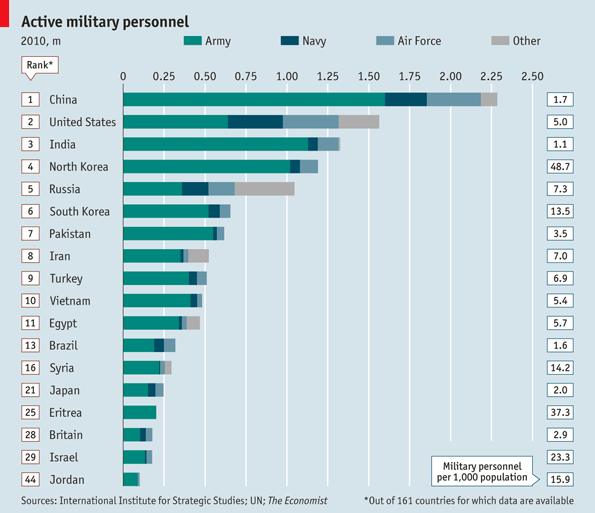
north korean military


largest armies


Leave a comment

Filed under Humor and Observations, Uncategorized

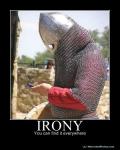
Irony

My favorite ironic phrase is still – A vegetarian is devoured by a man-eating plant.  Here is some more irony:

3 Comments

Filed under Humor and Observations, Uncategorized