Monthly Archives: February 2013

Robin, The Boy Wonder, Dies…

DC killing off Batman’s ‘Boy Wonder’ Damian Wayne in new comic book

  • By JOSH SAUL
  • Last Updated: 8:17 AM, February 25, 2013
  • Posted: 3:25 AM, February 25, 2013

Robin the Boy Wonder, Batman’s aide-de-camp, will be killed battling a brutal enemy in a comic book published Wednesday.

The shocking demise of the Dark Knight’s sidekick will first appear in issue No. 8 of the offshoot title “Batman Incorporated,” but the aftermath of his death will ripple throughout the DC Comics universe, the publisher confirmed exclusively to The Post.


Damian Wayne — the son of Bruce Wayne and the latest hero to assume the mantle of Robin — has a heart-to-heart with fellow superhero Nightwing before his final, and ultimately fatal, battle in the pages of “Batman Incorporated” No. 8, out Wednesday.


“He saves the world. He does his job as Robin,” writer Grant Morrison said. “He dies an absolute hero.”

Robin — a k a Damian Wayne, the 10-year-old son of Bruce Wayne — is slain fighting a hulking assassin who happens to be, in true comic-book form, a “brother” cloned from his genetic material.

And — SPOILER ALERT ! — unlike all the times he has swooped in at the last minute, Batman arrives too late to save his protégé.

A number of heroes have filled the role of Robin over the decades, including the first and best known, Dick Grayson, introduced in 1940.

PHOTOS: ROBIN THROUGH THE YEARS

The latest Robin, however, was the brilliant and caustic Damian, the illegitimate son of billionaire Bruce Wayne and Talia, the beautiful daughter of one of his deadliest enemies, Ra’s al Ghul.

Morrison, one of the industry’s top talents, brings an adult perspective to the grim tale.

Robin’s death, he said, will illustrate how parents lose sight of their kids when they fight.

“It’s all about the family and the family going to hell,” said Morrison, who threw in elements of his own parents’ divorce. “The two adults in the story are both culpable. The kid’s the good guy.”


Morrison, who brought Damian to the forefront in 2006, said he had created a full arc for the character, who grew from a violent, fledgling assassin to a selfless leader.

“What we did was turn this little monster into a superhero,” he said. “He’s a little brat, but he’s a super-brat.”

Damian isn’t the first Robin to die, but he’s the first to die at the height of his popularity with fans.

In 1988, a few years after Grayson moved on, the next Robin — the disliked, surly Jason Todd — was slain by the Joker after an infamous phone poll let fans choose whether the teen should be killed off.

Todd was resurrected in 2005.

So who knows if Damian will stay dead, or if a new Boy (or perhaps Girl) Wonder will take his place.

Noted Morrison: “You can never say never in a comic book . . . Batman will ultimately always have a partner.”

Leave a comment

Filed under Humor and Observations, Writing

Cute Dogs for Your Monday Blues!

Our every Monday post of cute dog pictures.  I now have about 2,000 pictures and can only post about 33 per week, so if you sent me yours, I pick them at random and hope yours comes up soon.  Thanks!  If you want to see more cute dogs, just type “cute dog pictures” in the Home page search block.

Leave a comment

Filed under Animals

Ten Mysteries That Are Unexplained

I found this a quite interesting article from StumbleUpon, originally Listverse.  As an officianado of enigmas, mysteries and bizarre stuff, I was surprised not to have heard of several.  The animals found inside rocks alive is pretty hard to believe.  I will have to do some research on these.  Here they are as originally posted:

10 More Enigmas That Defy Explanation

by , January 14, 2010
What is it about the bizarre and mysterious that piques our curiosity? It entertains our sense of wonder and excites our imagination, for sure. Luckily for us, history is marked with strange, logic-defying occurrences to amuse us. Here is a list comprised of 10 more unexplainable and interesting phenomenon and incidents that we crave so much. This list is made up of a mixture of two submissions to the Christmas competition which shared some items, so it seemed a good idea to combine the two to give us ten things never before shown on the site. Also note, this list is in the newly created category “Mystery” and all of our lists involving mysteries can now be found under that category in the archives or on the mystery category page.

10

Ice Woman

Female Frozen Body

Nature performs many astonishing feats, yet it is a different matter altogether when we human beings push past the boundaries of normal. It was a viciously cold morning in Lengby, Minnesota, when a man discovered his 19-year old neighbor, Jean Hilliard, lying in the snow. Her whole body was frozen solid from the night before, when temperatures dropped twenty-five degrees below zero. Apparently, Jean was trying desperately to reach her neighbor for help when her car skidded off the road. When her body was discovered she was immediately sent to the local hospital, where her condition stunned the doctors. One of the nurses said that Jean was “so cold, it was like reaching into a freezer” and that “her face was absolutely white, just this ashen, death look.” Jean was also seriously frostbitten, and none of her limbs would bend or move.

The hospital staff did everything possible, yet the situation was dire. Even if Jean were to regain consciousness, she would more than likely have severe brain damage, and she was frostbitten to the degree that both her legs would have to be amputated. Her family gathered in prayer, hoping for a miracle. 2 hours later, Jean went into violent convulsions, and regained consciousness. She was perfectly fine, mentally and physically, although a bit confused. Even the frostbite was slowly disappearing from her legs to the doctors’ amazement. She was released 49 days later without losing a single finger, and sporting only minor scars.

9

Iron Pillar of Delhi

Iron-Pillar

Iron, the king of metal, is used for just about everything from the skeleton of your house to the chains on your bike. Unfortunately, iron can never escape its destiny to slowly transform into rust – with the exception of this phenomenal structure: meet the Iron Pillar of Delhi! Standing in at 7 meters tall and weighing more than six tons, this iron giant has managed to defeat corrosion for over 1600 years! But how can something that is 98 percent iron withstand decaying for over a millennia? Scientists have found the answer to that question, but how ancient ironsmiths discovered the fact so long before us still amazes archeologists today.

8

Carroll A. Deering

Screen Shot 2010-01-14 At 12.50.47 Pm

Approximately 50 years after the mysterious disappearance of the crew of the Mary Celeste, a similar event occurred when the schooner Carroll A. Deering was spotted around the coast of North Carolina on January 31, 1921. When rescue ships finally reached her, they discovered, to their shock that the Deering’s entire crew was missing. Though evidence in the galley suggested that food was being prepared for the following day, nothing else was found of the crew. Eerily enough, no personal effects, no ship logs, no traces were left behind, much like the case of the Mary Celeste. Theories have pointed to paranormal activity, due to the fact that the Carroll A. Deering was in the region that is today known as the Bermuda Triangle. Others have concluded it was the work of pirates, or of Russians attempting to steal their cargo.

7

Hutchison Effect

Hutchison Effect 350

The Hutchison Effect refers to the number of eerie phenomena that occurred when inventor John Hutchison attempted to replicate a few of inventor Nickola Tesla’s experiments. Some of the strange events witnessed include levitation, fusion of objects completely different in matter (such as wood and metal), and disappearances of some smaller objects. Even stranger is that after his experiment, Hutchison was unable to repeat the project again with the same results. This experiment was so popular it even sparked the interest of NASA and the Military, both whom have failed to produce the Hutchison Effect.

6

Faces Of Belmez

Belmez-Faces

Is it just me or doest that stain on the wall look like a person staring at you? Yup, its one of the many faces of Belmez that the Pereira family home is used to having. For over twenty years, the faces that appear can resemble males or females. They also arrive with different expressions every time. Strangely, the faces only stop at the house for a quick visit before disappearing. Investigations have been preformed upon the house to discover what was causing the faces to spontaneously pop up. One investigation exhumed and removed a human body from under the house, but that still didn’t stop the faces from making round trips. Several hypotheses have been formed to help explain this strange reoccurring phenomenon, but overall, no conclusions have been come to.

5

Disappearing Lake

Bbdd28B44947B185243Ccb0826B7F7Cd

On May 2007, a lake in Patagonia, Chile, literally disappeared, leaving behind a 30 meter deep pit, icebergs and dry soil. However, this wasn’t a small lake or pond – it was an astonishing 5 miles long! The last time geologists saw the lake in March 2007, they detected nothing strange about it. However, something happened during the 2 month span that not only caused the lake to vanish, but reduced a river that flowed from the lake to a tiny stream. Geologists were puzzled as to why a lake of that size would simply cease to exist. Perhaps, they suggested, an earthquake drained the lake, yet there were no reports of any quakes in that particular area during spring. Meanwhile, UFO enthusiasts concluded that a spaceship drained the lake. The mystery is unsolved to this day.

4

Raining Blobs

Nwsaleggmass

The townspeople of Oakville, Washington, were in for a surprise on August 7, 1994. Instead of their usual downpour of rain, the inhabitants of the small town witnessed countless gelatinous blobs falling from the sky. Once the globs fell, almost everyone in Oakville started to develop severe, flu-like symptoms that lasted anywhere from 7 weeks to 3 months. Finally, after exposure to the goo caused his mother to fall ill, one resident sent a sample of the blobs for testing. What the technicians discovered was shocking – the globs contained human white blood cells. The substance was then brought to the State Department of Health of Washington for further analysis. With another startling reveal, they discovered that the gelatinous blobs had two types of bacteria, one of which is found in the human digestive system. However, no one could successfully identify the blob, and how they were connected to the mysterious sickness that plagued the town.

3

The Black Helicopter

Black Helicopter-779486

In May 7, 1994, a black helicopter chased a teenage boy for forty-five minutes in Harrahan, Louisiana. Unable to run any further, the terrified boy explained that the occupants descended from the vehicle and pointed weapons at him. To this day, the boy has no idea why he was targeted by the helicopter, or why, mysteriously, they let him go. One week later, people traveling in a car near Washington had a similar experience when they too were pursued by the helicopter. Unable to escape, they witnessed men in black uniforms coming down from a rope ladder bearing weapons. However, the drivers were let off free, much to their confusion. Black helicopters feature much in UFO-lore and while there are simple explanations for some appearances, others (such as the two above) remain unsolved.

2

Animals within Stone

Toad

There are several documented cases where frogs, toads, and other small animals are found concealed within solid stone – alive. There are other instances too, where workers would cut down trees, and find hoards of frogs within the interior. Weirder still, people have found creatures within not just natural formations such as rocks and trees, but manmade establishments. In 1976, a Texas construction crew was breaking up concrete they set over a year ago. To their disbelief, the crew found a live green turtle within the concrete, in an air pocket that matched the shape of the small reptile. If, somehow, it got in when the concrete was poured a year earlier, how did it manage to survive during that time? After all, there were no signs of holes or cracks in the concrete through which the turtle could have entered.

1

Donnie Decker

Screen Shot 2010-01-14 At 12.56.13 Pm

Dubbed the Rain Boy in 1983, Donnie Decker was visiting his friend’s house when he abruptly went into a trance-like state. Immediately after, the ceiling began to drip water and a mist filled the room. His friends immediately called on the landlord who was alarmed by what he was seeing. Some time later, Donnie was at a restaurant with other companions when rain started pouring down their heads. The restaurant owner immediately forced him out. Years later, due to a petty crime, Donnie was put into jail where he caused chaos when rain started to pour down in his cell. After angry inmates complained, Donnie explained that he could make it rain when he wanted to, and proved his point by dumping rain on the jailor on duty. Eventually, he was released from jail and found a job as a cook at a local restaurant. His present whereabouts is unknown – as is the cause of the mysterious rain.

1 Comment

Filed under Animals, Humor and Observations, Uncategorized

More Crossovers

A regular feature on my blog are crossovers, also called mashups, where you mix two or more things together.  You can search for “crossovers” on the search block on the Home page if you wish to find other similar posts.  Enjoy!

Leave a comment

Filed under Humor and Observations

Writing – Is it Creative?

Most people think as an author and a magazine columnist that I create new things and new stories.  Oddly, the answer is yes and no.  We are the sum of our neural connections and memories.  I do not believe you can create anything new.  All you can do is take what is already in your head, and mix and match it into something new.  A good friend and fellow author disagreed with me.  In fact, he intentionally made up a name at random and put it in his story.  He was very proud to “prove me wrong.”  That week, he made the same turn he always did on his way home and noticed a small sign – with his entirely random name on it.  He changed the name in his story – to another random one, and went on his way, maybe a little more interested in my theory.

Throughout history, their are certain motifs, stories, and character archetypes which have been laid down in verbal tradition, through religion, stories, movies, TV, pretty much every interaction you have with your fellow man.  Here it is in the Bible:

Ecclesiastes 1:9

New International Version (NIV)

 What has been will be again,
what has been done will be done again;
there is nothing new under the sun.

So how then do you come up with “new” ideas if there is nothing “new”?  Stephen King in On Writing said as an author you should at least as much time reading as you do writing.  The more inputs you have, the more combinations can be made.  I have read at least one book a week since I was twelve.  I estimate I have read around 4,000 books.  I watch movies, I travel to new places, try new things, eat new foods.  People you meet, movies you see, conversations you have, failures and successes in careers all stay inside that grey matter in magical ways.

right left brain garden

So, in my own opinion, the only way to be “creative” in your writing, is to constantly explore, learn and put more little bits of potential into your head.  Mine usually come together best in that twilight moment of falling asleep.  I have written chapters, even entire books in my head as I drift off.  For some reason, for me, that is the time when all those life bits and memories swirl around in a big ocean and rejoin to make original patterns out of old data.

Writing is creative for sure.  Writing is even original to everyone else who reads it, because they do not share all the bits and pieces that you do in your brain.  They see with a different collection of fragments floating in their ocean.  But to me, as a writer, I know everything I write came from somewhere else, even if I don’t know what strange combination floated together.
child Head

Having indulged my philosophical side, here is a list of common Character Archetypes used in literature, compiled at Listology:

Character archetypes

 Submitted by diaskeaus on Wed, 02/15/2006 – 02:24
  1. Willing Hero — King Arthur; Leelu from The Fifth Element; Hercules
  2. Unwilling Hero — Bilbo Baggins from The Hobbitt, Phillipe Gaston from Ladyhawke
  3. Cynical Anti-hero — Han Solo from Star Wars
  4. Tragic Anti-hero –Lestat from Ann Rices’ Vampire Chronicles; Darth Vader from Star Wars
  5. Group-oriented Hero — CuChulainn from Irish myth.
  6. Loner Hero –Indiana Jones, Xena from Xena: Warrior Princess
  7. Catalyst Hero — Any mentor (s/he’s the hero of their own stories)
  8. Dark Mentor — anti-heroic character, the inversion of heroic values
  9. Fallen Mentor — characters who are having difficulty with their own heroic journey
  10. Continuing Mentor — recurring characters in a series of stories
  11. Multiple Mentors — a hero may have more than one Mentor, learning a new skill from each one
  12. Comic Mentor — often a type of advising sidekick to the Hero
  13. Shaman — helper who aids the Hero in seeking a guiding vision to help him/her on the journey
  14. The Herald — Herald characters issue challenges and announce the coming of significant change
  15. The Threshold Guardian — Threshold Guardians protect the Special World and its secrets from the Hero, and provide essential tests to prove a Hero’s commitment and worth
  16. Shapeshifter — The Shapeshifter’s mask misleads the Hero by hiding a character’s intentions and loyalties
  17. Trickster — Tricksters relish the disruption of the status quo, turning the Ordinary World into chaos with their quick turns of phrase and physical antics
  18. Fool — In Europe, the court jester was not necessarily a simpleton, and in fact, often served to remind the monarch of his own folly and humanity
  19. Shadow — the Shadow represents the energy of the dark side, the unexpressed, unrealized, or rejected aspects of something
  20. The Anima/Animus — form generally reflects either the condition or the needs of our soul presently
  21. The Divine Couple — The opposites of the outer and the inner life are now joined in marriage
  22. The Child — The Child Archetype is a pattern related to the hope and promise for new beginnings
  23. The Self — The Spirit descends as a Dove upon Jesus in the wilderness (example), true self
  24. The Magician — He once was ignorant but through the experience of taking the Fool’s “step of faith” over the edge and into the unknown he has made a decision to master the Four Elements and therefore seek to balance his personal Karma
  25. The Virgin/Maiden/High Priestess — She is the guardian of the Mystery Temple of Solomon; Protectress of the Secret Wisdom that lifts human consciousness from the depths of materialism to the heights of illumination
  26. The Empress — She is the image of Fertility; the creative Life Force that perpetuates the continuity of life forms on the planet; She is Mother Nature; guardian of the natural process and rhythms of growth and procreation
  27. The Authority/Emperor (King, Chief, Leader) — He is the representative image of Father Time; in charge of the seed and the withdrawal of the Life Force when the period of Life is done
  28. The Medicine Woman/Hierophant — This Archetypal Figure represents the external Form and function of the internal Mysteries; The Hierophant stands as a barrier to those who are yet unable to comprehend the True creative Life principles and therefore the External Teaching is all that they receive. However, if they can pass beyond the Form via choice to join the Spirit of Illumination radiating from within their Souls then the High Priestess is waiting to reveal the heretofore hidden Mysteries inscribed in the Scroll she is holding in reserve for those who are truly ready
  29. The Hermit — His search has led him to the Summit of his own perfection. Now, from this great height he can see 360 degrees without obscuration. His Lantern is held high as an inspiration to all who aspire to attain the Wisdom which he has come to realize during the process of his own Soul journey. The isolation and abstinence image sometimes given to the Hermit is one of the past; a glimpse of his travels through the physical and emotional wasteland where the misrepresentations of life as seen through the perception of the Physical Plane have been experienced and eventually transcended. This Archetype passed through a period of solitude and alienation during this walk through the proverbial “Valley of the Shadow of Death” that could have driven him Mad had it not been for the Light in his Lantern penetrating the Darkness and illuminating his Soul thus granting him hope of deliverance. The Hermit has indeed been carried through this initiatory Journey via his unwavering Faith in the Universal Source who Teaches and Guides all of us internally. The Lantern which he carries symbolizes his inner Vision provided via his “Third Eye” (Candle) which grants this Archetypal traveler a keen sense of Spiritual insight
  30. The Wanderer (aka chariot) — An invisible barrier stands between the mind of Man and the Mind of God, and this blinds the Charioteer, thus preventing his conscious realization of union with the Source, Victory in the material sense, on all levels. Mastery of the Elements, but not the Spirit which Guides them, therefore the Chariot rides in service to a higher authority even though the driver might presume that he is in complete control
  31. The Hunter/ Strongman (strength) — The senses of sight, smell, hearing, taste, and touch are directed by the sixth sense, intuition, thus resulting in perfect Harmony
  32. The Judge (law, justice) — The Dispensation of punishments and rewards according to the precepts of Karmic Law, which is represented on the Physical Plane by external legal systems: lawyers, courts, prisons, etc. However, it is the Spiritual workings of an involuntary nature of which this Archetype speaks
  33. The Weaver — Temperance, i.e. the balanced management of Life taking all things in moderation, is the means of maintaining steady progress during humanity’s long Search through Limitations of material existence for eventual Transformation into Divine Beings of Light
  34. Death (personification) — Transformation via Dramatic Change, as symbolized by the image of physical Life being terminated and the Afterlife commencing. Therefore, a sudden pole reversal occurs, i.e. orientation or circumstances change is indicated. That which was the order of things has been totally shattered
  35. The Sacred Messenger/ The Giver
  36. The Hanged Man (meditation, suspension) — Its symbolism points to divinity, linking it to the death of Christ in Christianity and the stories of Osiris (Egyptian mythology) and Mithras (Roman mythology). In all of these stories, the destruction of self brings life to humanity.
  37. The Devil — The Devil is both the Ur-Adversary, and a tremendous source of strength. He represents nearly an inexhaustible source of energy. Battling him gives us strength. Submitting completely to him is ego-death.
  38. The Unity of the Universe — continually changing universe. Here is the supreme unity of attainment and joy ruled by that incalculable factor – the element of luck; This ultimately manifests as the spiral progression of the unfolding Universe. The counterbalance of Night and Day, and to a greater extent passage of the Seasons, is indicated. However, more importantly, the Cycle of birth, death, and rebirth is depicted here. This is symbolic of the proverbial “Phoenix Principle.”
  39. The Sacrificial Dance
  40. The Tower (Babel, falsity)
  41. The Star(s) — People have always looked to the stars as a source of inspiration and hope. There is something about their twinkling light that draws us out of ourselves and up into a higher plane. When we turn our eyes heavenward, we no longer feel the distress of earth. The Star reminds one of the clear, high voice of a soprano. There is something otherworldly about it. All the harshness and density of everyday life has been refined away leaving only the purest essence. After being exposed to the Star, we feel uplifted and blessed.
  42. The Moon — The Moon is the light of this realm – the world of shadow and night. Although this place is awesome, it does not have to be frightening. In the right circumstances, the Moon inspires and enchants. It holds out the promise that all one can imagine can be obtained. The Moon guides one to the unknown so one can allow the unusual into one’s life.
  43. The Sun — Throughout history, people have honored the Sun as the source of light and warmth. In the myths of many cultures, the Sun is a prominent god – full of vigor and courage. He is the vital energy center that makes life on earth possible.
  44. The Spirit World
  45. The World — The World represents an ending to a cycle of life, a pause in life before the next big cycle beginning with the fool. The figure is at once male and female, above and below, suspended between the heavens and the earth. It is completeness.
  46. Übermensch — An Übermensch, (sometimes “Overman”, or “superman”) is a term coined by philosopher Friedrich Nietzsche, in Thus Spoke Zarathustra (in German, Also sprach Zarathustra). He argues that a man can become an Übermensch (homo superior; the common equivalent English translation would be ‘super-human’; see below) through the following steps: 1. By his will to power, manifested destructively in the rejection of, and rebellion against, societal ideals and moral codes; 2. By his will to power, manifested creatively in overcoming nihilism and re-evaluating old ideals or creating new ones. 3. By a continual process of self-overcoming.
  47. Wise Old Man — In works of fiction, this kind of character is typically represented by a kind and wise, older father-type figure who uses personal knowledge of people and the world, to help tell stories and offer guidance, that in a mystical way illuminate to his audience a sense of who they are and who they might become.
  48. The Puer Aeternus — (Latin for “eternal boy”), e.g. Peter Pan
  1. Enneagrams:minor archetypes
  2. One: Reformer, Critic, Perfectionist [Anger]. This type focuses on integrity. Ones can be wise, discerning and inspiring in their quest for the truth. They also tend to dissociate themselves from their flaws and can become hypocritical and hyper-critical of others, seeking the illusion of virtue to hide their own vices. The One’s greatest fear is to be flawed and their ultimate goal is perfection.
  3. Two: Helper, Giver, Caretaker [Pride]. Twos, at their best, are compassionate, thoughtful and astonishingly generous; they can also be prone to passive-aggressive behavior, clinginess and manipulation. Twos want, above all, to be loved and needed and fear being unworthy of love.
  4. Three: Achiever, Performer, Succeeder [Deceit]. Highly adaptable and changeable. Some walk the world with confidence and unstinting authenticity; others wear a series of public masks, acting the way they think will bring them approval and losing track of their true self. Threes fear being worthless and strive to be worthwhile.
  5. Four: Romantic, Individualist, Artist [Envy]. Driven by a fear that they have no identity or personal significance, Fours embrace individualism and are often profoundly creative. However, they have a habit of withdrawing to internalize, searching desperately inside themselves for something they never find and creating a spiral of depression. The angsty musician or tortured artist is often a stereotypical Four.
  6. Five: Observer, Thinker, Investigator [Avarice]. Believing they are only worth what they contribute, Fives have learned to withdraw, to watch with keen eyes and speak only when they can shake the world with their observations. Sometimes they do just that. Often, instead, they withdraw from the world, becoming reclusive hermits and fending off social contact with abrasive cynicism. Fives fear incompetency or uselessness and want to be capable above all else.
  7. Six: Loyalist, Devil’s Advocate, Defender [Fear]. Sixes long for stability above all else. They exhibit unwavering loyalty and responsibility, but are prone to extreme anxiety and passive-aggressive behavior. Their greatest fear is to lack support and guidance. There are two types of sixes, phobic and counter phobic. Phobic sixes will have a tendency to run from or hide from what they fear, while a counter phobic six is more likely to attack or confront said fear.
  8. Seven: Enthusiast, Adventurer, Materialist [Gluttony]. Eternal Peter Pans, Sevens flit from one activity to another. Above all they fear being unable to provide for themselves. At their best they embrace life for its varied joys and wonders and truly live in the moment; but at their worst they dash frantically from one new experience to another, being too scared of disappointment to enjoy what they have.
  9. Eight: Leader, Protector, Challenger [Lust]. Eights worry about self-protection and control. Natural leaders, capable and passionate but also manipulative, ruthless and willing to destroy anything and everything in their way. Eights seek control over their own life and their own destiny and fear being harmed or controlled by others.
  10. Nine: Mediator, Peacemaker, Preservationist [Sloth]. Nines are ruled by their empathy. At their best they are perceptive, receptive, gentle, calming and at peace with the world. On the other hand they prefer to dissociate from conflicts and indifferently go along with others’ wishes or simply withdraw, acting via inaction. They fear the conflict caused by their ability to simultaneously understand opposing points of view and seek peace of mind above all else.
  11. RPG Archetypes:
  12. (taken from Foxfire and Afira’s Guide to Roleplaying, http://www.angelfire.com/tx/afira/archetypes.html)
  13. The Scholar: The scholar is perhaps the most underestimated type of individual that exists in character building. He can be extremely calculating, highly intelligent, rational, an excellent strategist, and extraordinarily… vain. After all, he has all this excess intelligence, why not spend a little on himself? Scholars are guided by the pursuit of knowledge and the usage and implimentation thereof. This can range from the trivial, to the extensive knowledge and inner workings of political culture, computer design, or magic lore. Of course, like the rest of the archetypes, he comes in many forms. Usually the stereotypical scholar spends 10 years in hermitville studying on his choosen craft, he wears the scholarly glasses, the slightly balding head with a bit of wildly unmanagable tufts of hair sticking out, the plain and unassuming clothes of someone living on the edge of financial existance, however, as roleplaying of this character becomes divergent from the typical Hollywood influences, many new types are becomming apparent. Jesters and technology or weapons gurus also fit into this catergory. Jesters for their high levels of intelligence and strong usage of, and technology or weapons gurus for the same reasons.
  14. The Soldier: Strong, willful, and looking for a fight, whether it be for profit, or to avenge the death of a loved one. One type of soldier encompasses those who seek to do justice in an evil and dark world: The rugged heroes who are strong in arm and wit, but have some fatal character flaw (dealing with the death of a loved one, pride or vanity, a weakness for damsels in distress…) that will be the end of them if they don’t figure out how to solve it. Another type refers to those who always use sheer force to solve any problem. Big, hairy, and usually extraordinarily stupid, these individuals are almost always hopeless at accomplishing complex tasks. Still others might seek to cause destruction or chaos to appease a higher entity or leader. Persons of action, and extreme calculation, these people tend to make fantastic villains. Overall, the soldier class of characters seek to force their will on the world, directly, or indirectly.
  15. The Politician: The politician archetype usually encompasses the most diverse groupings of individuals: Poets, Rogues, and of course, Politicians. The Poet is the hopeless romantic that is usually more skilled with his instrument of choice, rather than sheer brute force. The instrument can range from musical lyres, lutes, and the like, to the musical sound an axe or gun makes when going through flesh. They are socially capable of holding conversations, but most people tend to view them as lost or dreamy souls. They tend to be stereotyped with the thin, wiry, tall, and dreamy; however, the jovial, heavy-set drunkard leaning on a wall with his mug of ale is just as susceptible to being a Poet. A Rogue is the strongly misunderstood man of the moment. Usually an attention getter striving to better himself at his trade or skill, the rogue is a drifter, never really settling down with someone or something. This could be caused by profession, reputation, or self-inflicted torture. Impulsive activity mixes with the common traits of exceptionally specialized skills in one or more areas, high levels of reflex, agility, and intelligence. They could potentially be very dangerous given the right circumstances, or alignment, for example, the Great Rogue himself-Robin Hood. Politicians are exactly as their name implies-great talkers who love to listen to the sound of their own voice. Rather than facing conflict, they seek to beguile, distract, and utilize words to walk around it. Usually they are highly intelligent with strong social skills, specifically dominate, persuade, or manipulate.
  16. The Priest: Priests, Clerics, Necromancers, Fortune-tellers, Mediums, and anything else dealing with the spiritual and supernatural world fall into this genre. These types of characters usually come in the most unlimited range of styles, body types, and personalities, as the effects of dealing with the spiritual or supernatural may have odd effects on someone’s psyche and physical appearence. Your average neighborhood Catholic Priest heavy in the midsection, could mingle with your thin teenage punk kid who has more than a few run-ins with walking zombies-and won. These individuals are either guided, aided, cursed, or replused by an driving force in their lives, and a sense that something bigger than them exists. Hunters that seek out supernatural creatures to kill for their own means portray aspects of the priest as well, as they seek to impose a vision of the world without those creatures. The priest is above all a visionary-he can see something that no one else can, and through his faith-in himself, or something higher-everything he sees will be accomplished.
  17. Combinations: To some extent, gypsies fit all of these profiles and work as a good combination. Very intelligent jesters at heart(Scholar), without a sense of the limits of their own physical property, mixed with a bit of old world swindling, story-telling, and pan-handling(Politician), perhaps guided by an overwhelming guiding force that lets them see the words, “I’m naive, steal from me.” in bold letters on someone’s forehead(Priest), and take advantage of the situation for their own ends(Soldier).
  18. Chinese Zodiac Animal-types
  19. Rat: Essentially charming. Compassionate. Renowned for thrift and love of family, at times rather superficial.
  20. Ox: Calm, patient, studied character. Takes things slow, steady pace. At times rather dictatorial. Always industrious.
  21. Tiger: Very warm, loving. Independent minded. Pays scant regard for other’s feelings while pursuing fun and freedom.
  22. Rabbit: Also know as the Cat or Hare. Very sensitive soul. Loves spending time at home. Although quiet and discreet, still ambitious. Self-indulgent.
  23. Dragon: Charismatic and colorful. Wants to be center of attention. Very arrogant.
  24. Snake: High moral principles, mostly when applied to other. Sophisticated and charming. More than meets the eye.
  25. Horse: Confident and proud. Prone to erratic behavior. Heart is in right place. Scatty.
  26. Goat: Sensitive, creative and multitalented. Eccentric. Much Fortitude. Loves to be loved, hates to be pushed.
  27. Monkey: Wily and cunning. Ignores regimented rules. Free spirit.
  28. Rooster: Brave and enthusiastic. Notoriously picky. Highly intelligent. Rarely has wool pulled over its eyes.
  29. Dog: Honest, loyal, sincere. Believes in justice for all. Fights for principles. Sometimes bad tempered, self-righteous.
  30. Boar: Will do anything for anybody. Model of sincerity and honor. Occasionally fits of rage. Self-sacrificing and altruistic.
  1. Carolyn Myss’s Archetypes:
  2. Included are many repeats, but kept for the sake of keeping her list whole
  3. Addict (Conspicuous Consumer, Glutton, Workaholic–see also Gambler)
  4. Advocate (Attorney, Defender, Legislator, Lobbyist, Environmentalist)
  5. Alchemist (Wizard, Magician, Scientist, Inventor–see also Visionary)
  6. Angel (Fairy Godmother/Godfather)
  7. Artist (Artisan, Craftsperson, Sculptor, Weaver)
  8. Athlete (Olympian)
  9. Avenger (Avenging Angel, Savior, Messiah)
  10. Beggar (Homeless person/ Indigent)
  11. Bully (Coward)
  12. Child (Orphan, Wounded, Magical/Innocent, Nature, Divine, Puer/Puella Eternis, or Eternal Boy/Girl)
  13. Clown (Court Jester, Fool, Dummling)
  14. Companion (Friend, Sidekick, Right Arm, Consort)
  15. Damsel (Princess)
  16. Destroyer (Attila, Mad Scientist, Serial Killer, Spoiler)
  17. Detective (Spy, Double Agent, Sleuth, Snoop, Sherlock Holmes, Private Investigator, Profiler–see also Warrior/Crime Fighter)
  18. Dilettante (Amateur)
  19. Don Juan (Casanova, Gigolo, Seducer, Sex Addict)
  20. Engineer (Architect, Builder, Schemer)
  21. Exorcist (Shaman)
  22. Father (Patriarch, Progenitor)
  23. Femme Fatale (Black Widow, Flirt, Siren, Circe, Seductress, Enchantress)
  24. Gambler
  25. God (Adonis, see also Hero)
  26. Gossip (see also Networker)
  27. Guide (Guru, Sage, Crone, Wise Woman, Spiritual Master, Evangelist, Preacher)
  28. Healer (Wounded Healer, Intuitive Healer, Caregiver, Nurse, Therapist, Analyst, Counselor)
  29. Hedonist (Bon Vivant, Chef, Gourmet, Gourmand, Sybarite–see also Mystic)
  30. Hero/Heroine (see also Knight, Warrior)
  31. Judge (Critic, Examiner, Mediator, Arbitrator)
  32. King (Emperor, Ruler, Leader, Chief)
  33. Knight (see also Warrior, Rescuer)
  34. Liberator
  35. Lover
  36. Martyr
  37. Mediator (Ambassador, Diplomat, Go-Between)
  38. Mentor (Master, Counselor, Tutor)
  39. Messiah (Redeemer, Savior)
  40. Midas/Miser
  41. Monk/Nun (Celibate)
  42. Mother (Matriarch, Mother Nature)
  43. Mystic (Renunciate, Anchorite, Hermit)
  44. Networker (Messenger, Herald, Courier, Journalist, Communicator)
  45. Pioneer (Explorer, Settler, Pilgrim, Innovator)
  46. Poet
  47. Priest (Priestess, Minister, Rabbi, Evangelist)
  48. Prince
  49. Prostitute
  50. Queen (Empress)
  51. Rebel (Anarchist, Revolutionary, Political Protester, Nonconformist, Pirate)
  52. Rescuer
  53. Saboteur
  54. Samaritan
  55. Scribe (Copyist, Secretary, Accountant–see also Journalist)
  56. Seeker (Wanderer, Vagabond, Nomad)
  57. Servant (Indentured Servant)
  58. Shape-shifter (Spell-caster–see also Trickster)
  59. Slave
  60. Storyteller (Minstrel, Narrator)
  61. Student (Disciple, Devotee, Follower, Apprentice)
  62. Teacher (Instructor, see also Mentor)
  63. Thief (Swindler, Con Artist, Pickpocket, Burglar, Robin Hood)
  64. Trickster (Puck, Provocateur)
  65. Vampire
  66. Victim
  67. Virgin (see also Celibate)
  68. Visionary (Dreamer, Prophet, Seer–see also Guide, Alchemist)
  69. Warrior (Soldier, Crime Fighter, Amazon, Mercenary, Soldier of Fortune, Gunslinger, Samurai)

4 Comments

Filed under Writing

Friend Needs Book Printer In Phoenix

My good friend Jake Friedman needs a printer for his literary publication.  It will have a full color cover and around 170 interior pages.  I have given him a few names of people I know, but he needs someone reliable and inexpensive.  Literary Magazines/books are not big money makers so he has to keep his costs very low.  He is also doing this to build up the local Arizona culture and arts scene.

If you know someone let me know.  Again, it is for book format, so if you don’t know your printer does books, you might not want to mention them.  Book production is different than other printing and not everyone does it.  Here is the specs he was looking for:

Can I  get a quote for (5.5 x 8.5″, perfect binding, 170 pages, with cover, for 500, 750, and 1000 copies).

I print my books in 7″x 9″ perfect press trade paperback style, so if you need to change the dimensions a bit I don’t think it would matter.

Jake Friedman, Friend, Writer and Editor of a Community Literary Magazine

Jake Friedman, Friend, Writer and Editor of a Community Literary Magazine

4 Comments

Filed under Writing

Future Internet/Smartphones/Ipads

The future of internet, pads and smartphones may look like the following:  (pretty amazing stuff)

  • Future of Internet Search: Mobile version
  • Part1: Looking Glass Concept
    This is what I wish the internet search will be able to do with a mobile device in the NEAR future. Touch screen, built in camera, scanner, WiFi, google map (hopefully google earth), google search, image search… all in one device. Like this way, when you can see a building through it, it gives you the image search result right on the spot.
  • Part2: Future of Mobile Internet Search: Applications

    Many applications like these will be developed that have never been possible.Indoor guide

    Works in a building, airport, station, hospital, etc.

    Automatic simultaneous translation
    Search keyword
    Helpful when you want to find out a word from a lot of text
  • Part3: Look at What You Don’t See Through Glass

    You can even see flowers that are not actually blooming.

    There are a lot more ideas drawn in my Moleskine, so I’ll introduce them later.
    Also visit other posts of this gadget.

  • Part4: Future of Mobile Search for Diet


    Mainly because I don’t usually care about nutrition when I eat, this kind of function would be helpful for people like me.
  • Part5: Future of Mobile Search- Search Beyond Time

    Getting data of a weather forecast, maybe this might be possible.

    When you wonder what the scene you’re looking at was like in the past, you can see it.

    It would be nice if it could work in sync with Google Maps like this.
  • Part6: Future of Mobile Search- Power of Visualization

    Visual aid for any book. It means any book can be a picture book.

    If it could be wirelessly in sync with your mobile phone or other mobile devices, visualized data exchange could be done like
  • Looking Glass for iPhone

    petitinvention.wordpress.com/2008/07/26/looking-glass-for-iphone/
  • Part7: Future of Mobile Search: Virtual Shopping #1

    I’m pretty sure companies like Ikea would quickly start to use this device this way if it became really available.
  • Part8: Speech Balloons for the Hearing-Impaired

    Speech balloons in comic books show very well how the characters speak. If we could instantly visualize how people speak, wouldn’t it be nice for the hearing-impaired? It means they can SEE our voices.

    Stressed words are rendered larger than those spoken less loudly.Arrows of the balloons show from where it’s spoken (of course).

    A scream is shown in a balloon with jags.

    Imitation sounds are also rendered, but with other colors than spoken words.

    When spoken to from out of the screen, it shows the words with the direction the voice is from.


    A pair of glasses with the same functions could replace the device if we could figure out a good way not to block visual information.

1 Comment

Filed under Humor and Observations, Uncategorized

Steampunk Aircrew Selection 5

This is your fifth chance to select an airship crew for your very own airship.  You cannot choose them all, so choose wisely.  Are you to run the ship as a pirate vessel. trader, smuggler, explorer, loyal military vessel, adventurer, evil mercenary?  All up to you.  For early posts, type in “Steampunk Aircrew” in the search box on the Home page of this blog site.  Enjoy!

Leave a comment

Filed under Humor and Observations

Questionnaires for Writing Character Profiles

Reposted from the wonderful folks at Creative Writing Now.  Below the article is their information for contacts, etc.  These are some great flesh-out questions for both authors, and in my opinion, readers to get better stories.  Enjoy!

Questionnaires for Writing Character Profiles

Here are some questionnaires for writing character profiles. You’ll find more fiction-writing resources at the bottom of this page. 
Free Fiction Writing Course: ENDLESS STORY IDEAS

This free 3-day online writing course will show you techniques to find new creative writing ideas whenever you need them.

Writing Character Profiles – Questionnaire 1 (Adult Characters)

  1. Name:
  2. Age:
  3. General physical description:
  4. Hometown:
  5. Type of home/ neighborhood:
  6. Relationship status:
  7. Current family:
  8. Family background (parents, previous marriages, etc.):
  9. Friends:
  10. Other close relationships:
  11. Relationship with men:
  12. Relationship with women:
  13. Job:
  14. Dress style:
  15. Religion:
  16. Attitude to religion:
  17. Favorite pastimes:
  18. Hobbies:
  19. Favorite sports:
  20. Favorite foods:
  21. Strongest positive personality trait:
  22. Strongest negative personality trait:
  23. Sense of humor:
  24. Temper:
  25. Consideration for others:
  26. How other people see him/her:
  27. Opinion of him/herself:
  28. Other traits, especially those to be brought out in story:
  29. Ambitions:
  30. Philosophy of life:
  31. Most important thing to know about this character:
  32. Will readers like or dislike this character, and why?

Writing Character Profiles – Questionnaire 2 (Child Characters)

  1. Name:
  2. Age:
  3. Birthday:
  4. General physical description:
  5. Hometown:
  6. Type of home/ neighborhood:
  7. Father’s name, background, and occupation:
  8. Mother’s name, background, and occupation:
  9. Brothers and sisters:
  10. Position in family:
  11. Other close relatives:
  12. Family relationships:
  13. Special friends:
  14. Enemies:
  15. Influential person or event:
  16. Grade in school:
  17. Attitude toward school:
  18. Grades:
  19. Favorite pastimes:
  20. Hobbies (music/art/reading material):
  21. Favorite sports:
  22. Favorite foods:
  23. Dress style:
  24. Religion:
  25. Attitude toward religion:
  26. Relationship with boys:
  27. Relationship with girls:
  28. Leader or follower:
  29. Strongest positive personality trait:
  30. Strongest negative personality trait:
  31. Sense of humor:
  32. Temper:
  33. Consideration for others:
  34. How other people see him/her:
  35. Opinion of him/herself:
  36. Other traits, especially those to be brought out in story:
  37. Ambitions:
  38. Philosophy of life:
  39. Most important thing to know about character:
  40. Will readers like or dislike this character, and why?

Writing Character Profiles – Additional Questions

  1. If your character has a job, is he or she good at it? Does he or she like it?
  2. What are your character’s bad habits?
  3. If you asked about his or her greatest dream, what would your character tell you?
  4. What’s a secret dream that he or she wouldn’t tell you about?
  5. What kind of person does your character wish he or she could be? What is stopping him or her?
  6. What is your character afraid of? What keeps him or her up at night?
  7. What does your character think is his or her worst quality?
  8. What do other people think your character’s worst quality is?
  9. What is a talent your character thinks he or she has but is very wrong about?
  10. What did his or her childhood home look like?
  11. Who was his or her first love?
  12. What’s the most terrible thing that ever happened to him/her?
  13. What was his/her dream growing up? Did he/she achieve this dream? If so, in what ways was it not what the character expected? If your character never achieved the dream, why not?
  14. In what situation would your character become violent?
  15. In what situation would your character act heroic?

Click here for more on creating characters and using character profiles.


About Creative Writing Now

Creative Writing Now was founded by writing teachers to be a supportive and friendly online space for authors and poets at all stages in their writing lives.

Our mission:

  • Educate – with high-quality courses and free resources for independent study.
  • Encourage – by maintaining a positive atmosphere and providing guidance for beginning writers.
  • Inspire – by sharing our passion for literature and writing.


Meet some of our team

Nancy Strauss
Founder and Online Courses Director

Nancy taught creative and expository writing at the University of Michigan before moving to the Czech Republic and then Spain. Since then, she has worked as an English teacher and consultant, published a book about online communities, and founded a content writing and translation company. She has an M.F.A. in Creative Writing from the University of Michigan and a B.A. in English from Oberlin College.

Linda Leopold Strauss
Contributor

Linda is the author of numerous fiction and nonfiction books for young people, including Drop Everything and Write!: An Easy Breezy Guide for Kids Who Want to Write a Story (E & E Publishing, 2010). In addition to her thirty-year career as an author, she has taught writing courses for the Institute of Children’s Literature. Linda lives in Cincinnati with her husband, Bill.

Cristina Viejo and Graciela Garcia
Web Designers

Cristina and Graciela are responsible for the new look of the Creative Writing Now website and created the woman with the laptop that you see at the top of this page. They are currently available for new design projects, including websites, illustrations, and other types of graphic design. Enquiries can be sent using the e-mail form below.

Legal information

This website is owned by William Victor, S.L. You can find the company’s legal information here.

Contact us

Questions? Feedback? We’d love to hear from you. You can use our e-mail form below to drop us a line, or write to us by snail mail c/o William Victor, Calle Viriato 2, puerta 639, 28010 Madrid, Spain.

2 Comments

Filed under Writing

Airless Car Tires

This is an older article from a nearly over a year ago, but I thought pretty cool anyway.

bridgestoneg

Bridgestone goes airless in tire concept for Tokyo show December 3, 2011 by Nancy Owano (PhysOrg.com) —

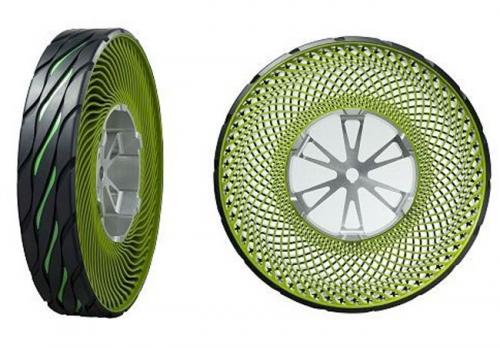
Visitors to the 42nd Tokyo Motor Show are to witness a new breed of airless tires from Bridgestone. Interest in the general press is already humming because of the material, design, and features of the Bridgestone debut on show. The concept tires use recycled thermoplastic, outside tread included. Fittingly colored green, the tires are being promoted for their green advantage of being completely recyclable.

The spokes are made of reusable thermoplastic resin. In design, interest is drawn toward the thermoplastic fins, staggered so that connections to the hub and the rim do not torque and there is no structural breakdown. The tires’ resin spokes radiate from rim to tread. They curve to the left and right to support vehicle loads. Bridgestone is not the first to experiment with an airless tire concept. Observers point to Michelin’s debut in 2005 of its airless Tweel tires. These were seen with much interest as a novel departure from the traditional wheel hub assembly, though concerns were raised in some quarters about their being noisy and vibrations at high speeds.

The name Tweel is a combination of the words tire and wheel. Michelin used polyurethane spokes arrayed in a wedge pattern. In describing differences between the Michelin and Bridgestone concept, observers say a key contrast is in size of the ribs. Michelin’s tires were viewed as more suitable for military applications—this is not like the Bridgestone concept, which is suited for something more consumer-driven. Another tire concept innovator has been Yokohama Rubber Co. Ltd. The company announced in October this year its airless tire concept which relies on mechanical rather than pneumatic support.

Yokohama introduced its tire concept earlier this year at a design expo in Japan. Bridgestone’s airless tires have a deeper structure of plastic ribs than either of the other two approaches, and it has a higher aspect ratio, according to Plastics News. Obviously, the key benefit for the consumer will be seen in the fact that the Bridgestone tires cannot suffer punctures. On the other hand, these have a way to go before seeing car commercialization. The tires are in prototype stage only and due for further evaluations. The company has tested the tires, nine inches across, on single-seater electric carts in Japan. Observers see similar uses, at this earlier level, as potential for use in motorized golf carts, lawnmowers and vehicles for the elderly.

Read more at: http://phys.org/news/2011-12-bridgestone-airless-concept-tokyo.html#jCp


Leave a comment

Filed under Humor and Observations