Monthly Archives: May 2014

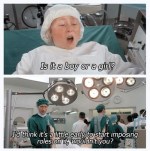
1897: Costume ball

Costume Ball 1


2 Comments

Filed under Humor and Observations

Ancient skeleton of teenage girl sheds new light on first Americans

firstamericans.jpg

FILE: Diver Susan Bird, working at the bottom of Hoyo Negro, a large dome-shaped underwater cave in Mexico’s Yucatan Peninsula, brushes a human skull found at the site while her team members take detailed photographs.AP

Thousands of years ago, a teenage girl toppled into a deep hole in a Mexican cave and died. Now, her skeleton and her DNA are bolstering the long-held theory that humans arrived in the Americas by way of a land bridge from Asia, scientists say.

The girl’s nearly complete skeleton was discovered by chance in 2007 by expert divers who were mapping water-filled caves north of the city of Tulum, in the eastern part of the Yucatan Peninsula. One day, they came across a huge chamber deep underground.

“The moment we entered inside, we knew it was an incredible place,” one of the divers, Alberto Nava, told reporters. “The floor disappeared under us and we could not see across to the other side.”

They named it Hoyo Negro, or black hole.

Months later, they returned and reached the floor of the 100-foot tall chamber, which was littered with animal bones. They came across the girl’s skull on a ledge, lying upside down “with a perfect set of teeth and dark eye sockets looking back at us,” Nava said.

The divers named the skeleton Naia, after a water nymph of Greek mythology, and joined up with a team of scientists to research the find.

The girl was 15 or 16 when she met her fate in a cave, which at that time was dry, researchers said. She may have been looking for water when she tumbled into the chamber some 12,000 or 13,000 years ago, said lead study author James Chatters of Applied Paleoscience, a consulting firm in Bothell, Washington. Her pelvis was broken, suggesting she had fallen a long distance, he said.

The analysis of her remains, reported Thursday in the journal Science by researchers from the United States, Canada, Mexico and Denmark, addresses a puzzle about the settling of the Americas.

Most scientists say the first Americans came from Siberian ancestors who lived on an ancient land bridge, now submerged, that connected Asia to Alaska across the Bering Strait. They are thought to have entered the Americas sometime after 17,000 years ago from that land mass, called Beringia.  And genetic evidence indicates that today’s native peoples of the Americas are related to these pioneers.

But the oldest skeletons from the Americas — including Naia’s — have skulls that look much different from those of today’s native peoples. To some researchers, that suggests the first Americans came from a different place.

Naia provides a crucial link. DNA recovered from a molar contains a distinctive marker found in today’s native peoples, especially those in Chile and Argentina. The genetic signature is thought to have arisen among people living in Beringia, researchers said.

That suggests that the early Americans and contemporary native populations both came from the same ancestral roots in Beringia — not different places, the researchers concluded. The anatomical differences apparently reflect evolution over time in Beringia or the Americas, they said.

The finding does not rule out the idea that some ancient settlers came from another place, noted Deborah Bolnick, a study author from the University of Texas at Austin.

Dennis O’Rourke, an expert in ancient DNA at the University of Utah who didn’t participate in the work, said the finding is the first to show a genetic link to Beringia in an individual who clearly had the anatomical signs of a very early American.  He said he considered the notion of multiple migrations from different places to be “quite unlikely.”

Last February, other researchers reported that DNA from a baby buried in Montana more than 12,000 years ago showed a close genetic relationship to modern-day native peoples, especially those in Central and South America. An author of that study, Mike Waters of Texas A&M University, said the Mexican finding fits with the one in Montana.

There are so few such early skeletons from the Americas, he said, that “every single one of them is important.”

However, Richard Jantz, a retired professor of forensic anthropology at the University of Tennessee in Knoxville, said he still believes early settlers arrived by boat from east Asia before any migration occurred via Beringia. That’s based on anatomical evidence, he said. The argument in the new paper “leaves a lot of unanswered questions,” he said in an email.

1 Comment

Filed under Humor and Observations

Random Humor

Random humor to close out your week…

Leave a comment

Filed under Humor and Observations

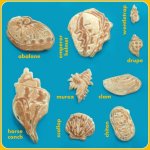
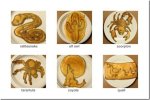
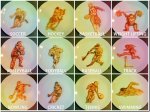
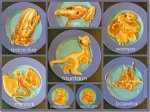
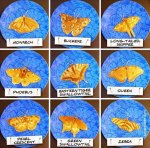
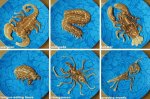
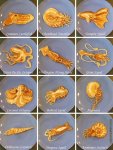
Pancake Art

Nathan Shields is a former math teacher and current stay-at-home father of two. He enjoys teaching his young kids something new each day in the most unusual way: making pancakes. Nathan has made everything from sharks to parasites to seashells, and whether it’s truly an effective teaching tool or not let’s just say having a tasty pancake breakfast is never NOT worth the time.

Reposted from the Chive.

1 Comment

Filed under Humor and Observations, Uncategorized

One Man Has Written Virtually Every Major Pop Song Of The Last 20 Years. And You’ve Probably Never Heard His Name

Random Celebrity Article By   on January 26, 2014

Pop quiz: Who has been the most influential and powerful person in pop music over the last 20 years? Britney Spears? Madonna? Michael Jackson? Beyonce? Simon Cowell? Sure, these people have all been extraordinarily successful, but what if we told you that there’s one man whose musical accomplishments easily trumps all of these artists? And what if we told you that most people have probably never even heard of this person and definitely wouldn’t recognize him walking down the street? Sounds impossible right? Well, if at any point in the last 20 years you’ve heard a song from The Backstreet Boys, Britney Spears, N’Sync, Kelly Clarkson, Taylor Swift, Ace of Base, Katy Perry, Celine Dion, Bon Jovi, Adam Lambert, Carrie Underwood, Pink, Justin Bieber… then you’ve unwittingly been subject to the creations of a Swedish born musical genius who goes by the name of Max Martin. Believe it or not, over the past 15-20 years Max Martin has been the brains, ears and talent behind virtually every hit pop song that has been released to the screaming masses. He’s personally responsible for churning out more Billboard singles than Michael Jackson and MadonnaCOMBINED. And since he is essentially unrecognizable to the average person, that might make him the most famous, non-famous person on the planet. This is his story.

Who is Max  Martin?

This past April, the Backstreet Boys celebrated the 20-year anniversary of their career by being inducted into the Hollywood Hall of Fame. On hand to give remarks was an un-remarkable looking man named Max Martin. Martin, with his Seth Rogen-esque neck beard and hair down to his shoulders, wrote many of the BSB’s hit songs. During his speech, Martin reminisced fondly of his first encounter with the Boys. He met the future superstars in a hip Stockholm restaurant back in the mid-nineties. He told them he was excited to hear them sing in the studio later that evening. In response, the band stood up and serenaded him on the spot. “I got the goosebumps. It was amazing”. For millions of people around the world, this would have been the event of a lifetime. But for Martin, it was just another day in the life.

So who is Max Martin aka Martin Karl Sandberg? Was he a huge rock star in Sweden? Not really. A powerful record executive? Nope. A Svengali-like manager who knows all the secrets to success in the music business? Hardly. If he was any one of these things, it would be hard to explain why the most popular song produced by his own band, “It’s Alive”, has fewer than 1000 views on Youtube today.

Max Martin - Life Story

Max may not have gotten super famous with his hard rock band “It’s Alive”, but he did receive two important gifts from the experience: 1) When the band recorded their first and only album, they hired a producer named Denniz PoP and Denniz is the person who suggested that “Martin Karl Sandberg” should change his name forever to Max Martin. 2) While recording their album, Max astutely learned all the tricks of the producing trade from Denniz. In an interview years later, Max explained: “I didn’t even know what a producer did. I spent two years – day and night – in that studio trying to learn what the hell was going on.”

Max Martin with Britney Spears

When “It’s Alive” flopped at record stores, Martin immediately decided that he really belonged on the other side of the glass in a recording studio. He began assisting Denniz Pop as a sound engineer and song writer for all the incoming talent. One of the first projects that Martin collaborated on was fellow Swedish band Ace of Base and their 1995 album “The Bridge”. This album eventually sold six million copies worldwide. As big of a success as that was, it was his next project that catapulted Martin to astronomical success. Impressed by his songwriting and producing work, an A&R executive from the record company Jive decided Max was the perfect person to work on the debut album of a fresh young boy band called The Backstreet Boys. Martin co-wrote the singles “Quit Playing Games (With My Heart),” “As Long as You Love Me,” and “Everybody (Backstreet’s Back)”, arguably the three most popular songs on the band’s self-titled debut album. The album went on to sell more than 10 million copies worldwide.

What is perhaps most remarkable about Martin’s career is the consistency with which he churns out the songs that find their way into the ears of millions of people around the globe. Britney Spears, Celine Dion, Christina Aguilera, Kelly Clarkson, Pink, Avril Lavigne. More than half of the Backstreet Boys’ 1999 album Millennium. The list goes on and on and on and on. Since 1999, Max has written or co-written 16 songs that hit #1 on Billboard. There aren’t enough metaphors to properly describe his success. He’s like the Michael Jordan, Wayne Gretzky, Roger Federer, Muhammad Ali, Michael Phelps, Usain Bolt… of music. Here is a list of some of the biggest pop songs that Max Martin has written and produced:

Katy Perry: “I Kissed a Girl”, “Teenage Dream”, “California Gurls”, “Roar”, “Dark Horse”

Britney Spears: “Oops!… I Did It Again”, “Stronger”, “…Baby One More Time”, “Till The World Ends”

Backstreet Boys: “Quit Playing Games With My Heart”, “I Want It That Way”, “Larger Than Life”, “As Long As You Love Me”, “Shape of my Heart”

Kelly Clarkson: “Since You’ve Been Gone”, “My Life Would Suck Without You”

N’Sync: “Tearin’ Up My Heart”, “It’s Gonna Be Me”, “I Want You Back”

Taylor Swift: “We Are Never Ever Getting Back Together”, “I Knew You Were Trouble”, “22″

If you are a Spotify user, I compiled a playlist of Max Martin’s biggest and most popular hit songs. To listen, just paste the following text into your Spotify search box:

Max Martin ASCAP Awards

For Martin, it’s the fun of the work that keeps him going: “If I did it because it was my job, and I only did it to make money, I don’t think I’d still be doing it.” Which isn’t to say that the man behind countless hits hasn’t found financial success. From the royalties and producing fees he has received from all of this fun he’s been having, Max Martin has earned a personal net worth of$250 million dollars. That’s right. He’s worth a quarter of a billion dollars and you’ve probably never heard his name.

Max has won ASCAP’s Songwriter of the Year award six times. His most recent #1 single is Katy Perry’s “Roar” which has been nominated for several Grammys including Song of the Year. He also contributed to the album “Red” by Taylor Swift which has been nominated for Album of the Year. Whether you love the songs or hate them, whether you can admit that behind the corniness of “As Long as You Love Me” is a pop mastermind, or not, one thing is for certain: Max Martin isn’t going anywhere anytime soon. Maybe if the accolades and records keep piling up, people might actually start knowing his name and face!

1 Comment

Filed under Humor and Observations

Print Your Own 3D Printer Porsche

The DIY 3D-printed Porsche

3d-porsche-660.jpg

PORSCHE

Is that Porsche you always wanted still out of your price range?

Well, now you can build one yourself. Just don’t expect to go very far in it.

The automaker is now offering the data needed to 3D print an accurate model of its Cayman sports car, saving you the trouble of driving a full-size one through a massive 3D scanner.

The download is available on Porsche’s website, and can be used to print cars in a variety of sizes and colors, depending on how large your 3D printer is and the filament used.

Those adept in the art of 3D printing should even be able to modify the data to design customized Caymans of their own creation.

Think you can do better than Porsche’s own designers?

Be sure to check out our review of the real car before you give it a shot.

Leave a comment

Filed under Humor and Observations

New life: Scientists create first semi-synthetic organism with ‘alien’ DNA

SCIENCE EDITOR
Wednesday 07 May 2014

The researchers believe the breakthrough is the first step towards creating new microbial life-forms with novel industrial or medical properties resulting from a potentially massive expansion of genetic information.

The semi-synthetic microbe, a genetically modified E. coli bacterium, has been endowed with an extra artificial piece of DNA with an expanded genetic alphabet – instead of the usual four “letters” of the alphabet its DNA molecule has six.

The natural genetic code of all living things is based on a sequence of four bases – G, C, T, A – which form two sets of bonded pairs, G to C and T to A, that link the two strands of the DNA double helix.

The DNA of the new semi-synthetic microbe, however, has a pair of extra base pairs, denoted by X and Y, which pair up together like the other base pairs and are fully integrated into the rest of the DNA’s genetic code.

The scientists said that the semi-synthetic E. coli bacterium replicates normally and is able to pass on the new genetic information to subsequent generations. However, it was not able to use the new encoded information to produce any novel proteins – the synthetic DNA was added as an extra circular strand that did not take part in the bacterium’s normal metabolic functions.

The study, published in the journal Nature, is the first time that scientists have managed to produce a genetically modified microbe that is able to function and replicate with a different genetic code to the one that is thought to have existed ever since life first started to evolve on Earth more than 3.5 billion years ago.

“Life on earth in all its diversity is encoded by only two pairs of DNA bases, A-T and C-G, and what we’ve made is an organism that stably contains those two plus a third, unnatural pair of bases,” said Professor Floyd Romesberg of the Scripps Research Institute in La Jolla, California.

“This shows that other solutions to storing information are possible and, of course, takes us closer to an expanded-DNA biology that will have many exciting applications, from new medicines to new kinds of nanotechnology,” Professor Romesberg said.

Expanding the genetic code with an extra base pair raises the prospect of building new kinds of proteins from a much wider range of amino acids than the 20 or so that exist in nature. A new code based on six base pairs could in theory deal with more than 200 amino acids, the scientists said.

“In principle, we could encode new proteins made from new, unnatural amino acids, which would give us greater power than ever to tailor protein therapeutics and diagnostics and laboratory reagents to have desired functions,” Professor Romesberg said.

“Other applications, such as nanomaterials, are also possible,” he added.

The researchers emphasised that there is little danger of the new life-forms living outside the confines of the laboratory, as they are not able to replicate with their synthetic DNA strand unless they are continuously fed the X and Y bases – synthetic chemicals called “d5SICS” and “dNaM”, that do not exist in nature.

The bacteria also need a special protein to transport the new bases around the cell of the microbe. The transporter protein comes from algae and if it, or the X and Y bases, are lacking, the microbial cells revert back to the natural genetic code, said Denis Malyshev of the Scripps Institute.

“Our new bases can only get into the cell if we turn on the “base transporter” protein. Without this transporter or when the new bases are not provided, the cell will revert back to A, T, G, C and the d5SICS and the dNaM will disappear from the genome,” Dr Malyshev said.

Leave a comment

Filed under Humor and Observations

Stonehenge Discovery ‘Blows Lid Off’ Old Theories About Builders Of Ancient Monument

Stonehenge Discovery ‘Blows Lid Off’ Old Theories About Builders Of Ancient Monument

From who built it to what it was used for, Stonehenge is surrounded by many enduring mysteries — and researchers from the University of Buckingham in England now say they’ve solved one of them.

“For years people have been asking why is Stonehenge where it is, now at last, we have found the answers,” David Jacques, an archaeology research fellow at the university, said in a written statement.

OLYMPUS DIGITAL CAMERA

Last October, Jacques led an archaeological dig at a site 1.5 miles from Stonehenge. His team unearthed flint tools and the bones of aurochs, extinct cow-like animals that were a food source for ancient people. Carbon dating of the bones showed that modern-day Amesbury, an area that includes the dig site and Stonehenge itself, has been continuously occupied since 8820 B.C. Amesbury has now been declared the oldest continually occupied area in Britain.

The finding suggests that Stonehenge was built by indigenous Britons who had lived in the area for thousands of years. Previous theories held that the monument was built in an empty landscape by migrants from continental Europe.

Stonehenge from the air

“The site blows the lid off the Neolithic Revolution in a number of ways,” Jacques said in the statement, referring to the assumption that those migrants drove Britain’s transition from a hunter-gatherer to a farming society in the 6th Century B.C. “It provides evidence for people staying put, clearing land, building, and presumably worshipping, monuments.”

The researchers say evidence suggests that before erecting Stonehenge, people living in the area set up gigantic timbers between 8820 and 6590 B.C. — a sort of wooden precursor to the stone monument. Jacques likened the area to a “Stonehenge Visitor’s Center,” where visitors from far and wide came to feast and tour the site with local guides.

“The area was clearly a hub point for people to come to from many miles away, and in many ways was a forerunner for what later went on at Stonehenge itself,” he said.

Leave a comment

Filed under Humor and Observations

Cute Dog Pictures for Your Monday Blues!

Cute pictures of dogs to cheer you up for the start of the work week:

Leave a comment

Filed under Animals

IRS Spends Nearly $100 Million on Office Furniture

Just remember, you don’t pay enough in taxes, you are greedy to want to keep your own earnings, and you can’t deduct legitimate home office use without getting audited… But if you are the government, you can buy chairs for $1,209 each, then go to Congress and tell them you don’t have any money to “support the taxpayer needs.”  Big government is the problem, not political parties.

Obama’s IRS Spends Nearly $100 Million on Office Furniture

Spending on furniture outnumbers Bush administration

Treasury Secretary Jacob Lew / AP

BY:
May 12, 2014 9:59 am

The IRS has spent $96.5 million on office furniture under the Obama administration and is now claiming it has insufficient funding to adequately serve taxpayers.

Treasury Secretary Jack Lew testified before the House two weeks ago about the IRS’ need for additional funding for the upcoming fiscal year. The IRS is currently seeking an increase of $1.2 billion—a 7 percent raise over its FY 2014 $11.29 billion budget. It would bring the agency’s FY 2015 budget to $12.48 billion.

A review of contracts by the Washington Free Beacon shows the IRS in the past five fiscal years has spent $96.5 million refurbishing IRS offices across the country. Those contracts include fiscal years 2010 through 2014.

That amount already exceeds what the agency spent during the entire eight years under President George W. Bush, fiscal years 2002 through 2009.

The purchases during the current administration show contracts are for various amounts. They range from several millions to hundreds of thousands of dollars for each agency office.

The first fiscal year budget for which President Obama was responsible was FY 2010 and it was a banner year—when the agency spent the most on new furniture. Records show $44.4 million was spent that year.

The Free Beacon found in a total of 3,777 contracts he IRS has purchased various types of furniture. The contracts include new chairs, showcases, partitions and shelving, and wood furniture.

A sampling from the volume of contracts includes the agency’s Lowell, Mass., office, which spent $5.04 million on showcases, partitions and shelving. The contract was signed in 2012 was completed on April 30, 2013.

The Philadelphia IRS office spent $2.8 million for “furniture systems.”  That contract was signed in 2011 and the work was completed in 2012.

Other IRS offices also had multi-million dollar makeovers.  A contract in 2011 shows the “purchase of systems furniture” in the amount of $2.67 million for the Colorado office. The Washington, D.C., office received $2.6 million in “new system furniture/service” and the work was completed in 2012.

Still another contract shows the Iowa office had a $1.08 million makeover. The contract did not detail the type of furniture purchased.

Michigan, which has six IRS offices, has spent the most on furniture of all the states during this time frame.  Its contracts include $1.57 million in taxpayer funds spent for its Leeward office, and another $1.36 million on its Zeeland office.

While it is unclear what type of furniture was purchased for the IRS office in Jasper, Ind., records show two large purchases were completed just four months apart. One contract for $689,719 was completed in November 2010.  Another contract for $805,515 was completed in March 2011.

Contracts also revealed that hundreds of thousands of dollars were spent solely on chairs for the IRS’ office in Haverhill, Mass. The contract shows $618,881 was spent on “Task Chairs Phase II.” That work was completed on Dec. 31, 2012. Due to the volume of contracts, the Free Beacon could not find the amount spent for Phase I of the task chairs project or if there were any additional phases after this second one.

Another contract shows the agency’s offices in Seattle and Austin received over $1.1 million in new furniture. One contract for $810,200 and another for $327,908 were both completed in February 2013.

The top three prime award contractors were Knoll, Herman Miller, and Haworth International. While some records did not give detailed information on the types of furniture purchased, the high-end retailers’ websites do give taxpayers a sampling of their products and costs.

Herman Miller has chairs that cost $1,209, and storage units that cost $1,749. Knoll’s chairs retail for $659. Another company awarded several contracts claims on its website it partners with “best interior products manufacturers” in the industry.

In his testimony, Lew said, “The IRS continues its commitment to carrying out its responsibilities, providing quality service to taxpayers and preserving the public’s faith in our tax system, but the lack of sufficient funding in recent years has made it difficult to provide the kind of services American taxpayers deserve.”

Leave a comment

Filed under Humor and Observations