Category Archives: Humor and Observations

Photos of Individual Snowflakes – Amazing

Ethereal Macro Photos of Snowflakes in the Moments Before They Disappear

Ethereal Macro Photos of Snowflakes in the Moments Before They Disappear macrosnow 5

Russian photographer Andrew Osokin is a master of winter macro photography. His photo collection is chock full of gorgeous super-close-up photographs of insects, flowers, snow, and frost. Among his most impressive shots are photographs of individual snowflakes that have fallen upon the ground and are in the process of melting away. The shots are so detailed and so perfectly framed that you might suspect them of being computer-generated fabrications.

They’re not though. The images were all captured using a Nikon D80 or Nikon D90 DSLR and a 60mm or 90mm macro lens.

Ethereal Macro Photos of Snowflakes in the Moments Before They Disappear macrosnow 2

Ethereal Macro Photos of Snowflakes in the Moments Before They Disappear macrosnow 3

Ethereal Macro Photos of Snowflakes in the Moments Before They Disappear macrosnow 4

Ethereal Macro Photos of Snowflakes in the Moments Before They Disappear macrosnow 1

Ethereal Macro Photos of Snowflakes in the Moments Before They Disappear macrosnow 6

Ethereal Macro Photos of Snowflakes in the Moments Before They Disappear macrosnow 7

Ethereal Macro Photos of Snowflakes in the Moments Before They Disappear macrosnow 8

Ethereal Macro Photos of Snowflakes in the Moments Before They Disappear macrosnow 10

Ethereal Macro Photos of Snowflakes in the Moments Before They Disappear macrosnow11

Ethereal Macro Photos of Snowflakes in the Moments Before They Disappear macrosnow 9

You can enjoy many more of Osokin’s impressive photographs (16 pages worth, at the moment) over on his LensArt.ru website.

Andrew Osokin Photography [LensArt via The Curious Brain via Colossal]

Read more at http://petapixel.com/2012/12/07/ethereal-macro-photos-of-snowflakes-in-the-moments-before-they-disappear/#Up1tq3XgppwS52xk.99

3 Comments

Filed under Humor and Observations

Thursday Night at Phoenix Comic Con 2013

Thursday used to be the day out of town folks arrived at the hotel, had dinner and a party before the con started on Friday morning.  This time it had programming and I was on the exhibit floor at my booth for six hours.  Three more long, but fun, days to go.  Here are some photos from the first night:

1 Comment

Filed under Humor and Observations

Lost Egyptian City Revealed After 1,200 Years Under Sea

Heracleion Photos: Lost Egyptian City Revealed After 1,200 Years Under Sea

Posted: 04/29/2013 3:44 pm EDT  |  Updated: 05/01/2013 11:40 am EDT

It is a city shrouded in myth, swallowed by the Mediterranean Sea and buried in sand and mud for more than 1,200 years. But now archeologists are unearthing the mysteries of Heracleion, uncovering amazingly well-preserved artifacts that tell the story of a vibrant classical-era port.

Known as Heracleion to the ancient Greeks and Thonis to the ancient Eygptians, thecity was rediscovered in 2000 by French underwater archaeologist Dr. Franck Goddioand a team from the European Institute for Underwater Acheology (IEASM) after a four-year geophysical survey. The ruins of the lost city were found 30 feet under the surface of the Mediterranean Sea in Aboukir Bay, near Alexandria.

A new documentary highlights the major discoveries that have been unearthed at Thonis-Heracleion during a 13-year excavation. Exciting archeological finds help describe an ancient city that was not only a vital international trade hub but possibly an important religious center. The television crew used archeological survey data to construct a computer model of the city (below).

Heracleion Photos: Lost Egyptian City Artifacts Unearthed After 1,200 Years Under Sea

Franck Goddio/Hilti Foundation, graphic: Yann Bernard
According to the Telegraph, leading research now suggests that Thonis-Heracleion served as a mandatory port of entry for trade between the Mediterranean and the Nile.

So far, 64 ancient shipwrecks and more than 700 anchors have been unearthed from the mud of the bay, the news outlet notes. Other findings include gold coins, weights from Athens (which have never before been found at an Egyptian site) and giant tablets inscribed in ancient Greek and ancient Egyptian. Researchers think that these artifacts point to the city’s prominence as a bustling trade hub.

Researchers have also uncovered a variety of religious artifacts in the sunken city, including 16-foot stone sculptures thought to have adorned the city’s central temple and limestone sarcophagi that are believed to have contained mummified animals.

For more photos, visit Goddio’s Heracleion website.

Experts have marveled at the variety of artifacts found and have been equally impressed by how well preserved they are.

“The archaeological evidence is simply overwhelming,” Professor Sir Barry Cunliffe, a University of Oxford archeologist taking part in the excavation, said in a press release obtained by The Huffington Post. “By lying untouched and protected by sand on the sea floor for centuries they are brilliantly preserved.”

A panel of experts presented their findings at an Oxford University conference on the Thonis-Heracleion excavation earlier this year.

But despite all the excitement over the excavation, one mystery about Thonis-Heracleion remains largely unsolved: Why exactly did it sink? Goddio’s team suggests the weight of large buildings on the region’s water-logged clay and sand soil may have caused the city to sink in the wake of an earthquake.

3 Comments

Filed under Humor and Observations

A Movie Starring Actual Atoms

This is a pretty amazing movie.  Not for the acting, direction, quality or plot.  What makes it amazing is that it uses photography of atoms and makes the movie by moving the atoms around.  IBM made this film and even with my science background, I am not real clear on how.  Time for me to do some research…  Pretty impressive stuff!  I have truly never heard of nor seen anything like it ever before.  Check it out:

http://www.stumbleupon.com/su/1nYjx5/:Lrx2mFNE:Q$pKJr32/bit.ly/10iKpZ8/

ibm-atom-movie-4


3 Comments

Filed under Humor and Observations

Fantasy Animal Sculptures by Ellen Jewett

19 PHANTASMAGORICAL ANIMALS BY ELLEN JEWETT

The phantasmagorical and surreal animal sculptures by Canadian artist Ellen Jewett. Between dream and nightmare, some strange creations born of a symbiosis between organic and mechanical elements, a meeting between fantasy, gothic and steampunk. Some very detailed sculptures in clay on a metal frame.

Images © Ellen Jewett / via

1 Comment

Filed under Humor and Observations

Cosplay Photos

More cosplay pictures for your enjoyment, in celebration of Phoenix Comic Con 2013 which starts tomorrow.  Please stop by booth #1629 and say hi.

1 Comment

Filed under Humor and Observations

Oldest Water On Earth Found

I remember an episode of Dr. Who where they found really old water at the core of a planet.  As I recall, that did not go that well…

Oldest Water on Earth Found Deep Underground

The finding suggests ancient life might be found within Earth and on Mars 

BY LIVE SCIENCE


A scientists takes a sample of water from a mine deep underground in Ontario, Canada. The water turned out to be 2.6 billion years old, the oldest known water on Earth. (B. Sherwood Lollar et al.)

A pocket of water some 2.6 billion years old – the most ancient pocket of water known by far, older even than the dawn of multicellular life – has now been discovered in a mine 2 miles below the Earth’s surface.

The finding, announced in the May 16 issue of the journal Nature, raises the tantalizing possibility that ancient life might be found deep underground not only within Earth, but insimilar oases that may exist on Mars, the scientists who studied the water said.

Geoscientist Barbara Sherwood Lollar at the University of Toronto and her colleagues have investigated deep mines across the world since the 1980s. Water can flow into fractures in rocks and become isolated deep in the crust for many years, serving as a time capsule of what their environments were like at the time they were sealed off.

In gold mines in South Africa 1.7 miles (2.8 kilometers) deep, the scientists previouslydiscovered microbes could survive in pockets of water isolated for tens of millions of years. These reservoirs were many times saltier than seawater, “and had chemistry in many ways similar to hydrothermal vents on the bottom of the ocean, full of dissolved hydrogen and other chemicals capable of supporting life,” Sherwood Lollar said. [Strangest Places Where Life Is Found on Earth]

To see what other ancient pockets of water might exist, Sherwood Lollar and her colleagues investigated copper and zinc mines near the city of Timmins in Ontario, Canada. “As the prices of copper, zinc and gold have gone up, mines now go deeper, which has helped our search for long-isolated reservoirs of water hidden underground,” Sherwood Lollar said.

‘Mind-blowing’ find

“Sometimes we went down in cages – they’re not called elevators underground – that dropped us to the levels we wanted to go,” Sherwood Lollar told OurAmazingPlanet. “Other times, we went down ramp mines, which have curling spiral roadways, so we could actually drive all the way down.”

The scientists analyzed water they found 2 miles deep. They focused on noble gases such as helium, neon, argon and xenon. Past studies analyzing bubbles of air trapped within ancient rocks found that these rare gases could occur in distinct ratios linked with certain eras of Earth’s history. As such, by analyzing the ratios of noble gases seen in this water, the researchers could deduce the age of the water.

The scientists discovered the fluids were trapped in the rocks between 1.5 billion and 2.64 billion years ago.

“It was absolutely mind-blowing,” Sherwood Lollar said. “These weren’t tens of millions of years old like we might have expected, or even hundreds of millions of years old. They were billions of years old.”

The site was formed by geological activity similar to that seen in hydrothermal vents. “We walked along what used to be ocean floor 2.7 billion years ago,” Sherwood Lollar said. “You could still see some of the same pillow lava structures now seen on the bottom of the ocean.”

Signs of life?

This ancient water poured out of the boreholes the team drilled in the mine at the rate of nearly a half-gallon per minute. It remains uncertain precisely how large this reservoir of water is.

“This is an extremely important question and one that we want to pursue in our future work,” Sherwood Lollar said. “We also want to see if there are habitable reservoirs of similar age around the world.”

Sherwood Lollar emphasized they have not yet found any signs of life in the water from Timmins. “We’re working on that right now,” she said. “It’d be fascinating to us if we did, since it’d push back the frontiers of how long life could survive in isolation.”

And the implications of such a finding would extend beyond the extremes of life on Earth.

“Finding life in this energy-rich water is especially exciting if one thinks of Mars, where there might be water of similar age and mineralogy under the surface,” Sherwood Lollar said.

If any life once arose on Mars billions of years ago as it did on Earth, “then it is likely in the subsurface,” Sherwood Lollar said. “If we find the water in Timmins can support life, maybe the same might hold true for Mars as well.”

2 Comments

Filed under Humor and Observations

1850 Steampunk…

c. 1850:Ambrotype of an Ojibwa Man wearing western dress and snow goggles

1 Comment

Filed under Humor and Observations

Who Has The Fastest Space Vehicle?

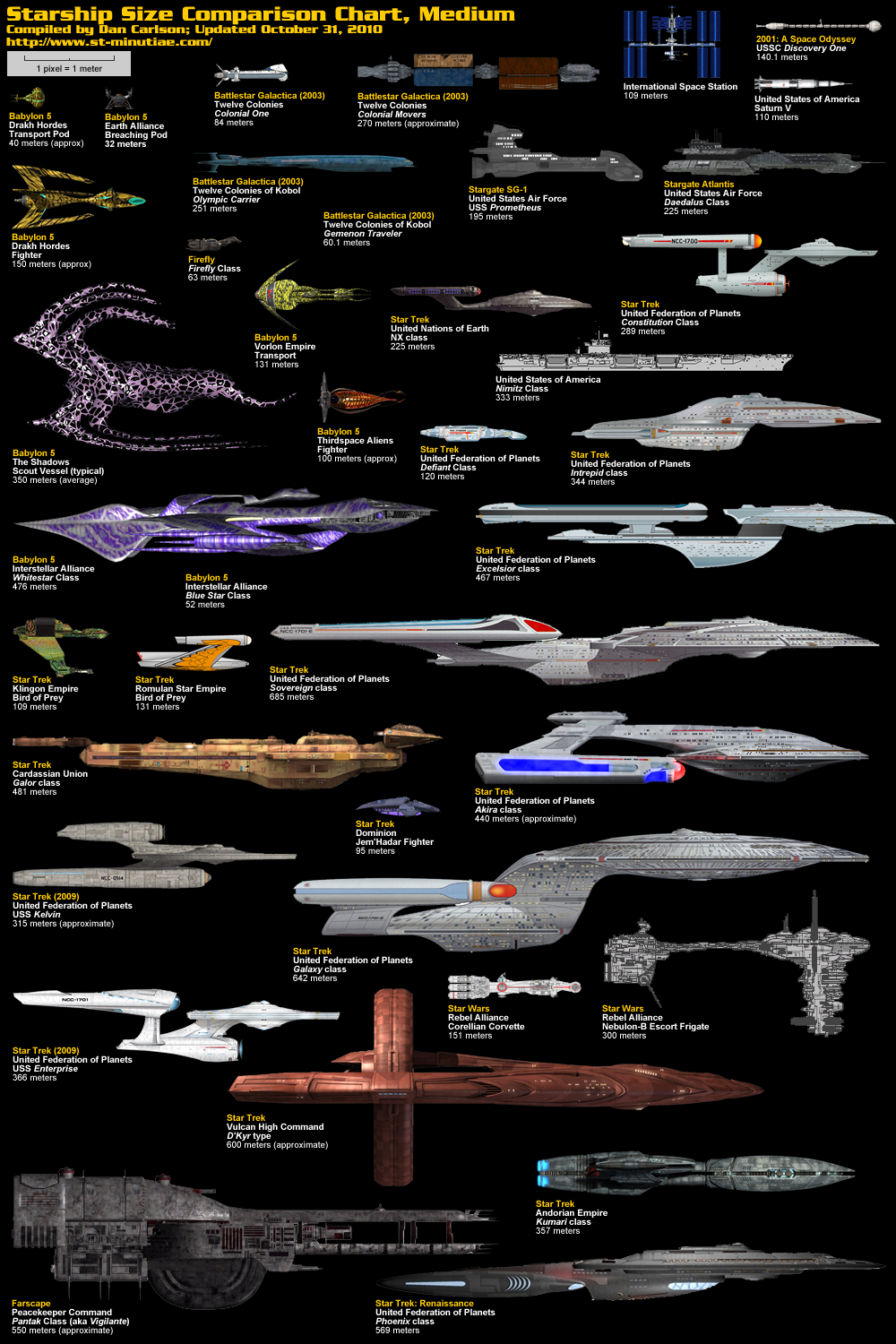
Star Trek, Star Wars, Firefly, Dr. Who… Who has the fastest space travel?  Who indeed…

Science-Fiction-Spaceship-Comparison-Infographic-2

If you click this link, they let you race the various ships across space to find out.

http://www.slate.com/articles/arts/map_of_the_week/2013/05/star_trek_enterprise_vs_star_wars_millennium_falcon_which_ship_is_fastest.html

From Slate.com:

Star Trek is all about interstellar travel. It’s right there in the title. “Warp 6!” or “Warp 9!” captains bark, sometimes following with a pedantic “point four” and punctuating with a “do it!” or “punch it!” or “engage!”  The numbers give the impression of a well-defined system of speed, but that’s misleading, and in this regard Star Trek is a good example of a recurring theme in popular science fiction: the obfuscation of distance and speed. When characters need to get from Point A to Point B with a speed that seems to defy existing rules, science fiction invents wormholes or slipstreams or other anomalies or allows captains to “risk” the ship by pushing it to a speed at which “she can’t take much more of this!” Or, worse, writers simply ignore the rules and leave it to fans, struggling to make sci-fi as real as possible, to explain away the inconsistencies for themselves in so many forums and wiki discussion pages.

It’s a little odd that a genre about science, the field of precision, can be so imprecise. The truth is that spaceships almost always fly at the speed of the plot. But, for those who refuse to accept that, this is a definitive guide to ship speeds, based on highly scientific computer simulations and highly unscientific speculation.

Enterprise: Nerds at Memory Alpha, the Star Trek wiki, have already arrived at a sprawling explanation that employs multiple warp scales associated with different eras of Star Trek’s fictitious history. The short version: As determined by a writers’ guide for the original series, theEnterprise of the original series, going at maximum, slightly unsafe warp, can reach Alpha Centauri in about three days. Although this conflicts with the apparently short trip the ship takes from Earth to Vulcan in Star Trek (2009), we’ll defer to the original series on this one. Later ships are faster, but even Voyager, one of the fastest Federation ships in the Star Trek universe, expected to take several decades to cross the galaxy and return home.

Millennium Falcon:  When Luke and Obi Wan first meet Han Solo in Mos Eisely, the first thing the smuggler does is brag about his ship. “You’ve never heard of the Millennium Falcon?” Han asks. That’s when A New Hope makes its infamous technical blunder. “It’s the ship that made the Kessel Run in less than 12 parsecs,” Han says. A parsec is, of course, a unit of distance, not time. Unfortunately, even the elaborate explanationof later material offers no more clues about the Millennium Falcon’s actual speed than the original flub. “She’ll make point five past light speed,” Han will later brag, but what does that mean? It certainly doesn’t mean 1.5 times the speed of light speed, because it would still take the ship several years to move between stars.

The Skywalker gang travels from Tatooine to where Alderaan is supposed to be in a matter of hours at the most, and the two planets, if this star chart is to be believed, are half a galaxy apart—though that wouldn’t jibe with a Star Wars role-playing book that suggests it would take several months to cross the galaxy. Crossover comics notwithstanding, the characters never make voyages to other galaxies, though this is apparently due to a disturbance at the edge of the galaxy. And a question I posed to the Star Wars subreddit yielded mixed answers.

Here’s my conclusion: In the films, the characters travel among Tatooine, Alderaan, Yavin, Hoth, Dagobah, Bespin, Naboo, Coruscant, Mustafar, and Geonosis, and never does it seem as if months or even weeks have passed. Every time a Star Wars character travels, it appears no more than the Star Wars equivalent of a short road trip, so we’ll conclude, assuming Han can get the hyperspace engine working, that the Millennium Falcon could reach the galactic center in mere minutes.

TARDIS: “All of time and space; everywhere and anywhere; every star that ever was,” the Eleventh Doctor says in a trailer for Series 5. In the 797 episodes of all the series, the TARDIS is seen at times instantly rematerializing in new galaxies or universes or times, usually accompanied with its signature noise. At others, it hurtles through space or chases down cars. We’re going to stick with its fastest mode of travel and assume it can travel to any place and any time, virtually instantaneously.

Planet Express Ship: The Planet Express Ship’s dark matter drive, which pulls the universe around it at 200 percent fuel efficiency, allows it to routinely make trips to other galaxies, such as the Galaxy of Terror, as well as, on one “morning off,” the edge of the universe. Its regular intergalactic flights make it easily one of the speediest ships in science fiction.

Heart of Gold: The Heart of Gold runs on the infinite improbability drive, which, according to The Hitchhiker’s Guide to the Galaxy, is “a wonderful new method of crossing vast interstellar distances in a mere nothingth of a second.” The only caveat: “you’re never sure where you’ll end up or even what species you’ll be when you get there.”

Jupiter 2: The ship of the lost Robinson family was to reach Alpha Centauri in 5.5 years, according to the aired pilot.

Serenity: Travel in the Verse is strictly interplanetary. A production manual suggested Malcolm Reynolds’ Firefly-class ship takes 16 days to travel one astronomical unit, or the distance between the Earth and the sun, although whether this is canonical is debatable. Material tied to theSerenity Role Playing Game suggests the planets of the Verse are arrayed among four very close stars that span, if this “Complete and Official Map of the Verse” is to be believed, a couple of hundred AU. Even with Wash at the helm, Kaylee in the engine room, and Malcolm spouting Chinese curses the whole way, Serenity would need a few decades to travel to another star system.

Battlestar GalacticaGalactica travels through space skipping from one location to another in instant jumps of a few light-years. The maximum range of each jump is obscure, but seems to be about 16 “Colonial light-years,” which I’m going to equate to light-years over the objections of possibly hundreds of nerds. The duration of the cool-down period is similarly elusive, but it’s “brief,” so let’s say five minutes. That’s about 4,600 light-years in a day, which means, excluding any structural damage to the ship, Galactica can travel to center of the galaxy in about six days doing one jump after another, with Cylons on their heels the whole way.

Voyager 1: The real-world space probe, launched in 1977, is traveling away from the sun at 38,600 miles per hour. That’s about 0.00005 light-years per year. If the probe were heading in the direction of Alpha Centauri, it would take several thousand years to arrive.


4 Comments

Filed under Humor and Observations

Anniversary of the First U.S. Speeding Ticket in 1899

First U.S. speeder caught on this date in 1899

By Antony Ingram

Published May 20, 2013

High Gear Media

  • first-ticket-660.jpg

    Electric Vehicle Company taxis in NYC (NYPL)

Speeding is big business. There’s no money to be made from it as an individual of course, unless you subscribe to the theory “time is money”.

But the U.S. Census Bureau estimates 100,000 Americans are ticketed for speeding every day, at an average cost of $150 per ticket–$5.5 billion a year in revenue.

There’ll only ever be one “first” speeding offense though, and you might be surprised to learn that it was for an electric car.

It was also a taxi driver, which you’ll be less surprised about. And a taxi driver in New York at that. “Get outta here,” you shout at the computer screen, reaching for the Ritalin.

Way back on May 20, 1899, taxi driver Jacob German was caught doing a heady 12 mph down Lexington Street in Manhattan. Caught both figureatively and literally, as a bicycle-mounted police officer clocked Mr German at the illegal speed and set off in pursuit.

Today I Found Out says the limit at the time was a more sedate 8 mph, or 4 mph around corners. Perhaps, as many electric drivers today have discovered, the relative silence of electric running leads to rather higher speeds than you’re expecting.

Reports seem to suggest the reckless Mr German didn’t receive a paper ticket though–that honor going to a Mr Myers of Dayton, Ohio in 1904, according to Ohio History Central–and instead spent some time behind bars.

Mr German drove for the Electric Vehicle Company, which ran taxis throughout New York. In fact, electric taxis were incredibly common back in 1899–Today I Found Out also reveals that 90 percent of NYC taxis were electric back in those days.

The period holds other significance for electric cars, too. Just one year earlier the first land-speed record was set by Gaston de Chasseloup-Laubat in an electric car.

We can’t imagine what that police officer would have thought of Gaston’s 39.24 mph speed, though…

Read more: http://www.foxnews.com/leisure/2013/05/20/first-us-speeder-caught-on-this-date-in-18/?intcmp=features#ixzz2Ttrjfhpo

1 Comment

Filed under Humor and Observations