Category Archives: Writing

Welcome to New Followers!!

I really appreciate all of you who come to this blog site for some fun and interesting reading.  I am now up to 468 followers on my blog and if you throw in the twitter feed @mbtimetraveler, linkedin, FB, pinterest, etc., up to around 4,000.  Every one of you are awesome!  Thanks for the support, you reading the posts makes it fun for me to put them on here.  If you think this is an enjoyable blog, please recommend it to others so we can reach that 500 blog followers mark.

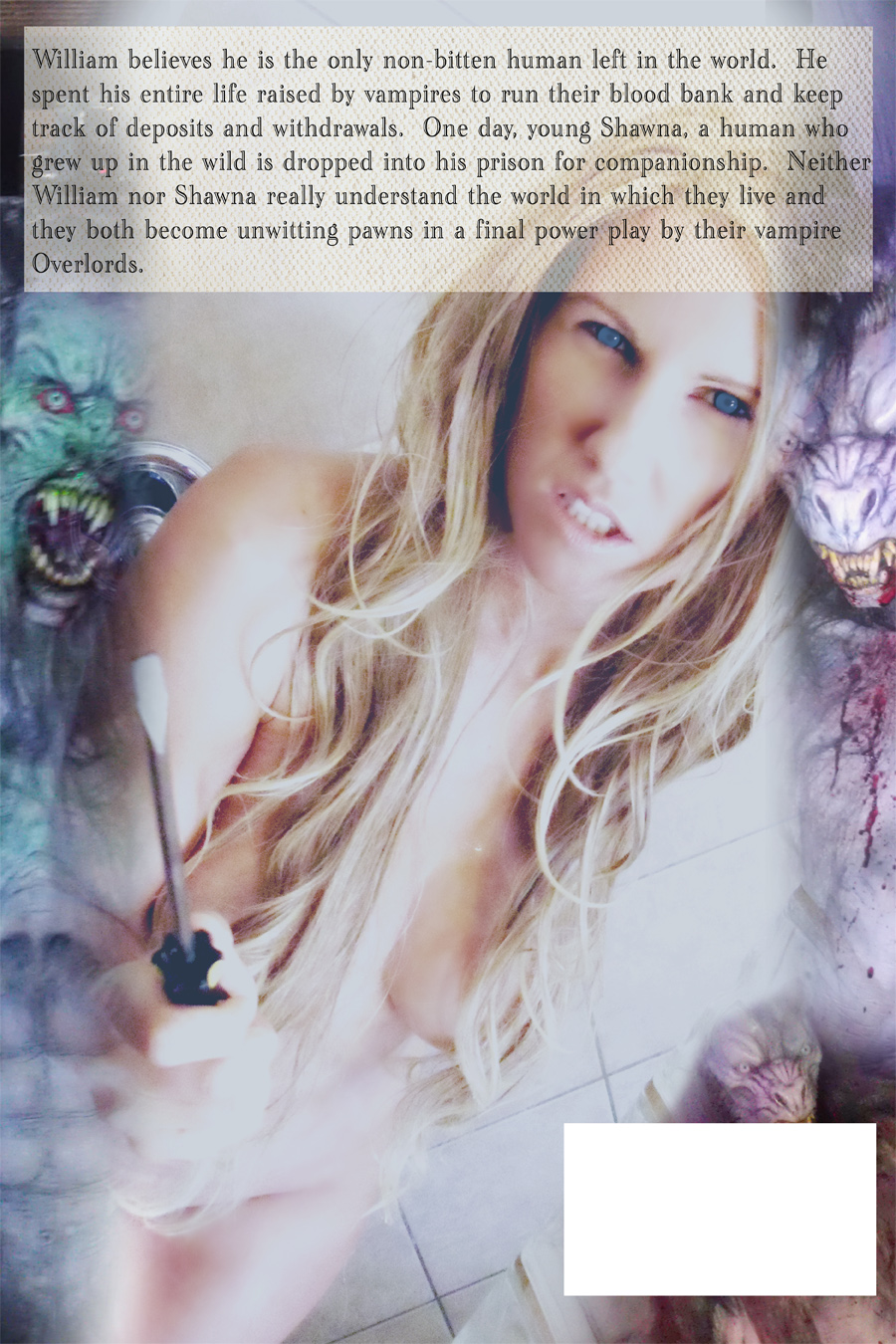
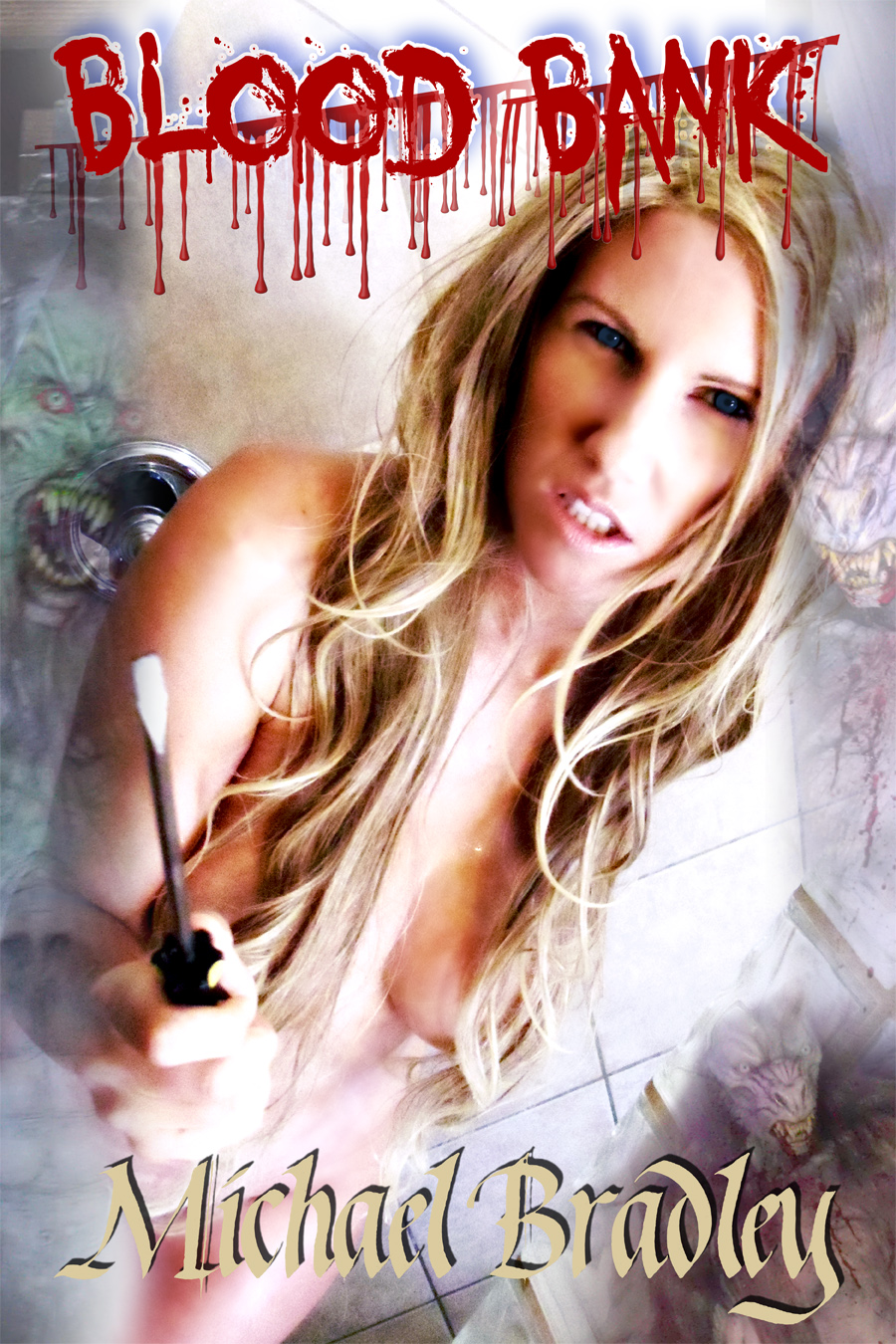
Also, if you ever want some longer reading, feel free to visit my store for links to my books.  I just finished the first draft of my fifth book, Blood Bank.  I am rewriting it and then it goes to the agents/publishers for consideration.  Wish me luck!

Here are some early concept covers courtesy of the lovely Cara Nicole (AZ Powergirl) posing as the heroine of the story, Shawna.  At the beginning she is dropped naked into the Blood Bank and has nothing to defend herself but her fierce spirit and a screwdriver.  Photography and design by Alfred Trujillo:

Front Cover

Front Cover


Back Cover

Back Cover


2 Comments

Filed under Humor and Observations, Writing

Tasha Harrison on self publishing: ‘I was sick of rejection’

Tasha Harrison on self publishing: ‘I was sick of rejection’

After trying to publish her work through traditional routes for 10 years, Tasha Harrison decided to take control and self-publish.

• Tasha Harrison was recommended by readers greenawayzoo and LS Young. Scroll down to recommend your own favourite self-published books

Tasha Harrison

‘Self-publishing has been liberating’… Tasha Harrison. Photograph: Tasha Harrison

Why did you choose to self-publish?

I first had interest from a literary agent back in 2001, after sending out a stack of manuscripts. It eventually came to nothing, but at the time I was over the moon just to have confirmation I could write. A year later, after another mass send-out, I found another literary agent who took me on but, unfortunately, she was unable to sell my book, Package Deal. After that disappointment, I told her I was thinking of self-publishing but she didn’t think it was a good idea, so we parted ways. This was 2004 – before the rise of ebooks and the birth of Facebook and Twitter. My husband, Chris, runs a graphic design agency so he helped me to design a cover for Package Deal and we printed a few hundred copies. He also set up a website for me to sell them through. I had no marketing plan but to my amazement several branches of Waterstones in East Sussex took it on, as well as a few independent bookshops. I also got a tiny bit of publicity although most of the press refuse to review self-published books. All in all, I probably sold around 150 copies – but most of those were to friends.

Despite making a loss, it wasn’t completely in vain. I sent off 50 of my new paperbacks and the first three chapters of my next novel, Hot Property, to another round of agents. Before long, I landed myself a new agent who was absolutely certain she could sell Hot Property. But after several drafts, she seemed less keen and told me to write something else, so I did, my third book – Pearls. When I submitted the manuscript, however, she turned it down and politely let me go. To say I was gutted was an understatement. I felt I’d reached the end of the road. It was then 2011. For 10 years, I’d been trying to find a way in, but it was “access denied” every time.

I put my books to one side for a year – I had enough to keep me busy working part-time as a copywriter and looking after two young children. Then Chris got wind of people self-publishing on Amazon and suggested I give it a go. As it would cost us nothing – Package Deal and Hot Property had already been edited and proofread, and Chris could sort out the covers – it was a no-brainer. I was sick of rejection and waiting for agents to get back to me while my books waited in slushpiles. That route clearly didn’t work and I’d wasted enough time trying it. It was time to try something else, so in early 2012, I self-published with Amazon KDP (Kindle Direct Publishing).

Tell us a bit about the books

Package Deal is a comedy about a group of British holidaymakers whose lives become entangled on the Greek island of Kefalonia. It’s told from several characters’ perspectives, including lone traveller Mia who has a more specific reason for going to Kefalonia than her neighbouring counterparts.

Hot Property is also a comedy, this time about a group of British expats who are all chasing the sun, sea and sand dream in Crete, but whose plans for an idyllic lifestyle come a cropper thanks to a handsome but devious property dealer.

My third novel, Pearls, is different. It’s set in England, and is about three women – a reformed alcoholic, a cleaner and a career-driven magazine designer – whose lives converge when they each try to follow or resist fate.

My first two books are beach reads – sort of EastEnders meets Shirley Valentine. My third is a little more serious than the previous two, although it still has a comic element. If I had to put all three books under one umbrella, I suppose it would be “feel-good fiction“. All three books are currently only available as ebooks.

What are the positives of self-publishing?

I’m in control – well, more than I was, at any rate. My books are selling and people are contacting me to say how much they’ve enjoyed reading them. I’ve waited a long time to have that satisfaction! I have instant access to my sales figures, can change my cover image, price and content whenever I want and work to my own deadlines. I’m not worrying too much about what genre I fall under, either. Overall, self-publishing has been liberating.

And the negatives?

Marketing. I’m building a readership from scratch, progress is slow and I’m learning on the job. I joined Twitter and set up a Facebook author page the same day I uploaded my first two books to Amazon – hardly a marketing plan. At first, I found it nerve-wracking interacting with other people on Twitter, asking for advice and feedback. However, I’ve met some lovely authors that way and have learned a lot from them. I’ve also met some lovely readers. Twitter is a great networking tool but it’s not a bookselling tool, although it can be useful when running a free promotion, which I’ve experimented with a few times. Overall, finding the time to market my books and write the next one is the biggest challenge – there just aren’t enough hours in the day.

How are you pricing your books?

When I first uploaded my books, I priced them at £2.99 each (allowing me 70% royalties). After a good start and a successful summer last year that surpassed my expectations, my sales plummeted overnight last September and trickled in over the winter. Suddenly, my future in self-publishing was looking a lot less rosy. I got a bit obsessed with what could possibly have caused such a sudden, dramatic drop in my sales. I came up with various theories – Amazon’s algorithms, the sudden expansion of Amazon into other countries, perhaps my books only have summer time appeal, etc – until, eventually, I realised there was nothing I could do about it. Reluctantly, I dropped the price to 99p, which reduced my royalties to 35%. My reasoning was that it was still early days and I wanted to encourage readers to take a chance on me. Sales have picked up considerably since then.

In my first year of self-publishing, I sold over 1,500 books. In the first half of this year I’ve sold 2,000. For someone who thought they’d be lucky to sell 100, that’s pretty good going!

Have you worked with an editor or designer on the novel?

I edited my first two novels under the guidance of the agents I had at the time, but with my third, Pearls, I was on my own. I sent it to my friend Jo Dearden – a fellow copywriter who I used to work with – and paid her to help me edit and proofread it. She made valid points, spotted inconsistencies and threw ideas on to the pitch. Then it was really hard to know when to follow her advice and when to stick to my guns. As for a designer, I’m very fortunate that my husband has designed all my covers – although I have to do all his proofreading in return!

Do you think this is important?

Professional proofreading and cover design is crucial. I think it’s best to view these services as an investment rather than a cost. When my local Waterstones took Package Deal on a few years back, they looked at the cover, read the blurb and said “yes”. I was astonished. I thought they’d take a few weeks to consider it. But that’s how we all buy books – the cover draws you in, so you read the blurb. If the blurb appeals, you buy the book. So those two elements are essential to get right.

As for proofreading, it’s not humanly possible to spot every one of your typos among 80,000 words – you need a few fresh pairs of eyes. Saying that, I’ve yet to read a traditionally published book without a single typo in it. With regards to editing, it’s important, but I think it’s more subjective. An editor can provide a lot of insightful advice, but you don’t have to follow it all if it doesn’t feel right.

Would you self-publish again?

Yes. I’m currently working on my fourth novel, Blown-Away Man, about an advertising executive who embarks on a journey of self-discovery after having a bombshell dropped on him at a school reunion. I’m also working on a collection of humorous children’s stories, called The Adventures of Fartina Gasratilova. Both books have samples on my blog and should be ready to publish by the end of the year.

A short passage from Pearls

You don’t remember the last time you slapped me, do you?’ said Katherine.

How Miriam wanted to wipe her 15-year-old daughter’s mocking expression from her face right there and then.

‘OK, I’ll tell you,’ Katherine sighed. ‘It was a few days ago when you accused me of not telling you that I’d be staying the night at Samantha’s. Only I did tell you. I’d even written you a note, just in case you forgot about it. Later I found my note and showed it to you and instead of apologising to me you slapped me. I said it was no wonder Julian was avoiding you, ‘cos who wants to spend all their time with a pisshead? You slapped me again, and that time, I slapped you back.’

Miriam had no recollection of any of this. She wouldn’t put it past her angry, rebellious daughter to make it all up just to get back at her.

‘You’re –’ She hesitated.

‘Lying?’ Katherine laughed. ‘Jesus, Mum. You really don’t remember a thing, do you? Weird … I wonder if this is what it’s like to live with someone with Alzheimer’s?’

Miriam exploded. ‘GET OUT!’

Katherine saluted her. ‘Adios, amigo.’ She opened the door and hopped out.

Miriam sped off, nearly colliding with another vehicle and bolting through a red light.

1 Comment

Filed under Writing

Fellow Author Releases Novel

I met Colin James while attending the West Valley Writers’ Workshop in Avondale, Arizona.  Colin has a number of works and has just released his first novel – Lord Alf.  Here is a picture of Colin James, his bio, a picture of his new novel, a link to Amazon if you wish to purchase it or check it out, and the book description.

Remember to support our new authors.  You can also find my books, although I am sure you have already purchased them *wink, at my Store Tab on this site.  Thanks!

colin james

Colin James

Colin James, an Englishman by birth and a Yorkshireman by the grace of the gods, who emigrated to the U.S back in 2001, is a happily married man with two terrible children. After various junctures in New Mexico and New York he and his family are now settled in Arizona. The career path he has followed has taken him from the ranks of the British Army (R.E.M.E.) to the tops of Austrian mountains as a ski guide. A former engineering professional in the semi-conductor industry, he currently runs a successful window cleaning company in sunny Phoenix. As well as helping the local population to see through clean glass, he is a writer, author, and blogger.

A 3rd year student of English literature at Arizona State University and a member of the WEST VALLEY WRITERS WORKSHP Colin has already been published in several on line literary magazines including ‘THE FRONT PORCH’ and ‘AT THE BIJOU’. His work has appeared in print at ‘THE STARVING ARTIST’ and he has received accolades in several prestigious writing competitions. A rising literary star of the future his first novel LORD ALF is completed.

To date Colin has published three books which are available at AMAZON. COM

lord alf

http://www.amazon.com/Lord-Alf-ebook/dp/B00ETISGXC/ref=sr_1_1?s=digital-text&ie=UTF8&qid=1377799836&sr=1-1&keywords=LORD+ALF

The hammer is poised, the metal is hot and the atmosphere in the auditorium is electric. The boys burst through the dry ice, on to the stage, and into their routine. Tennyson’s charge comes alive; a hoof-thundering dash of British humor, classic literature, wailing guitars, and schoolboy inadequacy.

It’s the end of the school year, exams are finished, and Jake and his mates are going out with a bang. The sixth form ‘Blast’ is ahead of them as the lads prepare for one final blow out. Ending their time at ‘Woldcroft Comprehensive’ and taking their rightful place in the annals of high-school history before disappearing to leafy college nowheres. They have practiced, they are word perfect, the act is finely tuned, and they sort of look the part!

‘Lord Alf’ traces the experiences not only of the boys’ performance, but of a soldier who actually rode in the charge, Tennyson himself, and his creation ‘The Charge of the Light Brigade.’ The story unfolds in the corridors of an English secondary school with all the foibles of a depressed Thatcher Britain. It takes us across the battlefields of the Crimea, placing the reader in the center of the charge, and walks the reader through the streets of Victorian England.

‘Lord Alf’ documents the quirks of British adolescence in a dwindling age of empire, a riveting story which shows depth, historical nuance, emotion and humor. It highlights the wastage of war and compares and contrasts the social issues of Victorian England with the modern age.

1 Comment

Filed under Humor and Observations, Writing

Penguin Random House Merger Helps Author Solutions Exploit Writers

Penguin Random House Merger Helps Author Solutions Exploit Writers.

1 Comment

Filed under Writing

1,000 Posts!

The artistic prosthetics was my 1,000th post on this blog!  Woohoo!

7 Comments

Filed under Humor and Observations, Uncategorized, Writing

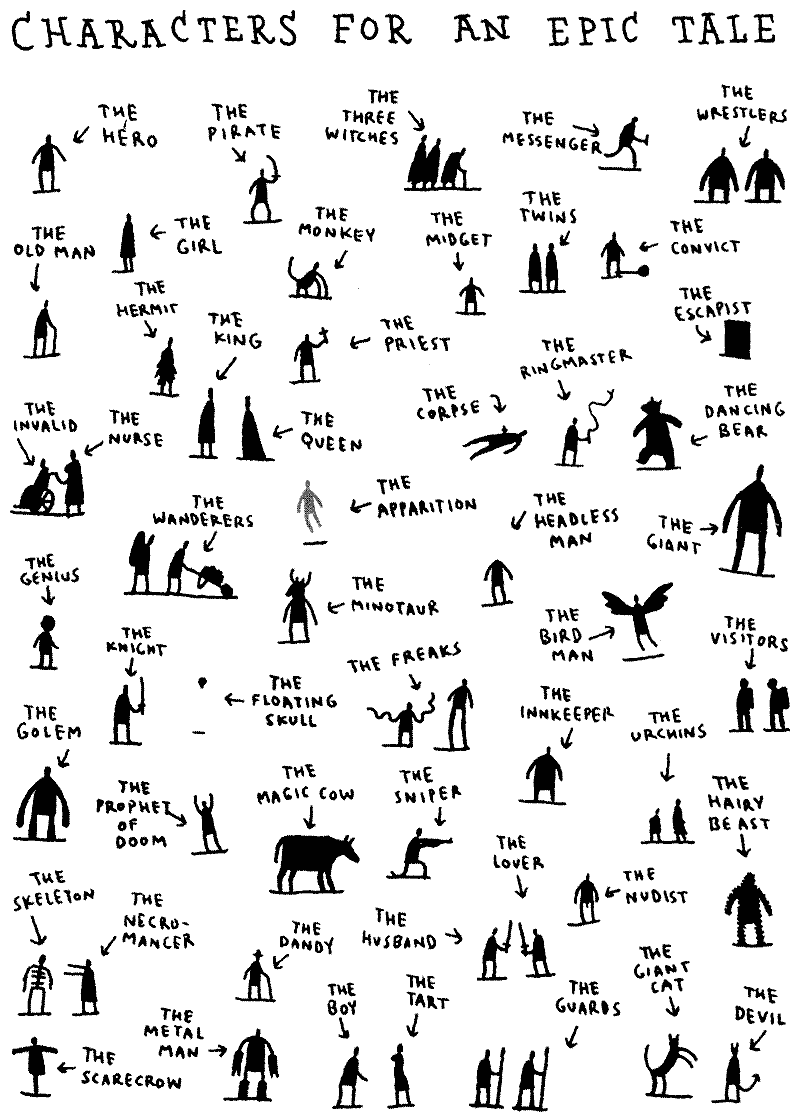
Characters for an Epic Tale

I love this drawing of characters for an epic tale.  Just the characters and their titles gave me hundreds of ideas for stories.  So many stories, so little time…sigh.  I hope you enjoy this cute set of drawing and characters I found on StumbleUpon at:

http://www.stumbleupon.com/su/2DCou6/mlkshk.com/r/DC1/

Unfortunately, I am not sure who to credit, other than mlkshk.com.  If you know who drew this, please comment.

characters in epic stories

1 Comment

Filed under Humor and Observations, Writing

Free Science Fiction Story – The Drifter

The Drifter is a four part sci-fi serial I penned for The WOD Magazine.  The first three parts have been published.  You lucky readers of this blog can read all four parts.  Just go to my page “Flash Fiction” and you can read it in its entirety.  It is only 2,800 words total.  It was a bit of a challenge to write flash fiction in four parts.  I hope you find the story entertaining and thought provoking.

drifter

1 Comment

Filed under Humor and Observations, Writing

Great Character Descriptions from Science Fiction and Fantasy Books

As an author I found this very helpful.  I was pleased to see that I have read most of the books as well.  Putting good reading into your head helps get good writing out of it.  These descriptions are far from the police version – 6 foot, medium build, 30s, caucasion male.  I think all of us can learn to think a bit outside the box in creating our descriptions.

Reposted from StumbleUpon, from I09, written by CHARLIE JANE ANDERS AND MANDY CURTIS.

Great Character Descriptions from Science Fiction and Fantasy Books

The best science fiction and fantasy books aren’t just about amazing ideas, or huge vistas — they’re about people. So part of the key to a really successful SF/fantasy book is to describe people in a memorable, cool fashion.

A good description of a character goes a long way to letting you get to know that person — but it’s a tricky business. The best way to learn this challenging skill is by studying how others have pulled it off in the past. So here are some examples of our favorite character descriptions from science fiction and fantasy books.

Top image by Tomasz Jendruszek.

Ender’s Game by Orson Scott Card (page 10):

“Ender did not see Peter as the beautiful ten-year-old boy that grown-ups saw, with dark, tousled hair and a face that could have belonged to Alexander the Great. Ender looked at Peter only to detect anger or boredom, the dangerous moods that almost always led to pain.” Nice construction, telling us how other people see Peter, but then juxtaposing it with the more visceral way that Ender sees him.

The Hundred Thousand Kingdoms by N.K. Jemisin (page 30):

“… Face like the moon, pale and somehow wavering. I could get the gist of his features, but none of it stuck in my mind beyond an impression of astonishing beauty. His long, long hair wafted around him like black smoke, its tendrils curling and moving of their own volition. His cloak — or perhaps that was his hair too — shifted as if in an unfelt wind. I could not recall him wearing a cloak before, on the balcony. The madness still lurked in his face, but it was a quieter madness now, not the rabid-animal savagery of before. Something else — I could not bring myself to call it humanity — stirred underneath the gleam.” This is full of lovely imagery, including the hair and the cloak moving like smoke — and it leaves you with a really sharp impression even as you don’t ever get a clear impression of him, because Yeine doesn’t either. It’s like a painting that sticks with you.

Hitchhiker’s Guide to the Galaxy by Douglas Adams (page 11):
“He was not conspicuously tall, his features were striking but not conspicuously handsome. His hair was wiry and gingerish and brushed backward from the temples. His skin seemed to be pulled backward from the nose. There was something very slightly odd about him, but it was difficult to say what it was. Perhaps it was that his eyes didn’t seem to blink often enough and when you talked to him for any length of time your eyes began involuntarily to water on his behalf. Perhaps it was that he smiled slightly too broadly and gave people the unnerving impression that he was about to go for their neck.” This description of Ford Prefect is sparky and full of action, you can practically see him smiling unblinkingly at you.

Lord of the Rings: The Fellowship of the Ring by J.R.R. Tolkien (page 274):

“The face of Elrond was ageless, neither old nor young, though in it was written the memory of many things both glad and sorrowful. His hair was dark as the shadows of twilight, and upon it was set a circlet of silver; his eyes were grey as a clear evening, and in them was a light like the light of stars.” You can almost feel night gathering as you read that passage, from the gray of evening to the appearance of the night sky, and the overall impression is one of great age despite the claim of agelessness.

The Hunger Games by Suzanne Collins (page 98):

“She’s the twelve-year-old, the one who reminded me so of Prim in stature. Up close she looks about ten. She has bright, dark eyes and satiny brown skin and stands tilted up on her toes with arms slightly extended to her sides, as if ready to take wing at the slightest sound. It’s impossible not to think of a bird.” A lot of the best character descriptions have action or a element of movement to them, so you not only see the character, you see her in motion. (Doris Lessing has a good passage about this in one of her Martha Quest novels.) Here, we get Rue’s physical details, but we also have an indelible sense of how she moves.

Do Androids Dream of Electric Sheep? by Philip K. Dick (page 39):

“Black-haired and slender, wearing the huge new dust-filtering glasses, she approached his car, her hands deep in the pockets of her brightly striped long coat. She had, on her sharply defined small face, an expression of sullen distaste.” The body language, with the hands deep in the coat pockets, is super clear — you can practically see her hunching over. And you have to love the giant glasses and the “sharply defined small face.”

Great Character Descriptions from Science Fiction and Fantasy Books

Soulless by Gail Carriger (page 8):
“The fourth Earl of Woolsey was much larger than Professor Lyall and in possession of a near-permanent frown. Or at least he always seemed to be frowning when he was in the presence of Miss Alexia Tarabotti, ever since the hedgehog incident (which really, honestly, had not been her fault). He also had unreasonably pretty tawny eyes, mahogany-colored hair, and a particularly nice nose.” What’s great here is that you digress into backstory that gives you a tantalizing hint about this character’s bad temper, and then suddenly you’re snapped back into very concrete physical description — but the physical description seems sharper because you’ve gotten this impression of Lord Maccon as a person.

A Clockwork Orange by Anthony Burgess (page 2):

“These sharps were dressed in the heighth of fashion too, with purple and green and orange wigs on their gullivers. Each one not costing less than three or four weeks of those sharps’ wages, I should reckon, and make-up to match (rainbows round the glazzies, that is, and the rot painted very wide). Then they had long black very straight dresses, and on the groody part of them they had little badges of like silver with different malchick’s names on them-Joe and Mike and suchalike.” Describing the three devotchkas, Burgess gives us a crash course in dystopian future fashion.

Dune by Frank Herbert (page 459):

“Through the door came two Sardukar herding a girl-child who appeared to be about four years old. She wore a black aba, the hood thrown back to reveal the attachments of a stillsuit hanging free at her throat. Her eyes were Fremen blue, staring out of a soft, round face. She appeared completely unafraid and there was a look to her stare that made the Baron feel uneasy for no reason he could explain.” Your immediate impression of Alia is one of power and disturbing intensity. But there’s a lot of implied violence in the description too — the hood that’s “thrown back” and the emphasis on her bare throat. It’s immediately intense and gripping.

Harry Potter and the Philosopher’s Stone by J.K. Rowling (page 8):

“If the motorcycle was huge, it was nothing to the man sitting astride it. He was twice as tall as a normal man and at least five times as wide. He looked simply too big to be allowed, and so wild — long tangles of bushy black hair and beard hid most of his face, he had hands the size of trash can lids, and his feet in their leather boots were like baby dolphins.” The idea that Hagrid is “simply too big to be allowed” is fantastic — it’s the Dursleys’ viewpoint seeping through, but also maximizes how big and unruly he seems. And his feet are like baby dolphins! It’s comical and totally lodges itself in your brain.

Slaughterhouse Five by Kurt Vonnegut (page 23):

“He was a funny-looking child who became a funny-looking youth — tall and weak, and shaped like a bottle of Coca-Cola.” I love the pithiness of Vonnegut, the quirky images that say a lot in a few words.

Boneshaker by Cherie Priest (page 22):

“Without the coat, her body had a lean look to it — as if she worked too long, and ate too little or too poorly. Her gloves and tall brown boots were caked with the filth of the plant, and she was wearing pants like a man. Her long, dark hair was piled up and back, but two shifts of labor had picked it apart and heavy strands had scattered, escaping the combs she’d used to hold it all aloft.” This is another description that gives you both the physical details but also a sense of who Briar is, and exactly how poverty and hard labor have affected her.

Nineteen Eighty-Four by George Orwell (page 12):
“She was a bold-looking girl of about twenty-seven, with thick dark hair, a freckled face, and swift, athletic movements. A narrow scarlet sash, emblem of the Junior Anti-Sex League, was wound several times around her waist of her overalls, just tightly enough to bring out the shapeliness of her hips.” I love the irony of the anti-sex sash bringing out the shapeliness of Julia’s hips, but also the repeated suggestions that she’s bold and fast-moving.

Neverwhere by Neil Gaiman (page 7):

“There are four simple ways for the observant to tell Mr. Croup and Mr. Vandemar apart: first, Mr. Vandemar is two and a half heads taller than Mr. Croup; second, Mr. Croup has eyes of a faded china blue, while Mr. Vandemar’s eyes are brown; third, while Mr. Vandemar fashioned the rings he wears on his right hand out of the skulls of four ravens, Mr. Croup has no obvious jewelry; fourth, Mr. Croup likes words, while Mr. Vandemar is always hungry. Also, they look nothing alike.” I love how the first sentence sets you up to believe the two characters are almost identical, and by the time the expectation is subverted, you’ve gotten a very clear impression of both of them because you’ve been paying extra-careful attention.

Fahrenheit 451 by Ray Bradbury (page 4):

“He knew that when he returned to the firehouse, he might wink at himself, a minstrel man, burnt-corked, in the mirror. Later, going to sleep, he would feel the fiery smile still gripped by his face muscles, in the dark. It never went away, that smile, it never ever went away, as long as he remembered.” It’s not exactly a description, but it gives us a vivid impression of Guy Montag, his creepy smile and his burnt face.

The Golden Compass by Philip Pullman (page 12):

“Lord Asriel was a tall man with powerful shoulders, a fierce dark face, and eyes that seemed to flash and glitter with savage laughter. It was a face to be dominated by, or to fight: never a face to patronize or pity. All his movements were large and perfectly balanced, like those of a wild animal, and when he appeared in a room like this, he seemed a wild animal held in a cage too small for it.” I love the idea that his movements can be both huge and completely controlled, and that his face tells you what the two proper responses to it are.

Brave New World by Aldous Huxley (page 4):

“Tall and rather thin but upright, the Director advanced into the room. He had a long chin and big rather prominent teeth, just covered, when he was not talking, by his full, floridly curved lips. Old, young? Thirty? Fifty? Fifty-five? It was hard to say.” It’s funny how a lot of descriptions leave some things unresolved, like the Director of Hatcheries and Conditioning’s age — but you know that he’s someone who “advances” into a room rather than strolling in, and he’s always talking and displaying his giant teeth.

A Game of Thrones by George R.R. Martin (page 40):
“Fifteen years past, when they had ridden forth to win a throne, the Lord of Storm’s End had been clean-shaven, clear-eyed, and muscled like a maiden’s fantasy. Six and a half feet tall, he towered over lesser men, and when he donned the armor and the great antlered helmet of his house, he became a veritable giant. He’d had a giant’s strength too, his weapon of choice a spiked iron warhammer that Ned could scarcely lift. In those days, the smell of leather and blood had clung to him like perfume.

“Now it was perfume that clung to him like perfume, and he had a girth to match his height. Ned had last seen the king nine years before during Balon Greyjoy’s rebellion, when the stag and the direwolf had joined to end the pretensions of the self-proclaimed King of the Iron Islands. Since the night they had stood side by side in Greyjoy’s fallen stronghold, where Robert had accepted the rebel lord’s surrender and Ned had taken his son Theon as hostage and ward, the king had gained at least eight stone. A beard as course and black as iron covered his jaw to hide his double chin and the sag of his royal jowls, but nothing could hide his stomach or the dark circles under his eyes.” Instead of a contrast between how other people see a character and the POV character sees him, as in Ender’s Game, you have a lovely contrast between how Robert appeared in his prime and how he appears now — which serves to accentuate his present decrepitude far more than a simple description would.

1 Comment

Filed under Humor and Observations, Writing

Cosplay Interviews

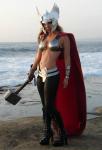
Each month I am interviewing cosplayers for publication and radio broadcasts in conjunction with Patti Hulstrand at The WOD and KWOD radio.  Last month Toni Darling was the headline article and this month Cassandra S. Kyle will be featured.  I am currently scheduling Cara Nicole, AZ Powergirl for recording and interview.  If you would like to join in and get on the schedule so your fan base can learn more about you, please let me know at eiverness@cox.net.  The interviews are very pro-cosplay and you will receive sample questions in advance.
1 Comment

Filed under Humor and Observations, Writing

Rare Books

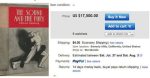
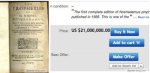
Here are a list of some rare books and their prices.  Just a reminder, you can buy my books today instead of waiting years until they cost millions.

1 Comment

Filed under Humor and Observations, Writing