The Causes of the Disappearing Bees

Feds blame combination of parasite, virus, bacteria, pesticides for strange bee disappearance

Published May 05, 2013

Associated Press

  • Disappearing Bees 2013.jpg

    May 2, 2013: A bee looks for a pollen laden flower in Kennewick, Wash. A new U.S. report blames a combination of problems for a mysterious and dramatic disappearance of honeybees across the country since 2006. (AP Photo/The Tri-City Herald, Richard Dickin)

  • Disappearing Bees 2013 2.jpg

    Jeffery Pettis, a top bee scientist at the Agriculture Department’s Bee Research Laboratory, talks about his work with honeybees, in Beltsville, Md in 2007. (AP Photo/Haraz N. Ghanbari)

  • Disappearing Bees 2013 1.jpg

    A new federal report blames a combination of problems for a mysterious and dramatic disappearance of U.S. honeybees since 2006. The factors cited include a parasitic mite, multiple viruses, bacteria, poor nutrition and pesticides. Experts say having so many causes makes it harder to do something about what’s called colony collapse disorder. The disorder has caused as much as one-third of the nation’s bees to just disappear over the winter each year since 2006. (AP Photo/Haraz N. Ghanbari)

A new federal report blames a combination of problems for a mysterious and dramatic disappearance of U.S. honeybees since 2006.
The intertwined factors cited include a parasitic mite, multiple viruses, bacteria, poor nutrition, genetics, habitat loss and pesticides.

The multiple causes make it harder to do something about what’s called colony collapse disorder, experts say. The disorder has caused as much as one-third of the nation’s bees to just disappear each winter since 2006.

Bees, especially honeybees, are needed to pollinate crops.

The federal report, issued Thursday by the Agriculture Department and the Environmental Protection Agency, said the biggest culprit is the parasitic mite varroa destructor, calling it “the single most detrimental pest of honeybees.”

The problem has also hit bee colonies in Europe, where regulators are considering a ban on a type of pesticides known as neonicotinoids that some environmental groups blame for the bee collapse. The U.S. report cites pesticides, but near the bottom of the list of factors. And federal officials and researchers advising them said the science doesn’t justify a ban of the pesticides yet.

May Berenbaum, a top bee researcher from the University of Illinois, said in an interview that she was “extremely dubious” that banning the pesticide would have any effect on bee health. She participated in a large conference of scientists that the government brought together last year to figure out what’s going on, and the new report is the result of that conference.

Berenbaum said more than 100 different chemicals – not just the pesticides that may be banned in Europe – have been found in bee colonies. Scientists find it hard to calculate how they react in different dosages and at different combinations, she said.

Some of these chemicals harm the immune systems of bees or amplify viruses, said Penn State University bee expert Diana Cox-Foster.

At a news conference Thursday, Sonny Ramaswamy, a top USDA official, said the scientific consensus is that there are multiple factors “and you can’t parse any one out to be the smoking gun.”

USDA bee researcher Jeff Pettis also cited modern farming practices that often leave little forage area for bees.

Dave Gaulson of the University of Stirling in Scotland, who conducted a study last year that implicated the chemical, said he can’t disagree with the overall conclusions of the U.S. government report. However, he said it could have emphasized pesticides more.

The environmental group, Pesticide Action Network North America blasted the federal government for not following Europe’s lead in looking at a ban of certain pesticides.

Pollinators, like honeybees, are crucial to the U.S. food supply. About $30 billion a year in agriculture depends on their health, said Ramaswamy.

Besides making honey, honeybees pollinate more than 90 flowering crops. Among them are a variety of fruits and vegetables: apples, nuts, avocados, soybeans, asparagus, broccoli, citrus fruit and cranberries. About one-third of the human diet comes from insect-pollinated plants, and the honeybee is responsible for 80 percent of that pollination.

“It affects virtually every American whether they realize it or not,” said EPA acting administrator Bob Perciasepe.

Zac Browning, a fourth-generation commercial beekeeper who has hives in Idaho, North Dakota and California, said the nation is “on the brink” of not having enough bees to pollinate its crops.

University of Maryland entomologist David Inouye, who was not part of the federal report, said he agrees that there are multiple causes.

“It’s not a simple situation. If it were one factor we would have identified it by now,” he said.

Inouye, president-elect of the Ecological Society of America, said the problems in Europe and United States may be slightly different. In America, bee hives are trucked from farm to farm to pollinate large tracts of land and that may help spread the parasites and disease, as well as add stress to the colonies, while in Europe they stay put so those issues may not be as big a factor.

At the news conference, Berenbaum said there’s no single solution to the U.S. bee problem: “We’re not really well equipped or even used to fighting on multiple fronts.

Read more: http://www.foxnews.com/science/2013/05/05/feds-blame-combination-parasite-virus-bacteria-pesticides-for-strange-bee/?intcmp=features#ixzz2SQlUIKuZ

Leave a comment

Filed under Animals, Humor and Observations

1820 Clockwork Caterpillar

1820:Mechanical Robot Caterpillar

“Made by Swiss watchmaker Henri Maillardet for sale to aristocratic Chinese buyers. The gold, enamel, jewel and pearl-set automaton mimics the caterpillar’s crawl with a clockwork powered mechanism which drives a pair of gilt-metal knurled wheels. 

“It was titled ‘the Ethiopian caterpillar’ when Maillardet, in partnership with watchmaker Jaquet Droz, organized an exhibition to show off his miniaturised automata in London.”

– Daily Mail

Leave a comment

Filed under Humor and Observations

Fly-sized robot takes first flight

Fly-sized robot takes first flight

By Jillian Scharr

Published May 03, 2013

TechNewsDaily

  • RoboticInsect

    The RoboBee is the smallest flight-capable robot to date. (Kevin Ma and Pakpong Chirarattananon, Harvard University.)

Flies have tiny wings and even tinier brains, yet they are capable of flying swiftly and agilely through even turbulent air. How do they do it?

And could we create a robot capable of doing the same?

That’s the question that’s been buzzing around Harvard professor Robert Wood’s head for 12 years now. And finally, after years of testing and the invention of an all-new manufacturing technique inspired by children’s pop-up books, Wood and his team at the Wyss Institute for Biologically Inspired Engineering at Harvard University have created a robot the size of a penny that is capable of remote-controlled flight. 

‘Large robots can run on electromagnetic motors, but at this small scale, you have to come up with an alternative.’

– Kevin Ma, a graduate student at Harvard’s School of Engineering and Applied Sciences 

You’d think that the smaller something is, the easier it’d be to make. But there’s a point at which making things smaller becomes harder rather than easier, which is why making a functional fly-sized robot has proved such a challenge.

The so-called RoboBee flaps its wings approximately 120 times per second, almost faster than the eye can track, and is capable of hovering and flying horizontally in multiple directions like a helicopter.

At 80 milligrams, which is less than one-twentieth the weight of a dime, the robot is so small that traditional components of flight-capable machines simply wouldn’t work, so the team had to create new ones.

“Large robots can run on electromagnetic motors, but at this small scale, you have to come up with an alternative, and there wasn’t one,” Kevin Ma, a co-lead author and graduate student at Harvard’s School of Engineering and Applied Sciences, said in a statement.

In place of electromagnetic motors, the team used ceramic strips that can expand or contract when hit with an electric field, a technique known as piezoelectricity. 

The problem of building these parts at a fly-sized scale was also an enormous obstacle. For example, the robot has no onboard power source — instead, it receives electricity via a thin wire connected to an external battery.

To build the other parts, the team looked for inspiration not from the natural world, but from children’s pop-up books and origami.

Their solution is a groundbreaking technique that involves layering and folding sheets of carbon fiber, brass, ceramic and other materials, and then using extremely precise lasers to cut these sheets into structures and circuits. After that, the sheets can be assembled into extremely small but entirely functional devices in a single movement, just like a children’s pop-up book.    

Wood and his team devised the pop-up technique in 2011, publishing a paper on it in February 2012. And last summer, after years of failed prototypes, the first RoboBee took flight in a Harvard robotics lab at 3 a.m.

Read more: http://www.foxnews.com/tech/2013/05/03/fly-sized-robot-takes-first-flight/?intcmp=trending#ixzz2SN5zkDo9

Leave a comment

Filed under Humor and Observations

Vadering

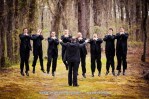
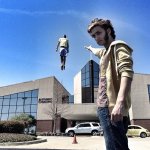
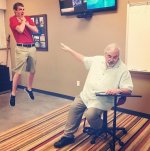
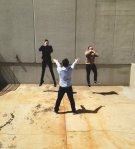
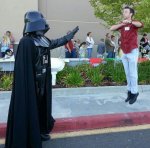
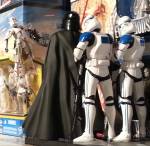
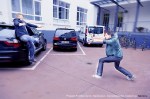
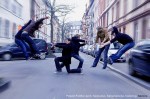
Vadering is a new photo fad where you use Vader skills and document them.  These include force chokes, force pushes, and even dark side lightning.  Enjoy!

Leave a comment

Filed under Humor and Observations

Star Wars Universal Holiday – May the Fourth (be with you)!

If you see a lot of Star Wars references today on social media and don’t know why – it is May the Fourth, Be With You Day.  The annual celebration of all things Star Wars.  As a result, I will make a few Star Wars posts today in homage to the very cool books and movies, of which sadly, I believe my personal collection includes every book, every movie, and an alarming number of miniatures and toys, still in their original boxes.

Having grown up poor, Star Wars was only the second movie I had ever seen at a theater.  My first was The Sting with Robert Redford and Paul Newman.  You have to understand that prior to Star Wars, you either had spaceships hanging from strings, or people in monster suits in sci-fi films.  When I sat there with my friend Mark Tunnell watching the movie, we saw the star battle in space with lasers, the shiny robots, Darth Vader boarding the ship…   We just looked at each other with open eyes, faces full of awe, and both thought – Oh my!  This is something totally awesome!

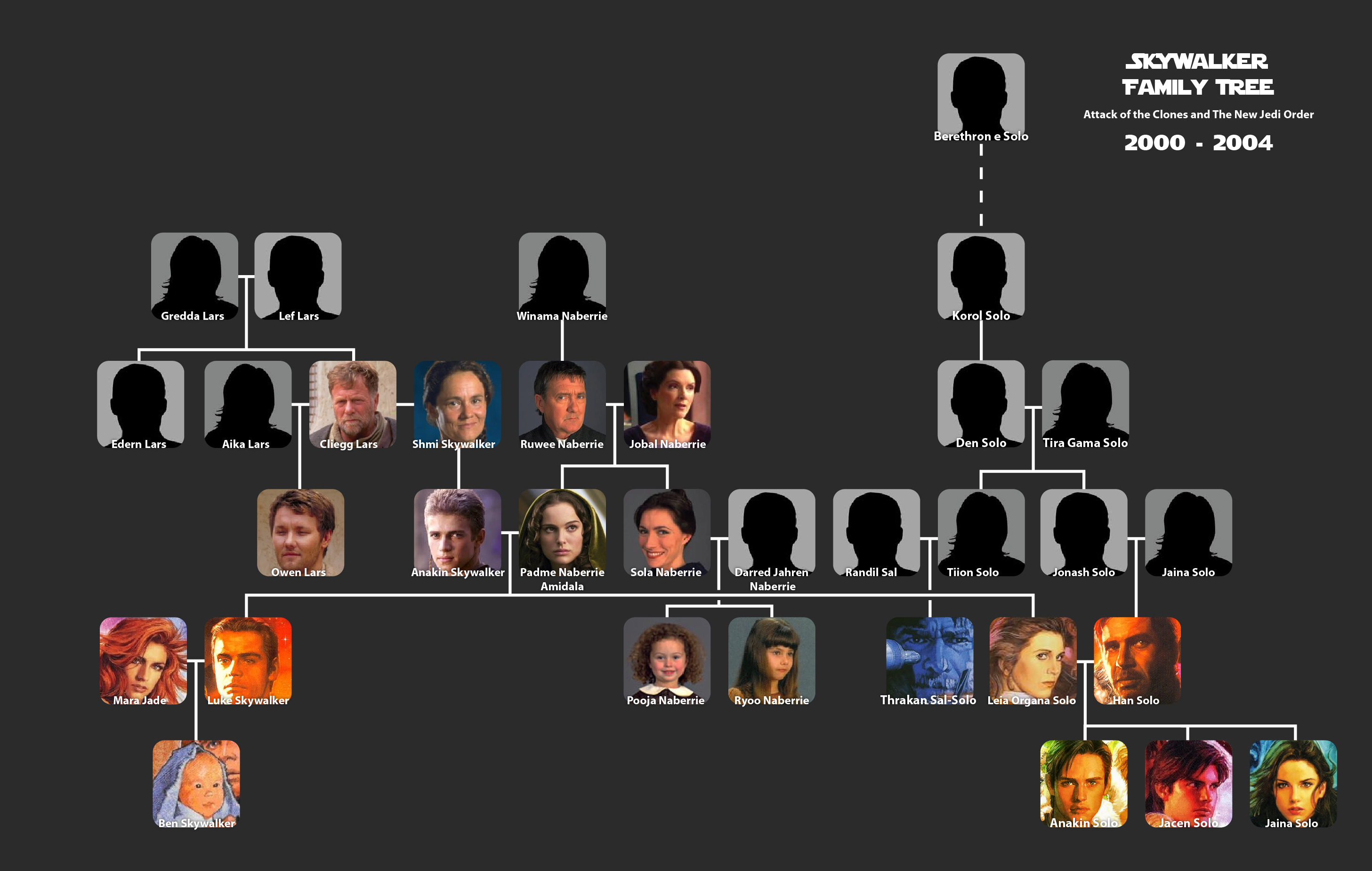
Here is the first Star Wars Post, a Skywalker family tree, and the women in Annakin and Luke’s life:

Skywalker-Family-Tree_NJO


L-R. Padme Amidala, Annakin's wife, Luke's mom;  Princess Leia Organa, Annakin's Daughter, Luke's Sister; Mara Jade, Annakin's former employee, future daughter-in-law, Luke's wife, mother of Annakin, future grandson of first Annakin.

L-R. Padme Amidala, Annakin’s wife, Luke’s mom; Princess Leia Organa, Annakin’s Daughter, Luke’s Sister; Mara Jade, Annakin’s former employee, future daughter-in-law, Luke’s wife, mother of Annakin, future grandson of first Annakin.


Leave a comment

Filed under Humor and Observations

1874 – Cincinnati Public Library – Impressive!

Today, we have that many books available on our phone through Kindle.  Makes you think what the next hundred years will bring.  As an author, I hope future generations care about reading as much as those in Cincinnati obviously did in 1874.

1874:

Interior of the Public Library of Cincinnati

2 Comments

Filed under Humor and Observations

More Irony

Humorous posts that are hopefully also ironic, although that term is used loosely.  For other posts on this topic, type “Irony” into the search box on the front page.  Enjoy!

Leave a comment

Filed under Humor and Observations

HD 3D Sistine Chapel

This is one of the coolest HD interactive 3d renderings I have seen, simply because of the subject – The Sistine Chapel.  All I can say is WOW!  Can’t make the trip to Rome to visit The Vatican and hope to see it in person?  Enjoy.  The artwork is truly awe inspiring.  You can drag your mouse around to see floor, ceiling, front, back, everything.  Use your mouse wheel to zoom in or out.

Here is the link:

http://www.stumbleupon.com/su/1kpcQm/:84$b-iEc:U@lNLkDt/www.vatican.va/various/cappelle/sistina_vr/index.html/

This photo does it no justice:

sistine chapel

2 Comments

Filed under Humor and Observations, Uncategorized

Dogs Praying to God (very cute)

As a believer and a penultimate dog lover, I found this post very cute.  Hopefully, you will as well.  🙂

Reposted via StumbleUpon via GoPetplan.com.

Dear God; from the dog

Dear God: Is it on purpose our names are the same, only reversed?

image

Dear God: Why do humans smell the flowers, but seldom, if ever, smell one another?

image

Dear God:
When we get to heaven, can we sit on your couch? Or is it still the same old story?

image

Dear God:
Why are there cars named after the jaguar, the cougar, the mustang, the colt, the stingray, and the rabbit, but not ONE named for a Dog? How often do you see a cougar riding around? We do love a nice ride! Would it be so hard to rename the ‘Chrysler Eagle’ the ‘Chrysler Beagle’?

image

Dear God:
If a Dog barks his head off in the forest and no human hears him, is he still a bad Dog?

image

Dear God:
We Dogs can understand human verbal instructions, hand signals, whistles, horns,
clickers, beepers, scent ID’s, electromagnetic energy fields, and frisbee flight paths.
What do humans understand?

image

Dear God: More meatballs, less spaghetti, please.

image

Dear God: Are there mailmen in Heaven? If there are, will I have to apologize?

image

Dear God:
Let me give you a list of just some of the things I must remember to be a good Dog:

1. I will not eat the cats’ food before they eat it or after they throw it up.

2. I will not roll on dead seagulls, fish, crabs, etc., just because I like the way they smell.

3. The Litter Box is not a cookie jar.

4. The sofa is not a ‘face towel’.

5. The garbage collector is not stealing our stuff.

image

6. I will not play tug-of-war with Dad’s underwear when he’s on the toilet.

7. Sticking my nose into someone’s crotch is an unacceptable way of saying ‘hello’.

8. I don’t need to suddenly stand straight up when I’m under the coffee table

9. I must shake the rainwater out of my fur before entering the house – not after.

10. I will not come in from outside and immediately drag my butt across the carpet.

11. I will not sit in the middle of the living room and lick my crotch.

12. The cat is not a ‘squeaky toy’ so when I play with him and he makes that noise,
it’s usually not a good thing.

image

P.S. Dear God: When I get to Heaven may I have my testicles back?

Leave a comment

Filed under Animals, Humor and Observations

Twisted Nightmares Will be Out Soon!

The latest book project will be out on Kindle, Nook, and print versions soon.  I just got the proof copies and we are making a few small changes.  Twisted Nightmares is the second is a series of books that will come out once per year.  The first was Twisted History, an anthology of alternative history stories written by writers from all different genres, making it “twisted.”  The purpose is to induce fresh perspectives into standard genres by having new authors take different approaches to the work than regular genre writers.  In Twisted Nightmares, writers all submitted horror short stories and poems.  Our editor, Andrew Terech, then reviewed and selected them anonymously, and put them through a rigorous edit process.  Thanks also to Chris Wilke for his outstanding work on the cover and in the compilation process.

I am glad to say I have several that made it into print, including Future Sport, Humanity Won, Humanity Too, Terror Insertion, and The Hair.  This is the fourth time The Hair has been picked up for publication.  I will post when Twisted Nightmares will be available.  It will be 99 cents on ebook format and a bit more in print version (have to pay to get it printed, and if at a bookstore, they have to get paid too).  Thanks to all the great writers and readers out there!

T-Nightmares-Cover

Leave a comment

Filed under Writing