Deadly fungus creates ‘zombie ants’ and hijacks their jaws to cause suicide

By Chris Ciaccia | Fox News

If you thought fictional zombies walking around on film were scary, the condition that turns creatures into mindless eating machines actually exists in nature. In ants.

According to research published in the Journal of Experimental Biology, ants that come in contact with the deadly fungus Ophiocordyceps unilateralis have their jaw muscles taken over until they eventually die.

Image of an ant who received honeydew from aphid. (Credit: Dawidi, Johannesburg, South Africa)

Image of an ant who received honeydew from aphid. (Credit: Dawidi, Johannesburg, South Africa)

Mangold, along with her other researchers found that the infected muscles showed evidence of hypercontraction as the ants clamped their jaws tightly onto a leaf vein or twig.

“Despite the extensive colonization, both motor neurons and neuromuscular junctions appear to be maintained,” the study’s abstract reads. “Infection results in sarcolemmal damage, but this is not specific to the death grip. We found evidence of precise penetration of muscles by fungal structures and the presence of extracellular vesicle-like particles, both of which may contribute to mandibular hypercontraction.”

Ultimately, the ant dies, as it’s consumed from within by the fungus. Making matters worse, spores of the deadly fungus drop below from the stalk that grows out of the dead ant in hopes of finding a new host.

The fungus is largely found in ants that live in tropical climates such as Brazil, Africa and Thailand.

Mangold’s research follows up on a 2017 study into the deadly effects of Ophiocordyceps unilateralis.

Leave a comment

Filed under Animals, Humor and Observations

Remains of Napoleon’s one-legged general found under Russian dance floor

By Laura Geggel Associate Editor | LiveScience

An excavation in a peculiar place — under the foundation of a dance floor in Russia — has uncovered the remains of one of Napoleon Bonaparte’s favorite generals: a one-legged man who was killed by a cannonball more than 200 years ago, news sources report.

Gen. Charles Etienne Gudin fought with Napoleon during the failed French invasion of Russia in 1812. On July 6 of this year, an international team of French and Russian archaeologists discovered what are believed to be his remains, in Smolensk, a city about 250 miles (400 kilometers) west of Moscow, according to Reuters.

The researchers said that several clues suggested that the skeleton they found under the dance floor belongs to Gudin, who had known Napoleon since childhood. Both men attended the Military School in Brienne, in France’s Champagne region. Upon hearing of Gudin’s death, Napoleon reportedly cried and ordered that his friend’s name be engraved on the Arc de Triomphe, according to Euronews.

Records from the 1812 Russian invasion note that Gudin’s battlefield injuries required him to have his left leg amputated below the knee, Euronews reported. Indeed, the skeleton in the coffin was missing its left leg and showed evidence of injury to the right leg — details that were also mentioned in those records, the archaeologists said, according to Reuters.

Moreover, it was “with a high degree of probability” that the remains the team uncovered belonged to an aristocrat and a military veteran of both the French Revolutionary and Napoleonic wars, they said, according to Reuters.

“It’s a historic moment not only for me, but for I think for our two countries,” French historian and archaeologist Pierre Malinovsky, who helped find the remains, told the Smolensk newspaper Rabochiy Put(Worker’s Journey), according to Reuters. “Napoleon was one of the last people to see him alive, which is very important, and he’s the first general from the Napoleonic period that we have found.”

The general has known living descendants, so researchers plan to test the skeleton for DNA. That way, they’ll be able to say for sure whether the remains are those of Gudin.

Gudin, however, is hardly the only French fatality recently found in Russia. Earlier this year, scientists did a virtual facial reconstruction of a man in his 20s who was slashed in the face with a saber and died during the invasion of Russia.

Leave a comment

Filed under Humor and Observations

Massive 16-foot python with nest of 50 eggs removed from Florida Everglades

By Stephen Sorace | Fox News

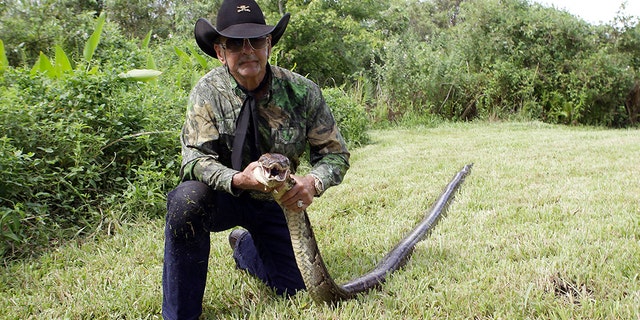
A female Burmese python that stretched 16 feet was found in the Florida Everglades over the weekend with its nest of nearly 50 eggs.

Ron Bergeron, an Everglades conservationist, removed the 165-pound snake from its nest beneath a home in Possum Head Camp, about four miles south of Alligator Alley. Some eggs hatched as Bergeron inspected the nest. Brian Van Landingham and Frank Branca assisted in the capture and destruction of the snake and its nest.

“The Burmese python poses a significant threat to the Florida Everglades by disrupting the natural food chain,” Bergeron, who goes by the nickname “Alligator Ron,” told the South Florida Sun-Sentinel. “With good fortune, we were able to find a large female, and remove her and an entire nest of up to 50 baby snakes which would have continued killing off our precious habitat.”

The Burmese python is an invasive species of snake that is damaging the natural ecosystem of the Everglades, experts have said.

The Burmese python is an invasive species of snake that is damaging the natural ecosystem of the Everglades, experts have said. (Ron Bergeron)

Native to Southeast Asia, the Burmese python is one of the largest snakes and considered an invasive species. It began appearing in the Everglades more than 20 years ago when the reptiles were imported as pets, the U.S. Department of Agriculture states on its website.

The apex predator has caused severe declines in mammal populations in the Everglades, including endangered species, according to the Everglades Cooperative Invasive Species Management Area.

Bergeron said in a video posted online that the reptiles eat rabbits, possum, deer and bobcats. A Burmese python has previously been seen devouring a 7-foot alligator in the Everglades, according to National Geographic.

The python caught over the weekend measured 16 feet, 1-inch long. It was about 1 foot shy of the record length in Florida.

The python caught over the weekend measured 16 feet, 1-inch long. It was about 1 foot shy of the record length in Florida.(Ron Bergeron)

Wildlife officials encourage the removal or humane killing of the Burmese python to reduce its impact on the environment. The pythons can be killed at any time throughout the year and no permit is required, according to the Florida Fish and Wildlife Conservation Commission (FWC).

The snakes can reach a length of over 25 feet and weigh as much as 200 pounds. The average size of a python removed in Florida is usually between 8 and 10 feet, the agencysaid.

The Burmese python Bergeron helped remove was 16 feet, 1-inch long — about 1 foot shy of the record-setting length of the Everglades python captured in April.

Bergeron, a board member of the South Florida Water Management District, said he and Florida Gov. Ron DeSantis are working on a plan to “increase the pressure” on the pythons to preserve the Everglades.

Leave a comment

Filed under Animals, Humor and Observations

If you could choose only one? Classic Cars…

Leave a comment

July 2, 2019 · 7:45 pm

‘Undisturbed’ Roman-era shipwreck discovered off Cyprus

By James Rogers | Fox News

Archaeologists have discovered the wreck of a Roman-era ship off the east coast of Cyprus.

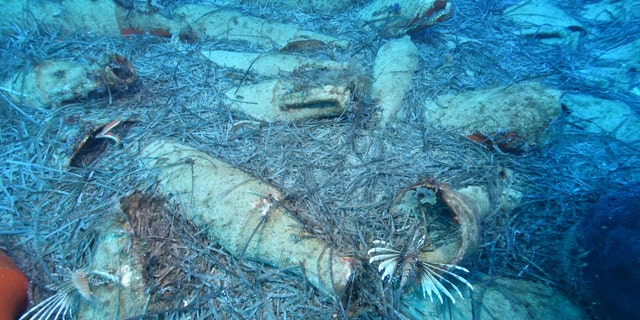
In a statement, Cyprus’ Department of Antiquities explained that the wreck is the first undisturbed Roman shipwreck found in the Mediterranean island nation’s waters. The ship is loaded with amphorae, or large ancient jars, which are likely from Syria and ancient Cilicia on modern-day Turkey’s southeastern coast.

Analysis of the shipwreck will shed new light on seaborne trade between Cyprus and the rest of the Roman provinces of the eastern Mediterranean, officials explained in the statement.

The wreck was found near the resort town of Protaras by a pair of volunteer divers with the University of Cyprus’ archaeological research unit.

The shipwreck was discovered off the coast of Eastern Cyprus.

The shipwreck was discovered off the coast of Eastern Cyprus. (Republic of Cyprus, Department of Antiquities)

It’s also the first time an underwater archaeological project is fully funded by the Cyprus government.

A team from the Maritime Archaeological Research Laboratory at the University of Cyprus is working with the Department of Antiquities and Cyprus University of Technology to document and protect the site.

Other Roman shipwrecks have been grabbing attention in recent years. In 2017, for example, archaeologists in Egypt discovered three Roman-era shipwrecks and other stunning ancient artifacts on the Mediterranean seafloor off the coast of Alexandria.

Climate change researchers working in the Black Sea also discovered 60 shipwrecks dating back 2,500 years, which include vessels from the Roman and Byzantine eras.

Off the coast of Portugal, the Underwater Archaeological Chart of the Municipality of Cascais contains a host of shipwrecks dating back to the Roman era.

The Associated Press contributed to this article. Follow James Rogers on Twitter @jamesjrogers

Leave a comment

Filed under Humor and Observations

Mysterious dinosaur remains discovered in Colorado are from an adult triceratops, experts confirm

The fossilized remains of a dinosaur that was discovered at a Colorado construction site last month have been identified as a triceratops.

The fossils were found last month at a construction site near a retirement community in Highlands Ranch. In a statement, the Denver Museum of Nature and Science said that the remains were found in a rock layer that dates to between 66 million and 68 million years ago.

A limb bone and several ribs were the first fossils to be uncovered from what paleontologists described as a horned dinosaur.

Natalie Toth, the Museum’s chief fossil preparator, has confirmed that the remains are from an adult Triceratops, a Museum spokeswoman told Fox News.

The dinosaur dig. (Denver Museum of Nature & Science)

The dinosaur dig. (Denver Museum of Nature & Science)

Citing the museum, Fox 31 reports that the triceratops could have been 30 feet long, weighing up to 13,000 pounds.

In 2017, a fossilized torosaurus skull was found at a construction site in Thornton, Colorado.

Other dinosaur discoveries have been getting plenty of attention recently. Researchers, for example, have discovered the fossilized remains of a herd of dinosaurs in an opal mine in the Australian outback.

The remains have been identified as an adult triceratops. (Denver Museum of Nature & Science)

The remains have been identified as an adult triceratops. (Denver Museum of Nature & Science)

In a separate project, paleontologists in the U.S. recently named a tiny 3-foot-tall relative of the Tyrannosaurus rex.

Elsewhere, paleontologists recently discovered a new spike-armored dinosaur in Texas. Paleontologists in Canada have also touted the discovery of the world’s largest Tyrannosaurus rex.

Follow James Rogers on Twitter @jamesjrogers

Leave a comment

Filed under Animals, Humor and Observations

‘Magnificent’ baptismal font discovered at Bethlehem’s Church of the Nativity, Palestinian officials say

By James Rogers | Fox News

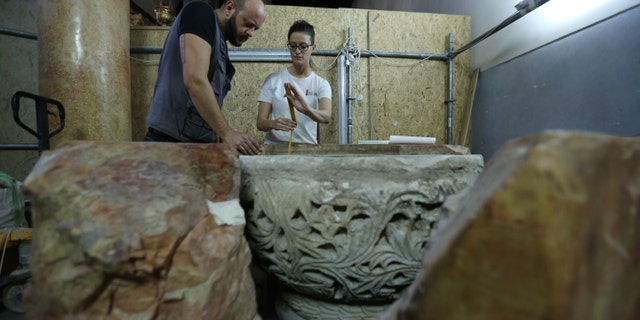
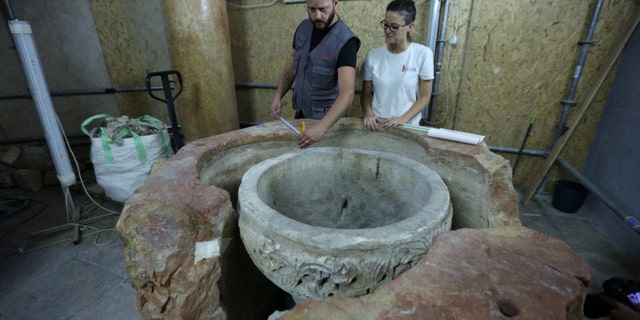
An ancient 1,500-year-old baptismal font has been discovered during renovation work at the Church of the Nativity in Bethlehem.

Bethlehem is Jesus’ birthplace, according to Christian tradition. The font is estimated to date back to between 501 and 600 A.D.

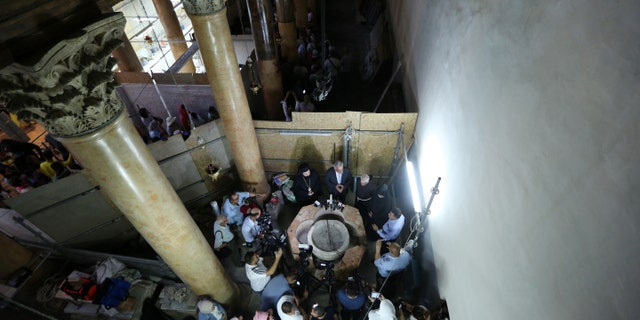
Ziad al-Bandak, head of a Palestinian presidential committee leading the church renovation, said Saturday that international experts are arriving in the biblical West Bank town to examine the receptacle.

Al-Bandak described the Byzantine font as a “magnificent” discovery that had been covered by the larger known vessel.

Palestinian Minister and Head of Restoration Commission for Church of the Nativity, Ziad al-Bandak (C) holds a press conference on the discovery of a baptismal font at the Church of the Nativity in Bethlehem, West Bank on June 22, 2019.

Palestinian Minister and Head of Restoration Commission for Church of the Nativity, Ziad al-Bandak (C) holds a press conference on the discovery of a baptismal font at the Church of the Nativity in Bethlehem, West Bank on June 22, 2019.(Photo by Wisam Hashlamoun/Anadolu Agency/Getty Images)

UNESCO World Heritage site, the Church of the Nativity is located about 6.2 miles south of Jerusalem. The church is built on the site identified as Jesus’ birthplace by Christian tradition.

A restoration project was launched five years ago to overcome decades of neglect at the historic church.

Palestinian news agency WAFA reports that a ceremony to celebrate the end of the restoration project, which was planned for November, has been pushed back to May 2020. The postponement will allow the three churches in charge of the Church of the Nativity to undertake a restoration of the church’s grotto, WAFA reports.

A baptismal font is discovered at the Church of the Nativity in Bethlehem, West Bank on June 22, 2019. Baptismal font at the Church of the Nativity, considered to be the birthplace of Jesus, is estimated to be from the 501-600 A.D.

A baptismal font is discovered at the Church of the Nativity in Bethlehem, West Bank on June 22, 2019. Baptismal font at the Church of the Nativity, considered to be the birthplace of Jesus, is estimated to be from the 501-600 A.D. (Photo by Wisam Hashlamoun/Anadolu Agency/Getty Images)

The baptismal font was discovered during restoration work at the Church of the Nativity.

The baptismal font was discovered during restoration work at the Church of the Nativity. (Photo by Wisam Hashlamoun/Anadolu Agency/Getty Images)

In a separate project at the site of an ancient city on the West Bank, archaeologists have been hunting for evidence of the tabernacle that once housed the Ark of the Covenant.

The Associated Press contributed to this article.

Follow James Rogers on Twitter @jamesjrogers

Leave a comment

Filed under Humor and Observations

Unique Bath Tubs

Leave a comment

June 24, 2019 · 10:57 am

Mysterious white light on Mars seen in NASA photo

By Chris Ciaccia | Fox News

NASA has released a photo taken by its Curiosity rover that shows a mysterious, unexplained white light on Mars.

The black-and-white raw image was taken by the rover’s right “navcam” (which acts as sort of an eye) on June 16, 2019 or Sol 2438, and transmitted back to Earth. The navcam snapped the picture at 03:53:59 UTC.

The rover has two navcams and 17 cameras and it has been sending photographs continuously since it landed on the Red Planet in August 2012, nearly seven years ago.

(Credit: NASA/JPL-Caltech)

(Credit: NASA/JPL-Caltech)

It’s unclear exactly what the white spot on the photograph is, as images taken almost immediately before and after do not show the mysterious white light. The images below, also released publicly, were taken at 03:53:46 UTC and 03:54:12 UTC.

This image was snapped by Curiosity at 3:53:46 UTC. (Credit: NASA/JPL-Caltech)

This image was snapped by Curiosity at 3:53:46 UTC. (Credit: NASA/JPL-Caltech)

This image was snapped by Curiosity at 03:54:12 UTC. (Credit: NASA/JPL-Caltech)

This image was snapped by Curiosity at 03:54:12 UTC. (Credit: NASA/JPL-Caltech)

This is not the first time an anomaly of this sort has been spotted by Curiosity on Mars. In 2014, a separate mysterious white spot was seen by the rover on April 3, or Sol 589. At the time, JPL scientist Dr. Justin Maki said he believed the light could be a glint from the “rock surface reflecting the Sun.”

In December 2018, Curiosity detected a “shiny” object which may be a meteorite, but NASA researchers were not sure at the time. “The planning team thinks it might be a meteorite because it is so shiny,” NASA wrote in a November 2018 mission update. “But looks can deceive, and proof will only come from the chemistry.”

Leave a comment

Filed under Humor and Observations

Ancient city gate from the time of King David discovered in Israel

The find was made during an excavation at the ancient city of Bethsaida. “There are not too many monumental discoveries dating from the reign of King David,” Rami Arav, associate professor at the University of Nebraska and Bethsaida excavation director, told Fox News via email. “This is absolutely a significant contribution to biblical archaeology and biblical studies.”

Arav explained that Bethsaida was founded in the 11th century B.C. as a pre-planned city and the capital of the Biblical kingdom of Geshur. “The city included a place, granary, city walls, city gate, a high place in the city gate, and a cobblestones courtyard in front of the gate,” he said.

The city was destroyed in 920 B.C. “Since this is the period of time of King David and since the Bible narrates that King David married Maachah the daughter of Talmai the king of Geshur, it is reasonable that King David walked on these very cobblestones when he visited the city,” Arav added.

King David bearing the Ark of the Covenant into Jerusalem depicted in the early 16th century. From a private collection.

King David bearing the Ark of the Covenant into Jerusalem depicted in the early 16th century. From a private collection.(Photo by Fine Art Images/Heritage Images/Getty Images)

An ancient stele, or monumental stone slab, was discovered adjacent to the gate’s tower. The stele depicts the Moon-god worshipped by the ancient Aramean people.

Arav explained that the discoveries were made during the 32nd season of excavations in the ancient city. The project was initially sponsored by Israel’s Haifa University, then by the University of Nebraska at Omaha. It is now sponsored by the Hebrew Union College in Jerusalem.

The Jerusalem Post reports that a gate discovered at the site last year likely dates from the First Temple period when the city was known as Zer.

In a separate project, last year archaeologists in Israel uncovered an ancient site that may offer fresh insight into the biblical kingdom of David and Solomon.  The kingdom is described in the Hebrew Bible but has long divided historians.

While some experts believe that it existed in the 10th century B.C., others have questioned its existence, citing a lack of evidence of royal construction at the center of the region where the kingdom is said to have existed.

However, part of the building at Tel ‘Eton in the Judean foothills has been dated to a period in history that coincided with the supposed joint kingdom, according to a study published in the journal Radiocarbon.

In another project, soldiers at a paratrooper base in Southern Israel recently uncovered a Biblical-era watchtower.

The watchtower, which dates back to the 8th century B.C., was revealed during recent excavations by Israel Defense Forces troops working under the direction of the Israel Antiquities Authority.

Follow James Rogers on Twitter @jamesjrogers

Leave a comment

Filed under Humor and Observations