Tag Archives: history

1857: The Victoria Inflated Skirt

Leave a comment

Filed under Humor and Observations

1868 – Horse Drawn Airplane

“A sea captain, Jean Marie Le Bris (1817-1872) observed the flight of the Albatross. He caught some of the birds and analysed the interaction of their wings with air. Le Bris built a glider, inspired by the shape of the Albatross and named L’Albatros artificiel. During 1856 he flew briefly on a beach, the aircraft being placed on a cart towed by a horse. He flew reportedly to a height of 100 m for a distance of 200 m.Wikipedia

Leave a comment

Filed under Humor and Observations

Photography – The First Time it Stopped Atrocities

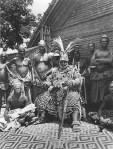
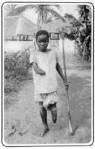
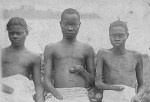
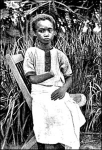
John Hobbis Harris was a Christian missionary that traveled to the Belgian Congo.  His wife was an amateur photographer in this new technology of taking pictures.  Her name is Alice Seeley.  Their story is one of courage to document and fight against horrible atrocities along side such figures as William Sheppard, a black American Christian missionary,  E.V. Sjöblom, a Swedish Baptist minister, George Washington Williams, a black American minister who had fought in the US Civil War, and even Mark Twain (Samuel Clemens).  It was the photographs taken by Harris and his wife Alice Seeley that won over the public.

1899-27112

Alice Seeley seated. Her husband standing to her left. Not only did their photos change Belgian Congo, but the world. Their mission also provided healthcare and shelter to dismembered slaves.

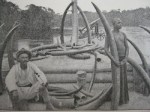
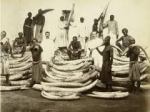
King Leopold II of Belgium, like so many European monarchs in the 1800’s, had established various colonies around the world.  By the late nineteenth century, most of the world had been colonized from South America to Africa, Asia and the Pacific Islands.  Belgium had a substantial colony in the Congo.  The Congo had two products that were in high demand – ivory and rubber.  There was no modern media such as TV or radio, much less the internet.  Most colonial powers could do as they pleased and no one be the wiser.

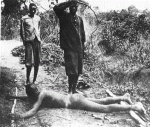
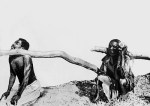
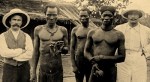
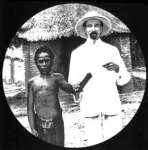
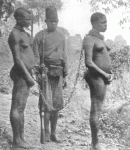
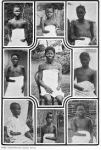
Following the American Civil War, abolitionists from America went to other areas where slavery was practiced to expose it and abolish it.  American protestant missionaries were in the forefront of this movement, often suffering death as a result.  In the Belgian Congo, the local populace was beaten, enslaved and mutilated to keep up the rubber plantations and bring in revenues for Belgium, while the indigenous animals were slaughtered.  Several newspapers, brochures and pamphlets were used to try to stop the practice, but it was these pictures that caused King Leopold II to finally stop the worst of the atrocities.

WARNING:  These images are graphic.  Not only were slaves beaten or killed, but the Belgium leaders would chop off arms and legs as punishment.

Leave a comment

Filed under Humor and Observations

That Croissant You Eat Is a Political/Religious Statement

Most people do not realize that the Croissant is Austrian, not French.  It was made in the shape of a crescent to celebrate the Austrian victory over the Turks.  The Turks, being Muslims, had the crescent, or “croissant”, on their flag.  The bread was made as a mockery of them.

untitled (3)

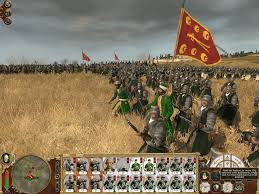
Ottoman Empire Battle Flag during Vienna siege Era

History majors might know that the Muslims came close to conquering the world.  They took over part of India, moved and took over the Middle East, then North Africa, then the Iberian Peninsula (Spain and Portugal).  They were stopped in Western Europe by an army of the Franks (now France).  They conquered most of Eastern Europe, fought Russia, took over the Byzantine Empire, changing Constantinople to Istanbul and changing the churches back to Islamic Mosques.  In the east, they were besieging the city of Vienna when they were finally stopped.

Over the years, Spain and Portugal were reclaimed in the “Reconquista” the Crusades in the west of Europe few Americans know about.  The famous character “El Cid” comes from this time period.  In Western Europe, the Austro-Hungarian Empire and the Russians made some inroads but it was not until after European colonization in North Africa and the end of World War 1 that the Ottoman Empire was broken up.

So the next time you eat a croissant, remember, it is celebrating the defeat of Muslim invaders.  It is the same as if the Taliban started making cross-shaped Pita breads, or Iran made six-sided star pastries.  Isn’t history strange?

untitled (2)

The history of “Croissants”
The first production of a Croissant dates back to 1683. That year, Austria was under siege by the Turkish Empire. In Vienna, the Turkish assailant found that time was slipping past and decided to dig an underground tunnel to enter the city. The Vienna bakers, the majority of whom worked underground, heard noises and called in the army. The Turks were discovered and retreated. 

The bakers were thanked and honored and they decided to make bread in the shape of a crescent moon (the symbol of the Turkish flag) and the croissant was born. One hundred years later, Marie Antoinette (Austrian Princess who married Louis XVI), introduced the croissant to the French Aristocrats.

It was only at the start of this century that the butter puff croissant was created, and became the French national product in 1920. Source: http://www.lagourmandise.net/history.htm


Leave a comment

Filed under Humor and Observations

1887 – 1898: Whaleback steamships

A whaleback was a type of cargo steamship with a hull that continuously curved above the waterline from vertical to horizontal. When fully loaded, only the rounded portion of the hull (the “whaleback” proper) could be seen above the waterline. With sides curved in towards the ends, it had a spoon bow and a very convex upper deck. It was formerly used on the Great Lakes of Canada and the United States, notably for carrying grain or ore.Whaleback Steamships 2

The term developed in common usage in response to the ship’s appearance when fully loaded. A total of 44 such vessels were constructed from 1887 to 1898.

Whaleback Steamships 3 Whaleback Steamships 15 Whaleback Steamships 13 Whaleback Steamships 7


Leave a comment

Filed under Humor and Observations

1888: Balloon wedding

The September 27, 1888, wedding of Margaret Buckley and Edward T. Davis was held at the Rhode Island State Fair at Narrangansett Park in Providence. An article in Frank Leslie’s Illustrated Newspaper estimates that 40,000 watched as Davis and Buckley entered the “specially prepared ‘bridal car’ of the mammoth balloon Commonwealth, held down by 24 men at the guy ropes.”  After the ceremony, aeronauts James Allen and his son James K. directed the balloon skyward.At dusk, the balloon landed in a swamp near Easton, Massachusetts, about thirty miles away from Providence.  The wedding party was “obliged to cling to the ropes above the basket to keep out of the water.”  Finally rescued, the balloon tied safely to a tree, the couple completed their trip by rail.  Afterwards, Allen and the Davises reenacted their wedding for a photographer in a studio.Balloon Wedding 1 Balloon Wedding 2

Leave a comment

Filed under Humor and Observations

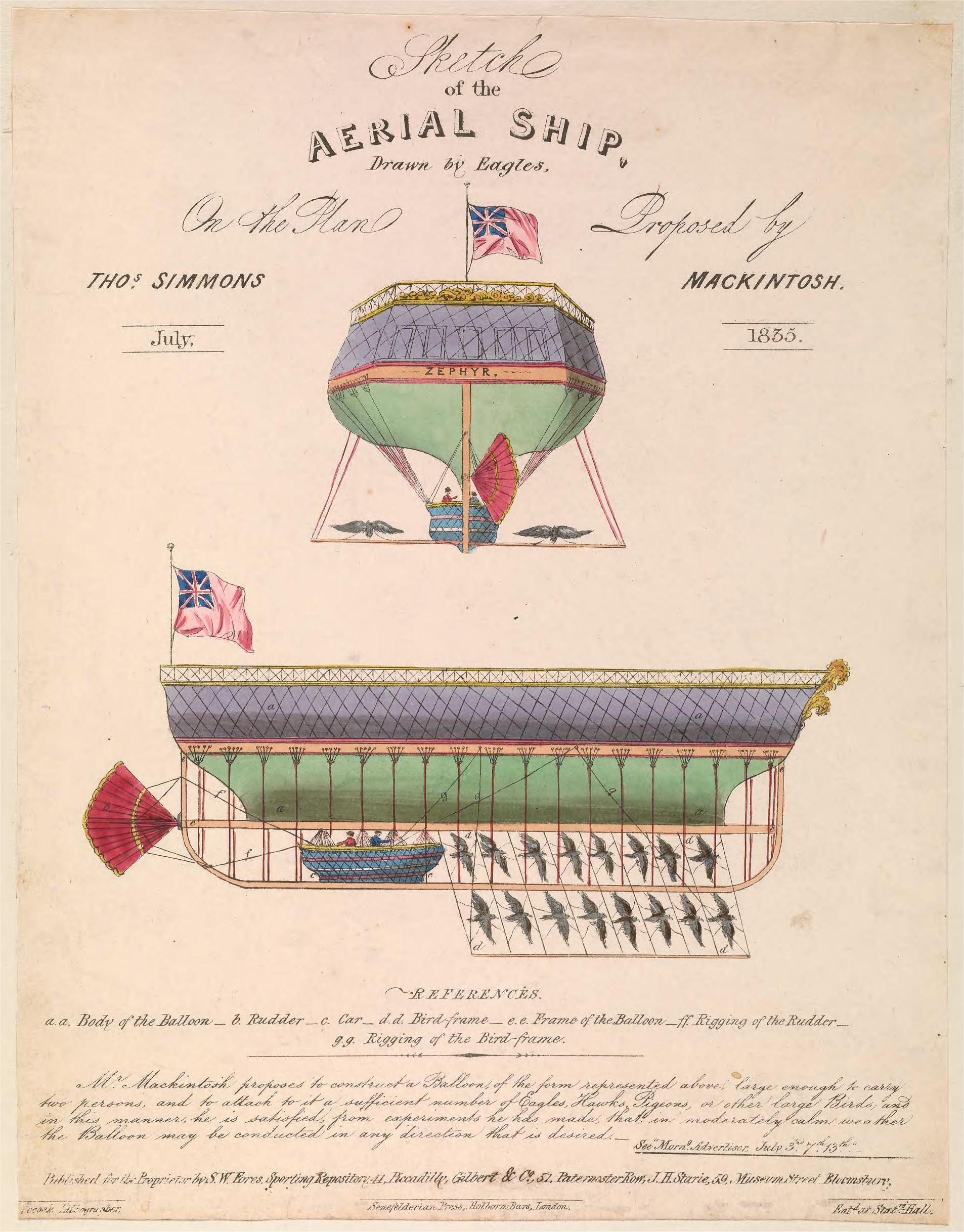
1835: Mackintosh’s Aerial Ship “Drawn by Eagles”

1835: Mackintosh’s Aerial Ship “Drawn by Eagles”

 Amanda

 August 25, 2013

 1800-1899, Transport

Mackintoshs-Aerial-Ship-Drawn-by-Eagles

Source: The Internet Archive

3 Comments

Filed under Humor and Observations

Burst water pipe reveals century-old Crusader murals in Jerusalem

LiveScience

painted-storeroom-140513

Rediscovered late-1800s paintings in a storeroom in Saint-Louis Hospice, a Jerusalem hospital built by a prominant Christian.Israel Antiquities Authority

Wall murals portraying Crusader knights and symbols of medieval military orders have been rediscovered in a Jerusalem hospital thanks to a burst water pipe and a storeroom reorganization.

These paintings were the works of a French count, Comte Marie Paul Amde de Piellat, who believed himself to be a descendant of Crusaders. The count was a frequent visitor to Jerusalem and had the Saint-Louis Hospice built between 1879 and 1896, naming it after St. Louis IX, a king of France and leader of the Seventh Crusade between A.D. 1248 and 1254.

During World War I, however, the hospital came under the control of Turkish forces, who painted over the designs with black paint. The count returned to Jerusalem to restore his murals, but died in the hospital in 1925, his work undone. [See Images of the Rediscovered Murals]

A beautiful discovery
More recently, the nuns who run the hospital found some of the forgotten wall paintings while reorganizing storerooms in the building, according to the Israel Antiquities Authority (IAA). A burst water pipe also stripped away modern paint and plaster, revealing more sections of the paintings.

IAA conservators are now working to clean and stabilize the paintings, and are looking for funds to continue the preservation work. There are no plans to turn the paintings into a tourist attraction, however, as the hospital is still in use for chronic and terminally ill patients. Sisters of the order of St. Joseph of the Apparition run the facility.

De Piellat was a devout Christian who wanted to boost the Catholic presence in Jerusalem at a time when multiple religious factions vied for influence in the city. His two-story hospital replaced a smaller medical facility in the city’s Christian Quarter. For Saint-Louis, de Piellat chose a location where the Norman king Tancred and his forces camped before storming Jerusalem in A.D. 1099, during the First Crusade. Today, the hospital is next to the Jerusalem municipal building and IDF square, which is on the dividing line between Israeli-dominated West Jerusalem and heavily Palestinian East Jerusalem.

Artistic history
The murals themselves are enormous paintings of Crusader knights dressed in full battle gear. The count also painted the names and genealogy of the families of French Crusaders, including their heraldry symbols. The murals are further decorated with symbols of military and monastic orders and cities conquered in the Crusades.

At the time de Piellat was working, the city was under the control of the Ottoman Turks. During the upheaval of World War I, the Turks took control of the building, according to the IAA, and painted over the Christian murals. The British captured Jerusalem from the Turks in 1917, at the end of the war.

De Piellat returned to his beloved hospital after the war and worked to restore his murals. After his death in 1925, however, no one took up his fallen paintbrush, and the unrestored murals were mostly forgot

Leave a comment

Filed under Humor and Observations

Stonehenge Discovery ‘Blows Lid Off’ Old Theories About Builders Of Ancient Monument

Stonehenge Discovery ‘Blows Lid Off’ Old Theories About Builders Of Ancient Monument

From who built it to what it was used for, Stonehenge is surrounded by many enduring mysteries — and researchers from the University of Buckingham in England now say they’ve solved one of them.

“For years people have been asking why is Stonehenge where it is, now at last, we have found the answers,” David Jacques, an archaeology research fellow at the university, said in a written statement.

OLYMPUS DIGITAL CAMERA

Last October, Jacques led an archaeological dig at a site 1.5 miles from Stonehenge. His team unearthed flint tools and the bones of aurochs, extinct cow-like animals that were a food source for ancient people. Carbon dating of the bones showed that modern-day Amesbury, an area that includes the dig site and Stonehenge itself, has been continuously occupied since 8820 B.C. Amesbury has now been declared the oldest continually occupied area in Britain.

The finding suggests that Stonehenge was built by indigenous Britons who had lived in the area for thousands of years. Previous theories held that the monument was built in an empty landscape by migrants from continental Europe.

Stonehenge from the air

“The site blows the lid off the Neolithic Revolution in a number of ways,” Jacques said in the statement, referring to the assumption that those migrants drove Britain’s transition from a hunter-gatherer to a farming society in the 6th Century B.C. “It provides evidence for people staying put, clearing land, building, and presumably worshipping, monuments.”

The researchers say evidence suggests that before erecting Stonehenge, people living in the area set up gigantic timbers between 8820 and 6590 B.C. — a sort of wooden precursor to the stone monument. Jacques likened the area to a “Stonehenge Visitor’s Center,” where visitors from far and wide came to feast and tour the site with local guides.

“The area was clearly a hub point for people to come to from many miles away, and in many ways was a forerunner for what later went on at Stonehenge itself,” he said.

Leave a comment

Filed under Humor and Observations

Cold War images spill new secrets: Lost cities

Cold War images spill new secrets: Lost cities

coronoa atlas.jpg

An image from the website.CORONA.CAST.UARK.EDU

The Middle East is home to 4,500 archaeological sites, or so we thought. An in-depth review of Cold War-era photos taken by spy satellites has pulled back the veil on as many as 10,000 more lost cities, roads, and other ruins in the region.

As Gizmodo reports, CORONA served as the code name for America’s first use of photographic spy satellites, and was in operation from 1960 to 1972.

Its name lives on in the new CORONA Atlas of the Middle East, which made its debut Thursday at the annual gathering of the Society for American Archaeology and revealed “completely unknown” sites via some of the 188,000 declassified photos taken during the mission’s final five years, reports National Geographic.

Archaeologist Jesse Casana of the University of Arkansas describes some of the sites as “gigantic,” with two sprawling over more than 123 acres; Casana suspects the largest, which appear to include aged walls and citadels, were Bronze Age cities.

And as he explains, the photos’ age matters. Though current satellites produce images superior to these grainy decades-old ones, “we can’t see a site that someone has covered up with a building,” and the fact that they were taken before cities like Iraq’s Mosul and Jordan’s Amman swelled makes them invaluable.

The CORONA site explains that the mission’s satellites snapped images “of most of the Earth’s surface” (images whose film strips were, in a great detail noted byNational Geographic, sent back to Earth via parachute-topped buckets) and archaeologists plan to also review areas like Africa and China.

Leave a comment

Filed under Humor and Observations