Category Archives: Humor and Observations

New life: Scientists create first semi-synthetic organism with ‘alien’ DNA

SCIENCE EDITOR
Wednesday 07 May 2014

The researchers believe the breakthrough is the first step towards creating new microbial life-forms with novel industrial or medical properties resulting from a potentially massive expansion of genetic information.

The semi-synthetic microbe, a genetically modified E. coli bacterium, has been endowed with an extra artificial piece of DNA with an expanded genetic alphabet – instead of the usual four “letters” of the alphabet its DNA molecule has six.

The natural genetic code of all living things is based on a sequence of four bases – G, C, T, A – which form two sets of bonded pairs, G to C and T to A, that link the two strands of the DNA double helix.

The DNA of the new semi-synthetic microbe, however, has a pair of extra base pairs, denoted by X and Y, which pair up together like the other base pairs and are fully integrated into the rest of the DNA’s genetic code.

The scientists said that the semi-synthetic E. coli bacterium replicates normally and is able to pass on the new genetic information to subsequent generations. However, it was not able to use the new encoded information to produce any novel proteins – the synthetic DNA was added as an extra circular strand that did not take part in the bacterium’s normal metabolic functions.


The study, published in the journal Nature, is the first time that scientists have managed to produce a genetically modified microbe that is able to function and replicate with a different genetic code to the one that is thought to have existed ever since life first started to evolve on Earth more than 3.5 billion years ago.

“Life on earth in all its diversity is encoded by only two pairs of DNA bases, A-T and C-G, and what we’ve made is an organism that stably contains those two plus a third, unnatural pair of bases,” said Professor Floyd Romesberg of the Scripps Research Institute in La Jolla, California.

“This shows that other solutions to storing information are possible and, of course, takes us closer to an expanded-DNA biology that will have many exciting applications, from new medicines to new kinds of nanotechnology,” Professor Romesberg said.

Expanding the genetic code with an extra base pair raises the prospect of building new kinds of proteins from a much wider range of amino acids than the 20 or so that exist in nature. A new code based on six base pairs could in theory deal with more than 200 amino acids, the scientists said.

“In principle, we could encode new proteins made from new, unnatural amino acids, which would give us greater power than ever to tailor protein therapeutics and diagnostics and laboratory reagents to have desired functions,” Professor Romesberg said.

“Other applications, such as nanomaterials, are also possible,” he added.

The researchers emphasised that there is little danger of the new life-forms living outside the confines of the laboratory, as they are not able to replicate with their synthetic DNA strand unless they are continuously fed the X and Y bases – synthetic chemicals called “d5SICS” and “dNaM”, that do not exist in nature.

The bacteria also need a special protein to transport the new bases around the cell of the microbe. The transporter protein comes from algae and if it, or the X and Y bases, are lacking, the microbial cells revert back to the natural genetic code, said Denis Malyshev of the Scripps Institute.

“Our new bases can only get into the cell if we turn on the “base transporter” protein. Without this transporter or when the new bases are not provided, the cell will revert back to A, T, G, C and the d5SICS and the dNaM will disappear from the genome,” Dr Malyshev said.

Leave a comment

Filed under Humor and Observations

Stonehenge Discovery ‘Blows Lid Off’ Old Theories About Builders Of Ancient Monument

Stonehenge Discovery ‘Blows Lid Off’ Old Theories About Builders Of Ancient Monument

From who built it to what it was used for, Stonehenge is surrounded by many enduring mysteries — and researchers from the University of Buckingham in England now say they’ve solved one of them.

“For years people have been asking why is Stonehenge where it is, now at last, we have found the answers,” David Jacques, an archaeology research fellow at the university, said in a written statement.

OLYMPUS DIGITAL CAMERA

Last October, Jacques led an archaeological dig at a site 1.5 miles from Stonehenge. His team unearthed flint tools and the bones of aurochs, extinct cow-like animals that were a food source for ancient people. Carbon dating of the bones showed that modern-day Amesbury, an area that includes the dig site and Stonehenge itself, has been continuously occupied since 8820 B.C. Amesbury has now been declared the oldest continually occupied area in Britain.

The finding suggests that Stonehenge was built by indigenous Britons who had lived in the area for thousands of years. Previous theories held that the monument was built in an empty landscape by migrants from continental Europe.

Stonehenge from the air

“The site blows the lid off the Neolithic Revolution in a number of ways,” Jacques said in the statement, referring to the assumption that those migrants drove Britain’s transition from a hunter-gatherer to a farming society in the 6th Century B.C. “It provides evidence for people staying put, clearing land, building, and presumably worshipping, monuments.”

The researchers say evidence suggests that before erecting Stonehenge, people living in the area set up gigantic timbers between 8820 and 6590 B.C. — a sort of wooden precursor to the stone monument. Jacques likened the area to a “Stonehenge Visitor’s Center,” where visitors from far and wide came to feast and tour the site with local guides.

“The area was clearly a hub point for people to come to from many miles away, and in many ways was a forerunner for what later went on at Stonehenge itself,” he said.

Leave a comment

Filed under Humor and Observations

IRS Spends Nearly $100 Million on Office Furniture

Just remember, you don’t pay enough in taxes, you are greedy to want to keep your own earnings, and you can’t deduct legitimate home office use without getting audited… But if you are the government, you can buy chairs for $1,209 each, then go to Congress and tell them you don’t have any money to “support the taxpayer needs.”  Big government is the problem, not political parties.

Obama’s IRS Spends Nearly $100 Million on Office Furniture

Spending on furniture outnumbers Bush administration

Treasury Secretary Jacob Lew / AP

BY:
May 12, 2014 9:59 am

The IRS has spent $96.5 million on office furniture under the Obama administration and is now claiming it has insufficient funding to adequately serve taxpayers.

Treasury Secretary Jack Lew testified before the House two weeks ago about the IRS’ need for additional funding for the upcoming fiscal year. The IRS is currently seeking an increase of $1.2 billion—a 7 percent raise over its FY 2014 $11.29 billion budget. It would bring the agency’s FY 2015 budget to $12.48 billion.

A review of contracts by the Washington Free Beacon shows the IRS in the past five fiscal years has spent $96.5 million refurbishing IRS offices across the country. Those contracts include fiscal years 2010 through 2014.

That amount already exceeds what the agency spent during the entire eight years under President George W. Bush, fiscal years 2002 through 2009.

The purchases during the current administration show contracts are for various amounts. They range from several millions to hundreds of thousands of dollars for each agency office.

The first fiscal year budget for which President Obama was responsible was FY 2010 and it was a banner year—when the agency spent the most on new furniture. Records show $44.4 million was spent that year.

The Free Beacon found in a total of 3,777 contracts he IRS has purchased various types of furniture. The contracts include new chairs, showcases, partitions and shelving, and wood furniture.

A sampling from the volume of contracts includes the agency’s Lowell, Mass., office, which spent $5.04 million on showcases, partitions and shelving. The contract was signed in 2012 was completed on April 30, 2013.

The Philadelphia IRS office spent $2.8 million for “furniture systems.”  That contract was signed in 2011 and the work was completed in 2012.

Other IRS offices also had multi-million dollar makeovers.  A contract in 2011 shows the “purchase of systems furniture” in the amount of $2.67 million for the Colorado office. The Washington, D.C., office received $2.6 million in “new system furniture/service” and the work was completed in 2012.

Still another contract shows the Iowa office had a $1.08 million makeover. The contract did not detail the type of furniture purchased.

Michigan, which has six IRS offices, has spent the most on furniture of all the states during this time frame.  Its contracts include $1.57 million in taxpayer funds spent for its Leeward office, and another $1.36 million on its Zeeland office.

While it is unclear what type of furniture was purchased for the IRS office in Jasper, Ind., records show two large purchases were completed just four months apart. One contract for $689,719 was completed in November 2010.  Another contract for $805,515 was completed in March 2011.

Contracts also revealed that hundreds of thousands of dollars were spent solely on chairs for the IRS’ office in Haverhill, Mass. The contract shows $618,881 was spent on “Task Chairs Phase II.” That work was completed on Dec. 31, 2012. Due to the volume of contracts, the Free Beacon could not find the amount spent for Phase I of the task chairs project or if there were any additional phases after this second one.

Another contract shows the agency’s offices in Seattle and Austin received over $1.1 million in new furniture. One contract for $810,200 and another for $327,908 were both completed in February 2013.

The top three prime award contractors were Knoll, Herman Miller, and Haworth International. While some records did not give detailed information on the types of furniture purchased, the high-end retailers’ websites do give taxpayers a sampling of their products and costs.

Herman Miller has chairs that cost $1,209, and storage units that cost $1,749. Knoll’s chairs retail for $659. Another company awarded several contracts claims on its website it partners with “best interior products manufacturers” in the industry.

In his testimony, Lew said, “The IRS continues its commitment to carrying out its responsibilities, providing quality service to taxpayers and preserving the public’s faith in our tax system, but the lack of sufficient funding in recent years has made it difficult to provide the kind of services American taxpayers deserve.”

Leave a comment

Filed under Humor and Observations

Cosplay Pictures for Your Saturday

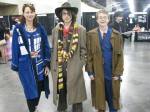
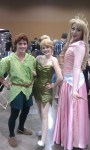
Just got done with another great day at LepreCon 40.  Meeting lots of old friends and making lots of new ones.  Four panels down, two more to go tomorrow.  Here are some cosplay pictures for your enjoyment!

1 Comment

Filed under Humor and Observations

LepreCon 40 – My Schedule of Appearances

See you at LepreCon 40 if you can make it.  Here is my schedule (Michael Bradley) for the event:

My schedule for LepreCon 40:

Friday (Dealer room when not at panel)

1 pm Steampunk 101

2 pm The Singularity

Saturday (Dealer room when not at panel)

9 am Self Publishing 101

Noon – The Perils of Time Travel

Sunday (Dealer room when not at panel)

10 am Advanced Self Publishing

11 am Advanced Steampunk

Susannes Treasures will be open during all dealer hours, Friday Noon to 6 pm, Saturday 10 am to 7 pm, and Sunday 9 am to 3 pm.

leprecon

1 Comment

Filed under Humor and Observations

Will Cherie Priest’s Boneshaker Become Reality?

Huge drilling device stuck under Seattle, can yellow blight gas and rotters be far behind…  How did Cherie Priest know this would happen, and even peg the city as Seattle?  Is Boneshaker fiction or forecast?

Massive tunneling machine stuck under downtown Seattle, fix could cost taxpayers millions

At 57 feet in diameter, it’s touted as the world’s biggest tunneling machine. It was even given a name, Bertha.

But now, after digging just over 1,000 feet, Bertha is broken down and stuck underneath Seattle’s downtown waterfront.

And fixing the massive mess could cost taxpayers millions.

The tunneling machine is the key workhorse in a $3.1 billion tunnel project aimed at replacing the Alaska Way Viaduct, a double-decker elevated highway that was damaged in the 2001 Nisqually earthquake. Bertha’s meltdown, though, has put the project in jeopardy of being the West Coast version of the biggest public works boondoggle in U.S. history, Boston’s “big dig” — which cost taxpayers $14.6 billion, nearly four times the original price tag.

“People should be very worried about what’s going on right now,” said Dori Monson, a radio host on KIRO in Seattle. “To have the state saying, ‘we’re not paying for the overruns.’ You have the contractor saying, ‘we’re not paying.’ The contractor has a provable history of making other people pay. So that means it’s going to be the taxpayers.”

The contractor, Seattle Tunnel Partners (STP), already has put in for $190 million in additional pay due to unforeseen problems.

Among the issues the project has encountered are: too much groundwater; a labor dispute involving the International Longshore and Warehouse Union; and a well that Bertha ran into, damaging her massive cutter head and main bearing. The steel pipe was put there by the state, and STP thinks the state should pay.

How exactly Bertha got stuck underground is an open question. The running theory is the machine overheated when it hit the well pipe, but the issue will be argued by the attorneys.

“Who’s ultimately responsible and liable for that time and cost is going to be determined by a review of the contract,” said Chris Dixon, of Seattle Tunnel Partners.

State officials say the contractor knew about the well and hit it anyway. The Department of Transportation gave Fox News documents supporting its case.

The issue is critical, because fixing the tunnel-boring machine is expected to take until March 2015 and cost $125 million. That’s $45 million more than STP paid for Bertha.

State officials say they’re trying to protect taxpayers.

“We have written the most robust contract we could possibly write with the best experts from around the country,” said state DOT Secretary Lynn Peterson. “And we brought a team together on the legal side to make sure we’re protecting taxpayers at every step of the way.”

The state has denied a majority of the contractor’s change orders, but that doesn’t end the dispute.

A court ultimately will decide who’s responsible for the delays and cost overruns. That puts taxpayers in danger of being on the hook for a project some fear may never get finished.

Dan Springer joined Fox News Channel (FNC) in August 2001 as a Seattle-based correspondent.

1 Comment

Filed under Humor and Observations

Steampunk Awesomeness

All of the pictures in the gallery below are reprinted here with permission of Tinker Hobnobbit from posts he has made on Steampunk.  He has a real eye for things I think are cool, so I asked him.  His permission, and my reproducing them are conditional:  1) we do not know all the models; and 2) we do not know all the photographers, artists, or artisans who fashioned them.  I have left all bugs and watermarks on them as always.  If you wish me to add credits, please send any to eiverness@cox.net and I will update the photo the same day.  Please let me know a description so I get the correct one.  If you wish me to remove any of them, also, please let me know.  They are here simply for enjoyment, I do not get revenues from this site.

3 Comments

Filed under Humor and Observations

Scientists Try 3-D Printer To Build Human Heart

Scientists Try 3-D Printer To Build Human Heart

 | by  DYLAN LOVAN

Posted: 04/10/2014 8:52 am EDT Updated: 04/10/2014 12:59 pm EDT 

In this March 6, 2014 photo, a 3-D printer was used to construct these tiny two-ventricle cylinders at the University of Louisville, in Louisville, Ky. Researchers are working on a project to build a human heart using a 3-D printer and human cells. (AP Photo/Dylan Lovan) | ASSOCIATED PRESS
untitled (5)

 LOUISVILLE, Ky. (AP) — It may sound far-fetched, but scientists are attempting to build a human heart with a 3-D printer.

Ultimately, the goal is to create a new heart for a patient with their own cells that could be transplanted. It is an ambitious project to first, make a heart and then get it to work in a patient, and it could be years — perhaps decades — before a 3-D printed heart would ever be put in a person.

The technology, though, is not all that futuristic: Researchers have already used 3-D printers to make splints, valves and even a human ear.

So far, the University of Louisville team has printed human heart valves and small veins with cells, and they can construct some other parts with other methods, said Stuart Williams, a cell biologist leading the project. They have also successfully tested the tiny blood vessels in mice and other small animals, he said.

Williams believes they can print parts and assemble an entire heart in three to five years.

The finished product would be called the “bioficial heart” — a blend of natural and artificial.

The biggest challenge is to get the cells to work together as they do in a normal heart, said Williams, who heads the project at the Cardiovascular Innovation Institute, a partnership between the university and Jewish Hospital in Louisville.

AOL AdAn organ built from a patient’s cells could solve the rejection problem some patients have with donor organs or an artificial heart, and it could eliminate the need for anti-rejection drugs, Williams said.

If everything goes according to plan, Williams said the heart might be tested in humans in less than a decade. The first patients would most likely be those with failing hearts who are not candidates for artificial hearts, including children whose chests are too small to for an artificial heart.

Hospitals in Louisville have a history of artificial heart achievements. The second successful U.S. surgery of an artificial heart, the Jarvik 7, was implanted in Louisville in the mid-1980s. Doctors from the University of Louisville implanted the first self-contained artificial heart, the AbioCor, in 2001. That patient, Robert L. Tools, lived for 151 days with the titanium and plastic pump.

Williams said the heart he envisions would be built from cells taken from the patient’s fat.

But plenty of difficulties remain, including understanding how to keep manufactured tissue alive after it is printed.

“With complex organs such as the kidney and heart, a major challenge is being able to provide the structure with enough oxygen to survive until it can integrate with the body,” said Dr. Anthony Atala, whose team at Wake Forest University is using 3-D printers to attempt to make a human kidney.

The 3-D printing approach is not the only strategy researchers are investigating to build a heart out of a patient’s own cells. Elsewhere, scientists are exploring the idea of putting the cells into a mold. In experiments, scientists have made rodent hearts that beat in the laboratory. Some simple body parts made using this method have already been implanted in people, including bladders and windpipes.

The 3-D printer works in much the same way an inkjet printer does, with a needle that squirts material in a predetermined pattern.

The cells would be purified in a machine, and then printing would begin in sections, using a computer model to build the heart layer by layer. Williams’ printer uses a mixture of a gel and living cells to gradually build the shape. Eventually, the cells would grow together to form the tissue.

The technology has already helped in other areas of medicine, including creating sure-fitting prosthetics and a splint that was printed to keep a sick child’s airway open. Doctors at Cornell University used a 3-D printer last year to create an ear with living cells.

“We’re experiencing an exponential explosion with the technology,” said Michael Golway, president of Louisville-based Advanced Solutions Inc., which built a printer being used by Williams’ team.

___

Follow on Lovan on Twitter: @dylanlovan

Leave a comment

Filed under Humor and Observations

Young Blood Injected Into Old Reverses Aging

Young blood reverses aging in mice

AP_miceblood.jpg

This combination of images shows 3-D reconstructions of brain blood vessels in, from left, a young mouse, an old mouse, and an old mouse who was exposed to the blood of a young mouse. (AP Photo/Lida Katsimpardi)

If Mickey Mouse is feeling his age at 86, scientists may have found just the tonic: the blood of younger mice.

Older mice got stronger, exercised longer and performed better mentally after they were injected with blood from young mice, or even just with a substance that’s more abundant in younger blood.

Someday, if more research goes well, this may lead to a way to treat some infirmities of old age in people. In the meantime, scientists have a warning for do-it-yourselfers.

“Don’t try this at home,” said Saul Villeda of the University of California, San Francisco, an author of one of three papers published online Sunday by the journals Nature Medicine and Science.

He worked with mice that were roughly the equivalent of people in their 20s and 60s. Researchers repeatedly injected the older mice with blood from either the younger animals or other aged mice. Those that got the young blood did better in learning and memory tests than the mice given the older blood. For example, they performed better at recalling where to find a submerged platform in a maze.

Villeda said the researchers are trying to figure out what’s in the young blood that made the difference.

The two other papers, from Harvard University, focused on a substance that is more abundant in the blood of younger mice than old. That protein, called GDF11, is also found in human blood and its concentration also appears to decline with age, said Amy Wagers, an author on both papers.

On average, aging mice that got injections of it showed greater grip strength and more endurance on a treadmill than untreated mice.

The Harvard scientists also found that exposing older mice to the blood of younger mice produced more blood vessels and blood flow in the brain. Injections of GDF11 had a similar effect. Lee Rubin, a study author, said those results suggest further work may lead to a way to treat age-related mental decline and perhaps dementia in people.

Wagers and Villeda said it’s not clear whether GDF11 explains the results of Villeda’s study. Wagers said she suspects other substances in blood can also help aging animals.

Leave a comment

Filed under Animals, Humor and Observations

Awesome Proposal On Stage

This is my son Alex proposing to his girlfriend Suzanna on stage.  She is the Choir Director at a High School, and this occurred right after intermission at her concert.  She had no idea.  My son is a former professional actor/singer/model, but they are moving to California for his fellowship at UCLA where he is completing his PhD in Molecular Biology.  I hope at least one of the links I have shared below allow you to see this.  I think one link is the lead up, and the second is the song/proposal.

alex


1 Comment

Filed under Humor and Observations, Uncategorized